Software Engineering vs Computer Science Degree: Which Path Leads to a Master’s?

SHARE THIS:


Both software engineering and computer science degrees can lead to a Master’s qualification. The real question for mid-career professionals is not whether postgraduate progression is possible, but which path gets you there while keeping you employable, relevant, and progressing professionally.
Many professionals return to education to advance, pivot, or future-proof their careers. Traditional computer science degrees offer strong academic foundations but are often theory-heavy and slow to translate into real workplace impact. Software engineering degrees focus on applied skills, yet are commonly misunderstood as limiting long-term academic progression.
This article explores the software engineering vs computer science degree decision through a modern lens and explains how both paths can lead to a Master’s. It also shows why a skills-first, work-integrated pathway like CLaaS2SaaS AI Applications Developer is often a smarter starting point for mid-career professionals.
Why This Degree Decision Matters More to Mid-Career Professionals
Mid-career professionals face constraints that early-career learners often do not:- The need to stay employed while studying
- Pressure to demonstrate immediate workplace value
- Lower tolerance for long academic pathways with delayed outcomes
At the same time, demand for software and AI-related roles continues to grow. The U.S. Bureau of Labor Statistics projects strong long-term growth for software development roles, driven by digital transformation and AI adoption
This makes the software engineering vs computer science degree choice a strategic career decision, not just an educational one.
What Is a Computer Science Degree?
A computer science degree focuses on the theoretical and mathematical foundations of computing. It explains why systems work the way they do rather than how to build production-ready applications.
Core Focus Areas in Computer Science
- Algorithms and data structures
- Computational theory
- Operating systems and computer architecture
- Discrete mathematics and logic
Strengths and Limitations
Computer science degrees provide strong academic credibility and clear routes into research-oriented Master’s programs. However, many programs offer limited exposure to real-world development workflows, which can slow employability for mid-career learners.
What Is a Software Engineering Degree?
A software engineering degree treats software development as an engineering discipline focused on building, deploying, and maintaining real systems.
Software Engineering Degree Requirements Explained
Most software engineering degree requirements include:- Programming and application architecture
- Front-end and back-end development
- Database design and APIs
- Agile project management and testing
This makes software engineering programs more aligned with real-world job expectations.
Software Engineering vs Computer Science Degree: Key Differences That Matter
Learning Focus
Computer science prioritizes understanding how systems work.
The curriculum emphasizes theory and foundational concepts that explain computing at a deep, abstract level. This includes why algorithms behave the way they do, how operating systems manage resources, and how computation can be optimized mathematically.Software engineering prioritizes building and delivering systems that work.
The focus is on applying technical knowledge to design, build, test, deploy, and maintain software in real-world environments.
For mid-career professionals, this distinction matters because employers hire based on what you can deliver, not just what you understand.
Time to Career Impact
Computer science often delays applied experience.
Many programs front-load theory before students work on complex, real-world systems. Practical exposure may come later in the degree or only during internships.Software engineering typically produces job-ready skills earlier.
Applied development, collaborative projects, and real system building are introduced early and reinforced continuously.
For mid-career learners, earlier career impact reduces financial and professional risk.
Master’s Progression and Long-Term Growth
Both software engineering and computer science degrees can lead to a Master’s degree.
The key difference is not the destination, but how the journey is structured.
In traditional pathways:
- Computer science often assumes learners start with theory and progress upward academically
- Software engineering is incorrectly perceived as a terminal or purely vocational path
In modern pathways like CLaaS2SaaS AI Applications Developer program:
- Learners build applied skills first to remain employable
- Academic depth is added later through structured Master’s progression
- The pathway leads directly into a Master in Computer Science or Master in Science Computing
The Software Engineering Career Path Degree Today
A modern software engineering career path degree supports progression beyond entry-level roles.
Common outcomes include:
- Software Engineer or AI Applications Developer
- Full-Stack Developer or Technical Specialist
- Solutions Architect or AI Consultant
- Engineering Manager or Technology Strategist
Increasingly, AI application development and system integration roles are evolving as extensions of modern software engineering pathways. Developer surveys consistently show that hands-on project experience accelerates career growth.
Why Traditional Degrees Fall Short for Mid-Career Professionals
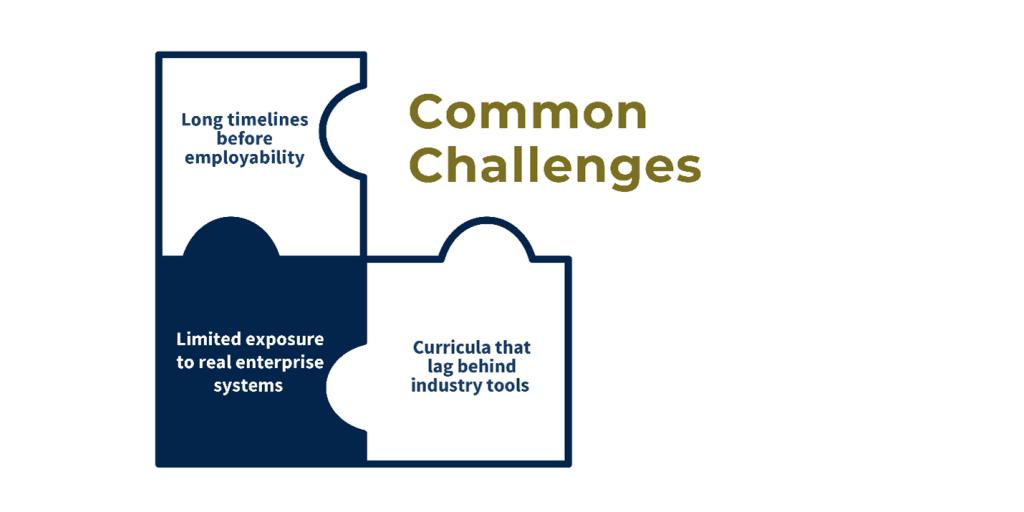
Common challenges include:
- Long timelines before employability
- Limited exposure to real enterprise systems
- Curricula that lag behind industry tools
This is where many traditional degree structures face constraints.
How CLaaS2SaaS Reframes the Software Engineering vs Computer Science Degree Choice
The ClaaS2SaaS AI Applications Developer (AIAD) pathway removes the false choice between applied skills and academic progression.
It is designed to:
- Build practical software and AI capabilities first
- Keep learners employable throughout their studies
- Provide direct progression into Master’s degrees
Crucially, the pathway leads to two Master’s top-up options:
This allows learners to sequence skills first and advanced theory later, without restarting or changing direction. - Master in Computer Science
- Master in Science Computing
How the CLaaS2SaaS AI Applications Developer Pathway Works
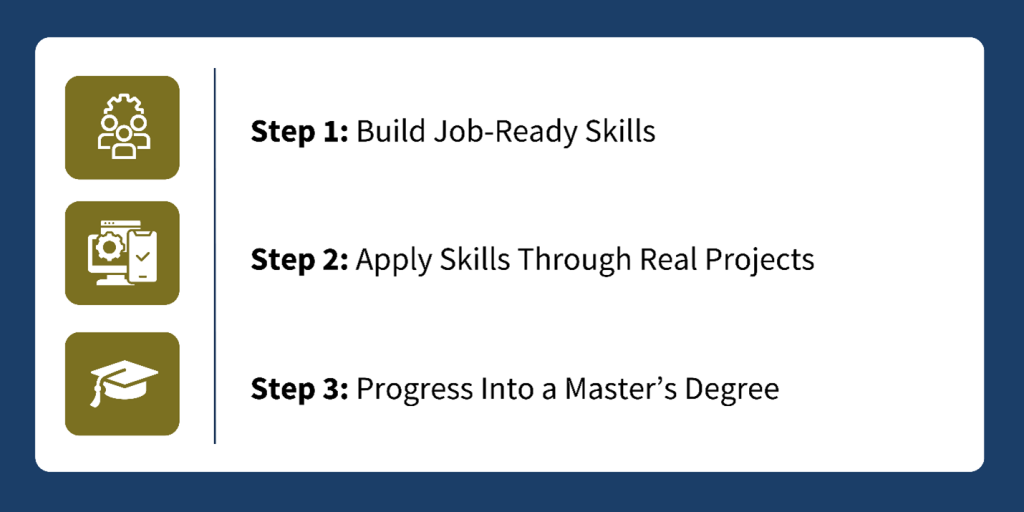
Step 1: Build Job-Ready Skills
Learners develop capabilities in:
- Full-stack software development
- AI application development and integration
- Databases, analytics, and system design
- Agile delivery and enterprise software practices
Step 2: Apply Skills Through Real Projects
Work-integrated projects mirror real business challenges, building portfolios that employers value.
Step 3: Progress Into a Master’s Degree
Graduates can top up into a Master in Computer Science or Master in Science Computing, deepening academic expertise while remaining employable with practical hands-on learning.
Common Misconceptions Addressed
“Only computer science degrees lead to a Master’s”
Both software engineering and computer science degrees can lead to Master’s qualifications when structured progression pathways exist.
“Software engineering lacks academic rigor”
Modern programs integrate architecture, systems thinking, security, data, and AI foundations that support postgraduate study.
“You must choose between skills and academic credibility”
Skills-first pathways allow learners to gain employability first and academic depth later.
“Career switchers must start from zero”
The World Economic Forum emphasizes recognizing transferable skills to accelerate reskilling
Which Is Best: Software Engineering or Computer Science?
Both software engineering and computer science degrees can lead to a Master’s qualification. The real difference is how each path supports your career before you get there.
A traditional computer science degree is well suited for learners aiming for research, academic specialization, or deep theoretical work. It builds strong foundations but often delays practical application and employability. For mid-career professionals, this can mean stepping away from the workforce or waiting longer to see career returns.
A software engineering-first pathway prioritizes immediate, applied capability. Learners build job-ready skills early, apply them in real-world environments, and continue progressing professionally while studying. Academic depth is then added later through structured Master’s progression, such as a Master in Computer Science or Master in Science Computing.
Conclusion: Choosing a Degree That Works for Your Career
The software engineering vs computer science degree decision no longer requires choosing between theory and practice.
With the CLaaS2SaaS AI Applications Developer pathway, professionals gain:
- Immediate, job-ready skills
- Real project experience
- A clear route to a Master in Computer Science or Master in Science Computing
This approach reflects how modern tech careers evolve and provides a future-proof foundation for long-term growth.
Course

Ready to Advance Your Software Engineering Career?
If you are comparing a software engineering vs computer science degree because you want real career impact, not just theory, CLaaS2SaaS provides a structured, skills-first progression model designed for working professionals.
Through skills-first learning, industry projects, and flexible progression into accredited degrees, CLaaS2SaaS helps professionals transition, advance, and future-proof their careers without putting work on pause.