Work-Study Software Engineering Degree: Structure, Eligibility, and a Career-Change Roadmap
SHARE THIS:


Most students think they have to choose: study now, earn later. The Work-Study Software Engineering Degree from CLaaS2SaaS flips that equation. You build real technical skills while staying financially independent, starting right after your O-Levels or A-Levels, no prior coding experience required.
This is a fully structured, accredited pathway from Foundation level all the way to a Bachelor’s degree in Software Engineering, designed for students who want a work-study software engineering degree that fits real life. Here is exactly how it works, who qualifies, and what you can expect along the way. You can also explore the full program overview at CLaaS2SaaS Software Engineering.
What Is a Work-Study Software Engineering Degree?
A work-study degree means you are not just sitting in a classroom. You are applying what you learn in real working environments, earning as you go. The Work-Study Software Engineering Degree program is built around project-based learning in information systems and technology, object-oriented programming, web and mobile applications development, and management information technology, so every module has practical, job-ready application.
What sets this model apart from a traditional full-time degree is the structure of how learning happens. Instead of waiting until after graduation to gain work experience, you build both at the same time. Each module is connected to real tasks: writing code that solves actual problems, managing systems that real teams use, and presenting solutions to people who have real stakes in the outcome. This is what project-based software engineering education actually looks like in practice.
For students fresh out of secondary school, this matters more than most people realize. Employers in tech do not just want a degree on paper. They want proof that you can think through a problem, collaborate across a team, and deliver something that works. The Work-Study Software Engineering Degree program is designed to give you that proof before you even finish your studies. By the time you graduate, you are not starting from zero. You have a portfolio, a professional track record, and the kind of confidence that only comes from doing real work.
According to the World Economic Forum, over 1 billion people will need reskilling by 2030, with software and digital roles topping the demand list. The students who will be most competitive are not the ones who studied the longest. They are the ones who started the earliest and stayed connected to real work throughout. Starting your software engineering degree while working puts you ahead of that curve from day one.
Who Is This Program For?
The Work-Study Software Engineering Degree is designed primarily for high school students who want to launch their tech career without waiting years before gaining real experience.
Entry Points Based on Your Current Level
| Your Current Level | Entry Point | Duration |
|---|---|---|
| O-Level / Below Grade 12 | Foundation Diploma | ~6 months |
| A-Level / Diploma / Grade 12+ | Higher Diploma (Direct Entry) | ~12 months |
No prior coding experience is required. What matters more is your mindset: a willingness to work hard, stay committed even when topics get difficult, and push through challenges without giving up. The computer software development courses in this program are built to take you from zero, step by step. The curriculum does the heavy lifting on structure. You bring the drive.
Program Structure: Your 2.5-Year Roadmap
The full pathway from Foundation to Bachelor’s takes approximately 2.5 years, broken into three clear stages.
Stage 1: Foundation Diploma in Software Engineering
Duration: ~6 months | Entry: O-Level / Below Grade 12
This stage covers the fundamentals: computer information systems, programming basics, software development patterns, and responsive web development. By the end, you have a Diploma-level credential while being introduced to real project environments. Explore the Foundation Diploma
Stage 2: Higher Diploma in Software Engineering
Duration: ~12 months | Entry: Foundation graduates or A-Level / Grade 12+ students
Here you go deeper into information systems project management, managing information systems, advanced object-oriented programming, and web and mobile applications development. This is where the difference between learning theory and learning by doing becomes impossible to ignore.
A student learning theory reads about how to manage an information system. A student in the Work-Study Software Engineering Degree program actually manages one. Theory gives you a framework. Work gives you instincts.
By the end of this stage, you will have encountered real constraints, real deadlines, and real feedback from people outside the classroom. This directly prepares you for junior software engineering roles where handling deadlines, feedback, and system constraints is part of daily work. That is the outcome a traditional degree cannot replicate, no matter how good the syllabus is.
Stage 3: Bachelor’s Degree in Software Engineering
Duration: ~12 months | Entry: Higher Diploma graduates
The final stage brings everything together with advanced modules in building information management, system architecture, and enterprise-level management information technology. At this level, the gap between theory and doing closes completely.
Where earlier stages taught you to build and manage systems, Stage 3 teaches you to lead them. You are not just a contributor anymore. You are the person who understands the full picture: how the architecture holds together, how the information flows across an enterprise, and how decisions at the technical level affect the business above it.
You graduate with an accredited Bachelor’s degree, a portfolio of real-world projects, and two-plus years of demonstrated work experience. That combination is what separates Work-Study Software Engineering graduates from candidates who only have a certificate.
What You Will Study
The curriculum is designed to mirror what the industry actually uses, covering both the technical and management sides of software engineering.
- Computer information systems and data management
- Object-oriented programming and software design
- Responsive web development and front-end frameworks
- Web and mobile applications development
- Information systems project management
- Managing information systems in enterprise environments
- Software development patterns and architecture
- Building information management for scalable systems
Every module connects theory to practice. You are not memorizing for exams; you are building things that work.
Beyond the technical curriculum, the actual work environment teaches you things no syllabus can fully capture. You learn to collaborate across teams, communicate progress clearly, and adapt when requirements change. You get exposure to agile ways of working: breaking projects into sprints, reviewing work iteratively, and shipping improvements rather than waiting for perfection.
You develop the kind of professional habits that take most graduates years to build after they leave school, because you are living them from the start.
Why Work-Study? The Real Advantage
A software engineering degree while working is not just about saving money (though it does help). It is about arriving at your first full-time role with actual experience, not just a certificate.
- Earn while you study, reducing financial pressure on your family
- Apply classroom learning in real working environments immediately
- Build a portfolio of real projects alongside your degree
- Graduate with both credentials and demonstrated work experience
- Develop professional habits, communication skills, and industry networks from day one
This is exactly what makes the Work-Study Software Engineering Degree program different from a traditional campus degree. This approach allows students to graduate not only with a degree, but also with practical experience that employers increasingly value.
Weekly Time Commitment
One of the most common questions: how much time does this actually take per week?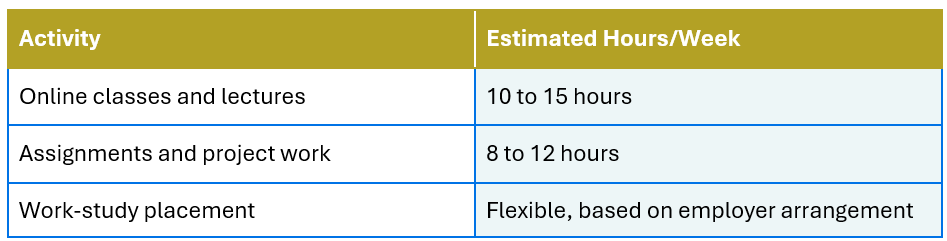
The program is designed to be manageable alongside part-time or structured work, not alongside a full-time 9-to-5 in an unrelated field.
Frequently Asked Questions
Can I enter with O-Levels only?
Yes. O-Level graduates enter through the Foundation Diploma, which takes approximately 6 months before progressing to the Higher Diploma.
Do I need prior coding experience?
No. The program starts from the ground up with computer software development courses designed for beginners. Curiosity and commitment matter more than prior knowledge.
What does the work-study component actually look like?
You are placed in a working environment where you apply your learning in live projects. Depending on your arrangement, this can be paid work, internship-style placements, or structured apprenticeships.
Is this degree accredited?
Yes. The CLaaS2SaaS Work-Study Software Engineering Degree pathway leads to an accredited Bachelor’s degree. You can verify full program details on the Software Engineering program page.
How long is the full pathway from O-Level to Bachelor’s?
Approximately 2.5 years in total: around 6 months for Foundation, 12 months for Higher Diploma, and 12 months for the Bachelor’s degree.
Can I do a career change to a software engineering degree through this program?
If you are already working and considering a career change to a software engineering degree, the A-Level / Grade 12+ entry point lets you skip Foundation and enter directly at the Higher Diploma level, cutting your total timeline significantly.
Course

Ready to Start Your Software Engineering Journey?
Earn while you study. Build real projects. Graduate with both a degree and experience.