Higher education is facing a defining moment. Universities are under increasing pressure to produce job-ready graduates, support lifelong learning, and remain relevant in an economy increasingly shaped by artificial intelligence, automation, and rapid technological change. Governments expect universities to strengthen national talent pipelines. Employers expect graduates who can apply skills immediately in real-world environments. Learners themselves are demanding education that is flexible, personalized, and directly connected to career outcomes.
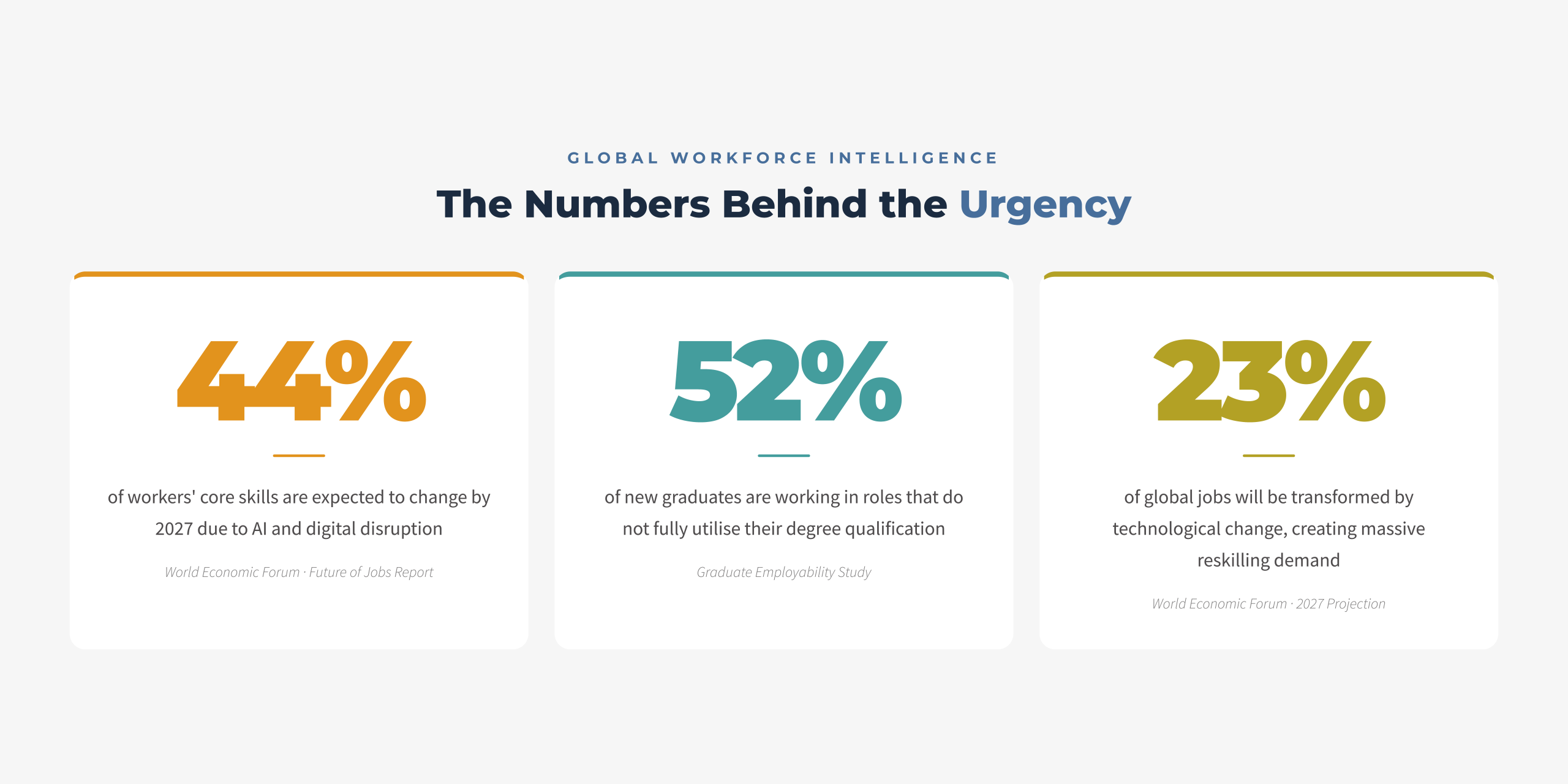
The urgency of this transformation is reinforced by global workforce trends. According to the World Economic Forum’s Future of Jobs Report, 44% of workers’ core skills are expected to change by 2027, driven largely by technological disruption and the rapid adoption of artificial intelligence and digital technologies.
At the same time, the gap between higher education outcomes and labor market needs continues to widen. A recent graduate employability study found that 52% of new graduates are working in roles that do not fully utilize their degree, highlighting a persistent mismatch between academic credentials and workforce requirements.
Yet despite these rising expectations, many institutions still operate within rigid, degree-centric models designed for a very different era.
The traditional university system was built for a time when industries evolved slowly and career paths were relatively predictable. Programs were designed around multi-year degrees, fixed course sequences, and standardized academic calendars. Students typically progressed through the same curriculum at the same pace, graduating with similar academic experiences regardless of their individual strengths, interests, or career goals.
While this model has produced generations of educated professionals, it increasingly struggles to keep pace with the realities of today’s digital economy.
The traditional university system is structured around fixed curricula, standardized learning pathways, and batch-based delivery models where students move through programs as cohorts. While this approach ensured consistency and scalability in the past, it now limits the ability of institutions to adapt quickly to emerging technologies and evolving workforce needs. Curriculum updates can take years to implement, even as new skills in areas such as artificial intelligence, data science, cloud computing, and cybersecurity become essential in a matter of months.
The pace of technological change is also reshaping the nature of work itself. The World Economic Forum estimates that 23% of global jobs will be transformed by technological change by 2027, creating both new opportunities and significant demand for reskilling and workforce development.
At the same time, the learner profile has changed dramatically. Universities are no longer serving only traditional full-time students entering directly from secondary education. They must also support working professionals seeking to reskill, alumni returning for career advancement, and lifelong learners navigating multiple career transitions. These learners require flexible, modular, and personalized learning pathways that traditional systems are not designed to deliver.
This growing mismatch between educational structures and workforce realities is driving a global conversation about the future of universities.
This is why AI-First Adaptive University Transformation is rapidly emerging as a new strategic model for modern institutions. Rather than focusing solely on digitization or online learning, this transformation reimagines universities as intelligent learning ecosystems where artificial intelligence, adaptive learning technologies, and skills-first curricula work together to create more responsive and personalized educational experiences.
At its core, AI-First Adaptive University Transformation represents a shift from static education systems to adaptive, skills-first, and AI-powered learning ecosystems that align universities with the future of work. Learning becomes more dynamic, programs become more modular, and education becomes more closely connected with industry and workforce development.
In this model, universities move beyond delivering standardized content to enabling personalized learning journeys tailored to individual learners. Artificial intelligence can support curriculum design, monitor learner progress, recommend adaptive learning pathways, and provide insights that help faculty deliver targeted mentoring and support.
Rather than simply digitizing existing processes, this transformation fundamentally reimagines how universities design curricula, support faculty, and guide learners throughout their careers. Institutions become platforms for lifelong talent development, enabling learners to continuously acquire new skills, apply them in real-world contexts, and return to education throughout different stages of their professional journey.
For higher education leaders, this shift represents both a challenge and an opportunity. Those who successfully embrace AI-First Adaptive University Transformation will be better positioned to deliver meaningful learning outcomes, strengthen graduate employability, and establish their institutions as leaders in the future of education and workforce development.
Structural Problem in Higher Education
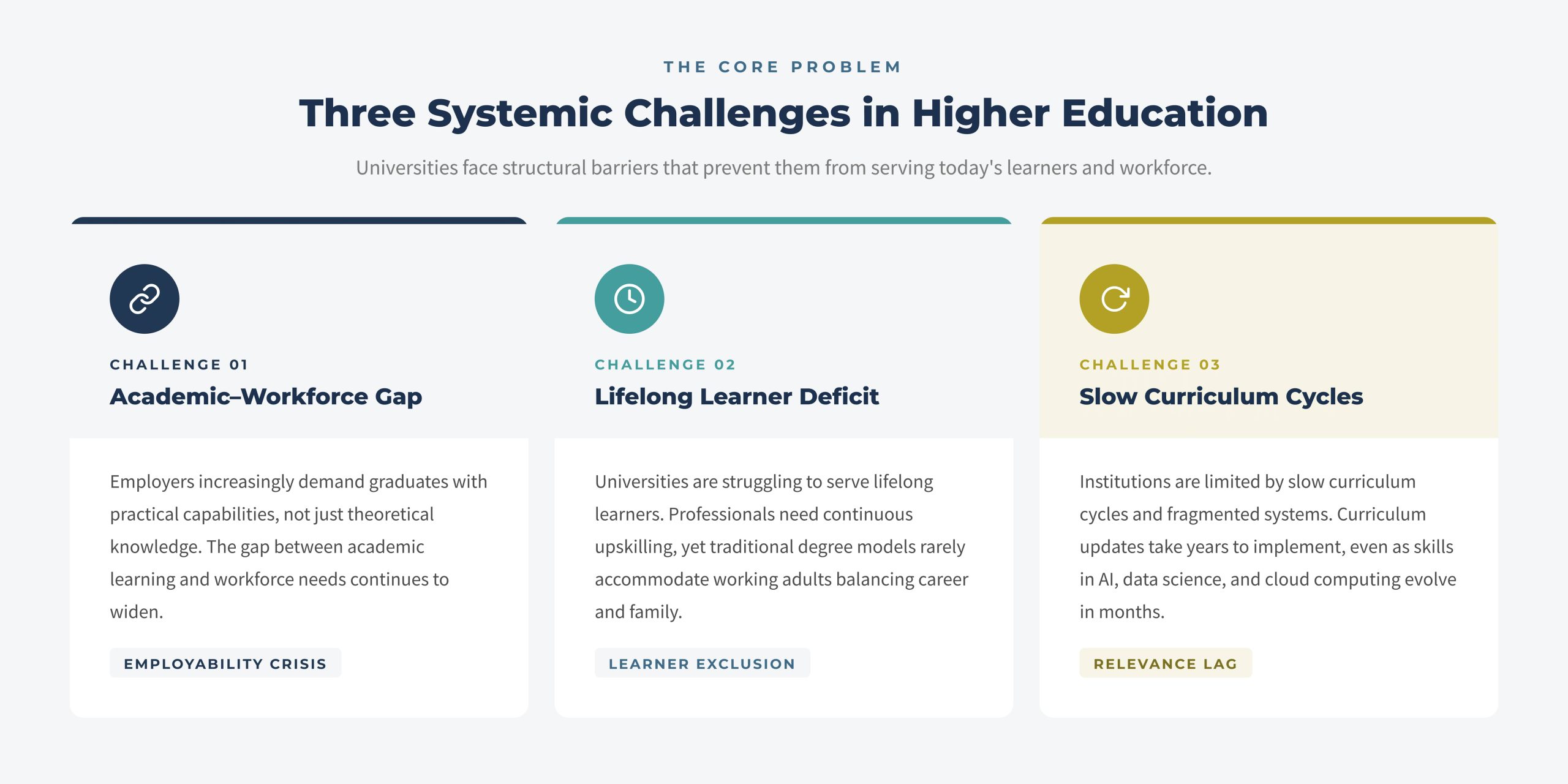
Universities around the world face three systemic challenges.
First, the gap between academic learning and workforce needs continues to widen. Employers increasingly demand graduates with practical capabilities, not just theoretical knowledge.
Second, universities are struggling to serve lifelong learners. Professionals need continuous upskilling, yet traditional degree models rarely accommodate working adults balancing career and family commitments.
Third, institutions are limited by slow curriculum cycles and fragmented systems, making it difficult to adapt programs to rapidly changing technologies.
These constraints prevent universities from delivering personalized learning experiences or responding quickly to emerging skill demands. Traditional one-size-fits-all learning systems often result in low engagement, high opportunity costs for learners, and persistent talent shortages for employers.
The future of higher education requires something fundamentally different.
What Is AI-First Adaptive University Transformation?
AI-First Adaptive University Transformation is a holistic approach that reimagines universities as intelligent, skills-first institutions powered by AI-driven platforms, adaptive learning models, and workforce-aligned programs.
Instead of relying solely on traditional classroom instruction, universities adopt an integrated system that combines:
- AI-powered learning technology
- Skills-first curriculum design
- Work-integrated learning experiences
- Faculty enablement and digital pedagogy
- Workforce-aligned training pathways
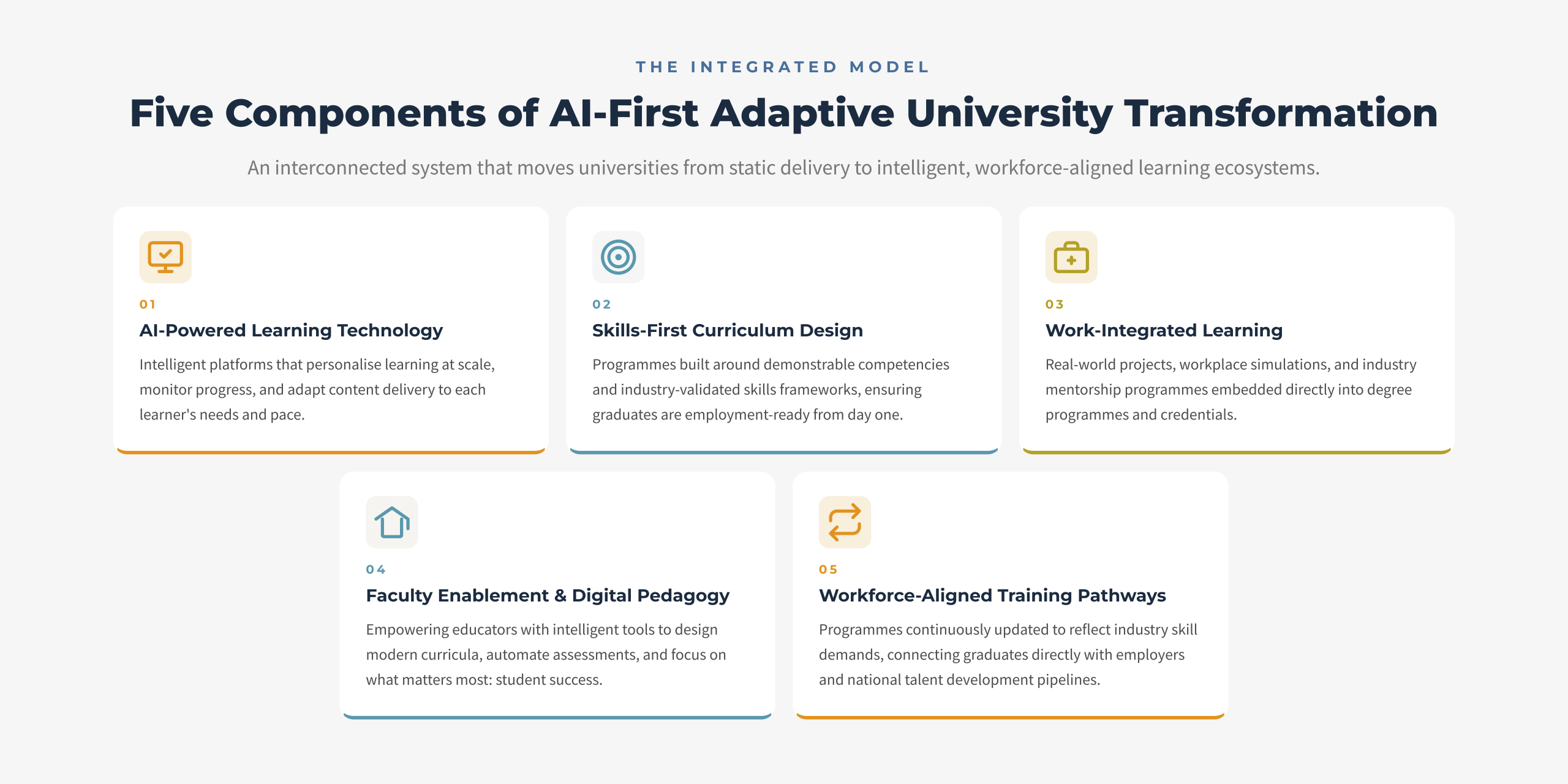
The goal is to create an AI-First University capable of delivering personalized education at scale while maintaining strong connections with industry.
In this model, universities evolve into lifelong learning hubs where students, alumni, and working professionals can continuously develop new capabilities throughout their careers.
The Three Pillars of Adaptive University Transformation
Successful University Transformation with AI rests on three interconnected pillars.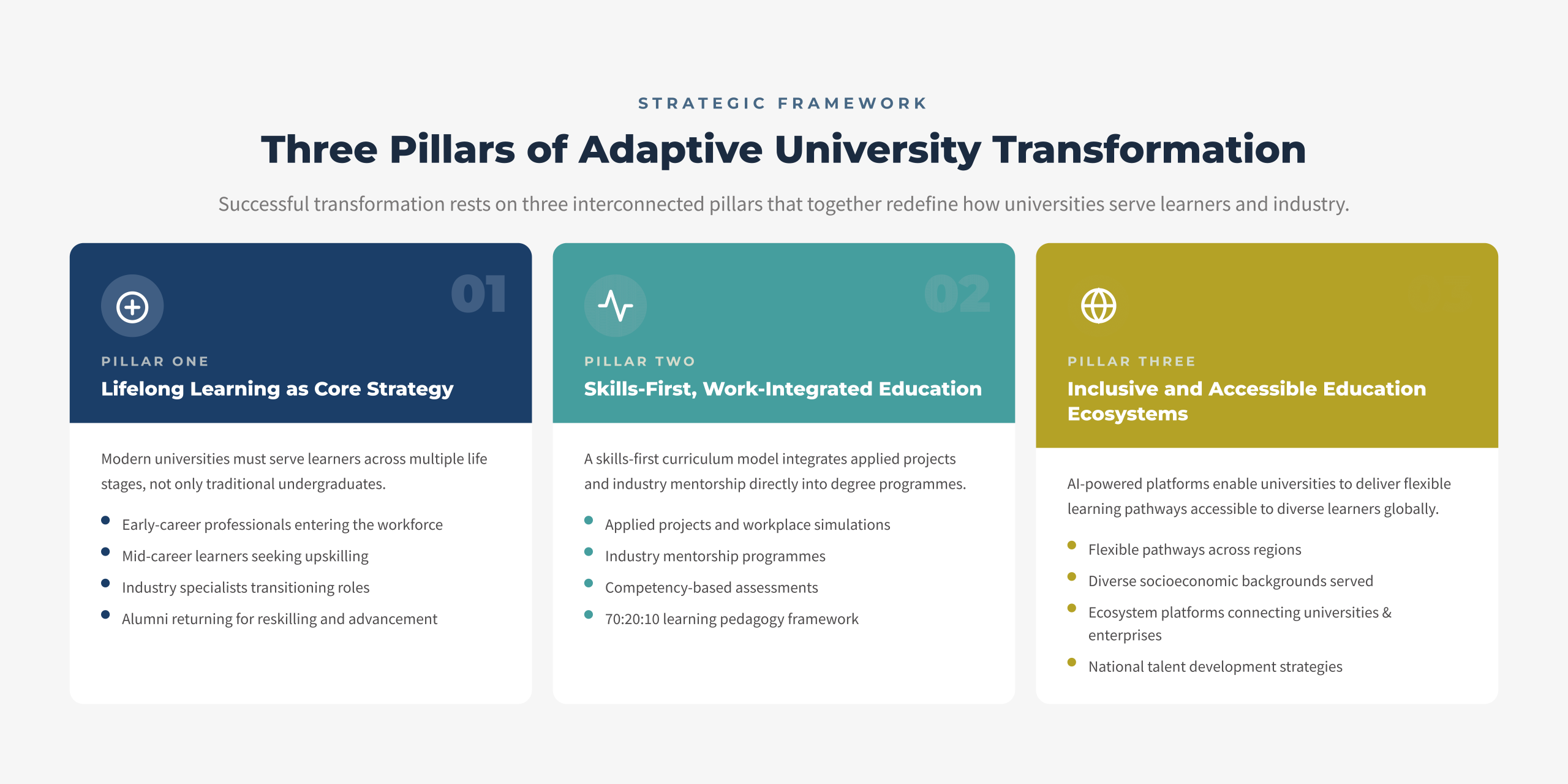
1. Lifelong Learning as a Core Institutional Strategy
2. Skills-First, Work-Integrated Education
The second pillar focuses on aligning academic learning with real-world outcomes.
A skills-first curriculum model integrates applied projects, industry mentorship, and competency-based assessments into degree programs.
Students do not simply study concepts. They apply them through real projects and workplace simulations.
CLaaS2SaaS frameworks such as the 70:20:10 learning pedagogy illustrate this shift:
- 10% on-the-job training for Knowledge
- 20% work-based mentoring for Skills
- 70% structured instruction for Ability
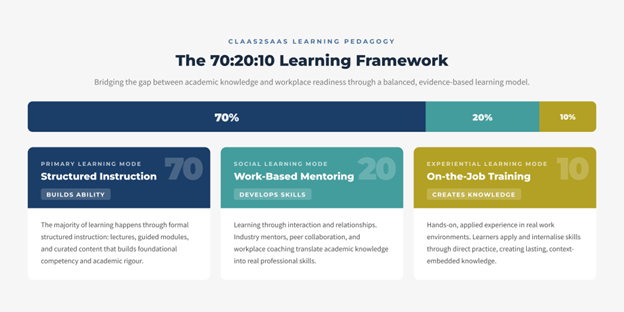
This approach bridges the long-standing gap between academic knowledge and workplace readiness.
3. Inclusive and Accessible Education Ecosystems
The Role of AI in Higher Education Transformation
Artificial intelligence is not simply an add-on technology. It acts as the operational backbone of the adaptive university.
AI enables universities to deliver batch-of-one learning, where each student follows a personalized pathway tailored to their skills, pace, and career goals.
In AI-powered adaptive systems, intelligent agents can:
- Design competency-based curricula
- Personalize learning plans
- Track learner progress and engagement
- Recommend interventions when students struggle
- Provide real-time mentoring support
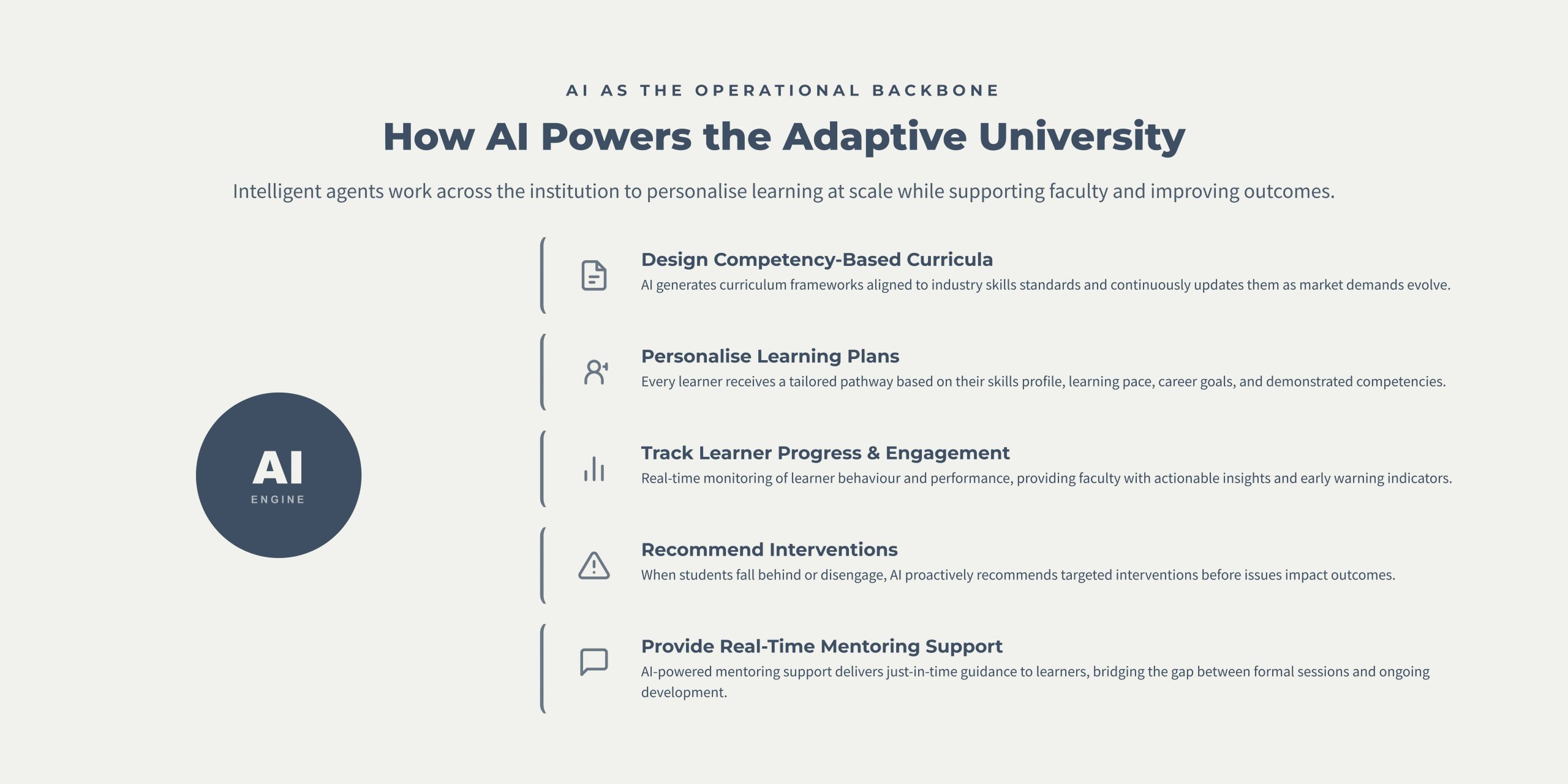
This allows institutions to deliver personalization at scale while maintaining quality and consistency.
Adaptive learning platforms also provide faculty with powerful insights into student performance, enabling targeted mentoring and continuous curriculum improvement.
From Static Degrees to Modular Skills Pathways
Another defining characteristic of Higher Education Transformation with AI is the shift from rigid degree programs to modular learning pathways.
Modern programs increasingly include stackable credentials such as:
- Microcredentials
- Professional certificates
- Professional diplomas
- Work-study degree pathways
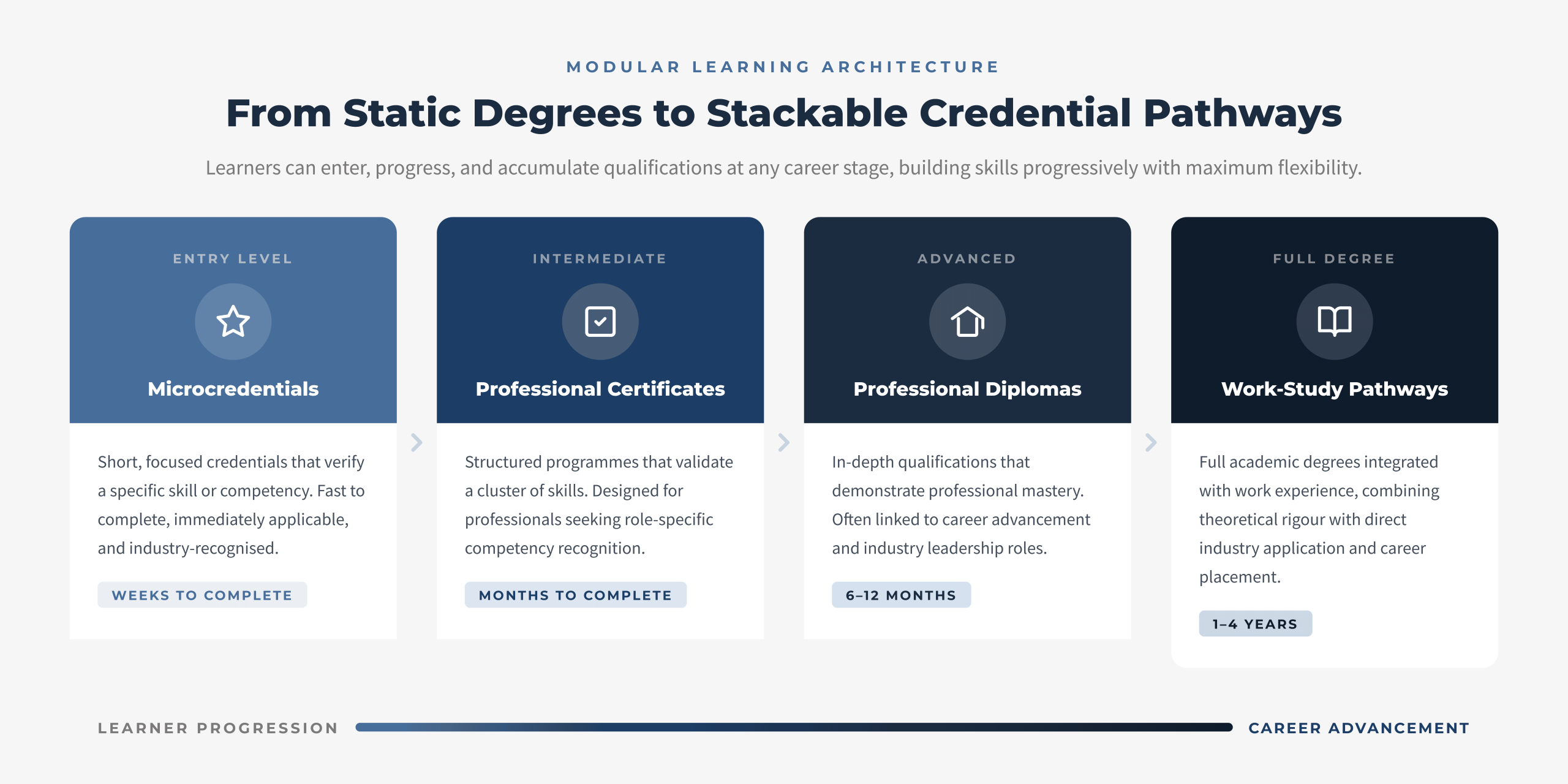
These modular structures allow learners to accumulate skills progressively while maintaining flexibility.
For universities, this creates new revenue opportunities and expands their reach to lifelong learners and enterprise training markets.
Empowering Faculty Through Intelligent Platforms
Faculty members remain central to the transformation of higher education.
However, AI-powered platforms significantly enhance their capabilities by automating administrative tasks and providing intelligent tools for curriculum development.
For example, AI-driven learning systems can support educators in:
- Generating curriculum frameworks aligned with industry skills standards
- Designing multimodal learning materials
- Automating assessment creation and grading
- Monitoring learner engagement in real time
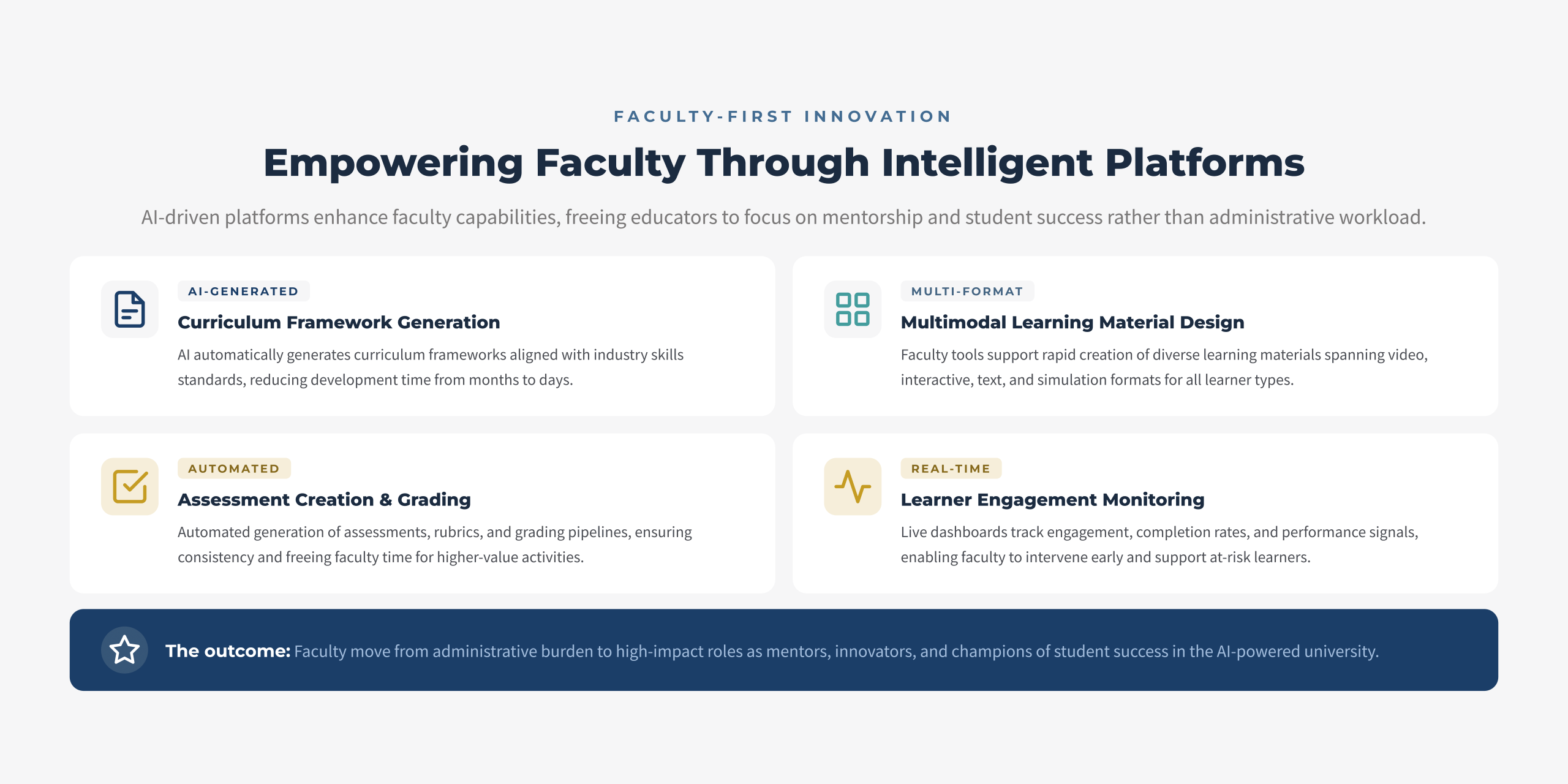
This frees educators to focus on mentorship, innovation, and student success rather than administrative workload.
Building an AI University Ecosystem
A true AI University does not operate in isolation.
Instead, it functions within a broader ecosystem that connects:
- Higher education institutions
- Enterprises and employers
- Industry associations
- Learners across all career stages
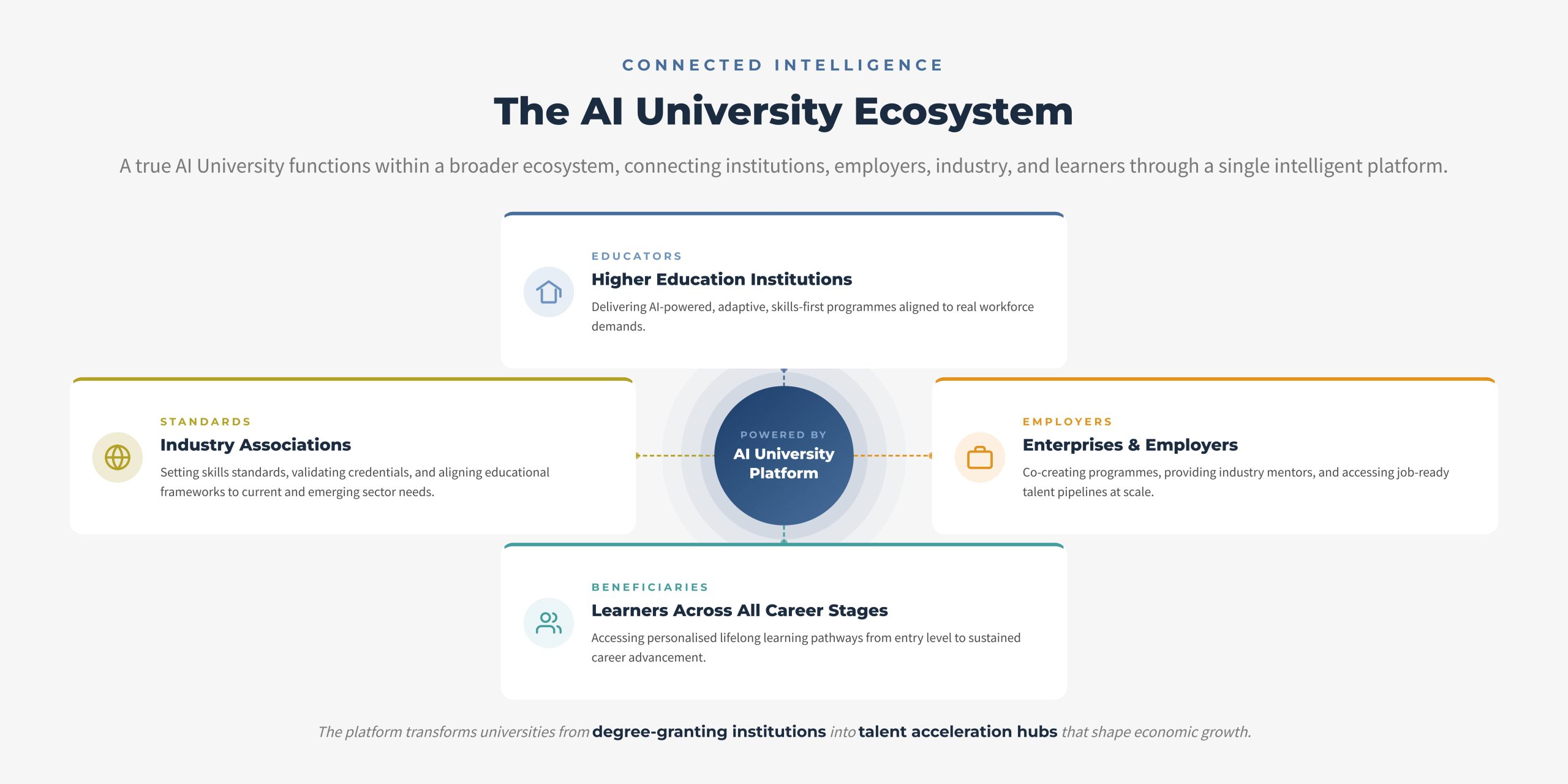
Platforms that integrate learning, talent development, and workforce transformation enable universities to play a much larger role in economic development.
In this model, universities become talent acceleration hubs that support both education and workforce transformation simultaneously.
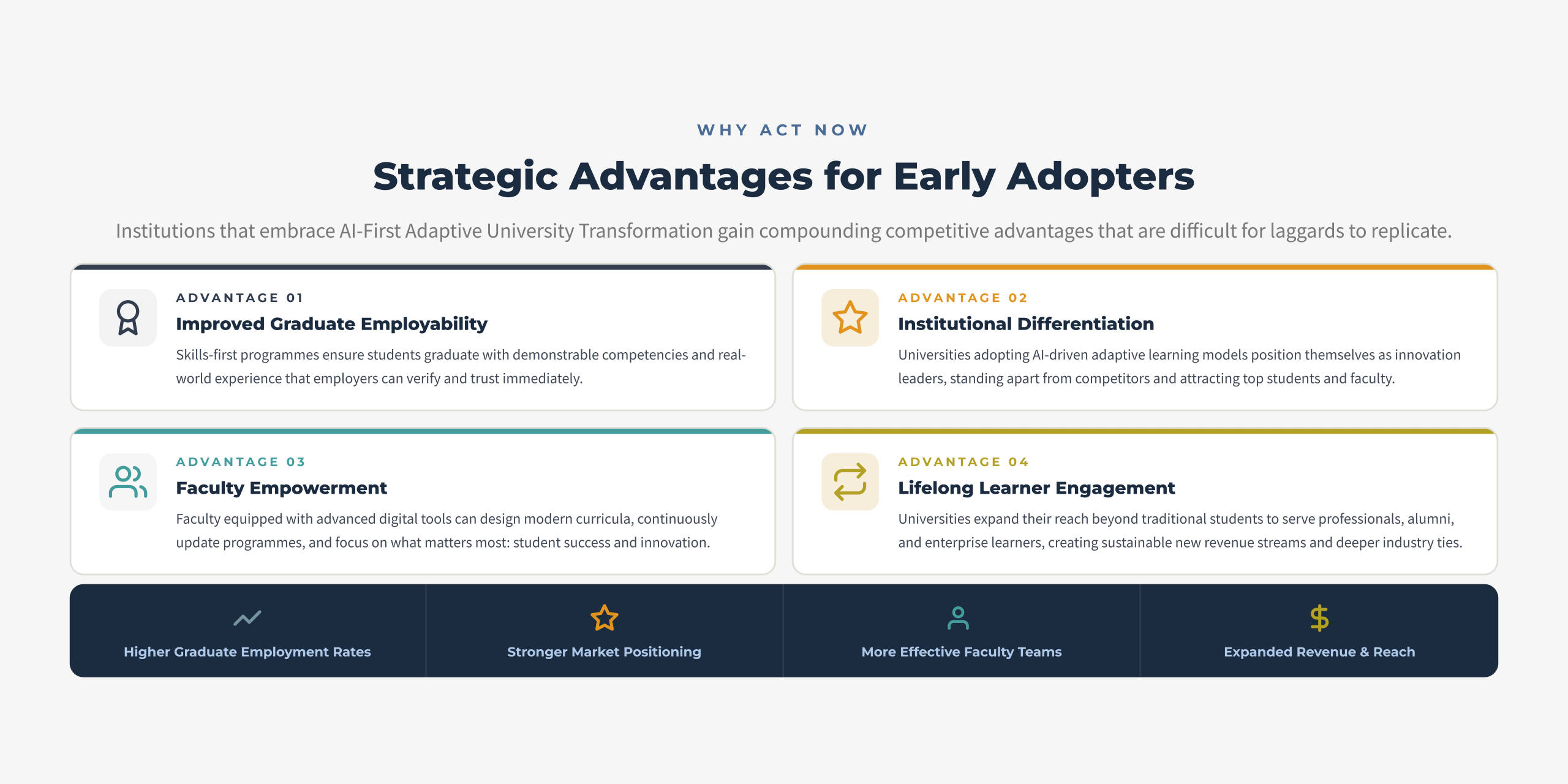
Together, these outcomes create a sustainable model for universities to thrive in the digital economy.