Data Analyst Course Online: Project-Based Data Science & AI Training
SHARE THIS:


Choosing the right data analyst course online can determine whether you become job-ready in months or remain stuck with theory and certificates.
This is especially true for working professionals, career switchers, and graduates who cannot afford to pause their income or commit to full-time study. They need a flexible, part-time, work-integrated pathway that fits around their jobs while helping them upgrade their skills quickly and move into higher-paying digital roles.
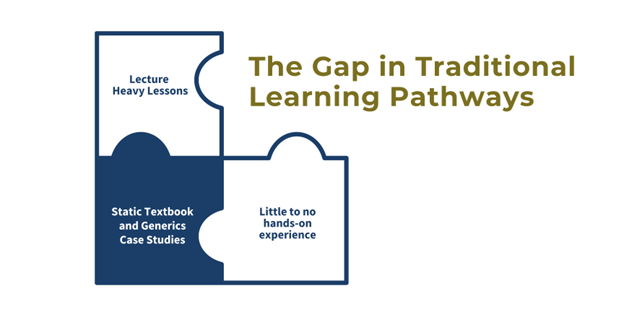
Many learners enroll in analytics programs filled with theory, recorded lectures, and generic quizzes. They finish with certificates but still feel unprepared for real work. Digital careers employers ask for portfolios, dashboards, business case studies, and AI experience, which most courses do not provide these.
This is the gap.
As mentioned by industry analysts, organizations continue to struggle to find professionals who can turn raw data into actionable business insights, automate decisions using AI tools, and communicate findings clearly to stakeholders. At the same time, many aspiring analysts have limited exposure to real business challenges and applied data work, leaving them underprepared for the expectations of modern, data-driven roles.
A data analyst course online should not just teach concepts. It should train you to actually do the job.
That is exactly where a work-integrated, project-based approach makes the difference. Programs from CLaaS2SaaS including, Project Based Data Science and AI training are designed specifically for working professionals who want to upskill without stopping their careers. Delivered part-time and built around real projects, mentorship, and enterprise-style workflows, the pathway allows learners to apply skills immediately at work while building a strong portfolio that proves readiness to employers.
Why a Data Analyst Course Online Must Be Project-Based in 2026
Every industry now runs on data.
Retail tracks customer behavior.
Banks monitor fraud.
Healthcare predicts patient risks.
Marketing teams optimize campaigns in real time.
But here is the challenge. There are more tools than ever, yet not enough people who know how to use them well.
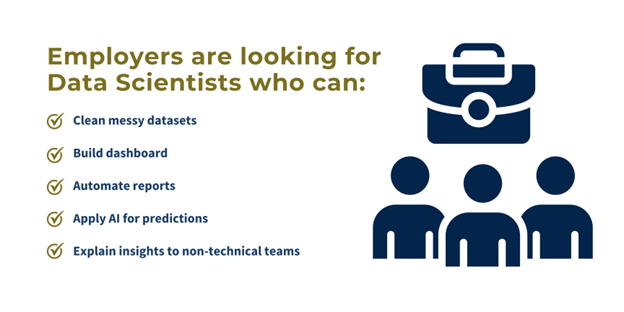
Companies are not looking for “students of data.” They want problem solvers who can:
This means employability depends on applied experience, not just knowledge.
- Clean messy datasets
Transform raw, inconsistent data into organized, reliable information ready for analysis.
- Build dashboards
Create visual tools that track key metrics and make data easy to understand briefly.
- Automate reports
Set up dynamic reports that update automatically, save time, and reduce errors.
- Apply AI for predictions
Use machine learning models to forecast trends and guide smarter business decisions.
- Explain insights to non-technical teams
Communicate findings clearly so everyone can act on the data, even without technical expertise.
A modern analytics pathway must focus on execution from day one.
Doubting if this program suits you?
Consult with our experts
What Most Online Courses Get Wrong
The Core Skills of a Data Analyst Employers Expect
It is easy to be impressed by course titles, certificates, or marketing promises. But before enrolling in any analytics program, you need clarity on what the actual job requires day to day.
Remember that employers do not hire based on what you studied; they hire based on what you can do independently.
A capable analyst must combine technical skills, business thinking, and modern AI tools to turn raw data into decisions that drive results. Without this full skill set, even the best credentials fall short.
Here’s what managers consistently expect.
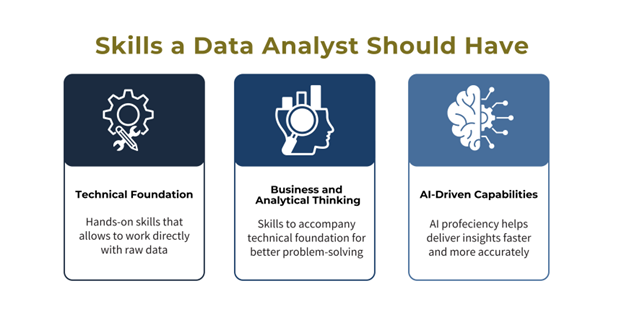
Technical Foundations
Every data role starts with strong technical basics. These are the hands-on skills that allow you to work directly with raw data and transform it into something usable.
- Data cleaning and preparation
- SQL queries and database handling
- Spreadsheet modeling
- Python or analytics tools
- Dashboard creation
Business and Analytical Thinking
Technical skills alone are not enough. Great analysts think like problem solvers, not just number crunchers. This is where business understanding makes the difference.
- Asking the right questions
- Defining KPIs
- Identifying trends
- Translating numbers into decisions
- Communicating insights clearly
AI-Driven Capabilities
Modern analytics increasingly includes AI and automation. Analysts who understand these tools can deliver insights faster and more accurately. This is quickly becoming a competitive advantage.
- Forecasting and predictions
- Automation of reports
- Generative AI for analysis
- Decision intelligence tools
These capabilities make you not just an analyst, but a strategic contributor.
Combining Relevant Data Science Skills
These are the true skills of a data analyst that hiring managers consistently value across industries.
Technical execution, business thinking and AI-powered efficiency.
If a course only teaches theory or isolated tools without real projects, it cannot fully prepare you for the workplace because skills are not developed by watching, they are built by doing.
That is why the right program should train you through practical, real-world applications where you clean data, build dashboards, solve business problems, and use AI tools just like you would on the job. Anything less is incomplete.
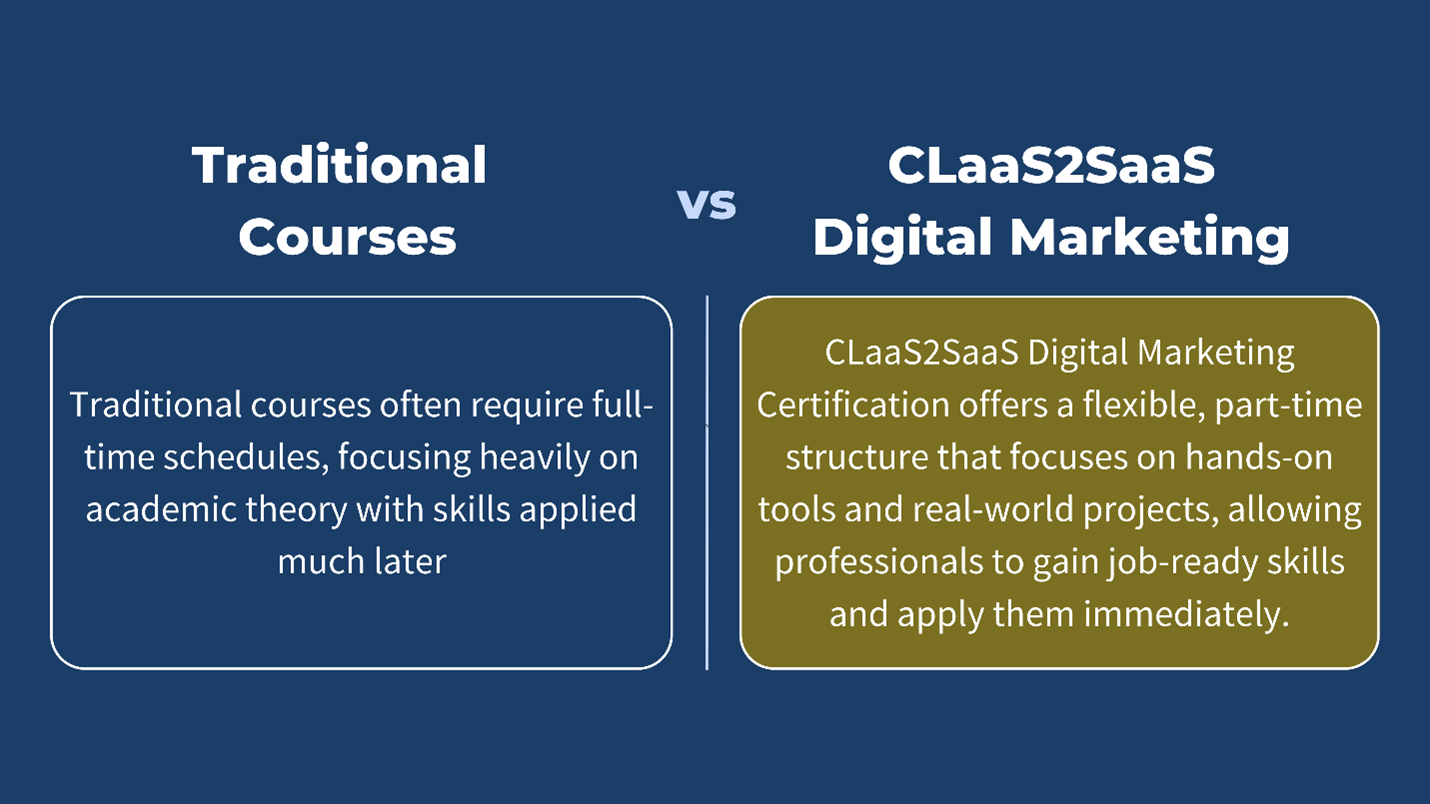
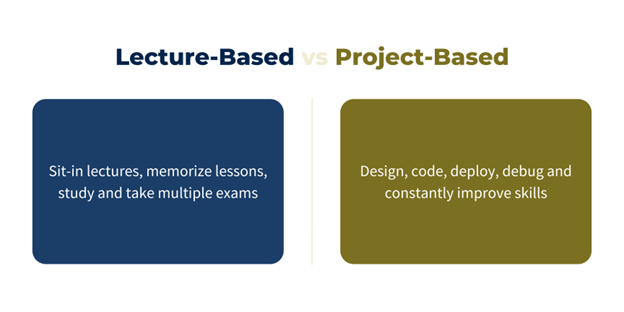
Project-Based Training vs Theory-Based Learning
When deciding how to learn data analytics, the type of course you choose can make all the difference in your confidence and career outcomes. Rather than simply memorizing terms, the learning method you engage with helps determine how ready you’ll be to tackle real work once you graduate.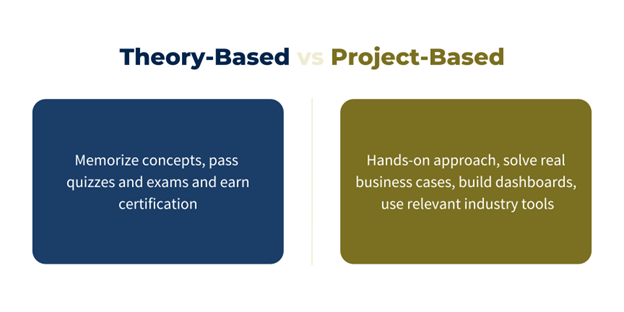
Theory-Based Courses
In traditional theory‑focused programs, most learning involves memorizing concepts, passing quizzes, and earning a certificate of completion. While this builds foundational knowledge, many students still feel unsure about applying that learning directly to workplace problems because they haven’t practiced solving them in realistic contexts.Project-Based Courses
In contrast, project‑based training centers on solving real business cases, building dashboards, and using industry tools. This hands‑on approach lets you create a professional portfolio of work and graduate truly job‑ready—not just credentialed. As highlighted in Cyberinfomines Technology’s analysis of training methods, project‑based training “bridges the gap between theory and practical skills” by immersing learners in activities that mimic workplace challenges and make them more employable.
The difference is confidence backed by proof. Employers increasingly value demonstrated outcomes, like real dashboards and AI use cases in a portfolio, more than transcripts and certificates, because tangible work shows you can do the job from day one.
How a Project-Based Data Science & AI Pathway Works
Instead of stretching learning across years of lectures, a skills-first pathway compresses a work-integrated, project-based experience that mirrors how analytics teams actually operate inside companies. From the start, you train in an environment that simulates real enterprise workflows, where projects are reviewed by industry professional mentors, feedback is structured and continuous, and expectations reflect workplace standards rather than classroom exercises. Learners do not study alone or submit assignments that disappear into a grading system. They collaborate, present findings, refine outputs, and improve through guided reviews, much like they would with managers or stakeholders on the job. Industry partners are also involved in shaping datasets and case problems, ensuring every task reflects real business challenges.
The goal is simple and practical: shorten the time between learning and employability.
Instead of spending years preparing for work, you prepare by doing the work.
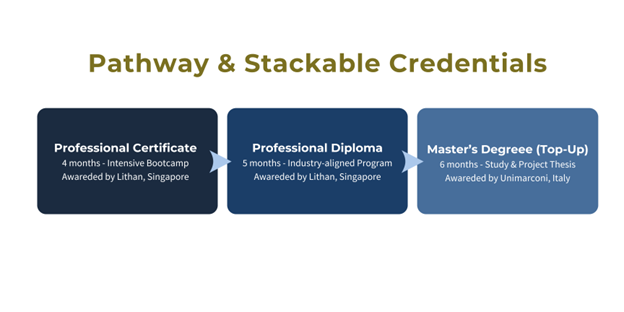
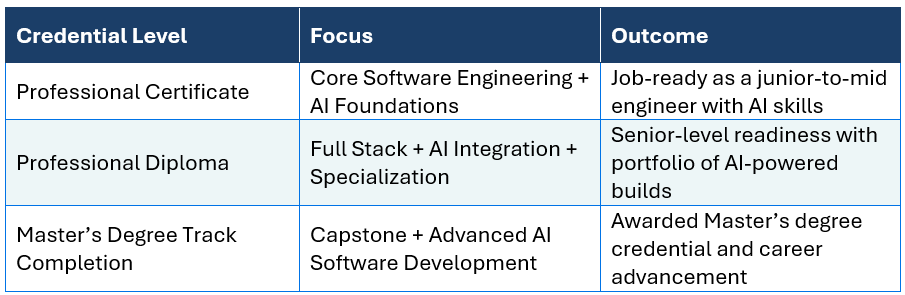
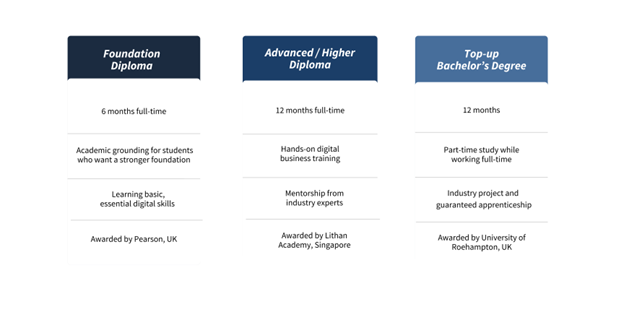
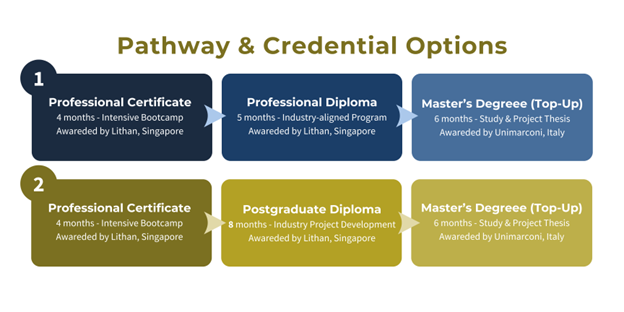
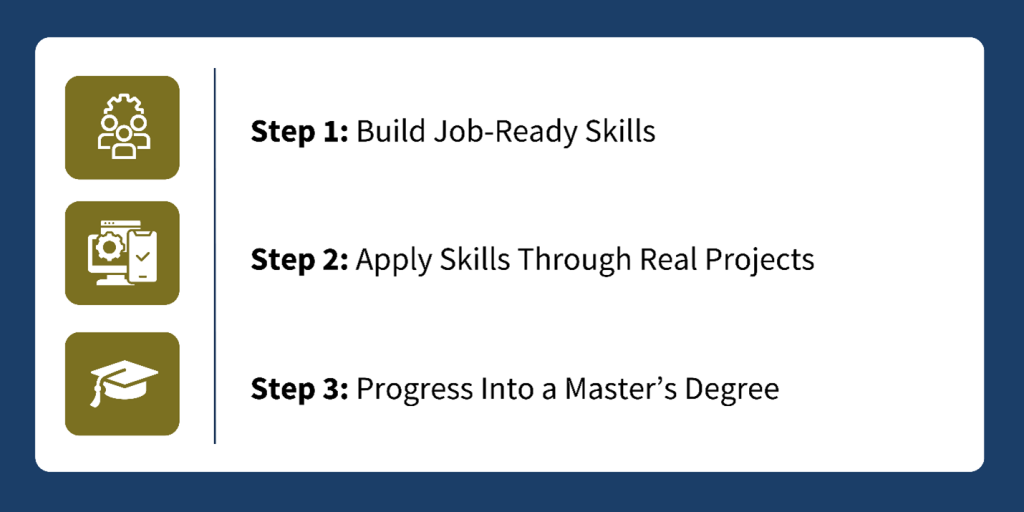
Stage 1: Professional Certificate (4 months)
Students master the fundamentals quickly by learning:
- Data preparation
- Visualization
- AI-assisted analysis
- Dashboard tools
- Business storytelling
By the end, you already have portfolio work.
Stage 2: Professional Diploma (4 months)
Learners go deeper by solving:
- Industry datasets
- Marketing analytics
- Financial forecasting
- Operations optimization
- AI-driven insights
Stage 3: International Master’s Top-Up (6 months)
In this last stage, learners get to advance to:
- Decision intelligence
- Advanced AI applications
- Leadership in analytics
- Enterprise problem solving
Wondering if you are capable of completing this pathway?
Get Your Personalized Eligibility Assessment!
How This Compares to a Google Data Analytics Professional Certificate
Many learners begin their analytics journey with the Google data analytics professional certificate because it is affordable, flexible, and beginner friendly. It provides a helpful introduction to terminology, tools, and basic workflows, making it a good starting point for understanding how analytics works.But there is an important distinction that most people only realize later.
Foundational certificates teach concepts. Employers hire for execution.
While entry-level certificates explain what dashboards, SQL queries, and data cleaning are, they rarely simulate the pressure, ambiguity, and complexity of real business problems. Lessons are often guided, step-by-step, and based on controlled exercises rather than messy, real-world datasets.
As a result, many learners finish with knowledge but still feel unsure when asked to independently solve an actual business case.
Certificates are strong for:
- Learning terminology and fundamentals
- Understanding basic tools
- Exploring whether analytics is right for you
- Building initial confidence
Limitations become clear when transitioning to employment:
- Exercises are often pre-structured rather than open-ended
- Datasets are simplified and “clean,” unlike real company data
- Little to no portfolio development
- Minimal mentorship or personalized feedback
- No apprenticeship or real business exposure
- Standalone credential with no progression pathway
How Project-Based Programs Go Further
Project-based pathways are designed specifically to close this gap between learning and working. Instead of controlled exercise, you operate in environments that mirror actual jobs.
From day one, you work with live business datasets that are messy, incomplete, and realistic, mirroring the exact challenges you would face inside an actual company. Each module requires tangible portfolio outputs such as dashboards, reports, and case studies, so you graduate with proof of your capabilities rather than just a line on your résumé. Modern AI workflows are also integrated into the learning process, teaching you how to automate analysis and use generative tools to work faster and smarter, the way real analytics teams do.
Beyond tools, the training emphasizes decision-making, guiding you to solve business problems end-to-end so you build confidence and independence instead of simply following instructions. You are supported throughout by mentorship from industry professionals who provide feedback, code reviews, and practical insights, ensuring you never learn in isolation.
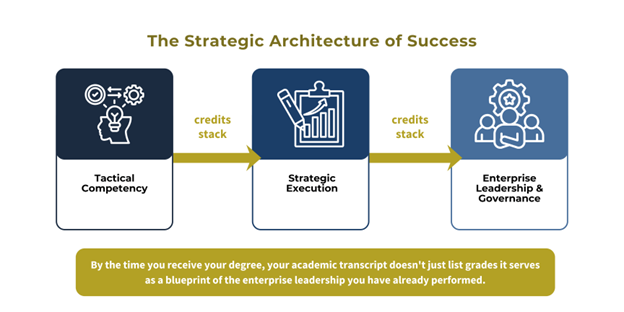
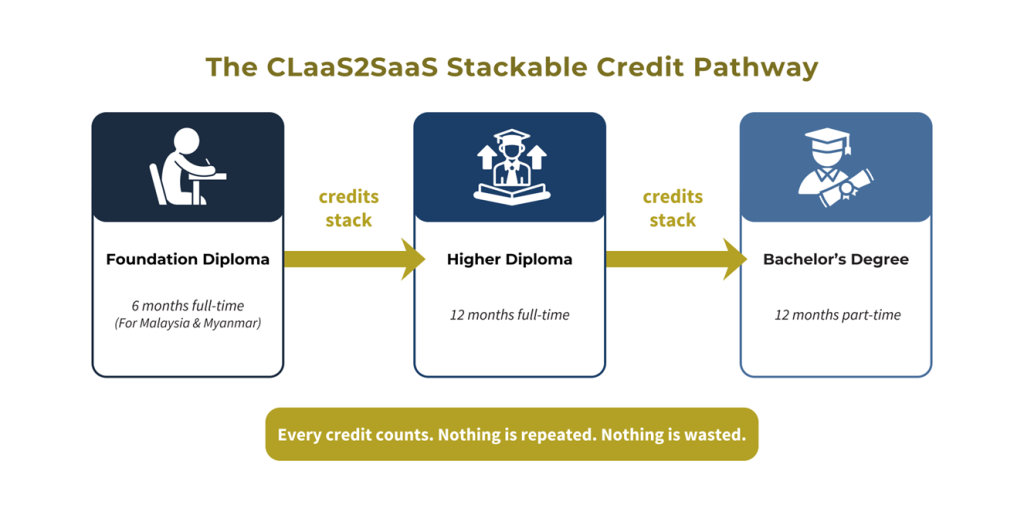
This pathway is also stackable, allowing you to progress from certificate to diploma and beyond without restarting, supporting continuous and structured career growth.
What You’ll Learn During the Training
Through CLaaS2SaaS’ online project based data science training, learning transforms into real-world impact. Rather than completing abstract assignments, our learners work on projects that produce tangible assets you can showcase to employers. Each task is designed to mirror challenges you’ll face in a professional data role.
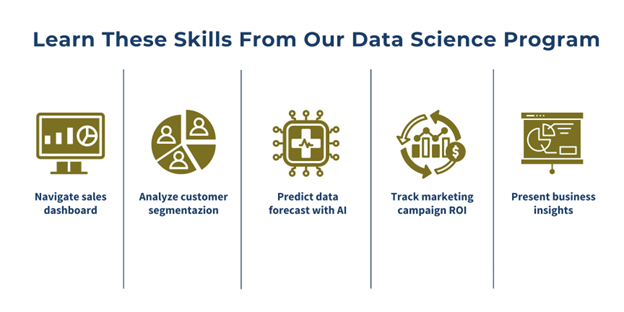
- Sales performance dashboard Visualize key metrics like revenue, growth, and trends to track business health.
- Customer segmentation analysis Group customers based on behavior or demographics to inform targeted strategies.
- AI-powered demand forecast
-
Use predictive models to anticipate sales or inventory needs accurately.
- Marketing campaign ROI tracker
-
Measure the effectiveness of campaigns and understand which initiatives drive results.
- Business insights presentation
-
Communicate findings clearly to stakeholders through concise visuals and summaries.
Career Outcomes After Completing a Data Analyst Course
Completing a data analyst course online opens doors to a variety of in-demand roles in the data-driven job market. Because these programs simulate real-world projects, graduates gain practical skills that employers immediately recognize and value.- Data Analyst Collect, clean, and interpret data to provide actionable insights. Your ability to turn raw information into clear visualizations makes you a critical asset for decision-making.
- Business Intelligence Analyst Transform complex datasets into strategic business recommendations. You bridge the gap between data and executives by providing clear, data-backed guidance.
- Reporting Specialist Generate accurate reports that track key metrics and trends. Your precision and attention to detail ensure stakeholders always have reliable information.
- Marketing Analyst Analyze campaign performance, customer behavior, and market trends. Your insights help shape effective marketing strategies and improve ROI.
- Operations Analyst Optimize internal processes using data-driven insights. By identifying inefficiencies, you contribute to smoother workflows and cost savings.
- Junior Data Scientist Apply statistical models and machine learning techniques to solve business problems. You gain hands-on experience with predictive analytics and AI applications.
- AI Analyst Evaluate and implement AI tools for business solutions. Your understanding of AI use cases allows you to enhance operations and strategic initiatives.
Common Questions About Online Analytics Training
Is online learning credible?
Yes, if it is skills-based and project-focused. Employers care about outcomes, not classroom location.
Do I need a coding background?
No. Most programs start with beginner-friendly tools and gradually introduce technical skills.
Is AI required now?
Yes. Modern analytics increasingly involves AI-driven automation and predictions. Learning this early gives you an advantage.
Will I get a portfolio?
Project-based pathways ensure you graduate with multiple real case studies.
Can I study while working?
Yes. Part-time structures are designed for working adults.
SHARE THIS:
Choosing the right data analyst course online can determine whether you become job-ready in months or remain stuck with theory and certificates.
This is especially true for working professionals, career switchers, and graduates who cannot afford to pause their income or commit to full-time study. They need a flexible, part-time, work-integrated pathway that fits around their jobs while helping them upgrade their skills quickly and move into higher-paying digital roles.
Many learners enroll in analytics programs filled with theory, recorded lectures, and generic quizzes. They finish with certificates but still feel unprepared for real work. Digital careers employers ask for portfolios, dashboards, business case studies, and AI experience, which most courses do not provide these.
This is the gap.
As mentioned by industry analysts, organizations continue to struggle to find professionals who can turn raw data into actionable business insights, automate decisions using AI tools, and communicate findings clearly to stakeholders. At the same time, many aspiring analysts have limited exposure to real business challenges and applied data work, leaving them underprepared for the expectations of modern, data-driven roles.
A data analyst course online should not just teach concepts. It should train you to actually do the job.
That is exactly where a work-integrated, project-based approach makes the difference. Programs from CLaaS2SaaS including, Project Based Data Science and AI training are designed specifically for working professionals who want to upskill without stopping their careers. Delivered part-time and built around real projects, mentorship, and enterprise-style workflows, the pathway allows learners to apply skills immediately at work while building a strong portfolio that proves readiness to employers.
Why a Data Analyst Course Online Must Be Project-Based in 2026
Every industry now runs on data.
Retail tracks customer behavior.
Banks monitor fraud.
Healthcare predicts patient risks.
Marketing teams optimize campaigns in real time.
But here is the challenge. There are more tools than ever, yet not enough people who know how to use them well.
Companies are not looking for “students of data.” They want problem solvers who can:
This means employability depends on applied experience, not just knowledge.
- Clean messy datasets
Transform raw, inconsistent data into organized, reliable information ready for analysis.
- Build dashboards
Create visual tools that track key metrics and make data easy to understand briefly.
- Automate reports
Set up dynamic reports that update automatically, save time, and reduce errors.
- Apply AI for predictions
Use machine learning models to forecast trends and guide smarter business decisions.
- Explain insights to non-technical teams
Communicate findings clearly so everyone can act on the data, even without technical expertise.
A modern analytics pathway must focus on execution from day one.
Doubting if this program suits you?
Consult with our experts
What Most Online Courses Get Wrong
The Core Skills of a Data Analyst Employers Expect
It is easy to be impressed by course titles, certificates, or marketing promises. But before enrolling in any analytics program, you need clarity on what the actual job requires day to day.
Remember that employers do not hire based on what you studied; they hire based on what you can do independently.
A capable analyst must combine technical skills, business thinking, and modern AI tools to turn raw data into decisions that drive results. Without this full skill set, even the best credentials fall short.
Here’s what managers consistently expect.
Technical Foundations
Every data role starts with strong technical basics. These are the hands-on skills that allow you to work directly with raw data and transform it into something usable.
- Data cleaning and preparation
- SQL queries and database handling
- Spreadsheet modeling
- Python or analytics tools
- Dashboard creation
Business and Analytical Thinking
Technical skills alone are not enough. Great analysts think like problem solvers, not just number crunchers. This is where business understanding makes the difference.
- Asking the right questions
- Defining KPIs
- Identifying trends
- Translating numbers into decisions
- Communicating insights clearly
AI-Driven Capabilities
Modern analytics increasingly includes AI and automation. Analysts who understand these tools can deliver insights faster and more accurately. This is quickly becoming a competitive advantage.
- Forecasting and predictions
- Automation of reports
- Generative AI for analysis
- Decision intelligence tools
These capabilities make you not just an analyst, but a strategic contributor.
Combining Relevant Data Science Skills
These are the true skills of a data analyst that hiring managers consistently value across industries.
Technical execution, business thinking and AI-powered efficiency.
If a course only teaches theory or isolated tools without real projects, it cannot fully prepare you for the workplace because skills are not developed by watching, they are built by doing.
That is why the right program should train you through practical, real-world applications where you clean data, build dashboards, solve business problems, and use AI tools just like you would on the job. Anything less is incomplete.
Project-Based Training vs Theory-Based Learning
When deciding how to learn data analytics, the type of course you choose can make all the difference in your confidence and career outcomes. Rather than simply memorizing terms, the learning method you engage with helps determine how ready you’ll be to tackle real work once you graduate.
Theory-Based Courses
In traditional theory‑focused programs, most learning involves memorizing concepts, passing quizzes, and earning a certificate of completion. While this builds foundational knowledge, many students still feel unsure about applying that learning directly to workplace problems because they haven’t practiced solving them in realistic contexts.Project-Based Courses
In contrast, project‑based training centers on solving real business cases, building dashboards, and using industry tools. This hands‑on approach lets you create a professional portfolio of work and graduate truly job‑ready—not just credentialed. As highlighted in Cyberinfomines Technology’s analysis of training methods, project‑based training “bridges the gap between theory and practical skills” by immersing learners in activities that mimic workplace challenges and make them more employable.
The difference is confidence backed by proof. Employers increasingly value demonstrated outcomes, like real dashboards and AI use cases in a portfolio, more than transcripts and certificates, because tangible work shows you can do the job from day one.
How a Project-Based Data Science & AI Pathway Works
Instead of stretching learning across years of lectures, a skills-first pathway compresses a work-integrated, project-based experience that mirrors how analytics teams actually operate inside companies. From the start, you train in an environment that simulates real enterprise workflows, where projects are reviewed by industry professional mentors, feedback is structured and continuous, and expectations reflect workplace standards rather than classroom exercises. Learners do not study alone or submit assignments that disappear into a grading system. They collaborate, present findings, refine outputs, and improve through guided reviews, much like they would with managers or stakeholders on the job. Industry partners are also involved in shaping datasets and case problems, ensuring every task reflects real business challenges.
The goal is simple and practical: shorten the time between learning and employability.
Instead of spending years preparing for work, you prepare by doing the work.
Stage 1: Professional Certificate (4 months)
Students master the fundamentals quickly by learning:
- Data preparation
- Visualization
- AI-assisted analysis
- Dashboard tools
- Business storytelling
By the end, you already have portfolio work.
Stage 2: Professional Diploma (4 months)
Learners go deeper by solving:
- Industry datasets
- Marketing analytics
- Financial forecasting
- Operations optimization
- AI-driven insights
Stage 3: International Master’s Top-Up (6 months)
In this last stage, learners get to advance to:
- Decision intelligence
- Advanced AI applications
- Leadership in analytics
- Enterprise problem solving
Wondering if you are capable of completing this pathway?
Get Your Personalized Eligibility Assessment!
How This Compares to a Google Data Analytics Professional Certificate
Many learners begin their analytics journey with the Google data analytics professional certificate because it is affordable, flexible, and beginner friendly. It provides a helpful introduction to terminology, tools, and basic workflows, making it a good starting point for understanding how analytics works.But there is an important distinction that most people only realize later.
Foundational certificates teach concepts. Employers hire for execution.
While entry-level certificates explain what dashboards, SQL queries, and data cleaning are, they rarely simulate the pressure, ambiguity, and complexity of real business problems. Lessons are often guided, step-by-step, and based on controlled exercises rather than messy, real-world datasets.
As a result, many learners finish with knowledge but still feel unsure when asked to independently solve an actual business case.
Certificates are strong for:
- Learning terminology and fundamentals
- Understanding basic tools
- Exploring whether analytics is right for you
- Building initial confidence
Limitations become clear when transitioning to employment:
- Exercises are often pre-structured rather than open-ended
- Datasets are simplified and “clean,” unlike real company data
- Little to no portfolio development
- Minimal mentorship or personalized feedback
- No apprenticeship or real business exposure
- Standalone credential with no progression pathway
How Project-Based Programs Go Further
Project-based pathways are designed specifically to close this gap between learning and working. Instead of controlled exercise, you operate in environments that mirror actual jobs.
From day one, you work with live business datasets that are messy, incomplete, and realistic, mirroring the exact challenges you would face inside an actual company. Each module requires tangible portfolio outputs such as dashboards, reports, and case studies, so you graduate with proof of your capabilities rather than just a line on your résumé. Modern AI workflows are also integrated into the learning process, teaching you how to automate analysis and use generative tools to work faster and smarter, the way real analytics teams do.
Beyond tools, the training emphasizes decision-making, guiding you to solve business problems end-to-end so you build confidence and independence instead of simply following instructions. You are supported throughout by mentorship from industry professionals who provide feedback, code reviews, and practical insights, ensuring you never learn in isolation.
This pathway is also stackable, allowing you to progress from certificate to diploma and beyond without restarting, supporting continuous and structured career growth.
What You’ll Learn During the Training
Through CLaaS2SaaS’ online project based data science training, learning transforms into real-world impact. Rather than completing abstract assignments, our learners work on projects that produce tangible assets you can showcase to employers. Each task is designed to mirror challenges you’ll face in a professional data role.
- Sales performance dashboard Visualize key metrics like revenue, growth, and trends to track business health.
- Customer segmentation analysis Group customers based on behavior or demographics to inform targeted strategies.
- AI-powered demand forecast
-
Use predictive models to anticipate sales or inventory needs accurately.
- Marketing campaign ROI tracker
-
Measure the effectiveness of campaigns and understand which initiatives drive results.
- Business insights presentation
-
Communicate findings clearly to stakeholders through concise visuals and summaries.
Career Outcomes After Completing a Data Analyst Course
Completing a data analyst course online opens doors to a variety of in-demand roles in the data-driven job market. Because these programs simulate real-world projects, graduates gain practical skills that employers immediately recognize and value.- Data Analyst Collect, clean, and interpret data to provide actionable insights. Your ability to turn raw information into clear visualizations makes you a critical asset for decision-making.
- Business Intelligence Analyst Transform complex datasets into strategic business recommendations. You bridge the gap between data and executives by providing clear, data-backed guidance.
- Reporting Specialist Generate accurate reports that track key metrics and trends. Your precision and attention to detail ensure stakeholders always have reliable information.
- Marketing Analyst Analyze campaign performance, customer behavior, and market trends. Your insights help shape effective marketing strategies and improve ROI.
- Operations Analyst Optimize internal processes using data-driven insights. By identifying inefficiencies, you contribute to smoother workflows and cost savings.
- Junior Data Scientist Apply statistical models and machine learning techniques to solve business problems. You gain hands-on experience with predictive analytics and AI applications.
- AI Analyst Evaluate and implement AI tools for business solutions. Your understanding of AI use cases allows you to enhance operations and strategic initiatives.
Common Questions About Online Analytics Training
Is online learning credible?
Yes, if it is skills-based and project-focused. Employers care about outcomes, not classroom location.
Do I need a coding background?
No. Most programs start with beginner-friendly tools and gradually introduce technical skills.
Is AI required now?
Yes. Modern analytics increasingly involves AI-driven automation and predictions. Learning this early gives you an advantage.
Will I get a portfolio?
Project-based pathways ensure you graduate with multiple real case studies.
Can I study while working?
Yes. Part-time structures are designed for working adults.
Course

Start Your Data Science & AI Career Today
If you want a faster, skills-first route into analytics without wasting time on theory-heavy programs, this pathway is designed for you.
Book a career consultation to explore the Professional Certificate → Diploma → Master’s progression and see how you can become job-ready in just four months.
Your future in data starts with CLaa2SaaS’ Work-Integrated program in Data Science and AI!