Best Data Analytics Certifications: Google Data Analytics Professional Certificate vs IBM and Microsoft
SHARE THIS:


Organizations today generate enormous volumes of data, yet many still struggle to turn that data into clear decisions. If you are exploring a career in data analytics or looking to strengthen your data skills, you are entering a field that organizations urgently need. Across industries such as finance, healthcare, retail, and technology, companies are actively searching for professionals who can analyze information, uncover patterns, and communicate insights that drive action. Organizations that use data-driven decision-making are 23 times more likely to acquire customers and 19 times more likely to be profitable than their competitors.
This growing reliance on analytics is rapidly reshaping the job market. Data analysts and data scientists are among the fastest-growing roles globally, driven by the expansion of AI, digital platforms, and large-scale data infrastructure. At the same time, data science and analytics skills consistently rank among the most in-demand capabilities across global labor markets, with demand continuing to outpace supply.
For learners and professionals entering this field, certifications can be one of the fastest ways to build credibility and practical analytics skills. Among the most recognized credentials today are the Google data analytics professional certificate, the IBM data science professional certificate, and the Microsoft certified data analyst associate certification.
This guide will help you compare these leading certifications and understand how applied analytics training can help you move beyond theory and develop real-world skills in AI-driven insights, dashboards, and decision intelligence.
Ready to start a career in data analytics? Find the certification pathway that fits your goals.
Why Data Analytics Certifications Matter for Modern Careers
The global demand for data professionals continues to rise as organizations rely on data-driven decision making. Companies want employees who can transform raw data into insights that guide strategy, optimize operations, and improve customer experiences.
However, there is still a gap between academic learning and real-world analytics work.
Many learners know tools such as spreadsheets or SQL but struggle to connect their technical skills to business outcomes. Certifications help bridge this gap by offering structured learning paths focused on practical tools and analytics frameworks.
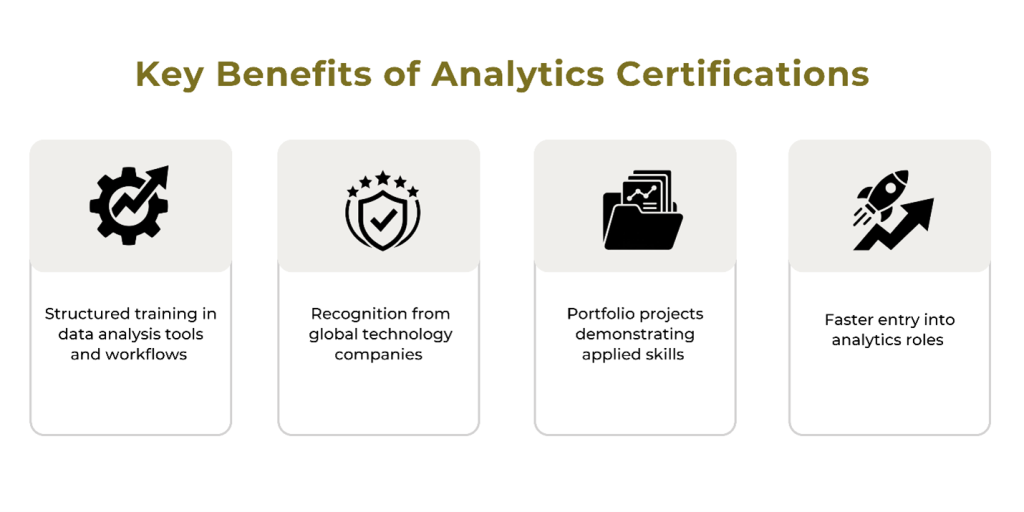
Certifications also allow career switchers and early professionals to gain relevant skills without committing to a full degree program through platforms like Coursera or edX.
Still, choosing the right certification depends on your career goals, timeline, and the level of technical depth you want.
Google Data Analytics Professional Certificate: The Most Popular Entry Point
The Google Data Analytics Professional Certificate has become one of the most widely recognized entry-level analytics programs worldwide.
Offered through online platforms like Coursera, the program was designed by Google to help learners transition into data analytics roles even without prior technical experience.
What You Learn in the Google Program
The curriculum focuses on foundational analytics skills.
Typical modules include:
- ✔ Introduction to data analytics concepts
- ✔ Data cleaning and transformation
- ✔ SQL for querying databases
- ✔ Spreadsheet analysis
- ✔ Data visualization using Tableau
- ✔ Basic data storytelling and reporting
The program emphasizes practical tools used by junior analysts.
Many learners complete the certification within three to six months, depending on their weekly study schedule.
Who the Google Certificate Is Best For
This certification works well for:
- Beginners entering the analytics field
- Career switchers without technical backgrounds
- Marketing or operations professionals who want data skills
Because the program focuses heavily on fundamentals, it is often used as a starting point rather than a complete career pathway.
IBM Data Science Professional Certificate: Expanding Into Data Science
Another popular program is the IBM Data Science Professional Certificate, which focuses more heavily on programming and machine learning.
While the Google program focuses primarily on analytics and reporting, the IBM pathway moves deeper into data science and predictive modeling.
Key Topics Covered
- ✔ Python programming for data science
- ✔ Data visualization libraries such as Matplotlib
- ✔ SQL and database querying
- ✔ Machine learning models
- ✔ Data science methodology
- ✔ Model deployment basics
The program includes several hands-on projects where learners build machine learning models and analyze datasets.
Ideal Learner Profile
- Want to move toward data science roles
- Are comfortable learning programming languages
- Prefer deeper technical exploration
While it is comprehensive, beginners sometimes find the learning curve steep without structured mentorship.
Microsoft Certified Data Analyst Associate: Enterprise Analytics Focus
The Microsoft Certified: Data Analyst Associate certification focuses on enterprise analytics and business intelligence.
This certification is closely connected with Microsoft Power BI, one of the most widely used analytics tools in corporate environments.
Skills Covered in the Microsoft Certification
Key learning areas include:
- ✔ Data preparation using Power Query
- ✔ Data modeling techniques
- ✔ Building interactive Power BI dashboards
- ✔ Visualizing enterprise datasets
- ✔ Implementing analytics solutions for organizations
The certification exam tests practical Power BI implementation rather than general analytics theory.
Who Benefits Most From This Certification
This program works well for:
- Business intelligence analysts
- Professionals already working with Microsoft tools
- Data professionals who focus on dashboard development
It is particularly valuable for organizations that rely heavily on Microsoft technology ecosystems.
The Missing Piece: Applied Analytics and AI Integration
Although these certifications teach valuable tools, many learners still face a common challenge after completing them.
They understand how tools work, but struggle to apply those tools to real business problems.
Employers are increasingly looking for professionals who can combine three capabilities:
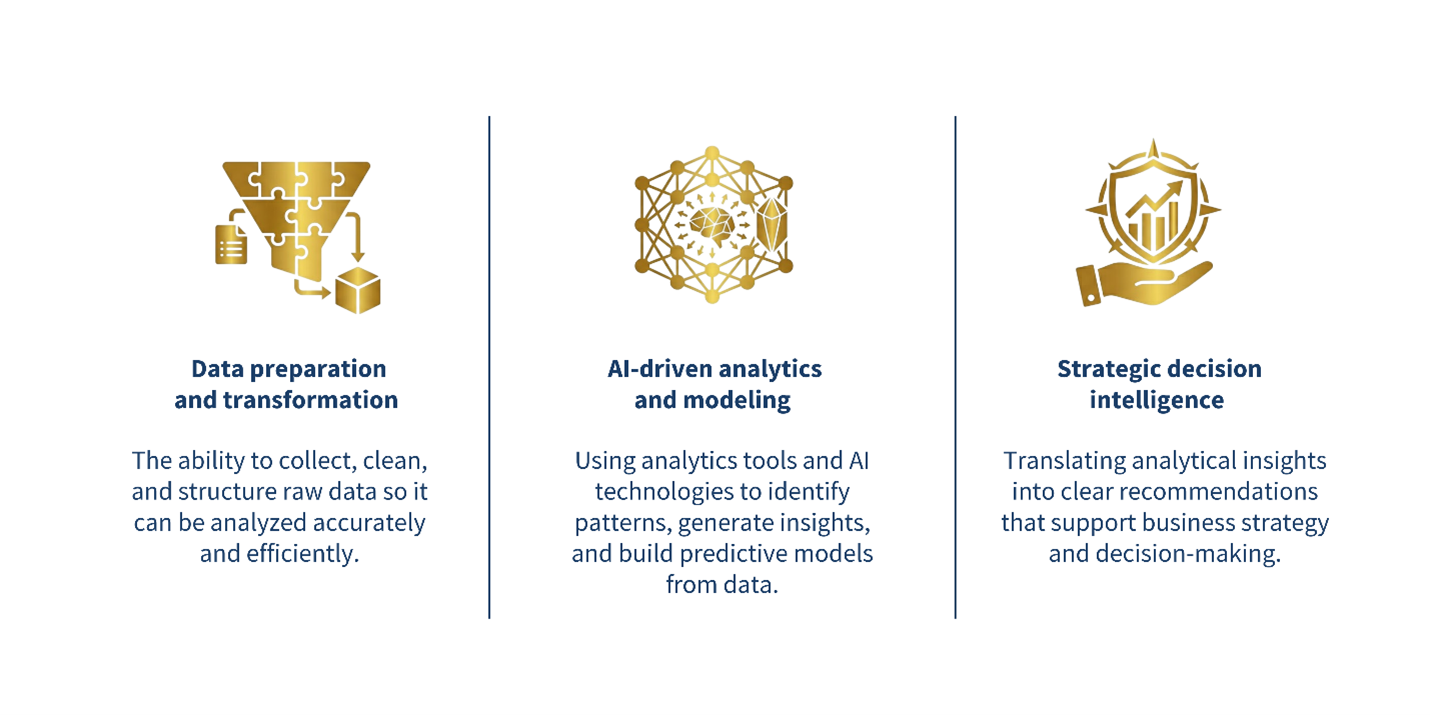
Traditional certificates often focus on isolated tools rather than end-to-end analytics workflows.
This gap is why applied training programs are becoming more popular.
Professional Applied AI Training: A Skills-First Analytics Pathway
Modern organizations do not simply need analysts who can run queries. They need professionals who can translate data into actionable insights powered by AI-driven analytics.
The CLaaS2SaaS Data Science & AI pathway addresses this challenge by combining analytics, artificial intelligence, and real business problem solving.
Instead of focusing only on tools, the program focuses on how data analytics actually works inside organizations.
The program is built around four strategic learning pillars:
1 Data Preparation and Transformation
In real-world analytics, most of the work involves preparing messy datasets.
Learners develop skills in:
- Data cleaning
- Handling missing values
- Transforming datasets
- Preparing structured data for analysis
This step often represents nearly 80 percent of an analyst’s real workflow.
2 AI Driven Insights
The next stage focuses on extracting deeper patterns using advanced analytics.
Learners explore:
- Predictive modeling
- Statistical analysis
- Machine learning fundamentals
- AI-driven forecasting techniques
These skills enable analysts to move beyond reporting and toward predictive decision making.
3 Visualization and Dashboard Development
Data becomes valuable when decision-makers can understand it quickly.
Students learn to build:
- Interactive dashboards
- Executive-level reports
- Real-time visualizations
Tools such as Power BI and other analytics platforms help translate complex analysis into clear business insights.
4 Decision Intelligence
The final stage connects data insights with strategic recommendations.
Professionals learn to answer questions such as:
- What business opportunity does this data reveal?
- What actions should leadership take next?
- How will these decisions affect long-term performance?
This stage transforms analysts into strategic decision partners rather than technical specialists.
Certification Pathway: From Professional Certificate to Master’s Degree
One of the biggest differences between traditional certifications and this applied analytics pathway is the stackable credential structure. This stackable learning structure allows professionals to progress from professional certification to advanced qualifications while continuing to build industry experience.
Learners can progress through multiple stages depending on their goals.
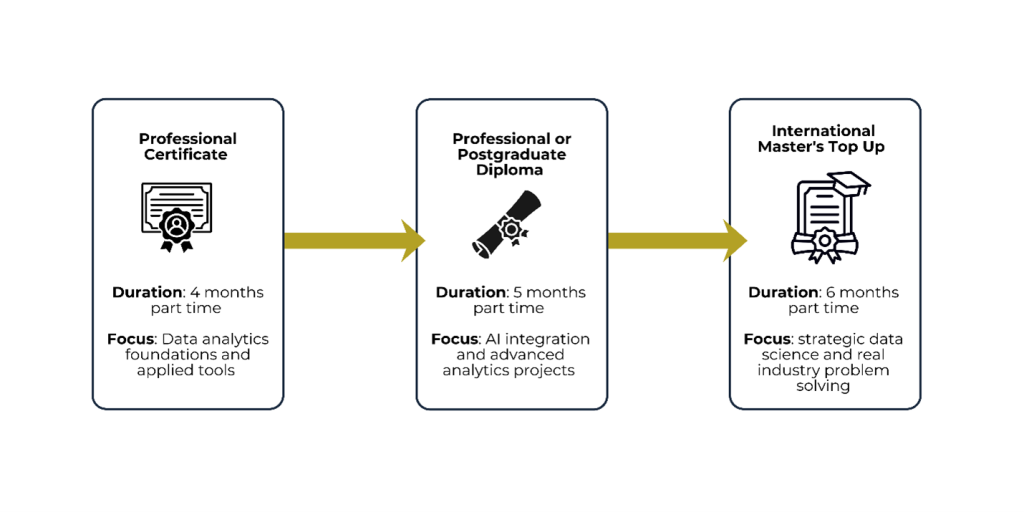
The program is delivered part-time, allowing professionals to continue working while upgrading their skills.
How This Pathway Compares to Traditional Certifications
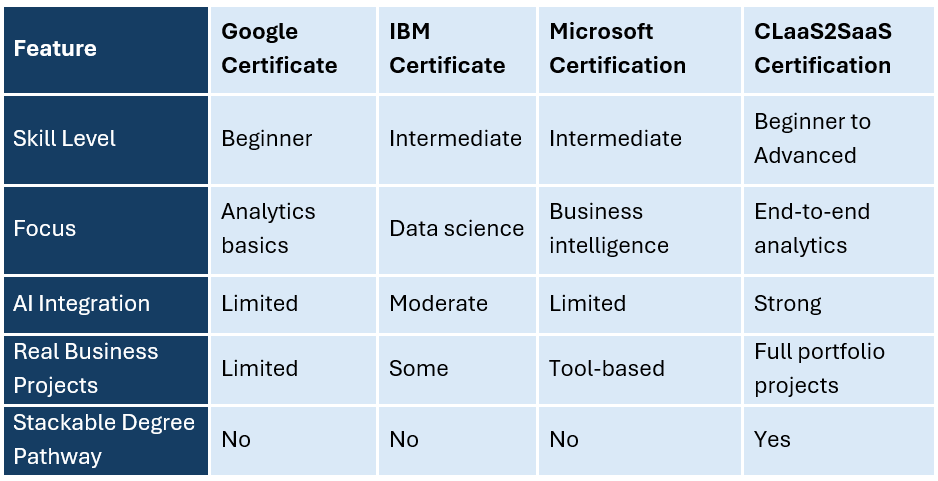
This comparison highlights a key difference, serving different career goals as well. Traditional certifications often focus on specific tools, while applied programs focus on complete analytics capability and AI integration.
Comparing analytics certifications? Discover the pathway designed for real-world data and AI-driven insights.
Who Should Consider This Analytics Pathway
The applied analytics pathway is designed for professionals who want structured skill development while maintaining their careers.
Typical learners include:
Working Professionals
Professionals in fields such as marketing, operations, finance, and management often want to add analytics skills without leaving their jobs.A part-time structure makes this possible.
Career Switchers
Many learners come from non-technical backgrounds but want to transition into high-demand analytics roles.Structured mentorship helps bridge that gap.
Early Career Professionals
Graduates entering the workforce benefit from developing a strong portfolio before applying for analytics roles.Career Opportunities After Data Analytics Certification
Completing a recognized analytics certification can open doors to multiple roles across industries.
Common career outcomes include:
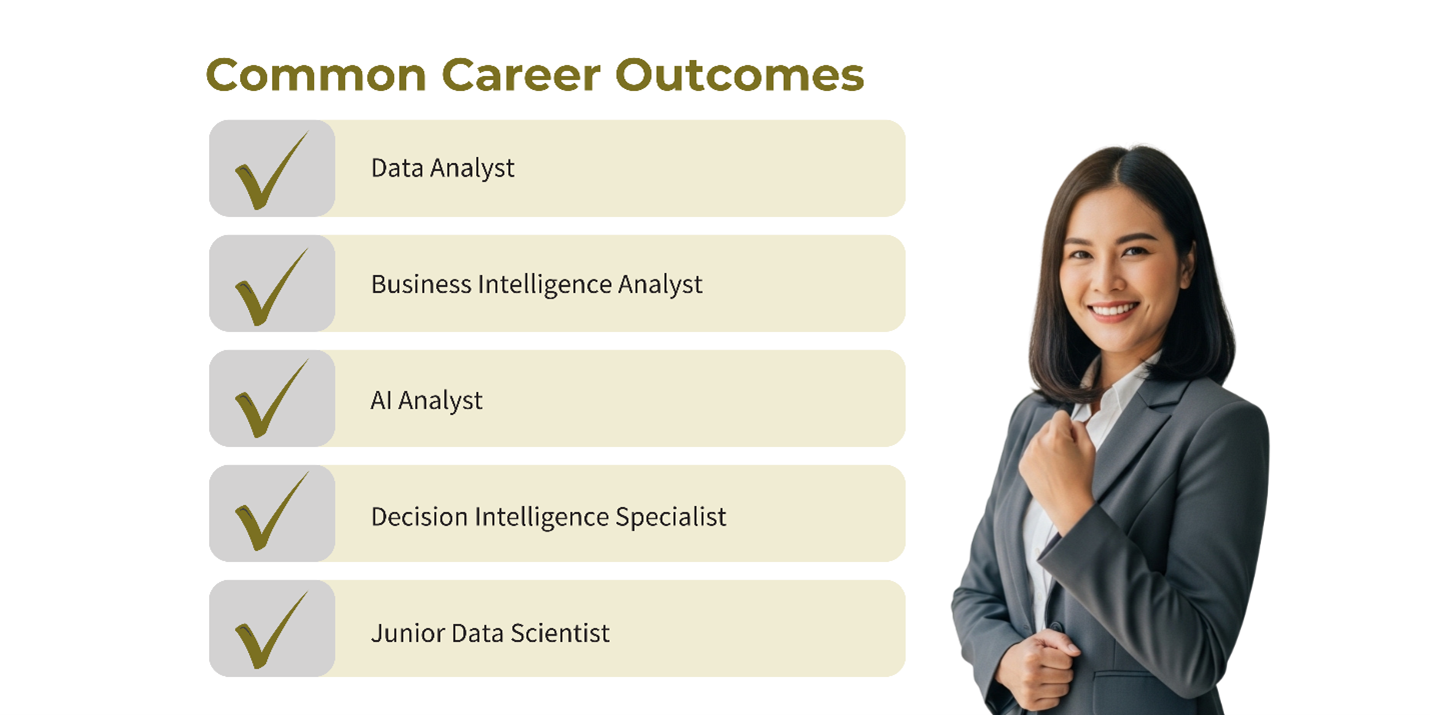
Organizations increasingly prioritize professionals who can combine technical data skills with strategic thinking.
This ability to translate data into business value is what differentiates high-impact analysts.
Frequently Asked Questions (FAQs)
1. Is the Google Data Analytics Professional Certificate enough to get a job?
The Google Data Analytics Professional Certificate is a strong entry-level program that teaches tools such as spreadsheets, SQL, and data visualization, but employers often expect applied experience as well. Many learners strengthen their job readiness by continuing into applied programs like the CLaaS2SaaS Data Science & AI pathway, where they solve real business problems and build portfolio projects that demonstrate practical analytics capability.
2. How is the CLaaS2SaaS Data Science & AI program different from standard certifications?
Most certifications focus on learning tools or passing exams, while the CLaaS2SaaS pathway emphasizes applied analytics and AI-driven decision intelligence. Learners work through structured modules covering data preparation, AI analysis, dashboard development, and business storytelling while solving real-world scenarios that mirror how analytics teams operate in organizations.
3. How much do data analytics certifications typically cost?
- Google Data Analytics Professional Certificate: ~$39/month on Coursera (~$120–$400 total, depending on completion time)
- IBM Data Science Professional Certificate: ~$39–$49/month (~$150–$450 total)
- Microsoft Certified: Data Analyst Associate: Exam fee ~$165 USD (additional courses may increase total cost)
Course

Start Building Your Data Analytics Career Today
Choosing the right analytics certification depends on your career goals, technical background, and preferred learning style.
Programs like the Google, IBM, and Microsoft certifications provide strong foundational knowledge. However, professionals who want deeper industry readiness often benefit from structured training that combines analytics, AI, and real business problem solving.
The CLaaS2SaaS Data Science and AI pathway offers a flexible route from professional certificate to advanced qualification while helping learners build a portfolio that employers can evaluate.
If you are serious about building a future in analytics, the best time to start is now.