Blog
Career Change to Software Engineering Degree You Can Finish in Just 2 Years
SHARE THIS:


For many students exploring tech degrees, software engineering feels like a powerful but intimidating choice. The field promises strong demand, global opportunities, and long-term career growth. At the same time, traditional degree paths often feel long, expensive, and slow to deliver real outcomes, driving interest toward CLaaS2SaaS Software Engineering, a program designed to help students graduate faster while focusing on real, job-ready skills instead of theory alone.
Here’s the reality most students only realize late: the software industry moves faster than traditional education timelines. Programming languages evolve, frameworks update, and development practices shift continuously. What matters today may no longer matter by the time a four-year degree ends, which is why many students explore CLaaS2SaaS Bachelor’s Degree pathways that use an adaptive, personalized, and outcome-based learning method, aligning education with real industry expectations and measurable career outcomes.
If you are considering a career change to a software engineering degree, the biggest risk is not difficulty. The real risk is choosing a pathway that delays your readiness for the job market while technology keeps moving forward.
This article explains how modern software engineering degrees work, why experience is not required to start, and how accelerated programs help students graduate faster with real work experience already built in.
Why Pursuing a Career Change to Software Engineering Degree Matters
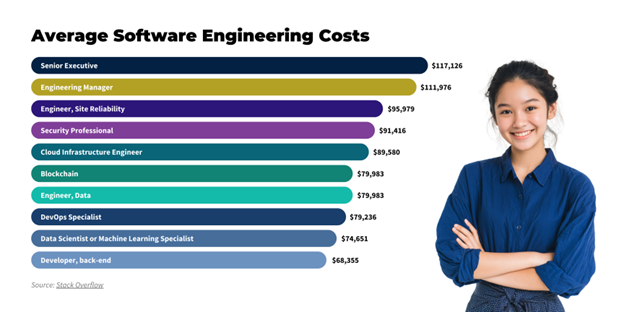
Software engineering is no longer limited to technology companies.
Banks rely on software to process transactions securely. Healthcare systems depend on digital platforms for patient data and diagnostics. Retail, logistics, education, and entertainment all run on software infrastructure built and maintained by engineers.
Between 2020 and 2025, global workforce reports consistently highlighted digital and software skills as among the most in-demand capabilities worldwide. Automation, cloud computing, and AI have accelerated this demand rather than reduced it.
This demand is reinforced by government labor data. The U.S. Bureau of Labor Statistics projects software developer roles to grow significantly faster than the average occupation through the mid-2020s, reflecting sustained demand rather than short-term trends.
At the same time, employers have changed how they evaluate graduates. They now prioritize practical ability, adaptability, and speed to productivity, not just academic credentials.
Many traditional degrees still emphasize:
- Theory before application
- Exams instead of real outputs
- Fixed timelines that ignore industry urgency
What Is a Career Change Software Engineering Degree?
A career-focused software engineering degree is designed around outcomes rather than traditional.
Instead of spreading learning across four years, this model compresses essential content into a focused 2-year pathway. Non-essential electives are reduced, while core engineering subjects receive deeper, more practical attention.
Students spend less time memorizing abstract theory and more time:
- Learning programming fundamentals
- Understanding software development workflows
- Building, testing, and improving applications
- Working with tools used in professional environments
Can You Start a Software Engineering Degree With No Experience?
Yes, and for most learners, that is the expected starting point.
A no experience software engineering degree is designed with beginners in mind. Programs start with foundational logic, problem-solving, and introductory programming concepts before progressing to more advanced topics.
Industry data supports this pathway. The Stack Overflow Developer Survey 2025 shows that a significant portion of professional developers entered the field without strong technical backgrounds, acquiring skills progressively through structured learning and practice.
This approach reduces early overwhelm and builds confidence. Students learn how to think like engineers before being asked to perform like professionals.
The degree exists to teach software engineering, not to filter out beginners.
Career Change to Software Engineering Degree: How the Learning Path Works
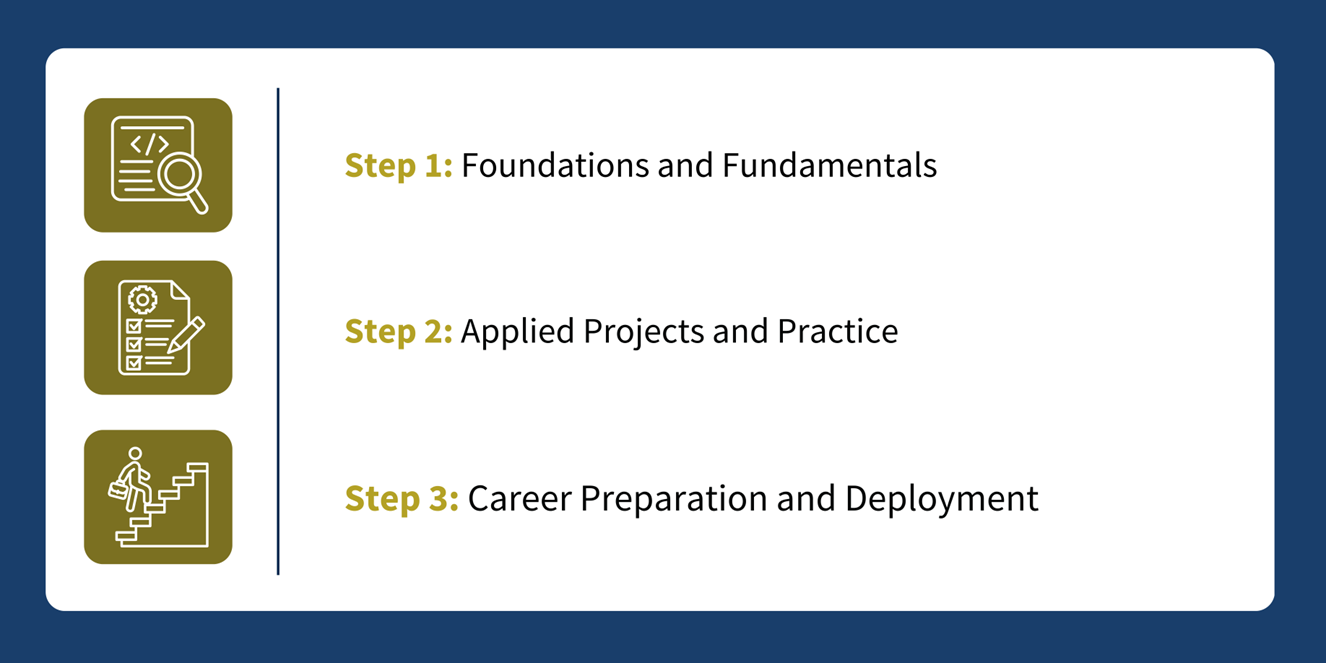
A well-designed degree breaks learning into phases that build upon each other.
Step 1: Foundations and Fundamentals
Students begin with programming logic, basic syntax, and an overview of development environments and tools. This stage builds conceptual understanding before complexity.
Step 2: Applied Projects and Practice
Once fundamentals are established, learning becomes hands-on. Students build projects that simulate real engineering tasks, reinforcing concepts through practice.
This aligns with findings from McKinsey & Company, which emphasize that learning models aligned with real-world job skills significantly improve workforce readiness and employability.
Step 3: Career Preparation and Deployment
The final phase is about readiness: building portfolios, sharpening professional habits, and understanding how engineers contribute in teams.
This progression helps students transform abstract learning into real capability.
How the CLaaS2SaaS Software Engineering Program Structure Works
Unlike traditional degrees that rely on rigid academic semesters, the CLaaS2SaaS Software Engineering program uses a progressive, stage-based structure.
Each stage is designed to build confidence first, capability second, and employability last. This ensures students do not jump into complex engineering tasks too early.
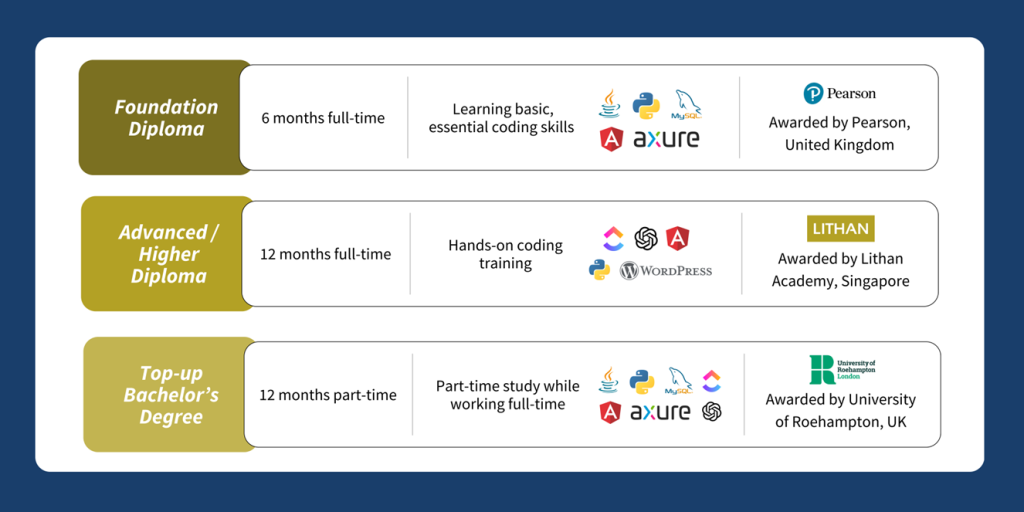
Foundation Diploma (O ptional): Building Confidence From the Ground Up
The Foundation Diploma supports students who want additional preparation before entering core software engineering modules.
At this stage, students build confidence in digital literacy, logical thinking, communication skills, and basic technical concepts. The focus is not advanced coding, but developing the mindset required to succeed in software engineering.
This stage is especially helpful for students entering a no experience software engineering degree pathway. It ensures everyone begins the core program with a strong, stable foundation
Advanced / Higher Diploma: From Theory to Applied Software Engineering
The Advanced / Higher Diploma marks the transition from learning concepts to executing real software engineering work.
Students work with programming languages, frameworks, and tools used by real engineering teams. They practice version control, debugging, testing, and collaborative development.
Learning becomes project-driven. Instead of isolated theory, students solve realistic engineering problems and build working applications. This is where a career change to software engineering degree becomes practical and tangible.
Top-Up Bachelor’s Degree: Bridging Education and Employment
The Top-Up Bachelor’s Degree is the final stage of the CLaaS2SaaS pathway.
This phase focuses on bridging education with real employment outcomes. Students refine their technical skills while gaining exposure to professional engineering environments through industry projects and apprenticeships.
Graduates leave with:
This stage ensures students graduate with experience, not just knowledge. - A recognized bachelor’s degree in software engineering
- Up to 12 months of real work experience
- First-hand understanding of how engineering teams operate
Become Software Engineer Degree vs Other Learning Paths
Students rarely choose a degree without comparison.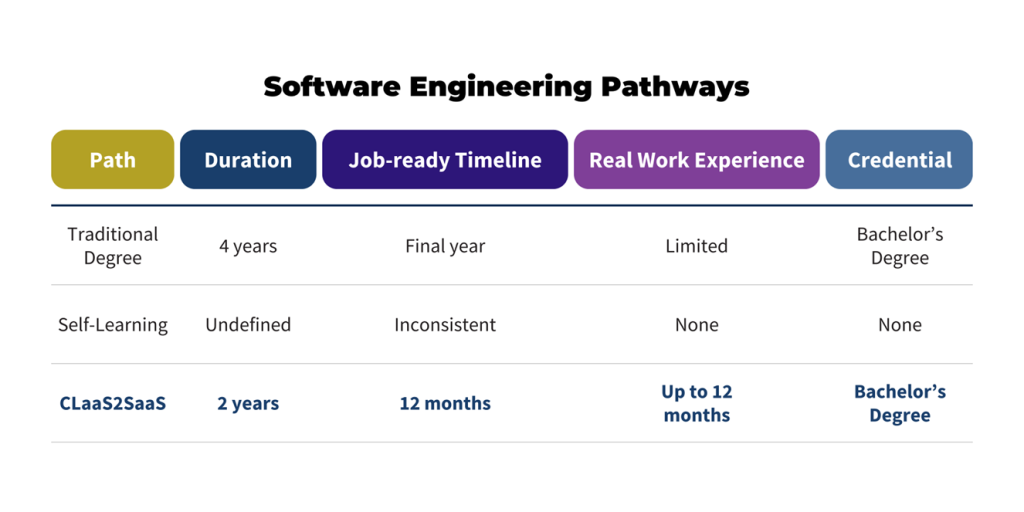
A become software engineer degree delivers the strongest outcomes when it balances structure, speed, and experience.
Why Speed and Experience Matter in Software Careers
Employers today want new hires who can hit the ground running.
Technical interviews often test real coding ability, familiarity with version control, and problem-solving skills in code. Graduates who have built real applications, not just written academic code, are more competitive.
According to several 2025 job market analyses, demand for developers is stabilizing but increasingly selective. Candidates with portfolios and relevant project experience stand out to hiring teams.
Graduating earlier with built-in experience helps close the gap between education and first employment.
How CLaaS2SaaS Redefines the Software Engineering Degree
CLaaS2SaaS Software Engineering is built around real-world engineering expectations.
Graduate in Just 2 Years
The program removes inefficient curriculum elements and focuses on what hiring managers truly value. This allows students to enter the workforce sooner without sacrificing academic credibility.
Job-Ready Skills Within 12 Months
Students start working on real industry projects early. This experiential learning helps them develop practical skills that mirror what professionals do daily.
Graduate With Real Work Experience
By integrating an apprenticeship model, CLaaS2SaaS Bachelor’s Degree enables students to graduate with up to 12 months of real work experience, a powerful differentiator in hiring.
Career Outcomes That Justify the Fast Track
Degrees that focus on outcomes help graduates succeed long-term.
Graduates move into diverse roles, including:
- Software Engineer
- Application Developer
- Systems Engineer
- Full-Stack Developer
Across industries, tech, finance, healthcare, media, logistics, software roles continue to be crucial. Even though hiring trends shift, engineers with relevant skills and experience remain in demand.
Addressing Common Misconceptions
“Is a faster degree less credible?”
No. Credibility comes from accreditation and curriculum relevance, not duration.
No. Credibility comes from accreditation and curriculum relevance, not duration.
“Does learning faster reduce quality?”
No. A focused, applied pathway removes inefficiencies, not core learning.
No. A focused, applied pathway removes inefficiencies, not core learning.
“Is this only for elite students?”
No. Programs designed for beginners can support motivated learners from the ground up.
No. Programs designed for beginners can support motivated learners from the ground up.
Course

Start Your Software Engineering Journey Now
Technology will not slow down, and neither should your learning.
With the CLaaS2SaaS Bachelor’s Degree in Software Engineering, you can:
- Graduate faster than traditional programs
- Become job-ready within 12 months
- Gain real work experience before graduation