Blog
Data Science Bootcamp Tech Professionals: A Practical Guide For Busy Builders
SHARE THIS:


If you already work in tech, you don’t need motivation—you need a plan. A Data Science Bootcamp For Tech Professionals that you can realistically finish after work should give you a clear roadmap, real projects, and feedback that replaces guesswork with momentum.
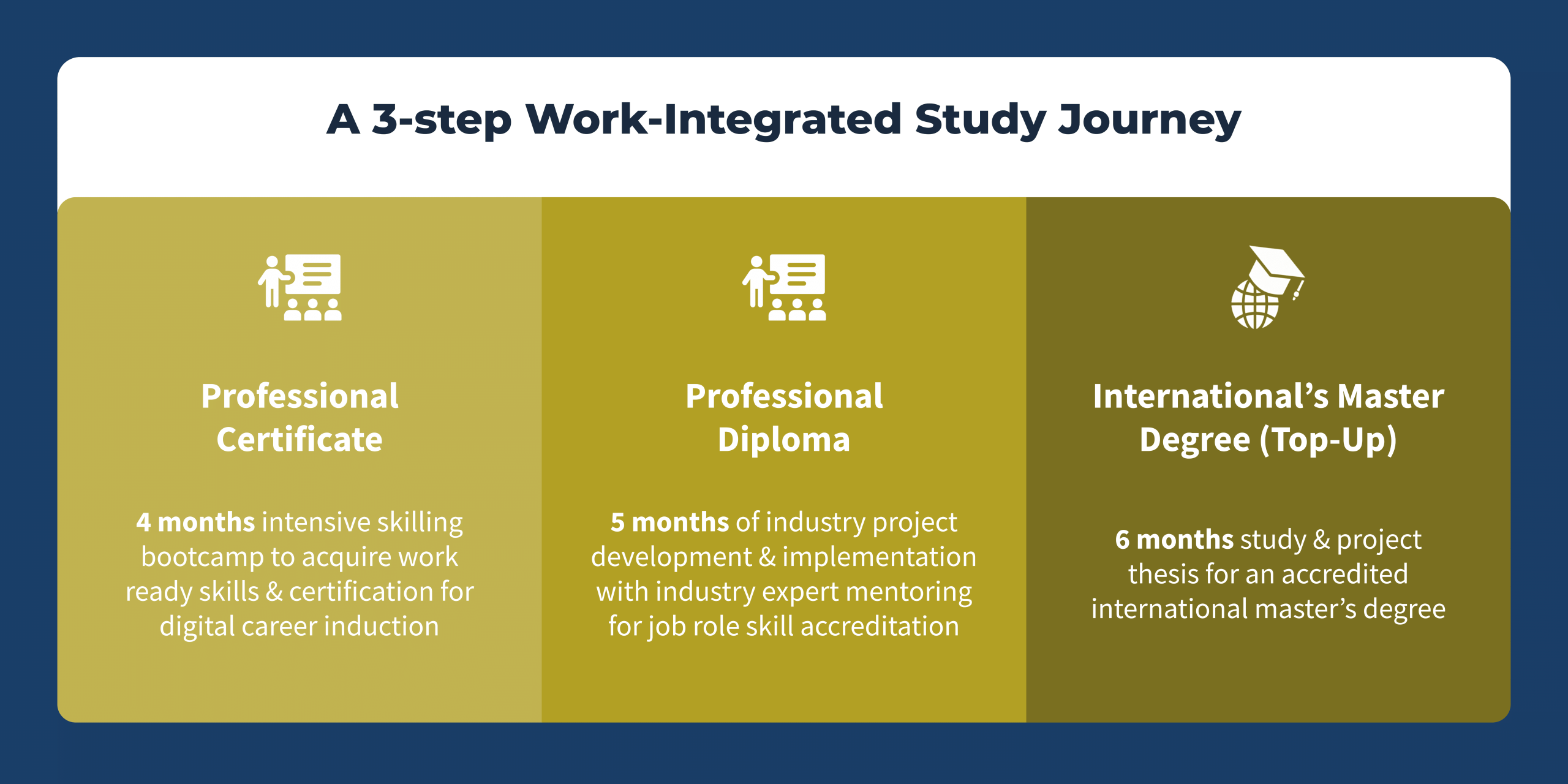
This guide breaks down what to look for, what to ignore, and how to start building job-ready proof of skill without pausing your career. If you are exploring structured upskilling options, a part-time data science bootcamp for working professionals can provide a clear, time-bound path. If you want a structured and time-efficient path, many working professionals begin with a Data Science Bootcamp For Working Professionals offered under the Claas2SaaS Lifelong Learning framework.
What “Bootcamp” Really Means When You’re Already In Tech
For working engineers, a bootcamp should not mean cramming everything at once. Instead, a Data Science Bootcamp Tech Professionals choose should focus on compressed, curated practice—the specific skills that create leverage in real-world environments.
Well-designed programs respect what you already know:
That’s why many learners prefer a structured online data science bootcamp for working professionals, especially those delivered through Lifelong Learning pathways such as Claas2SaaS. - You understand systems, debugging, and shipping software
- You can learn quickly when noise is removed
- You need help translating technical work into business impact
Why A Data Science Bootcamp Tech Professionals Pick Beats Random Self-Study
Self-study can work, but it often breaks down for full-time employees. Without structure, most learners struggle with consistency.
A Data Science Bootcamp For Professionals adds the right constraints:
- A syllabus that prevents tutorial hopping
- Weekly deadlines that force output
- Reviews that catch mistakes early
- A portfolio outcome at the end
According to the U.S. Bureau of Labor Statistics, employment for data scientists is projected to grow 34% from 2024–2034, far faster than average. This makes structured upskilling—such as a Claas2SaaS Data Science Learning Path—a practical investment rather than a speculative one.
The Skill Stack You Actually Need (And What You Can Skip)
Tech professionals often overestimate the math barrier and underestimate the communication barrier. You don’t need research-level depth to be effective in applied data roles.
Core 1: Data Wrangling And SQL
SQL delivers the fastest ROI because it turns raw tables into answers. Any serious Data Science Bootcamp Tech Professionals enroll in should cover:
If SQL is treated as secondary, that’s a red flag. Most learners benefit from a structured data science learning path for professionals that prioritizes SQL early. Programs aligned with Lifelong Learning in Data Science typically place SQL at the foundation. - Joins, window functions, and CTEs
- Data quality checks
- Analysis-ready datasets
- Business metrics like retention, churn, and LTV
Core 2: Python For Analysis And Modeling
Python remains central across analytics and data science roles. According to the Stack Overflow Developer Survey, Python continues to rank among the most-used languages by professional developers. The Stack Overflow Developer Survey consistently ranks Python among the most-used professional languages.
In a bootcamp setting, Python should be taught as a toolbelt:
Most Claas2SaaS Data Science Programs emphasize applied workflows over theory-heavy instruction. - Pandas and NumPy for analysis
- Visualization for decision-making
- Regression and classification basics
- Model evaluation and leakage awareness
Core 3: Communication And Decision-Making
This is where experienced tech professionals can differentiate quickly. The goal is not “I trained a model,” but “I influenced a decision.”
Look for training that includes:
- Writing concise insights
- Choosing the right metrics
- Explaining tradeoffs clearly
- Storytelling from assumptions to impact
How To Choose The Right Program (Use This Checklist)
Not all bootcamps are built for employed learners. Use this checklist to filter out hype-driven programs.
Curriculum Fit: From Fundamentals To Applied Projects
A strong Data Science Course For Professionals should include:
When comparing options, many learners benchmark against the Claas2SaaS Lifelong Learning Data Science Path to evaluate depth and relevance. - Focused probability and statistics refreshers
- SQL and data modeling fundamentals
- Applied machine learning
- Experimentation and A/B testing basics
- Optional specialization tracks
Schedule Reality: Part-Time Pacing And Deadlines
Ask these questions:
A predictable weekly rhythm is a defining feature of a good Online Data Science Bootcamp For Working Professionals. - Is the program async, live, or hybrid?
- What happens if you miss a week?
- Are deadlines fixed?
- Is mentor support available across time zones?
Portfolio Quality: Projects That Look Like Real Work
Portfolios should resemble professional artifacts, not classroom assignments. Strong projects include:
Many Claas2SaaS Certification Tracks emphasize portfolio-first learning for this reason. - Messy, realistic data
- A clear business question
- Baselines and improvements
- Metrics, tradeoffs, and limitations
Mentorship And Feedback Loops
High-quality feedback accelerates learning. Look for:
Many Claas2SaaS Certification Tracks emphasize portfolio-first learning for this reason. - Code reviews
- Rubric-based project scoring
- Mentor sessions focused on decisions
Career Support (Even If You’re Not Job-Hunting Yet)
Even if you’re staying put, career support should help you:
- Clarify target roles
- Build a narrative from your tech background
- Optimize LinkedIn and GitHub
- Practice case-study walkthroughs
A 10-Week Plan For Working Tech Pros (2–6 Hours/Week)
This pacing mirrors most Data Science Bootcamps For Tech Professionals designed under Lifelong Learning data science programs.
Weeks 1–2: Set Up Your “Data Lab”
Deliverables:
- Python environment or notebooks
- SQL sandbox
- One relevant dataset
- A short README defining your goal
Weeks 3–6: Build One End-To-End Project
Focus on a single question such as:
- What predicts churn?
- Which factors drive incidents?
- How did users respond to a new feature?
Weeks 7–10: Ship A Portfolio And Polish Your Story
Deliverables:
- Clean, reproducible repository
- One-page project summary
- Five-minute walkthrough script
Common Pitfalls (And How To Avoid Them Fast)
- Choosing programs that are too broad → Focus on role-aligned depth
- Over-indexing on deep math → Prioritize interpretation first
- Treating projects like homework → Write them like business deliverables
- Relying on motivation alone → Use deadlines and structure
- Ignoring communication → Always summarize insights for non-technical audiences
FAQs About Part-Time Data Science Learning
How long should a part-time bootcamp take?
Most programs designed for working adults run 8–16 weeks.
Do I need a math degree to start?
No. Logical thinking and interpretation matter more early on.
Is analytics or ML better to start with?
Analytics and SQL deliver faster business impact; ML can follow.
Course

Ready To Improve Your Data Science Bootcamp Tech Professionals Strategy?
You don’t need to start over. You need a learning path that respects your time, builds applied skill quickly, and produces portfolio-ready proof.
A Claas2SaaS Lifelong Learning Data Science Program can help you avoid the tutorial trap, maintain momentum through structure, and gain feedback when it matters most.