The Ultimate Guide to a Bachelor’s Degree in Digital Business: Requirements & Top Programs

SHARE THIS:


A decade ago, a business degree was enough.
Today, it isn’t.
Companies no longer hire graduates simply because they understand management theory or can explain marketing concepts. They hire people who can launch campaigns, analyze dashboards, automate processes, optimize funnels, and produce measurable growth immediately.
Business has become digital-first.
Retail runs on e-commerce.
Banking runs on apps.
Healthcare runs on online systems.
Education runs on platforms.
And every organization needs professionals who understand both business strategy and digital execution.
That’s why enrollment in a bachelor’s degree in digital business has increased globally — and why employers now actively seek graduates with hybrid business + tech skills.
According to the World Economic Forum, digital and technology-enabled jobs are among the fastest-growing categories worldwide. Meanwhile, research shows companies that successfully adopt digital transformation outperform competitors by up to 2–6 times in profitability.
The opportunity is clear.
But here’s the reality most students overlook:
Not all digital business degrees prepare you equally.
Some remain heavily theoretical.
Others — especially work-study models like the CLaaS2SaaS Work-Study Bachelor’s Degree in Digital Business — embed real industry projects into the curriculum.
That difference can determine whether you graduate with:
- knowledge only or
- employable experience + a portfolio + job offers
This guide explains everything you need to know — from digital business degree requirements to identifying the best digital business bachelor’s programs, plus how work-study learning dramatically improves career outcomes.
What Is a Work-Study Bachelor’s Degree in Digital Business?

Digital roles remain among the fastest growing globally. Meanwhile, hiring insights consistently show marketing analytics and performance marketing leadership among the most in-demand skill clusters.
The reality is simple: You can’t “wing it” into management anymore. You need:
- formal education
- technical skills
- applied experience
- leadership capability
- proof of results
What Is a Work-Study Bachelor’s Degree in Digital Business?
A work-study bachelor’s degree in digital business is a structured undergraduate program that integrates core business foundations, digital technologies, and applied real-world execution into one cohesive learning model.
At its core, the program is designed to reflect how modern organizations actually operate. Today’s businesses no longer separate “business strategy” from “technology” — they function within interconnected digital systems where data, automation, and customer platforms drive performance.
Unlike traditional business degrees that emphasize lectures, case studies, and theoretical examinations, digital business programs prioritize operational readiness. Students are trained not only to understand concepts, but to apply them inside real digital environments.
Instead of learning marketing purely from textbooks, students develop hands-on competence in areas such as:
- Running and optimizing paid advertising campaigns
- Managing CRM platforms and customer data systems
- Automating workflows and email sequences
- Interpreting analytics dashboards and performance metrics
- Building and optimizing e-commerce funnels
- Measuring ROI and growth performance
- Contributing to digital transformation initiatives
This applied structure bridges the gap between classroom theory and workplace execution. The objective is not simply to produce graduates who understand business terminology, but professionals who can step into digital roles with confidence and measurable capability.
In short, students graduate not just “qualified,” but operationally capable.
Why Digital Business Skills Matter More Than Ever
Digital is no longer a supporting function within a company — it is the infrastructure that powers the entire organization.
Customer acquisition, operations management, financial reporting, and service delivery are increasingly built on digital platforms and data-driven systems. Organizations that fail to adapt risk losing relevance in competitive markets. Today, nearly every major business function depends on digital tools:
- Marketing: performance advertising, marketing automation, and real-time analytics
- Sales: CRM pipelines, lead scoring, and lifecycle management
- Operations: dashboards, process optimization tools, and workflow automation
- Finance: digital reporting systems and data forecasting
- Customer Service: AI chatbots, ticketing systems, and omnichannel engagement platforms
As digital ecosystems grow more complex — particularly with the rise of AI, automation, and performance marketing technologies — businesses require professionals who can connect strategy with execution.
It is no longer sufficient to understand marketing theory or management principles in isolation. Employers seek individuals who can interpret data, optimize systems, reduce inefficiencies, and directly influence revenue performance.
This shift explains why hybrid business-and-digital skill sets are increasingly viewed as essential rather than optional. The OECD reports that digital trade and online services are growing faster than traditional sectors worldwide.
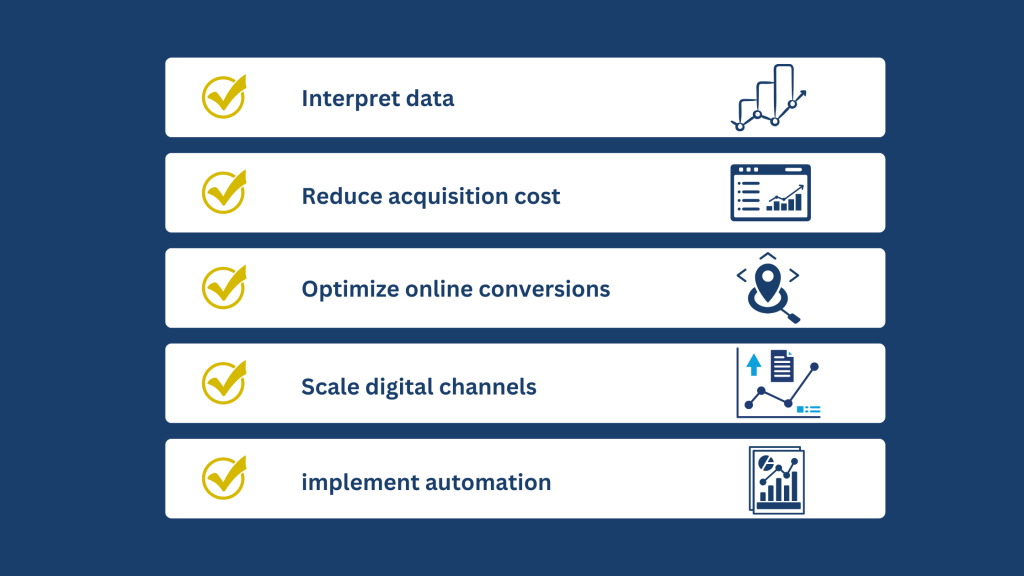
This shift creates strong demand for graduates who can:
- ✔ interpret data
- ✔ reduce acquisition costs
- ✔ optimize online conversions
- ✔ scale digital channels
- ✔ implement automation
Graduates without these skills often require months of training. Graduates from applied, work-study digital business programs? They contribute immediately. That difference significantly impacts:
- hiring speed
- starting salaries
- promotion timelines
Digital Business Degree Requirements: What You’ll Need
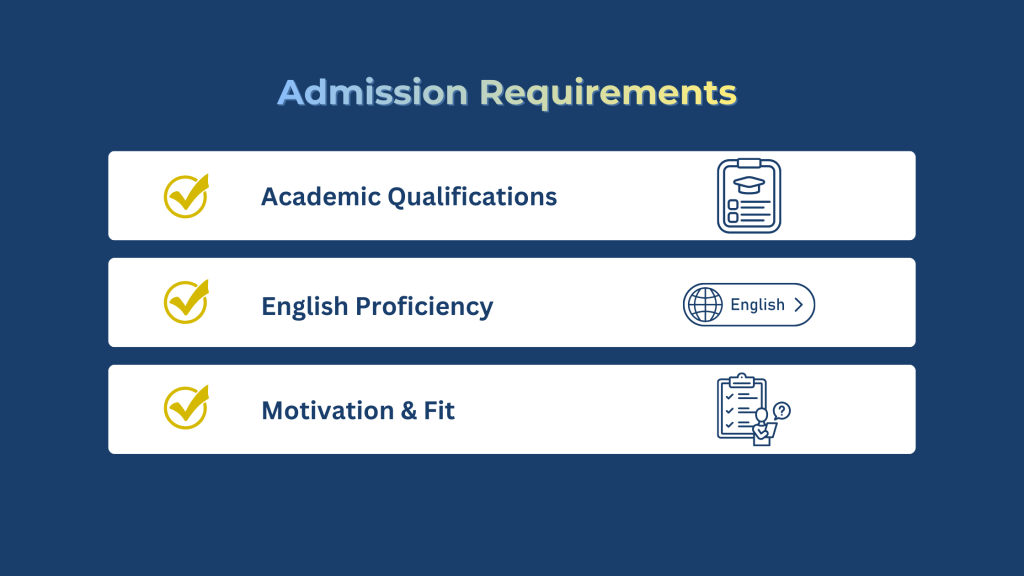
Understanding digital business degree requirements helps you prepare early.
Academic Requirements
- Most programs require:
- Completed secondary education (A-Level, IB, or equivalent)
- GPA benchmarks
- Basic math or analytical ability
Language Proficiency
- For international students:
- IELTS or TOEFL or
- proof of English-medium education
Motivation & Fit
Programs like CLaaS2SaaS evaluate career readiness, because students immediately participate in live projects — not just classroom simulations. - Higher-quality programs also assess:
- personal statement
- digital interest or projects
- internships or experience
What Makes the Best Digital Business Bachelor’s Programs Different?
When comparing digital business bachelor’s programs, many brochures appear similar on the surface. Most highlight modern modules, digital relevance, and career opportunities. However, the real difference lies not in marketing language — but in graduate outcomes.
Strong programs are defined by structure, depth, and industry integration. Here are the factors that genuinely separate leading programs from average ones.
1. Work-Study Integration (The Strongest Differentiator)
Theory builds understanding. Practice builds competence.
In high-performing programs, work-study is not an optional internship or short-term attachment — it is embedded within the academic framework. Students apply classroom concepts in real business environments under structured supervision.
They work with real companies, solve operational challenges, manage live campaign budgets, and present measurable performance outcomes. This transforms learning from passive absorption into active execution.
At CLaaS2SaaS, industry engagement is integrated directly into the curriculum. Students do not simply analyze case studies — they run campaigns for partner businesses, interpret performance data, and refine strategies based on actual results.
By graduation, students may have developed:
These outputs serve as tangible proof of capability. In competitive hiring environments, employers place greater trust in demonstrated performance than academic grades alone. - Analytics reports
- Campaign dashboards
- Growth strategy proposals
- Documented ROI case studies
2. Industry Tool Mastery
Modern business operations are platform-driven. Graduates who understand theory but lack technical fluency often require extensive onboarding time. Leading programs therefore prioritize tool mastery alongside conceptual learning.
Students gain exposure to systems such as:
Familiarity with these platforms reduces the transition time between graduation and workplace productivity. Employers value graduates who can contribute immediately rather than requiring months of technical training. - CRM platforms (e.g., HubSpot or Salesforce)
- Analytics tools (e.g., Google Analytics)
- Data visualization dashboards (e.g., Power BI or Tableau)
- Marketing automation platforms
- AI-driven productivity and optimization tools
3. Portfolio-Based Learning
Traditional degrees often assess performance through examinations. While exams measure understanding, they rarely demonstrate real-world application.
Modern digital business programs increasingly adopt portfolio-based assessment models. Instead of relying solely on written tests, students build professional artifacts throughout their studies.
These may include:
- Campaign case studies
- Performance reports
- Data dashboards
- Marketing automation platforms
- Strategic planning decks
By the end of the program, students possess a documented body of work that mirrors what early-career professionals produce inside organizations.
During interviews, this portfolio becomes a powerful differentiator — shifting conversations from theoretical knowledge to demonstrated impact.
4. Career Transparency and Measurable Outcomes
Reputable programs are transparent about graduate performance. They publish data and maintain visible industry partnerships.
When evaluating options, prospective students should look for clear evidence of:
- Employment rates
- Employer networks and partner companies
- Salary benchmarks
- Alumni progression outcomes
Transparency reflects confidence. If measurable outcomes are not visible, it may indicate limited tracking of graduate success. Strong programs do not rely solely on promises — they present results.
Now that you understand what separates strong programs from average ones, let’s examine what you would actually study.
Curriculum Breakdown: What You Actually Study
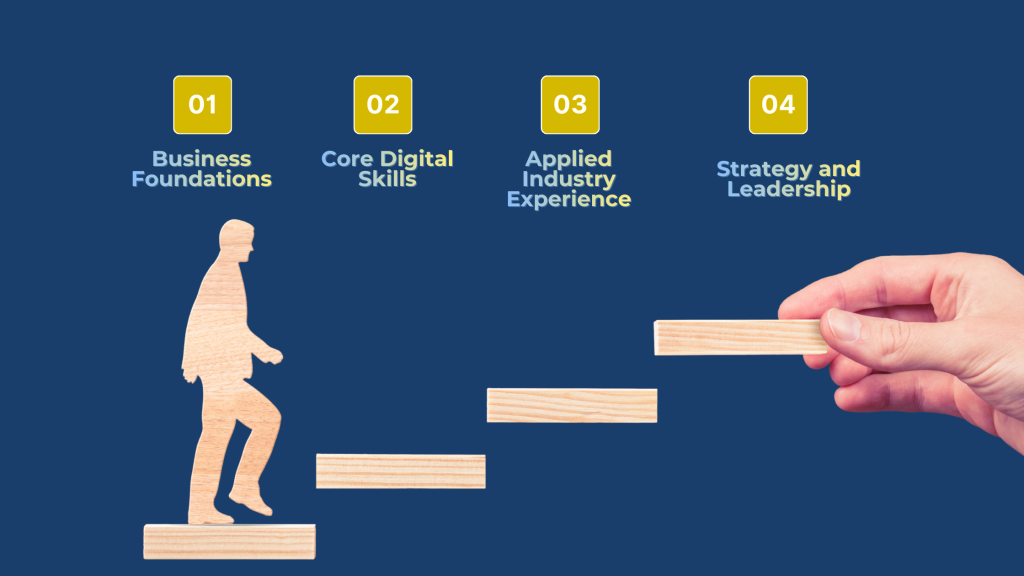
The CLaaS2SaaS Work-Study Bachelor’s Degree in Digital Business follows a progressive learning model that integrates academic study with structured industry application.
Rather than separating theory from practice, the program is designed around phases of development — moving from foundational knowledge to applied execution and strategic leadership.
Phase 1: Business Foundations
Students begin by building core business literacy. This phase establishes a strong understanding of how organizations operate before specializing in digital systems. Key areas of study include:
- Principles of Management
- Marketing Fundamentals
- Business Statistics
- Business Communication
Phase 2: Digital Systems & Applied Execution
Students then transition into digital business competencies, connecting strategy with real tools and platforms. Core focus areas include:
- Digital Marketing Strategy
- SEO and Paid Advertising
- E-commerce Operations
- CRM Systems
- Business Analytics
This is where theory starts converting into measurable application.
Phase 3: Performance Optimization & Industry Integration
As competency increases, students take on more responsibility within partner organizations while continuing advanced coursework. They focus on:
- Campaign execution and optimization, where they launch and optimize paid campaigns
- Growth strategy development, as they analyze customer acquisition funnels
- AI applications in business, where they build automated workflows
- Data-driven decision-making, where they present ROI-focused reports
Phase 4: Strategic Leadership & Transformation
In the final stage, emphasis shifts toward leadership and innovation. Students engage in:
- Advanced analytics and forecasting
- Digital transformation strategy
- Innovation management
- Capstone projects with real business challenges
Work-Study Learning: Why It Changes Career Outcomes
Here’s the typical scenario:- Traditional graduate → “Need experience”
- Work-study graduate → “Here’s my results”
- +30% lead growth
- reduced ad spend waste
- automated CRM workflows
- improved conversion rates
- increased revenue
Career Opportunities After Graduation
A bachelor’s degree in digital business opens multiple paths: Digital Marketing Manager, E-commerce Manager, Business Analyst, Growth Strategist, Product Manager, Digital Transformation Consultant
Salary Benchmarks (Estimated Global Averages – USD)
- Entry-level: USD $45,000–$60,000
- Mid-level: USD $70,000–$95,000
- Senior-level: USD $100,000+
Note: Compensation varies significantly depending on country, industry, company size, economic conditions, years of experience, and individual performance. Salaries in emerging markets, multinational firms, or high-growth technology companies may differ from these estimates.
While regional figures vary, the overall demand for digitally skilled business professionals remains strong across global markets.
Because work-study graduates accumulate structured industry exposure before entering the job market, they are often positioned competitively for earlier responsibility — which can influence promotion timelines in fast-paced digital environments.
Why CLaaS2SaaS Specifically Stands Out
Many programs claim “industry exposure.” Few structure the entire degree around it. CLaaS2SaaS combines:- classroom learning
- real company placements
- mentor feedback
- portfolio development
- continuous applied practice
How to Choose the Right Digital Business Program
Ask yourself:- ✔ Will I work on real projects?
- ✔ Do I use real business tools?
- ✔ Are there employer partnerships?
- ✔ Do graduates get hired quickly?
- ✔ Can I prove impact?
If yes, you’re likely looking at one of the best digital business bachelor’s programs available.
FAQs
What is a bachelor’s degree in digital business?
A degree combining business strategy with digital execution skills like analytics, marketing tech, and e-commerce.
What are digital business degree requirements?
Academic qualifications, English proficiency, and sometimes portfolios or interviews.
Is work-study better than traditional study?
Yes. It provides immediate real-world experience and faster employability.
Are digital skills in demand globally?
Yes. The World Economic Forum identifies digital roles as among the fastest-growing worldwide.
Can I enter management faster with a work-study degree?
Often yes, because you already have applied experience and a portfolio.
Course

Conclusion
Choosing a bachelor’s degree in digital business is not just about earning credentials. It’s about becoming job-ready, future-proof, and competitive.
Programs that integrate:
like the CLaaS2SaaS Work-Study Bachelor’s Degree in Digital Business — prepare students to deliver impact from day one. Because in today’s digital economy, employers don’t hire potential.
- applied learning
- real tools
- work-study experience
- measurable outcomes
They hire proof.
If your goal is real employability — not just a diploma — a work-study bachelor’s degree in digital business like the CLaaS2SaaS is the most practical path.