Data Science Bootcamp for Working Professionals: Structure, Timeline, and Who Qualifies
SHARE THIS:


The demand for data science and AI skills continues to grow across every major industry. But for most professionals, the real challenge is not whether data science is valuable—it is whether they can realistically gain these skills without stepping away from their career.
If you are managing a full-time career alongside personal responsibilities, flexibility becomes essential. Choosing a online data science bootcamp designed for working professionals provides a structured pathway to transition into AI-driven analytics without disrupting your professional momentum. Upskilling within your current trajectory is often the most effective way to secure a future-proof role.
To decide whether this path fits your goals, you need deep clarity on three things: how it is structured, how long it actually takes, and who qualifies to enroll. In this guide, we break down the CLaaS2SaaS Data Science and AI pathway to help you evaluate your career transition.
Balancing work and upskilling? See How the Part-Time Data Science Bootcamp Works
Why Structure Matters in a Data Science Bootcamp
In a fast-moving field like data science, a clear learning framework determines whether your skills build progressively or remain scattered. Well-designed learning pathways improve skill retention and long-term career mobility. For working professionals, this clarity reduces wasted time and prevents burnout. It ensures that the 10 to 15 hours you invest each week are focused on high-impact, job-relevant capabilities rather than disconnected tutorials that do not lead to measurable progress.
This approach matters for three key reasons:
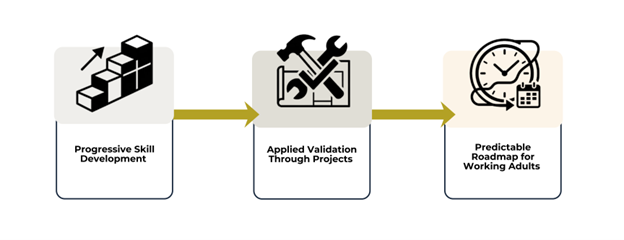
Progressive Skill Development
Without a clearly staged curriculum, learners often jump between Python, dashboards, and machine learning tools without understanding how they integrate. A structured pathway ensures each skill builds logically on the last.
Applied Validation Through Projects
Employers evaluate capability, not course completion. A structured program integrates milestone projects and a capstone project data science program that demonstrates end-to-end analytical thinking.
Predictable Roadmap for Working Adults
Professionals need clarity on weekly commitment. A structured model defines realistic timeframes for upskilling, allowing you to balance study with full-time employment without the “unknowns” that cause many to quit.
The goal is not speed alone. It is sustainable, stackable progression that builds verified capability over time.
How the Online Data Science Bootcamp Is Structured
The CLaaS2SaaS pathway is built as a stackable, staged program. Unlike short-term bootcamps that focus exclusively on coding syntax, this pathway is built around applied business analytics.
The learning structure follows four strategic pillars:
Pillar 1: Data Preparation and Transformation
In the real world, data is rarely clean or organized. This pillar focuses on cleaning and transforming messy, real-world datasets using Python and SQL logic. You learn to handle missing values, outliers, and data integrity issues, which accounts for nearly 80% of a data scientist’s daily value.
This mirrors how analytics teams prepare operational data before reporting cycles, performance reviews, or model deployment in finance, marketing, and operations.
Pillar 2: AI-Driven Analysis
This is where you move from descriptive analytics to predictive modeling. You apply statistical techniques and machine learning models to uncover patterns that manual reporting cannot detect. This includes understanding model selection and justifying why a specific algorithm fits a business problem.
In practice, this aligns with roles such as Data Analyst or AI Analyst, where professionals forecast sales trends, predict customer churn, or optimize resource allocation.
Pillar 3: Visualization and Dashboarding
Data is only valuable if it can be understood by decision-makers. You will master tools used to create interactive, real-time dashboards. The focus is on “Data Storytelling”—translating complex technical outputs into intuitive visual insights for non-technical stakeholders.
This reflects how Business Intelligence Analysts support leadership teams with dashboards that guide quarterly strategy and operational decisions.
Pillar 4: Decision Intelligence and Business Storytelling
The final pillar connects analytical outputs to strategic recommendations. You learn to provide data-backed answers for company growth and operational efficiency, moving beyond “what happened” to “what we should do next.”
This capability aligns with decision intelligence and strategy-focused roles that bridge analytics with executive-level planning and performance optimization.
Capstone Project Data Science Program: Real Business Validation
The defining feature of this pathway is the capstone project data science program component. Many courses include small assignments; fewer require learners to demonstrate full-lifecycle business problem solving.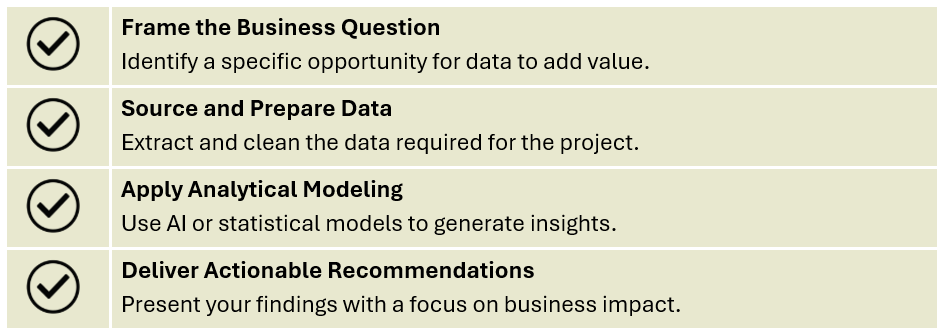
This mirrors how a data science bootcamp tech professionals value actually functions in the industry. It transforms your resume from a list of tools into evidence of capability. Employers can review your capstone as tangible proof that you can manage an end-to-end analytical workflow.
Performance-Based Mentorship
Most online platforms evaluate you through multiple-choice quizzes. This program evaluates you through professional outputs. Your capstone is assessed based on analytical accuracy, model selection, business relevance, and communication clarity. Mentors provide structured feedback at each stage, simulating a professional peer-review environment.Timeline: How Long Does It Take?
For working professionals, time is the most expensive resource. Here is a realistic breakdown of the journey: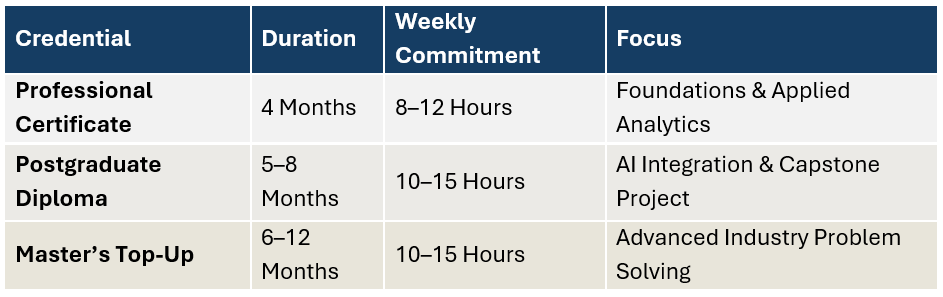
The structure is intentionally part-time. Because the curriculum is delivered in a flexible format, most learners maintain full-time employment while progressing through the program.
How This Pathway Compares to Other Learning Paths
When choosing a path, it is useful to compare based on the realities of a working professional’s life rather than just the price tag.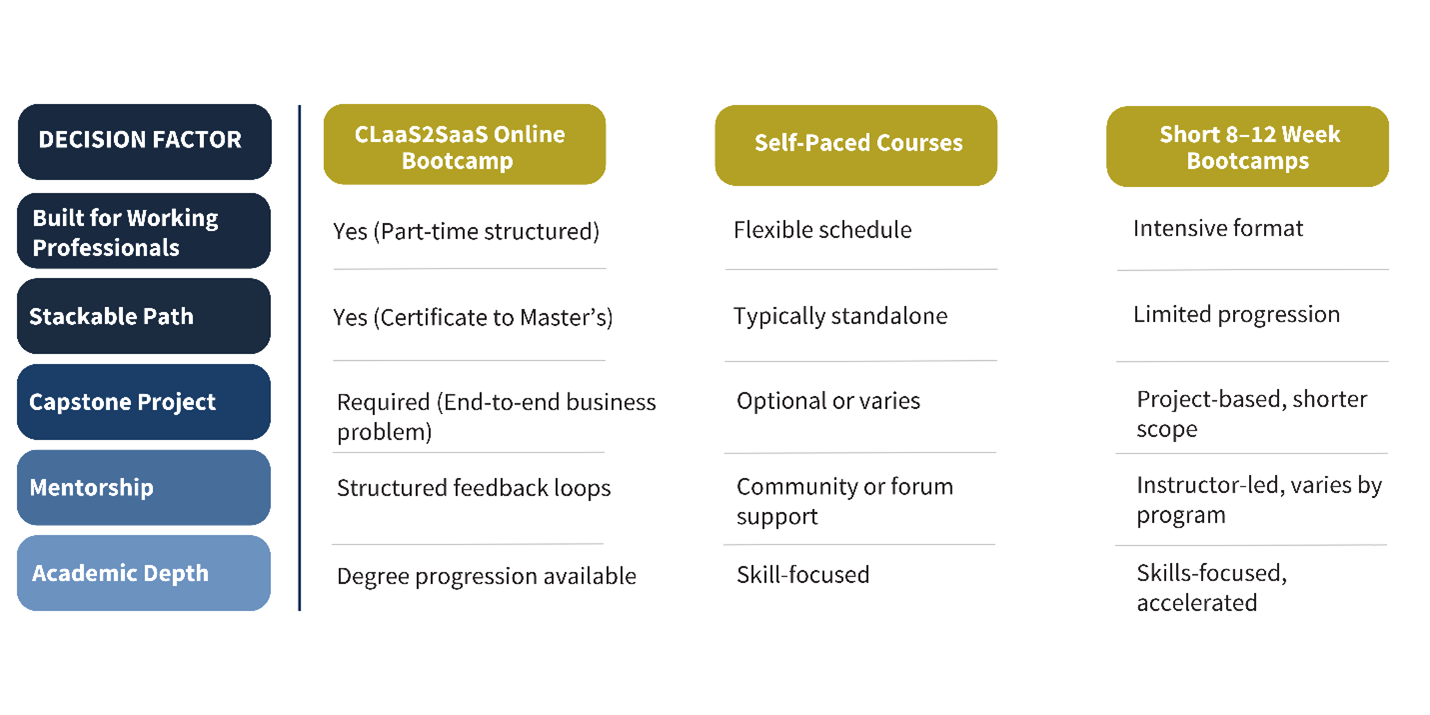
The key difference is not just speed, but sustainability. Short, intensive bootcamps are designed for rapid immersion, while self-paced courses prioritize flexibility. CLaaS2SaaS pathway focuses on structured progression, combining clear milestones, mentorship, and part-time pacing to support consistent skill development over time.
Who Qualifies for This Data Science Bootcamp?
Eligibility for the CLaaS2SaaS pathway is intentionally inclusive. The program is designed for individuals who need structured, part-time progression while maintaining professional responsibilities.
Unlike traditional full-time university programs, this bootcamp assumes you are balancing work, income, and career growth.
The primary qualification is commitment to a skills-first analytics pathway and consistent weekly effort.
Designed for Working Professionals and Career Switchers
Most learners are professionals transitioning into Data and AI while continuing in their current roles.
If you are looking to advance without pausing your income, this pathway supports that transition through structured, part-time progression. Typical profiles include those with:
Your domain expertise becomes a competitive advantage when applying analytics to real business problems. - A diploma or degree in any field
- Professional work experience
- Availability for 10 to 15 hours per week
Entry-Level and Recent Graduate Pathway
The program also supports entry-level candidates who want applied capability rather than theory alone.
If you are early in your career and motivated to build practical experience quickly, this pathway may align with your goals. Many successful applicants demonstrate:
This approach allows you to graduate with demonstrable project experience, not just academic knowledge. - Strong logical and quantitative thinking
- Portfolio-focused mindset
- Willingness to combine study with internships or early roles
Acceleration Track for Senior Professionals
This pathway also supports senior professionals who already have experience in technical, analytical, or leadership roles.
If you bring an existing foundation in programming, IT systems, analytics, or business strategy, you can move through introductory modules more efficiently and focus on higher-level capabilities such as:
By the end of the pathway, you complete a professional portfolio that demonstrates your ability to translate complex data into measurable business impact. - AI-driven modeling and optimization
- Advanced dashboard architecture
- Decision intelligence and strategic analytics
Not sure if you qualify? Explore the Data Science & AI Pathway Requirements
Career Outcomes: What This Prepares You For
By the time you complete your capstone project data science program, you are prepared for roles that bridge the gap between technical analysis and strategic interpretation.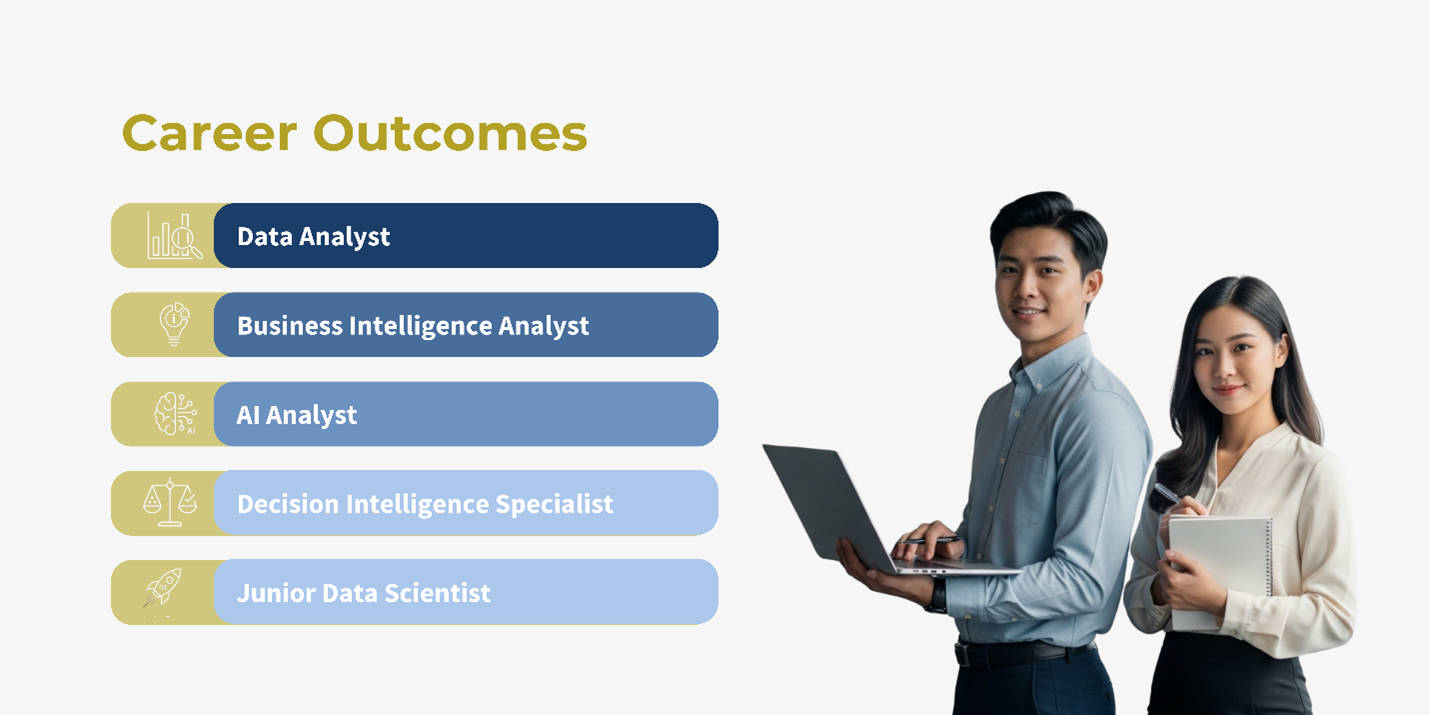
Employers increasingly prioritize professionals who can combine technical expertise with business insight. The ability to translate data and AI into measurable growth outcomes is what differentiates high-impact analysts in today’s economy.
Frequently Asked Questions (FAQs)
1. How is this different from a standard university degree?
Traditional degrees often focus on theory and take years to complete. This bootcamp focuses on “applied” skills—you learn by building real projects. Furthermore, our stackable model allows you to earn a Professional Certificate in just 4 months, which you can use to seek immediate job outcomes while continuing toward a degree.
2. Is the capstone project mandatory?
Yes. The capstone project data science program is a required component because it validates applied competence. It serves as tangible proof that you can manage a data project from start to finish — from defining the problem to delivering actionable insights.
3. I have no coding background. Can I still join?
Absolutely. A coding background is not required to enroll in a structured data science bootcamp for working professionals. Many learners enter the field from marketing, finance, operations, and other non-technical backgrounds. The Foundations phase is designed to teach Python and data logic step by step, starting from the basics.
4. What tools will I master?
You will work with industry-standard tools including Python for data manipulation, various machine learning libraries for AI, and advanced visualization platforms like PowerBI or Tableau for dashboarding.
Course

Start Building Your Future Today
Choosing an online data science bootcamp for working professionals can realistically complete requires clarity on structure and outcomes. This pathway combines applied analytics training, AI integration, and real business problem solving into one cohesive, stackable experience.If you are serious about transitioning into data and AI while continuing your career, this format provides the perfect balance of flexibility and professional credibility.