Thinking of Switching to Digital Marketing? A Degree Guide for Students and Parents
SHARE THIS:

 document.addEventListener("DOMContentLoaded", function () {
var url = encodeURIComponent(window.location.href);
document.getElementById("fb-share").href =
"https://www.facebook.com/share.php?u=" + url;
document.getElementById("li-share").href =
"https://www.linkedin.com/sharing/share-offsite/?url=" + url;
});
document.addEventListener("DOMContentLoaded", function () {
var url = encodeURIComponent(window.location.href);
document.getElementById("fb-share").href =
"https://www.facebook.com/share.php?u=" + url;
document.getElementById("li-share").href =
"https://www.linkedin.com/sharing/share-offsite/?url=" + url;
});
Many students today face growing concerns about their future.
Will the course they choose lead to real career opportunities in the digital economy?
Today’s students are entering a job market that looks very different from just a few years ago. Digital transformation is reshaping how businesses reach customers, making digital marketing skills more valuable than ever. For many students and parents evaluating education pathways, the question is no longer just about earning a degree. It is about gaining real capabilities that lead to meaningful career opportunities.
For learners who may be reconsidering their original course choice or exploring new opportunities, a change career to digital marketing degree pathway offers a practical way to transition into one of the fastest-growing industries in the global economy.
If you or your child is considering a transition into digital marketing, this guide explains what to expect, why the shift makes sense today, and how to choose a pathway that prepares learners for real industry demands.
Why Students Are Choosing Digital Marketing Earlier
Today’s students are entering a very different job market than previous generations. Employers no longer evaluate graduates based only on academic qualifications or theoretical understanding. Instead, companies increasingly look for individuals who can demonstrate practical digital capabilities, platform familiarity, and the ability to execute real marketing tasks.
At the same time, the rapid growth of the digital economy has significantly increased demand for marketing professionals who understand how to operate in online environments. Businesses of all sizes now rely on digital platforms to attract customers, build brand awareness, and drive revenue growth. As a result, there is increasing demand for graduates who are comfortable working with marketing technologies, data analytics tools, and campaign management platforms.
Parents are also becoming more cautious when evaluating degree pathways for their children. With rising education costs and evolving industry expectations, families want greater assurance that the programs students choose will lead to meaningful career opportunities after graduation. This has led many students to explore degree pathways that emphasize practical learning, hands-on experience, and real-world skill development.
This shift explains why more learners are exploring degree pathways that allow them to transition into digital marketing careers earlier in their academic journey. Many students now prefer degree pathways that allow them to build digital marketing skills while studying, enabling a smoother transition into the workforce. Instead of waiting until after graduation to build skills, students can now develop industry-relevant capabilities from year one.
See how students can start building real marketing skills while completing their degree
The Challenges Students Face in Traditional Degree Pathways
While interest in digital careers continues to grow, many students still encounter significant gaps in conventional programs.
Limited Hands-On Exposure
Many traditional business degree programs continue to focus heavily on theoretical instruction. While this provides students with a strong understanding of marketing concepts and strategic frameworks, it often leaves limited opportunities for learners to apply those concepts in real digital environments.
As a result, students may graduate with knowledge of marketing principles but lack the practical experience required to manage digital campaigns, analyze marketing data, or operate industry platforms. This gap between academic learning and workplace expectations can make the transition into professional roles more challenging for new graduates.
In many cases, graduates must spend additional time after completing their degree learning how to use digital marketing tools or gaining hands-on experience through internships or entry-level roles. This can delay their ability to contribute meaningfully within organizations and may slow their early career progression.
Without applied experience, graduates often need additional time after graduation to become fully job-ready.
Uncertainty About Course Direction
It is increasingly common for students to realize mid-way through their studies that their original course may not align with future career opportunities.
For these learners, the ability to shift into a practical digital marketing degree pathway provides a valuable second chance to realign their academic journey with market demand.
Rapid Growth of AI and Marketing Technology
Marketing is evolving rapidly as automation, artificial intelligence, and advanced analytics become increasingly integrated into everyday marketing activities. Businesses now rely on sophisticated technologies to better understand customer behavior, personalize messaging, and optimize marketing performance.
These developments mean modern marketers must be comfortable working with a wide range of digital tools. In addition to traditional marketing knowledge, professionals are expected to understand marketing automation systems, customer relationship management platforms, and data-driven campaign optimization techniques.
Artificial intelligence has also begun transforming how marketing teams operate. AI-powered tools can assist with tasks such as content generation, market research, audience analysis, and campaign reporting. When used effectively, these technologies allow marketing teams to work more efficiently and focus more on strategic and creative activities.
This is why many students are now choosing digital marketing degrees while working on real projects, allowing them to build both knowledge and practical experience before graduation.
What It Means to Change Career to Digital Marketing Degree Pathways
A well-designed transition program does more than teach theory. It builds real capability across the full marketing lifecycle.
Strong programs typically combine:
- marketing foundations
- platform execution
- automation workflows
- AI-enabled campaign management
- real client or simulated campaign projects
The goal is to help learners become full-stack digital marketers who can operate across multiple channels.
How a Digital Marketing Degree While Working Builds Real Readiness
For students, timing matters. The earlier practical skills are developed, the smoother the transition into the workforce becomes. Modern work-study pathways are designed to help learners build capability alongside their academic progress.
Adaptive Hybrid Learning
Students benefit from a structured blend of guided online learning, live applied sessions, and project-based work. This approach supports different learning speeds while maintaining academic rigor that supports personalized and competency-based skill development.
Early Exposure to Real Marketing Industry
One of the biggest advantages of a digital marketing degree while studying is early access to industry platforms. Instead of waiting until their final year, students begin working with real tools much earlier.
Not only tools, a digital marketing degree while working allows students to practice campaign execution while still studying, accelerating both learning and job readiness. This helps learners build confidence, familiarity, and practical understanding that employers value.
Building Full-Stack Marketing Capability Through the Digital Business Pathway
For students planning a career transition into digital marketing, developing full-stack capability is essential. Modern marketing roles require professionals who understand strategy, technology, and execution across multiple channels.
The Digital Business Work-Study Degree pathway allows students to earn a degree while working on real marketing projects, helping them graduate with both academic credentials and practical experience.
Omnichannel Campaign Execution
Modern marketing requires professionals who understand how multiple channels interact to create seamless customer journeys. Students therefore learn how digital platforms work together to support integrated campaigns.
- Plan integrated marketing campaigns
- Align messaging across digital platforms
- Optimize customer journeys
- Track cross-channel performance
This approach prepares learners to manage omnichannel marketing campaigns in modern organizations.
Mastering Industry-Relevant Marketing Tools
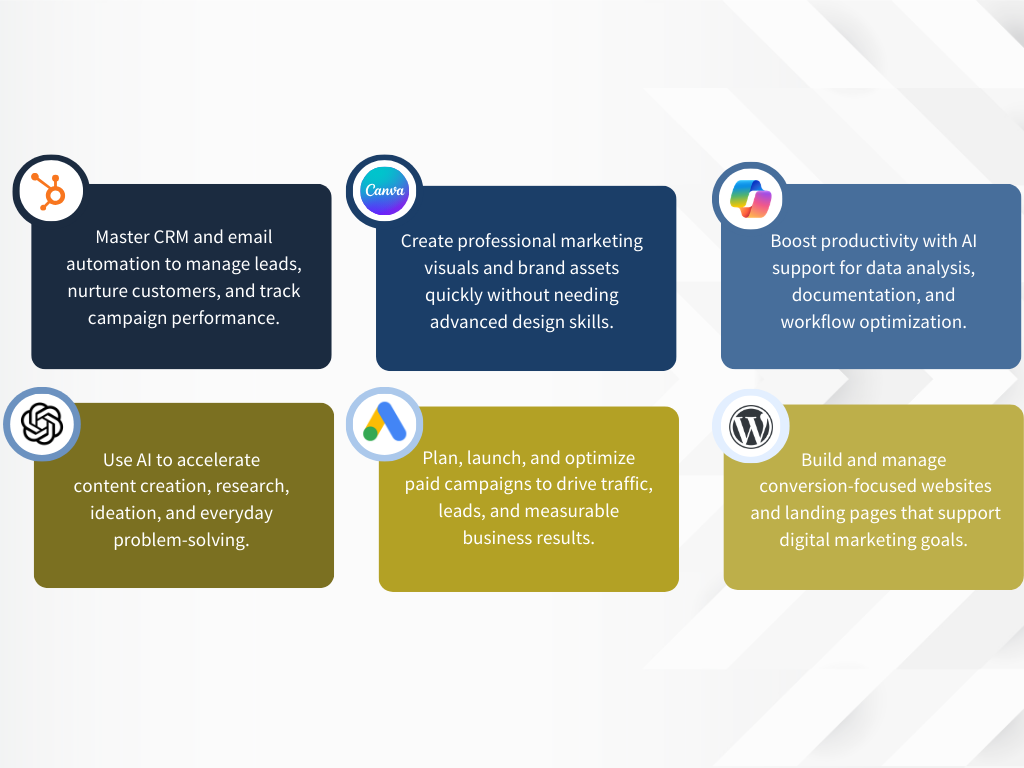
A practical digital marketing degree emphasizes real platform experience. Digital marketing teams rely heavily on specialized platforms to execute and measure campaigns. Students gain hands-on exposure to widely used marketing platforms in industry, including:
- WordPress for website and landing page creation
- HubSpot for CRM and marketing automation
- Google Ads for performance marketing campaigns
- Facebook Ads for social media advertising
Hands-on platform experience helps students develop confidence and practical capability before entering the workforce.
Using Generative AI to Improve Marketing Performance
Artificial intelligence is now embedded in modern marketing workflows. Students are introduced to AI-enabled tools such as ChatGPT and Copilot to support marketing execution. These tools help learners:
- Generate campaign content faster
- Conduct market research efficiently
- Analyze campaign performance insights
- Automate reporting and workflow tasks
Understanding how to combine human creativity and strategic thinking with AI support gives graduates a strong advantage in the evolving digital marketing landscape.
Through this integrated learning approach, the Digital Business pathway prepares students with both conceptual knowledge and real execution skills, helping them become job-ready digital marketers.
Career Opportunities After Switching to Digital Marketing
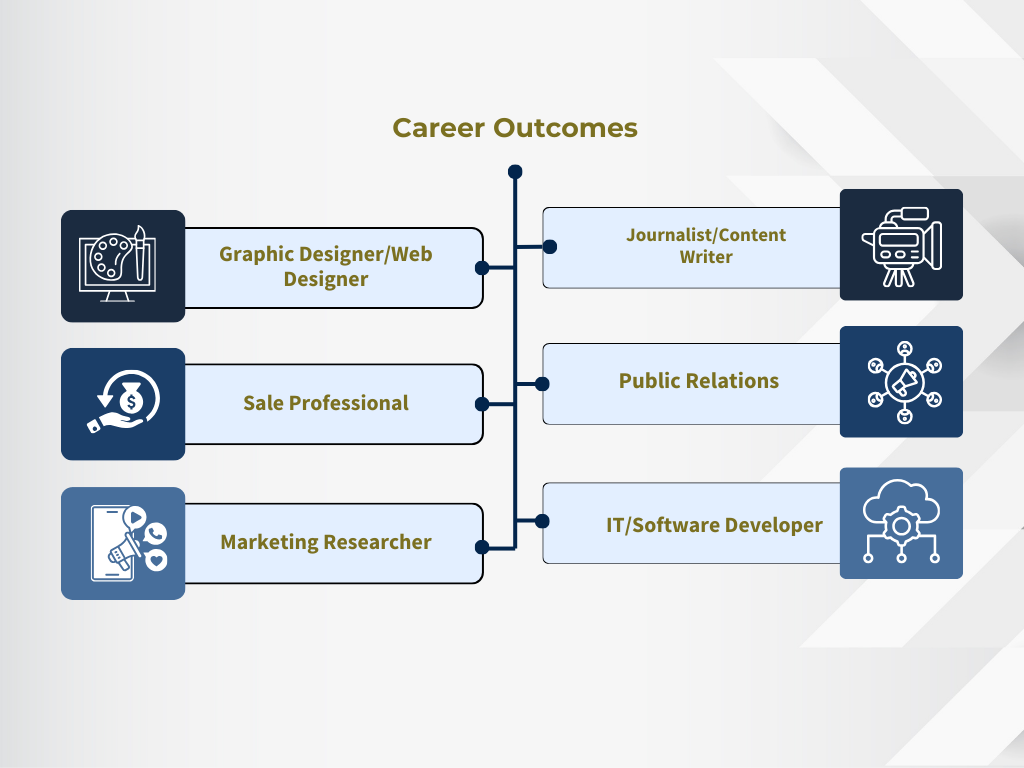
Graduates who complete a digital marketing degree while working often enter the job market with a strong advantage. Because they have already executed real campaigns and worked with industry tools, they can transition more quickly into entry-level marketing roles, such as:- Digital Marketing Executive
- Social Media Specialist
- Performance Marketing Associate
- Marketing Automation Assistant
- Growth Marketing Analyst
Practical Steps to Change Career to Digital Marketing
If you are serious about moving into digital marketing, follow this roadmap.
Step 1: Understand the Skills Gap
Audit your current capabilities against modern marketing requirements.
Step 2: Choose a Structured Practical Digital Marketing Degree
Look for programs that include:
- Real platform exposure
- AI integration
- Project-based learning
- Flexible delivery
- Industry relevance
Step 3: Build a Demonstrable Portfolio
Employers value proof of execution. Prioritize programs that require multiple real-world builds.
Step 4: Apply Skills in Real Contexts
Use your current job, freelance work, or simulations to reinforce learning and build confidence.
Ready to take the first step toward a digital marketing career? Speak with an Advisor
Course

The Future Belongs to Adaptive Digital Professionals
Choosing the right degree pathway is one of the most important decisions students and parents make together. In today’s AI-driven digital economy, programs that combine academic rigor with real-world capability building offer a clear advantage.
For learners considering whether to change career to digital marketing degree pathways, the key is selecting a structured program that develops both knowledge and execution skills from the start. Programs that combine academic learning with real marketing work experience allow students to graduate with both credentials and capability.
The CLaaS2SaaS Digital Business pathway is designed to support this journey through applied learning, industry tools, and AI-enabled marketing training. Start building the skills needed for a future-ready digital marketing career.