Computer Information Systems Degree: From Systems Skills to Digital Innovation Leadership

SHARE THIS:


Digital transformation is reshaping how businesses operate across industries. From artificial intelligence and data analytics to automation and cloud platforms, organizations increasingly depend on professionals who can connect technology with business strategy.
A computer information systems degree provides a strong foundation in how technology supports business operations, data management, and decision-making. However, as organizations accelerate the adoption of AI and digital platforms, many professionals are now facing a new challenge.
How do you move from understanding systems to leading digital innovation and transformation?
According to the World Economic Forum’s Future of Jobs Report, technological change and AI are among the major forces transforming the global labor market, with many organizations expecting digital technologies to reshape their operations by 2030.
At the same time, employment in computer and information technology occupations continues to grow rapidly. The U.S. Bureau of Labor Statistics estimates that the field will generate over 317,000 job openings annually due to both growth and workforce replacement needs.
For professionals who already have a computer information systems background, the next step is no longer just technical knowledge. It is the ability to design, deploy, and scale digital solutions that deliver measurable business outcomes.
This is where upskilling through a digital transformation certification and hands-on capability development becomes critical. CLaaS2SaaS offers specialized programs that support this shift by integrating practical learning with real-world digital transformation challenges.
To understand how this progression works, explore the structured pathway below.
What Is a Computer Information Systems Degree?
A computer information systems (CIS) degree focuses on how organizations use technology to manage data, improve efficiency, and support business decisions.
Unlike traditional computer science programs that emphasize programming theory, CIS programs focus on the practical application of technology within business environments.
Students learn how to design information systems, analyze business data, and implement digital solutions that support real operational needs.
In many programs, learners develop skills in areas such as:
- Information systems architecture
- Data management and analytics
- Business intelligence platforms
- Cybersecurity fundamentals
- AI-enabled automation
- Digital transformation strategy
This interdisciplinary approach is what makes the CIS degree particularly valuable. Graduates are equipped with both technical knowledge and business understanding.
However, in today’s environment, this foundation is only the starting point.
Why Computer Information Systems Skills Are in High Demand
Organizations today rely on digital systems for nearly every operation. From customer analytics platforms to enterprise systems, technology is embedded in core business processes.
Several global trends explain why CIS skills remain highly valuable.
1. Digital Transformation Across Industries
Organizations are investing heavily in digital technologies to improve efficiency, innovate products, and remain competitive.
2. Data-Driven Decision Making
Businesses rely on analytics platforms to guide strategic decisions. Information systems professionals ensure data is accessible, accurate, and actionable.
3. AI and Automation Integration
AI tools are now embedded into workflows and decision-making processes, increasing demand for professionals who can apply them in real business contexts.
4. Global Digital Talent Shortage
Organizations continue to face a shortage of professionals who can combine business knowledge with digital execution capability.
While CIS skills remain essential, organizations increasingly look for professionals who can apply these skills in transformation initiatives, not just manage systems. Those without transformation capability risk being limited to operational roles.
At CLaaS2SaaS, our programs are designed to help you make this shift by empowering you to lead and scale digital transformation across industries.
From CIS Foundation to Digital Innovation Leadership
A computer information systems degree builds strong foundational knowledge in systems, data, and business technology.
The shift from systems knowledge to digital innovation leadership is one of the most critical career transitions today.
They need professionals who can:
- Build digital solutions using low-code platforms
- Apply data analytics to real business problems
- Integrate AI into workflows and operations
- Lead transformation initiatives across teams
This is where many professionals reach a plateau, because they lack execution and leadership capability.
The challenge is no longer learning systems.
It is applying that knowledge to deliver real transformation outcomes.
Upskilling through a digital transformation certification and low-code application development training enables professionals to move from system understanding to execution capability. CLaaS2SaaS offers tailored learning pathways that bridge the gap between CIS foundational skills and digital leadership, preparing you for impactful roles in digital innovation.
Online Learning and Flexible Upskilling Pathways
For working professionals, continuous learning must fit within real-world constraints.
Modern programs increasingly offer flexible formats that allow learners to:
- Upskill while working full-time
- Apply learning directly to their current roles
- Build practical experience through real projects
The most effective pathways go beyond theory by combining structured learning with hands-on execution using tools such as:
- Low-code development platforms
- Data analytics systems
- AI-powered automation tools
This approach ensures that professionals develop capabilities that can be applied immediately in business environments.
For example, professionals interested in building digital transformation expertise can explore specialized training pathways such as the Top Four Digital Transformation Courses for Non-Technical Professionals, which highlight how emerging technologies shape modern careers.
The Digital Innovation Degree Pathway
The CLaaS2SaaS Digital Innovation Leadership program follows a stackable credential pathway designed for working professionals who want to accelerate their careers in digital transformation.
Across all stages, learners develop one core capability: the ability to design and implement end-to-end digital solutions by combining low-code applications, data analytics, and AI technologies to deliver real business outcome
Professional Certificate in Digital Innovation
This stage focuses on foundational digital skills used in modern organizations.
Learners gain experience in areas such as:
- low-code application development platforms
- generative AI tools
- workflow automation technologies
- data analytics systems
Outcome:
Ability to design and deploy intelligent digital solutions that integrate applications, data, and automation in real business scenarios.
Professional Diploma in Digital Transformation & Entrepreneurship
The professional diploma stage expands technical capability and focuses on implementing digital transformation initiatives.
Key learning areas include:
- digital transformation frameworks
- workforce transformation strategy
- digital business model design
- innovation and venture development
Outcome:
Ability to apply digital solutions across business functions to drive transformation and improve organizational performance.
Master of Business Administration - Digital Innovation & Entrepreneurship (Top up)
The final stage allows professionals to complete an internationally recognized MBA while applying their knowledge to real business challenges.
This stage focuses on:
- corporate finance and strategic integration
- digital transformation governance
- organizational design and project management
- international business strategy
Outcome:
Ability to scale and lead enterprise-wide digital transformation powered by integrated systems, data, and AI capabilities.
Career Opportunities with a Computer Information Systems Degree
A CIS degree opens the door to many careers across industries. Because information systems sit at the intersection of technology and business operations, professionals can work in diverse roles.
Common career paths include:
- Information systems analyst
- Data analyst
- Business intelligence specialist
- Digital transformation consultant
- IT project manager
- Cybersecurity analyst
For example, systems analysts help organizations evaluate technology infrastructure and design solutions that improve efficiency and performance.
Similarly, business intelligence analysts analyze data to support strategic decisions and improve competitiveness in the market.
These roles are critical to organizations that rely on technology to remain competitive in digital markets.
Skills You Build Along the Way
A strong computer information systems degree pathway focuses on building both technical and strategic skills.
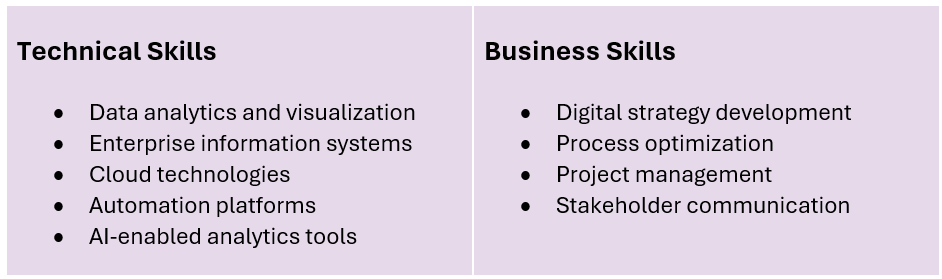
Professionals who combine these skill sets are often the most effective in digital transformation teams.
The Future of Digital Innovation Careers
The future workforce will increasingly depend on digital expertise.
Technology adoption continues to accelerate as organizations integrate AI, automation, and advanced data systems into everyday operations. The demand is not just for digital professionals, but for leaders who can guide transformation.
Some of the fastest-growing digital roles include:
- AI specialists
- data analysts
- cybersecurity experts
- information systems architects
- Digital transformation lead
Professionals who understand both technology and business processes are uniquely positioned to lead these changes. This creates a clear advantage for those who invest in an accelerated leadership-focused upskilling.
Frequently Asked Questions
What is a computer information systems degree?
A computer information systems degree focuses on how technology supports business operations, data management, and digital transformation.
Is CIS different from computer science?
Yes. Computer science focuses on programming theory, while CIS focuses on applying technology in business environments.
What can I do after a CIS degree?
You can pursue roles in analytics, systems, digital transformation, and technology leadership.
How do I move into digital innovation roles?
By developing practical execution capability through hands-on learning, real projects, and certifications focused on digital transformation.
Course

Start Planning Your Digital Innovation Journey
A computer information systems degree provides a strong foundation. The next step is building the capability to apply that knowledge in real-world transformation. It is not just about upgrading skills, but repositioning your career toward digital leadership
Structured pathways that combine digital transformation certification, low-code application development training, and real project experience can help professionals move into higher-impact roles.
If you want to explore how to transition from systems knowledge to digital innovation leadership, the next step is to review the full pathway.