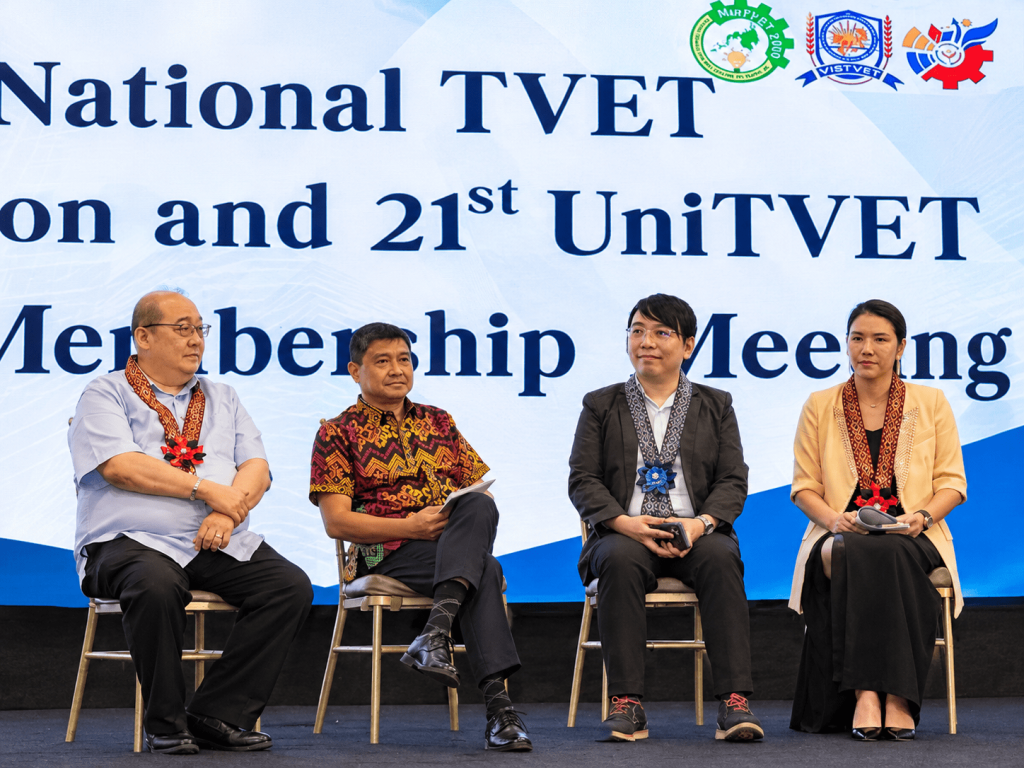
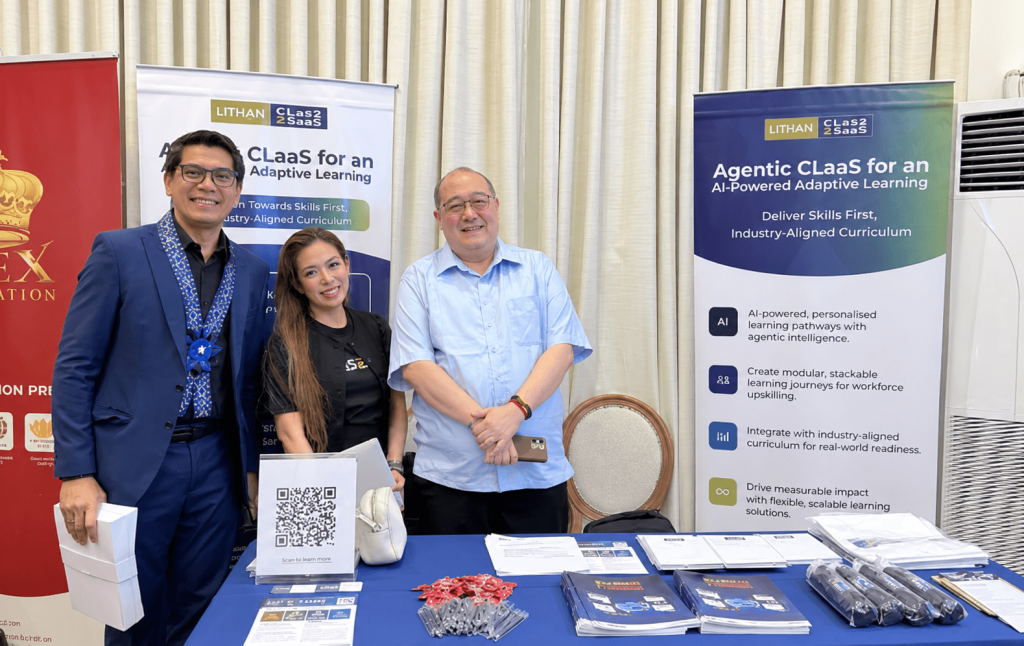
Philippines, 19-20 October 2026 – CLaaS2SaaS participated in the 2nd National TVET Convention and 21st UniTVET General Membership Meeting, organised by Unified TVET of the Philippines, Inc., bringing its perspectives on skills-first education, adaptive learning and industry-aligned workforce development to a gathering of technical and vocational education and training (TVET) stakeholders.
The two-day convention brought together representatives from the TVET community to discuss strategies for improving the quality, relevance and global competitiveness of Philippine technical and vocational education. Discussions highlighted the importance of aligning skills development with evolving industry requirements, strengthening partnerships among educational institutions, businesses and government, and harnessing technology to improve training and assessment.
The programme also featured an awarding ceremony and certificate presentation recognising achievements and contributions within the TVET community, reinforcing the importance of quality assurance, institutional excellence and continuous improvement.
Reimagining Learning for a Future-Ready Workforce
A key contribution to the convention came from Prof. Vicente Antonio V. Pijano III, Vice President for Higher Education at CLaaS2SaaS, who shared insights on reimagining learning for a future-ready workforce.
His presentation explored the role of adaptive learning, work-integrated learning (WIL), responsible artificial intelligence (AI) in education, and student portfolios in demonstrating competencies, practical experience and career readiness.
A central message was the need to move beyond traditional approaches that place greater emphasis on knowledge acquisition towards learning models that enable individuals to develop, demonstrate and apply competencies in practical workplace settings.
Adaptive learning technologies offer opportunities to make education more responsive to individual learner needs, while work-integrated learning connects competency development with actual industry requirements. Together, these approaches can help institutions deliver more relevant learning experiences and better prepare graduates for employment and evolving career opportunities.
Student portfolios also provide an important mechanism for documenting and demonstrating what learners can actually do. By capturing acquired competencies, project outputs and practical experience, portfolios can provide employers with a more meaningful view of an individual’s capabilities and readiness for work.
Bridging the Gap Between Learning and Work
The discussions at the convention reinforced an important challenge facing TVET institutions: ensuring that the competencies developed through education and training translate into meaningful workplace capabilities.
As technologies, business models and occupational requirements continue to evolve, training institutions must strengthen the connection between what they teach and what industries actually need.
This requires more than updating curricula. It calls for closer engagement with employers, opportunities for authentic workplace application, competency-based assessment and continuous adaptation of learning pathways.
For CLaaS2SaaS, this direction is central to its Skills-First, Work-Integrated Learning approach. By combining AI-powered adaptive learning technologies with practical skills development and industry-aligned learning pathways, the company supports the development of talent equipped to contribute effectively in an increasingly digital and AI-enabled economy.
Strengthening Industry Collaboration for Future-Ready TVET
The convention also highlighted the importance of sustained collaboration among educational institutions, industry, and government in building a responsive and competitive TVET ecosystem.
No single institution can address the changing demands of the workforce independently. Stronger partnerships are necessary to ensure that training programmes remain relevant, industry requirements inform competency development, and learners gain opportunities to apply their skills in real-world environments.
As the Philippines and the wider ASEAN region advance their digital economy ambitions, TVET institutions have an increasingly important role in developing the technical, digital and adaptive capabilities required by emerging industries.
CLaaS2SaaS remains committed to supporting this transformation through skills-first learning, adaptive education technologies, work-integrated learning and AI-enabled workforce development.
Its participation in the convention reflects the company’s continuing engagement with education and industry stakeholders in advancing more responsive learning systems and building a workforce prepared for the opportunities and challenges of the AI economy.
About CLaaS2SaaS
CLaaS2SaaS is a Pan-ASEAN AI Acceleration Platform with a connected AI and workforce transformation ecosystem committed to advancing inclusive digital economy transformation across Southeast Asia.
Driven by its Skills-First, Work-Integrated Learning approach, CLaaS2SaaS helps educational institutions develop industry-relevant digital talent through AI-powered adaptive learning technologies and practical workforce development pathways.
The company also supports enterprises in adopting intelligent digital solutions and scalable AI services that enhance productivity, strengthen workforce capabilities, and accelerate business transformation.