Blog
Software Engineering Bachelor – Earn a degree while working
SHARE THIS:


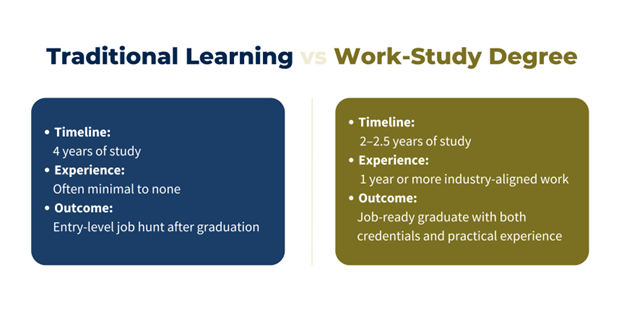
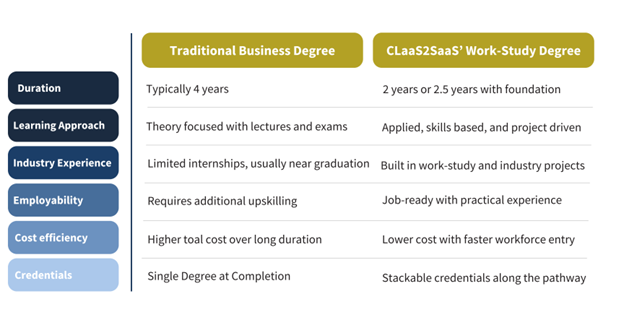
The era of the “unemployed graduate” is over. For years, the tech industry has complained about a “skills gap” where university graduates hold a degree but lack the ability to ship production-ready code. The Software Engineering bachelor’s degree at CLaaS2SaaS solves this by merging high-level academia with an intensive, work-study framework that gets you job-ready in half the time of a traditional program.
If you are looking for a software engineering degree while working, you are no longer limited to evening classes that take six years to complete. Our 2-year fast-track model is designed specifically for the AI-first economy, ensuring you graduate with an international credential and 2,000 hours of practical experience.
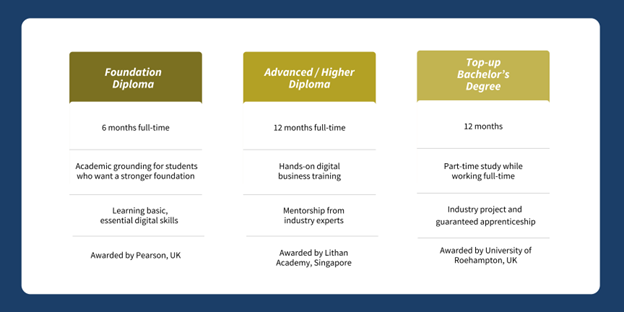
The 2-Year Fast-Track Structure: How It Works
Traditional degrees are often padded with years of “general education” that has little to do with building software. CLaaS2SaaS uses a modular approach to compress the timeline without sacrificing depth. . This structure mirrors the Agile methodology used by top engineering teams worldwide.
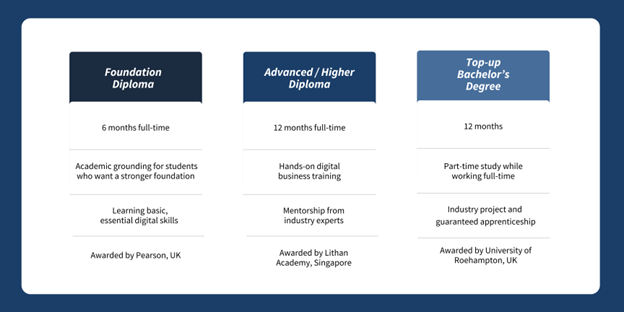
Phase 1: Foundation Diploma (Months 1–6)
This is an intensive digital skilling bootcamp. For six months, you are immersed in the core logic of engineering from 9 AM to 6 PM daily.
- Focus: Computer architecture, programming foundations, and UI/UX design.
- Outcome: You move from “beginner” to “industry-ready” by building responsive web applications and mastering IT project management.
During this phase, you aren’t just learning syntax. You are learning the “how” behind computers, memory management, logic gates, and how hardware interacts with software. This creates a solid foundation that prevents you from being a “copy-paste” developer.
Phase 2: Higher Diploma (Months 7–18)
This 12-month phase bridges the gap between a student and a professional. You start tackling enterprise-level challenges.
- Modern Stack: Mastering React for front-ends and Spring Boot for scalable back-ends. According to the Stack Overflow Developer Survey, these remain among the most in-demand frameworks globally.
- AI Integration: Implementing Generative AI to optimize business productivity and automate workflows.
- Awarded by: This phase results in a Higher Diploma from Lithan Academy, Singapore, an EduTrust-certified institution, ensuring your credits are internationally recognized.
Phase 3: Top-Up Bachelor’s (Months 19–24)
The final year is a work-study software engineering degree model. You work full-time as an apprentice while studying part-time.
- Advanced Skills: Data Visualization, Machine Learning, and Cyber Security.
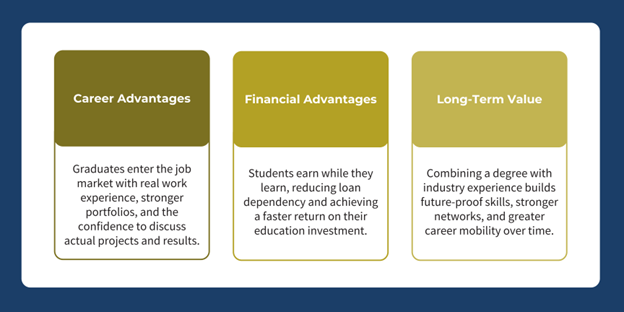
- Industry Placement: You gain real-world seniority while completing your final year project. By the time you graduate, your resume shows one year of full-time professional experience, putting you ahead of every other entry-level graduate.
Methodology: The 70:20:10 Skills Framework
CLaaS2SaaS goes beyond teaching you how to code.
We train you to function effectively in a modern development team.
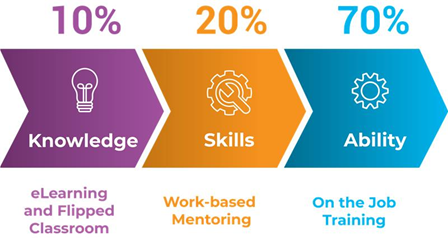
Our programs follow Singapore’s renowned 70:20:10 learning framework, delivered through a competency-based curriculum aligned with real industry skills. You learn by doing working on hands-on projects that mirror how real product teams operate.
At every stage, you choose a learning approach that fits your pace, needs, and goals, so you can build skills in a way that works for you.
- 70% On the Job training: You spend the majority of your time on hands-on industry projects. You don’t write “practice code” you build secure, scalable enterprise applications. . This ensures you understand the Software Development Life Cycle (SDLC) from start to finish.
- 20% Work-based mentoring: You are mentored by industry experts and senior developers. You learn to receive and implement feedback on your architecture, a soft skill that distinguishes senior engineers from juniors.
- 10% E-Learning & Flipped Classroom: Structured, self-paced digital modules and flipped classrooms ensure you have the theoretical foundation to back up your technical skills.
Mastering the Tech Stack of 2026
To be a successful engineer today, you need more than just one language. You need to be a T-shaped professional: deep expertise in one area, with a broad understanding of the rest. Our software engineering degree online covers:
| Category | Tools & Technologies | Why it matters in 2026 |
|---|---|---|
| Frontend | React, TypeScript, Next.js, Figma | To build high-performance, SEO-friendly user interfaces. |
| Backend | Java, Spring Boot, API Development, Node.js | To handle complex server-side logic and microservices. |
| Data & AI | SQL/NoSQL, Generative AI, Machine Learning | To build "smart" applications that leverage big data. |
| DevOps | Agile/Scrum, IT Security, Git, Cloud | To ensure code is deployed safely and efficiently. |
By the time you graduate, you aren’t just a “coder” you are a Full-Stack Engineer capable of managing the entire Software Development Lifecycle (SDLC).
Beyond Coding: Specializations and Advanced Engineering Roles
A software engineering bachelor’s degree should do more than just teach you how to write code; it must teach you how to think like an architect. As you progress into the final year of the CLaaS2SaaS program, the curriculum shifts from “implementation” to “engineering strategy.” This is where you differentiate yourself from bootcamp graduates who only know the basics.
Deep Dive: Cyber Security and Data Engineering
In the final year Top-Up degree, you explore two of the most critical pillars of modern tech:
- Cyber Security: With the average cost of a data breach reaching millions of dollars, companies are desperate for developers who understand Secure Coding Practices. You will learn to identify vulnerabilities before they are deployed, a skill that significantly increases your market value.
- Data Engineering & Visualization: In the AI-first economy, data is the fuel. You will learn how to build the pipelines that move data from raw sources into actionable insights using tools like Power BI and Machine Learning models.

The “Architect” Mindset: Final Year Projects
Your journey culminates in a Final Year Project (FYP). Unlike a standard school assignment, this is a capstone project that solves a real-world problem for an industry partner.
Whether you are building a predictive analytics tool for a retail firm or a secure fintech gateway, this project serves as your “professional proof.” It demonstrates to hiring managers that you can handle the Software Development Life Cycle (SDLC) from requirement gathering and system architecture to testing and deployment. This is the “secret sauce” of the 2 year software engineering degree; you aren’t just learning you are producing.
Career Outcomes: Pay & Prospects
Is a software engineering degree worth it? The data from CLaaS2SaaS suggests a massive ROI. Because you are working as an apprentice during your second year, you often start earning before you graduate.
According to Gartner, worldwide IT spending is projected to continue growing, with a heavy focus on software services.
- Front End Web Developer: Typical starting salaries range from $820 to $920 per month (entry-level).
- Full Stack Software Developer: Within 4-5 years, professionals can expect to earn $1,160 to $1,260.
- Software Development Manager: Senior leadership roles command $1,345 to $1,450+.
As noted by the U.S. Bureau of Labor Statistics, the demand for developers is growing at 15%, “much faster than the average.”

Why Choose CLaaS2SaaS for Your Degree?
Choosing a software engineering bachelor degree is a life-altering decision. CLaaS2SaaS provides a unique “safety net” for your career that traditional universities cannot match:
- Job Placement Support: We leverage partnerships with over 2,000 companies to help match you with the right employer. Our career coaches help you optimize your LinkedIn profiles to attract top-tier recruiters.
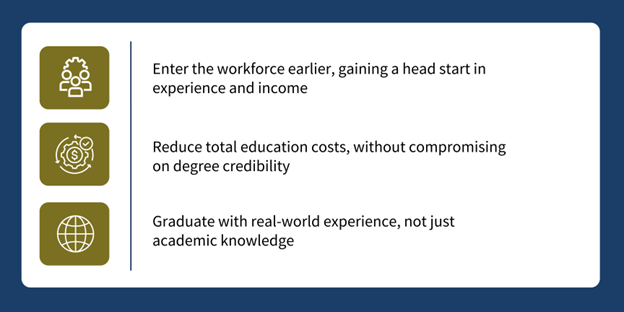
- Affordability: Our Work-Study model allows many students to fund their education through their apprenticeship earnings. This minimizes student debt, allowing you to reach financial independence sooner.
- Global Recognition: Earn a degree awarded by international partners (such as the University of Roehampton) through a mentor-led blended journey.
Navigating the Shift: From Junior to Lead Engineer
Most traditional graduates enter the market as “Juniors” and spend 3–5 years trying to climb the ladder. Because the CLaaS2SaaS model includes a full year of work-study apprenticeship, you are effectively “pre-promoted.”
By the time you receive your degree, you have already navigated the common pitfalls of a professional environment:
By choosing to get your software engineering degree while working, you are bypassing the “Entry-Level Trap” and moving directly into the “Experienced Professional” bracket. - Version Control in Teams: You’ve used Git in a shared codebase, not just a personal one.
- Agile Sprints: You’ve participated in daily stand-ups and two-week sprints, making you a “plug-and-play” hire for any tech firm.
- Stakeholder Communication: You’ve learned how to explain technical constraints to non-technical managers a soft skill that Harvard Business Review consistently identifies as the #1 predictor of career longevity in tech.

Course

Conclusion: Build the Future, Don’t Just Study It
A Software Engineering Bachelor Degree at CLaaS2SaaS isn’t just about passing exams; it’s about becoming a leader in the digital economy. Whether you are transitioning from a non-tech background or looking to formalize your existing skills, this 2-year journey is the most efficient path to technical mastery.
The digital world waits for no one. Start your journey today and graduate with the skills the industry is actually hiring for.
Ready to Start Your Engineering Career?
Don’t wait four years to start your life. Explore the work-study software engineering degree that fits your professional goals.