
Postgraduate Diploma in Data Science Online: Career Conversion for Professionals

SHARE THIS:

Data has become one of the most valuable resources in the modern economy. Organizations across industries are increasingly relying on data-driven insights to guide strategy, improving operational efficiency, and identifying growth opportunities.
This growing reliance on data has significantly increased demand for professionals who can analyze complex datasets and translate insights into business decisions. According to the U.S. Bureau of Labor Statistics, employment for data scientists is projected to grow around 34% between 2024 and 2034, making it one of the fastest-growing occupations in the technology sector.
For many professionals working in business, finance, marketing, operations, or engineering, this shift represents an opportunity and a growing urgency: to transition into one of the most dynamic and future-focused fields in the digital economy.
However, the biggest career challenge today is not a lack of experience—but a lack of data capability. It is creating a widening gap between existing experience and emerging data-driven skill requirements. This is where Data Science Degree & Conversion Programs become increasingly important.
Programs designed around the CLaaS2SaaS learning model combine structured classroom learning with real-world skills application. This approach allows professionals to move beyond theoretical knowledge and develop practical analytics capabilities through hands-on projects and industry-relevant scenarios.
One of the most flexible pathways available today is a postgraduate diploma in data science online, which enables professionals to build advanced analytical skills while continuing to work.

Why Data Science Careers Are Growing Rapidly
Data science has emerged as one of the most influential disciplines in the digital economy because it connects technology with strategic decision-making.
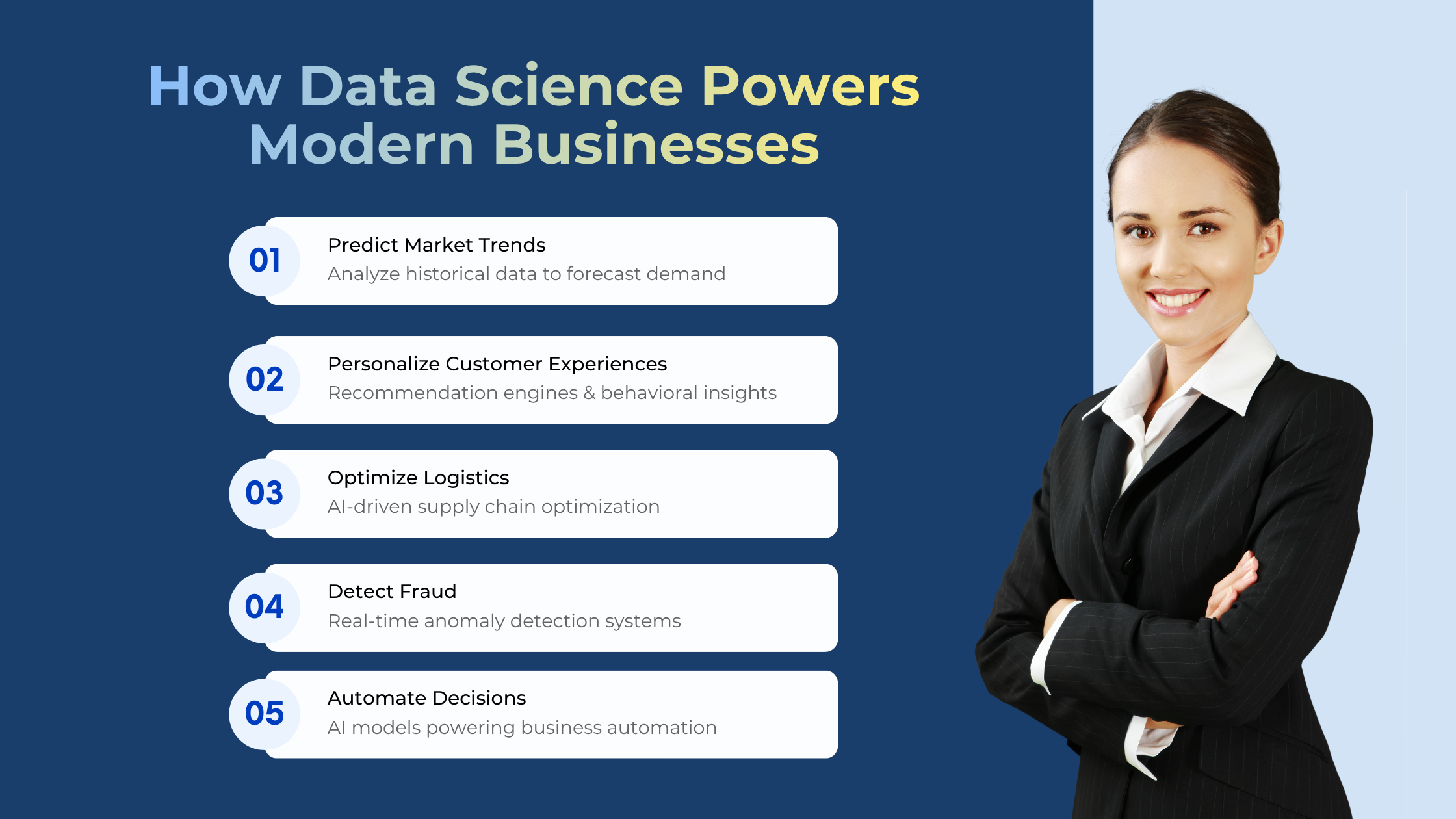
Organizations today rely on data science to:
  • Predict Market Trends– By analyzing large volumes of historical and real-time data, data scientists uncover patterns that enable organizations to forecast demand, anticipate customer behavior, and make informed strategic decisions—helping businesses respond quickly to market shifts, making this a critical capability for data analysts and business intelligence professionals. 
  • Personalize Customer Experiences– By analyzing browsing behavior, purchase history, and engagement data, organizations can tailor recommendations, marketing messages, and digital experiences—improving customer satisfaction, loyalty, and lifetime value, a skill widely required in marketing analytics and product analytics roles. 
  • Optimize Logistics and Supply Chains– Data science helps optimize inventory, delivery routes, and supply forecasting using analytics and machine learning—reducing costs while improving efficiency and service speed, increasing demand for data professionals in operations and supply chain roles. 
  • Detect Fraud and Financial Risks– Advanced models monitor transactions in real time to identify anomalies and suspicious patterns, helping organizations prevent fraud, minimize losses, and strengthen security, a key requirement in financial analytics and risk management roles. 
  • Automate Operational Decisions Through Artificial Intelligence– From recommendation engines to predictive maintenance, AI-powered systems automate complex decisions—enabling businesses to scale operations with greater efficiency and accuracy, driving demand for data scientists and machine learning engineers. 
 

Understanding Data Science Degree & Conversion Programs
A Data Science Degree & Conversion Program is specifically designed for individuals who want to enter the data science field even if their original academic background is not technical.
Unlike traditional computer science degrees, conversion programs focus on progressive skill development that helps learners gradually build expertise in analytics, programming, and machine learning.
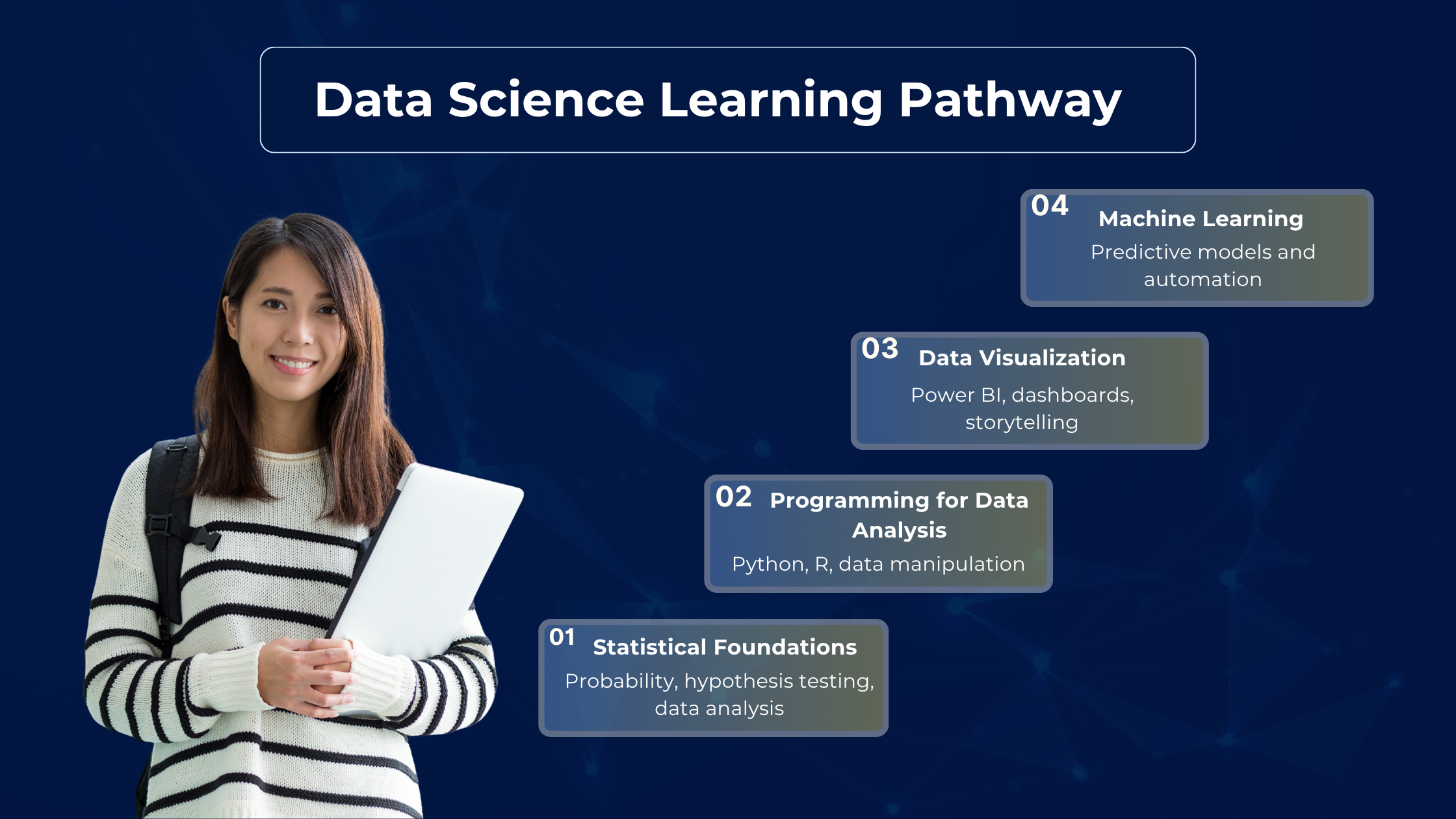
Typical areas of study include:

Statistical Foundations

Professionals learn to identify patterns, validate insights, and make reliable predictions using statistical methods. In practice, this means applying techniques like regression, probability, and hypothesis testing to real datasets—ensuring your analysis is accurate, explainable, and decision-ready.
In AI-driven roles, statistics underpins how machine learning models are trained and evaluated, helping you build models that are not just functional, but reliable and trustworthy in real business environments.

Programming for Data Analysis

Programming languages such as Python and R are widely used in modern data science workflows.
These tools enable analysts to clean datasets, automate workflows, build predictive models, and visualize insights. Programming also enables professionals to develop and deploy machine learning models that can process large volumes of structured and unstructured data enabled by AI or use cases like recommendation systems, forecasting, and intelligent automation.
It essentially allows professionals not only to work efficiently, but also to create intelligent systems that can automate analysis and generate insights at scale.

Data Visualization and Business Intelligence

Visualization platforms allow analysts to transform complex datasets into charts, dashboards, and interactive reports that help decision-makers understand analytical results.
With AI-enabled analytics, you’ll also work with tools that automatically surface trends and generate insights. These capabilities allow organizations to move beyond static reporting toward more dynamic and predictive decision-making environments.

The Flexibility of a Postgraduate Diploma in Data Science Online

For professionals transitioning into data science, flexibility is critical. A postgraduate diploma in data science online allows you to build in-demand data and AI skills without stepping away from your current role.

Learning While Maintaining Employment

Apply what you learn immediately in your job—whether it’s analyzing business data, automating reports, or supporting decision-making with insights. This accelerates both skill development and career relevance, as it helps reinforce learning while building relevant experience that can be leveraged in future job roles.

Flexible Study Schedules

Many online programs offer flexible learning structures that allow students to study at their own pace.
This flexibility is especially important for professionals balancing work commitments, family responsibilities, and continuing education.

Access to Industry Tools

Gain hands-on experience with tools used in real data roles—such as Python, Power BI, and AI-driven analytics platforms—so you graduate job-ready, not just theory-ready.
However, flexibility alone is not enough—what ultimately determines successful career transitions is the ability to apply these skills in real-world contexts.

Work-Integrated Learning and the CLaaS2SaaS Model

Employers increasingly value professionals who can apply analytical skills in real-world contexts.
The CLaaS2SaaS approach integrates structured learning with real-world application, allowing you to work on practical data and AI use cases throughout the program.
Instead of only learning concepts, you will actively build job-ready capability by
  • Analyzing real datasets
  • Building predictive models
  • Creating dashboards and business insights
  • Solving actual business problems using AI and analytics
This approach helps you build a portfolio of real projects, demonstrating your ability to apply data science in business contexts.
For career switchers, this is critical—it bridges the gap between learning and employment, making it easier to transition into roles such as data analyst, BI specialist, or data scientist with proven, job-ready experience.

Core Skills Developed in an Advanced Diploma in Data Science
A structured advanced diploma in data science equips learners with both technical expertise and analytical thinking.
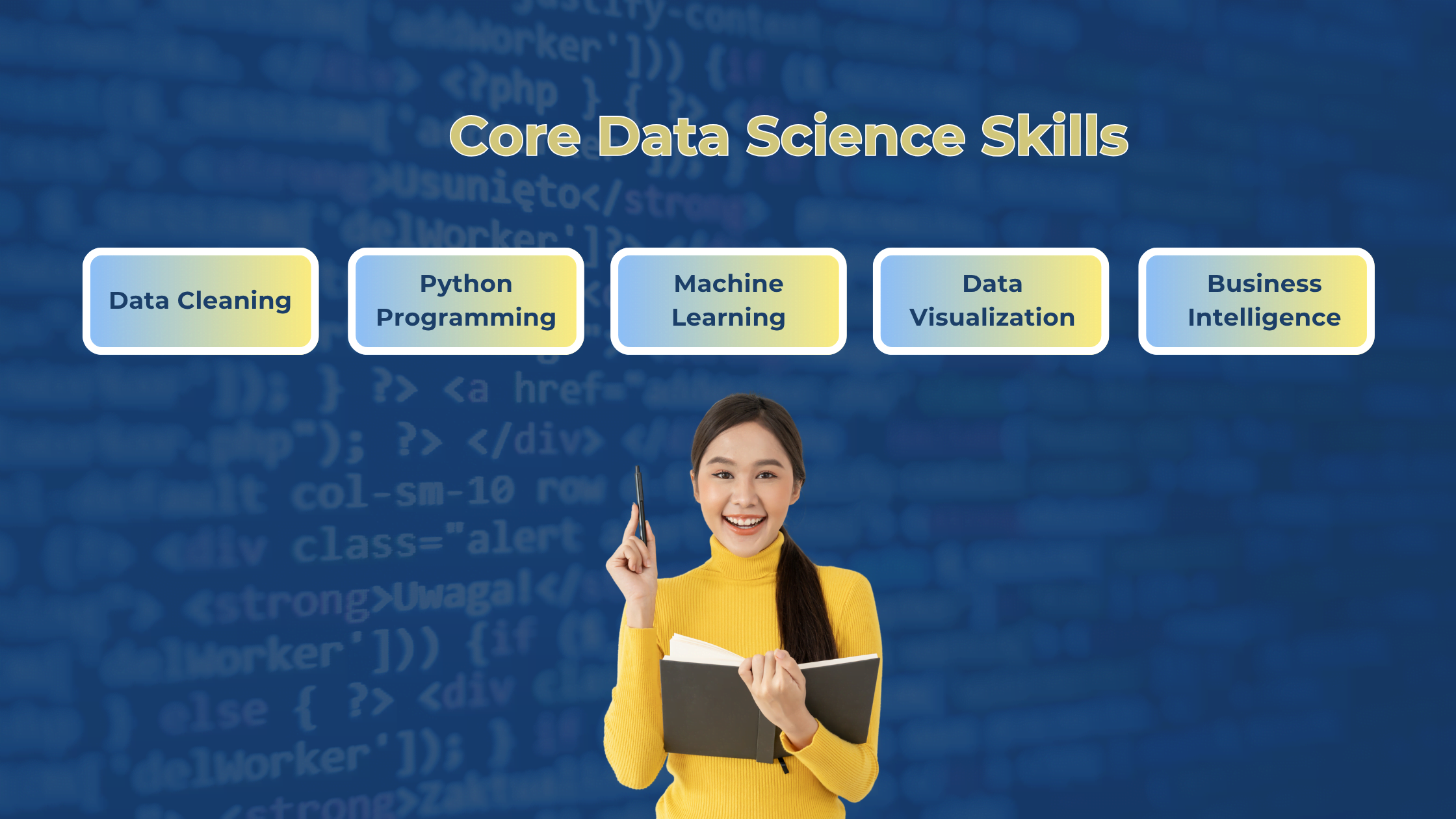
Key competencies include:

Students learn how to identify inconsistencies, handle missing data, and structure datasets for analysis. This process—often referred to as data wrangling or data preprocessing—is one of the most time-intensive stages of a data science workflow.
Professionals therefore learn techniques such as data normalization, feature engineering, and anomaly detection to ensure that datasets are clean, consistent, and suitable for training AI models. Strong data preparation skills enable analysts to build more reliable analytical pipelines and improve the overall accuracy of intelligent systems.
Machine learning enables professionals to build predictive models that identify patterns in historical data. It powers AI-driven tools that support strategic decision-making and operational efficiency.
These models can be applied to:
  • Demand forecasting
  • Recommendation systems
  • Fraud detection
  • Predictive maintenance
For example, recommendation systems use machine learning to analyze user behavior and suggest relevant products or content, while predictive maintenance models help manufacturing companies anticipate equipment failures before they occur. Fraud detection systems in financial institutions also rely on machine learning to identify unusual transaction patterns in real time.
Data storytelling combines visualizations with narrative explanations to help organizations understand trends and patterns within their data. Rather than presenting raw numbers alone, analysts structure insights into clear narratives that explain what the data means and why it matters.
Modern analytics tools increasingly include AI-assisted features that automatically generate insights, highlight anomalies, or recommend visualizations. However, human interpretation remains essential for validating results, explaining model behavior, and ensuring that insights are communicated responsibly.
This ability to connect advanced analytics with strategic communication is a critical skill for modern data professionals working in AI-enabled organizations.

Career Opportunities After Data Science Conversion Programs

Professionals who complete Data Science Degree & Conversion Programs can pursue a variety of roles across industries. As organizations increasingly adopt AI technologies, these roles are expected to remain among the fastest-growing careers in the digital economy.
Common career pathways include:
Data analysts interpret datasets and generate insights that support business decisions. They often work with dashboards, visualization platforms, and reporting tools.
Business intelligence professionals monitor organizational performance through analytics dashboards and reporting systems.
Their insights help organizations optimize processes and identify growth opportunities.
Data scientists build predictive models and machine learning systems that analyze large datasets and automate decision-making processes.
Machine learning engineers develop algorithms and AI-driven systems that support predictive analytics and intelligent automation.

Preparing for a Data-Driven Future

The rise of data-driven decision-making has created significant opportunities for professionals seeking meaningful career transitions.
Fields such as analytics, machine learning, and artificial intelligence continue expanding as organizations increasingly rely on digital insights to guide strategy and innovation.
For professionals looking to enter this field, Data Science Degree & Conversion Programs offer structured pathways to develop the analytical and technical skills required by modern organizations.
A postgraduate diploma in data science online provides the flexibility to gain advanced analytics expertise while maintaining professional commitments.
When combined with hands-on project experience and work-integrated learning models like CLaaS2SaaS, these programs can help learners successfully transition into the rapidly growing world of data science.

Course

Ready to move into a data-driven career?

Discover how a postgraduate diploma in data science online can help you build advanced analytics skills, gain practical project experience, and prepare for opportunities in the global data economy.