Web and Mobile Applications Development: Full Stack Skills for Modern Software Careers
SHARE THIS:


The digital world runs on applications.
From the mobile apps people use daily to the complex web platforms powering global businesses, modern organizations rely heavily on web and mobile applications development to deliver services, engage customers, and scale operations. As digital transformation accelerates worldwide, the demand for professionals who can build, manage, and improve these applications continues to grow.
According to the U.S. Bureau of Labor Statistics, employment for software developers is projected to grow significantly faster than the average for all occupations, reflecting the increasing importance of digital platforms across industries.
However, employers today are not simply looking for programmers who can write code. They increasingly seek developers who understand how entire systems work — from the interface users interact with to the server infrastructure that powers the application behind the scenes.
This is where full stack developer skills become essential.
Learning how to build applications that function seamlessly across devices, browsers, and platforms requires a deep understanding of responsive web development, backend systems, and user-centered design. These capabilities allow developers to create digital experiences that are reliable, scalable, and adaptable to changing user needs.
For aspiring developers, structured training in web and mobile applications development provides the foundation needed to build these capabilities and prepare for modern software careers.
Programs such as the Work-Study Bachelor’s Degree in Software Engineering (CLaaS2SaaS) are designed to bridge the gap between academic learning and real-world application development by combining technical education with industry-relevant experience.

Understanding Web and Mobile Applications Development
At its core, web and mobile applications development refers to the process of designing, building, and maintaining software applications that operate across internet-connected platforms.
These applications power many of the digital services people rely on every day, including:
- E-commerce websites and digital marketplaces
- Social media platforms and communication tools
- Enterprise management systems
- Online banking and financial platforms
- Mobile apps for healthcare, logistics, and entertainment
Each of these systems involves multiple layers of technology working together.
The front end is the part of the application users interact with. It includes the visual interface, navigation elements, and interactive components that shape the user experience.
The back end operates behind the scenes, handling tasks such as data processing, server logic, authentication, and database management. Without this layer, applications would not be able to store information, process transactions, or respond dynamically to user actions.
Connecting these layers requires a well-structured architecture, ensuring that data flows efficiently between the user interface and server infrastructure. Developers working in this field must therefore understand how different technologies interact to create smooth and reliable application performance.
Curious how students learn to build real applications from scratch?

Why Responsive Web Development Matters
One of the most important aspects of modern application development is responsive web development.
Google’s Web.dev documentation states that responsive web design ensures that websites automatically adapt to different screen sizes, helping deliver consistent user experiences across mobile phones, tablets, and desktop devices.
Today’s users access digital platforms through a wide range of devices, including smartphones, tablets, laptops, and desktop computers. Each device has different screen sizes, processing capabilities, and interaction methods.
Responsive design ensures that applications adapt automatically to these variations. Instead of creating separate versions of a website for each device type, responsive development allows a single application to adjust its layout and functionality dynamically.
This capability provides several important advantages.
– Improved user experience
Users expect digital platforms to work seamlessly regardless of the device they are using. Responsive design ensures that navigation, readability, and interaction remain consistent across screens.– Better accessibility
Applications that adapt to multiple devices make digital services more accessible to broader audiences, including users in mobile-first markets.– Simplified maintenance
Maintaining a single responsive codebase reduces development complexity compared with managing multiple platform-specific versions.
For developers, mastering responsive design is therefore a critical component of modern web and mobile applications development.
Essential Full Stack Developer Skills
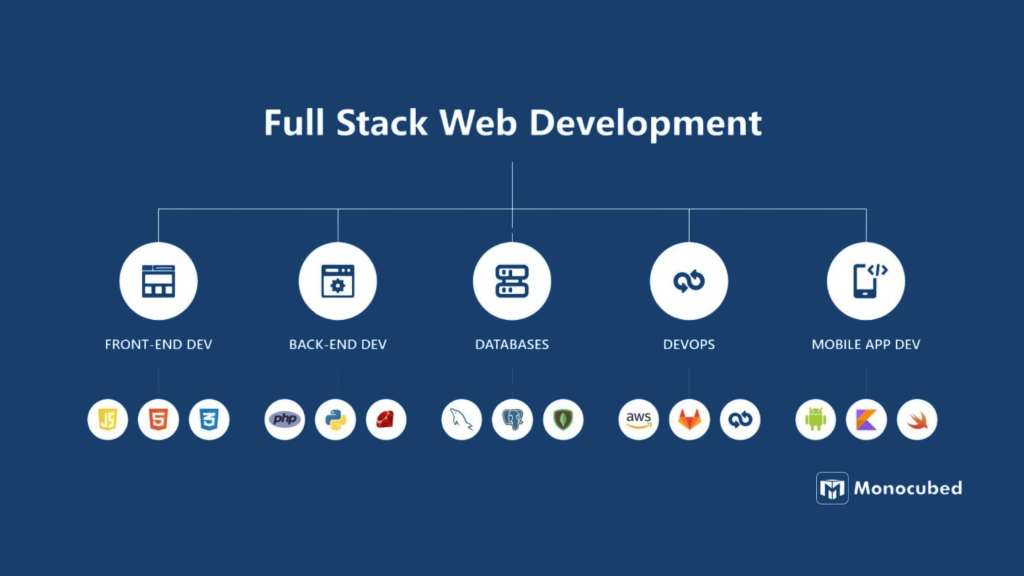
Building modern digital platforms requires developers to understand how different technologies interact across the entire application stack. These full stack developer skills enable professionals to contribute to multiple stages of the development process rather than focusing on a single specialized layer.
While developers often specialize over time, having a broad understanding of the full stack significantly improves problem-solving capabilities and collaboration within development teams. Some of the most important skills include:
Front-End Development
Front-end development focuses on the user-facing components of an application. Developers in this area work with technologies such as HTML, CSS, and JavaScript to create layouts, interactive elements, and visual interfaces.
A strong front-end developer ensures that users can navigate applications easily, access information quickly, and interact with digital features smoothly. Attention to detail, usability principles, and accessibility standards play a crucial role in delivering a positive user experience.
Back-End Development
Back-end development involves building the systems that power applications behind the scenes. This includes server-side programming, database integration, and application logic that processes user requests.
Back-end developers ensure that data is stored securely, transactions are processed accurately, and applications remain stable even under heavy usage. Technologies such as Node.js, Python, and Java are commonly used to manage these systems.
Database Management
Modern applications rely on databases to store and organize information. Developers must understand how to structure, retrieve, and manage data efficiently.
This involves working with database technologies such as SQL or NoSQL systems, designing scalable data models, and ensuring that applications can handle large volumes of information without performance issues.
API Integration
Applications rarely operate in isolation. They often communicate with external services such as payment gateways, analytics platforms, or cloud storage systems.
Application Programming Interfaces (APIs) allow developers to connect these services together. Understanding how APIs function enables developers to extend application capabilities and integrate multiple digital tools into a single ecosystem.
Development Workflow Tools
Developers must also understand tools such as Git, version control systems, and collaborative development platforms that allow teams to manage code efficiently and track software changes.
Want to see how these skills are taught through real development projects?
Career Opportunities in Web and Mobile Applications Development
Professionals trained in web and mobile applications development have access to a wide range of career opportunities across industries.
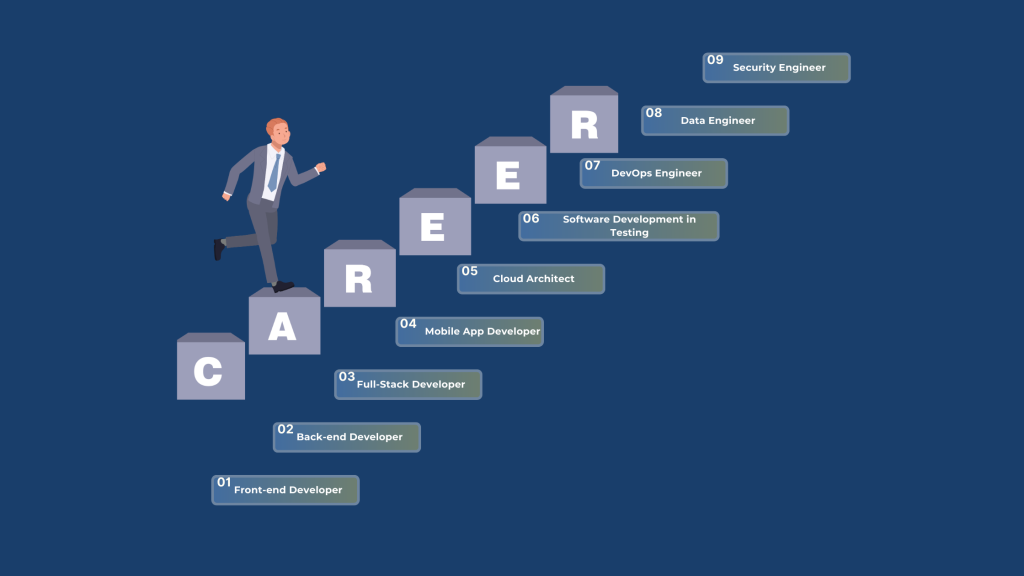
As businesses continue expanding their digital capabilities, developers with strong full stack expertise are increasingly valuable. Common career roles include:
Front-end Developer
Front-end developers focus on building user interfaces and interactive elements that shape how users experience digital platforms. They work closely with designers and product teams to ensure that applications are visually appealing, responsive, and easy to navigate.Back-end Developer
Back-end developers handle the server-side logic that powers applications. Their work involves managing databases, processing user requests, implementing authentication systems, and ensuring that applications remain secure and scalable.Full stack Developer
Full stack developers combine both front-end and back-end expertise, enabling them to work across multiple layers of application development. This versatility makes them valuable members of development teams, especially in startups and fast-moving technology environments.Mobile Application Developer
Mobile developers specialize in creating applications designed specifically for smartphones and tablets. They focus on performance optimization, device compatibility, and integrating platform-specific features such as camera access or push notifications.Stack Overflow’s Developer Survey states that full stack developers remain among the most sought-after professionals in the global software industry due to their versatility and ability to manage complex development tasks.
Why Work-Study Software Engineering Programs Provide a Strong Advantage
Learning development tools through short tutorials can introduce programming concepts, but building real expertise requires structured practice and real-world experience.
This is where a Work-Study Bachelor’s Degree in Software Engineering provides a major advantage.
The CLaaS2SaaS model enables learners to acquire validated competencies while simultaneously gaining hands-on experience with the digital tools and systems used in real-world business and technology environments, effectively bridging the gap between education and industry practice.
Programs like CLaaS2SaaS combine academic instruction with industry exposure, allowing students to learn development principles while applying them in practical contexts. This approach helps bridge the common gap between education and employability.
Students gain exposure to:
– Real-world development workflows
Working on practical projects allows students to understand how development teams collaborate, manage tasks, and deliver software solutions within structured project timelines.– Modern development tools
Students gain experience with tools widely used in the industry, including version control systems, development frameworks, and cloud-based deployment environments.– Team-based problem solving
Software engineering is rarely a solo activity. Work-study environments allow students to collaborate with peers and mentors, strengthening communication and technical coordination skills.– Professional portfolio development
By contributing to real or simulated projects during their studies, students graduate with tangible work they can showcase to potential employers.
This combination of theoretical knowledge and hands-on experience helps graduates transition more smoothly into professional roles.
Building a Portfolio That Demonstrates Real Skills
One of the most effective ways developers demonstrate their capabilities is through a strong project portfolio. Employers often evaluate candidates based on what they have built rather than solely on academic credentials.Students studying web and mobile applications development can build portfolio projects such as:
- Responsive websites designed for multiple devices
- Interactive dashboards and data visualization tools
- Mobile applications for productivity or lifestyle use
- Web platforms integrating third-party APIs
- Automation tools that streamline digital workflows
If they host their projects on platforms such as GitHub, employers can even review their code quality, documentation, and development process.
By the time students graduate from a work-study program, they can present a portfolio showing not only their technical knowledge but also their creativity, problem-solving ability, and the ability to apply that knowledge in real-world scenarios.

Preparing for the Future of Software Careers
The technology landscape continues evolving rapidly.
Artificial intelligence, cloud computing, and data-driven applications are transforming how software systems are designed and deployed. Developers who understand both foundational programming concepts and modern development environments will be better positioned to adapt to these changes.
Reports such as GitHub’s Octoverse highlight the rapid growth of software development communities worldwide, reflecting the increasing demand for developers capable of building modern web and mobile applications.
Training in web and mobile applications development helps aspiring developers build this adaptability.
By learning how applications function across devices, integrate with multiple services, and scale within digital ecosystems, developers develop the flexibility needed to work across different industries and technologies.
For individuals seeking a structured pathway into software engineering, programs such as the Work-Study Bachelor’s Degree in Software Engineering (CLaaS2SaaS) offer a comprehensive learning model that combines academic depth with practical experience.
Ready to turn these skills into a real software career?
Course

Conclusion
Digital applications are now at the center of modern business operations.
Organizations rely on well-designed web and mobile platforms to deliver services, engage users, and operate efficiently in competitive digital markets.
Developers with strong full stack developer skills, knowledge of responsive web development, and hands-on experience building digital platforms are therefore in high demand. Learning web and mobile applications development through a structured and industry-aligned program can help aspiring developers gain the knowledge, practical experience, and portfolio needed to succeed in this fast-growing field.
For students looking to transition from learning to real-world software careers, the Work-Study Bachelor’s Degree in Software Engineering through CLaaS2SaaS provides a pathway that integrates technical education with real industry exposure.
Ready to explore a future in software engineering?
The Work-Study Bachelor’s Degree in Software Engineering (CLaaS2SaaS) equips students with industry-relevant development skills, practical project experience, and the technical foundations needed for modern digital careers.
Download the Program Brochure to learn more about the curriculum, career pathways, and admissions process.