Program Sarjana Teknik Perangkat Lunak: Opsi Belajar Online, Syarat Kelulusan, dan Pathway untuk Pemula
BAGI sebagian orang, ini adalah momen yang paling dinanti-nantikan dalam hidup mereka.


For many high school students, choosing a program sarjana teknik perangkat lunak feels both exciting and intimidating.
The opportunity is clear. Software drives banking, healthcare, AI, e-commerce, and logistics. Software developer roles are projected to grow much faster than the average occupation through 2032, that growth reflects structural demand, not a short-term trend.
But here is the challenge most students realize too late: traditional degree timelines move slower than the software industry itself.
Programming frameworks evolve. Cloud platforms update. Development practices shift. A four-year delay before real-world exposure can create a readiness gap.
That is why more students are exploring structured, accelerated, work-integrated pathways like the CLaaS2SaaS Work-Study Bachelor’s Degree especially programs designed to help student fast-track in software engineering while gaining real development experience.
This article explains:
- What a modern software engineering bachelor program should include
- How a software engineering degree online works
- The real software engineering degree requirements
- A structured beginner pathway
- Why speed and experience matter more than ever
Why a Software Engineering Bachelor Program Matters Now
Teknologi perangkat lunak tidak lagi terbatas pada perusahaan teknologi.
Banks rely on secure systems to process transactions. Hospitals depend on digital infrastructure to manage patient data. Retail and logistics operate on complex backend systems. Even education platforms rely on scalable applications.
The World Economic Forum Future of Jobs Report consistently lists software-related roles among the fastest-growing professions globally. Automation, AI, and cloud computing are increasing demand, not reducing it.
At the same time, employer expectations have changed.
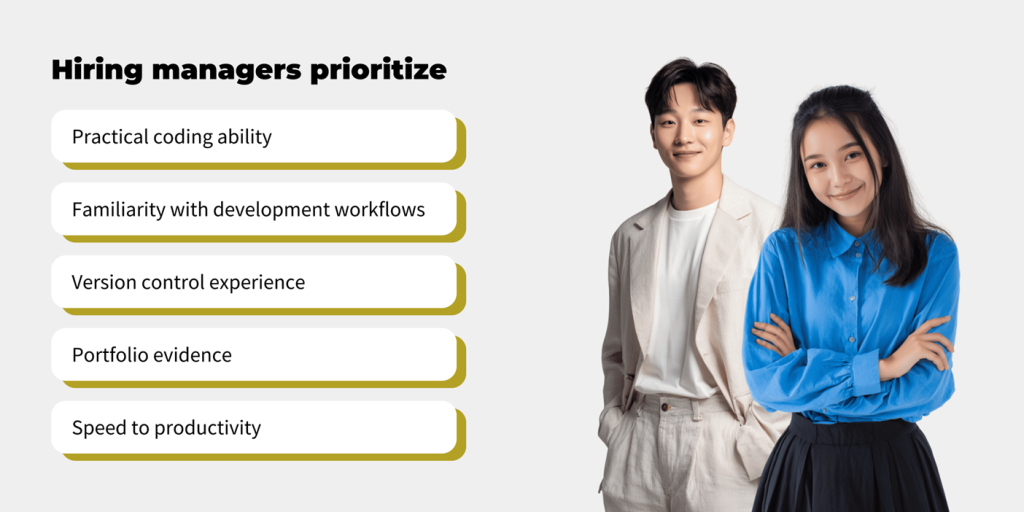
Hiring managers prioritize:
- Practical coding ability
- Familiarity with development workflows
- Version control experience
- Bukti portofolio
- Kecepatan menuju produktivitas
A strong software engineering bachelor program must respond to these expectations, not just deliver theory.
This means students who have already practiced building applications and debugging real code often adapt more quickly to professional environments than those who have only studied theoretical concepts.
And as modern software development also relies heavily on collaboration, a lot of employers prefer those prepared to contribute to real engineering teams using structured workflows, shared repositories, and version control systems to manage large codebases.
Because of this shift, the most effective software engineering bachelor programs emphasize hands-on projects, collaborative development, and industry-relevant tools, so students graduate with both conceptual understanding and practical experience.
What Is a Software Engineering Bachelor Program?
A program sarjana teknik perangkat lunak is an undergraduate qualification focused on designing, building, testing, and maintaining software systems.
Unlike general IT degrees, it emphasizes the full engineering lifecycle:
Requirement analysis, system architecture, implementation, testing and debugging, deployment and maintenance.
Students in structured programs learn:
- Programming fundamentals
- Data structures and algorithms
- Database systems
- Web and mobile development
- Cloud infrastructure
- Software quality assurance
Many of these practical skills are developed through hands-on environments similar to real production systems, including learning workflows used in web and mobile app development.
Software Engineering Degree Online: Is It a Smart Choice?
Interest in a software engineering degree online has increased significantly.
Online delivery provides flexibility. Students can study remotely and begin building experience earlier. According to the National Center for Education Statistics (NCES), online higher education enrollment has grown steadily over the past decade.
However, not all online programs are equal.
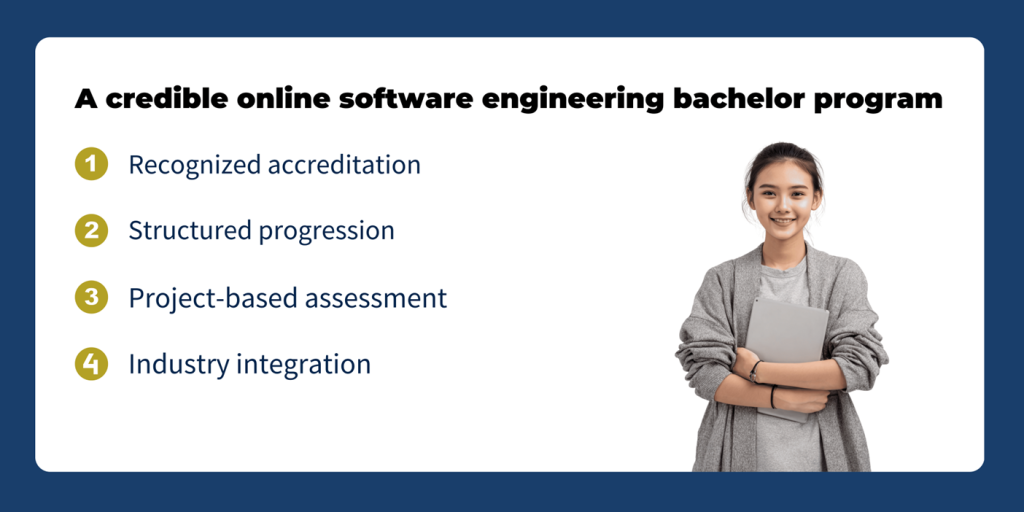
A credible online software engineering bachelor program must include:
- Recognized accreditation
- Structured progression
- Project-based assessment
- Industry integration
Flexibility without structure reduces effectiveness. Structure without application reduces employability.
The CLaaS2SaaS Software Engineering pathway integrates structured coursework with applied work-study exposure. That combination aligns academic learning with industry expectations.
Software Engineering Degree Requirements: What You Actually Need
Many students overestimate the difficulty of software engineering degree requirements.
They assume advanced calculus is mandatory.
They assume prior programming knowledge is required.
They assume only “top math students” qualify.
In reality, most modern program sarjana teknik perangkat lunak pathways are designed to teach engineering from the ground up.
Let’s break this down clearly.
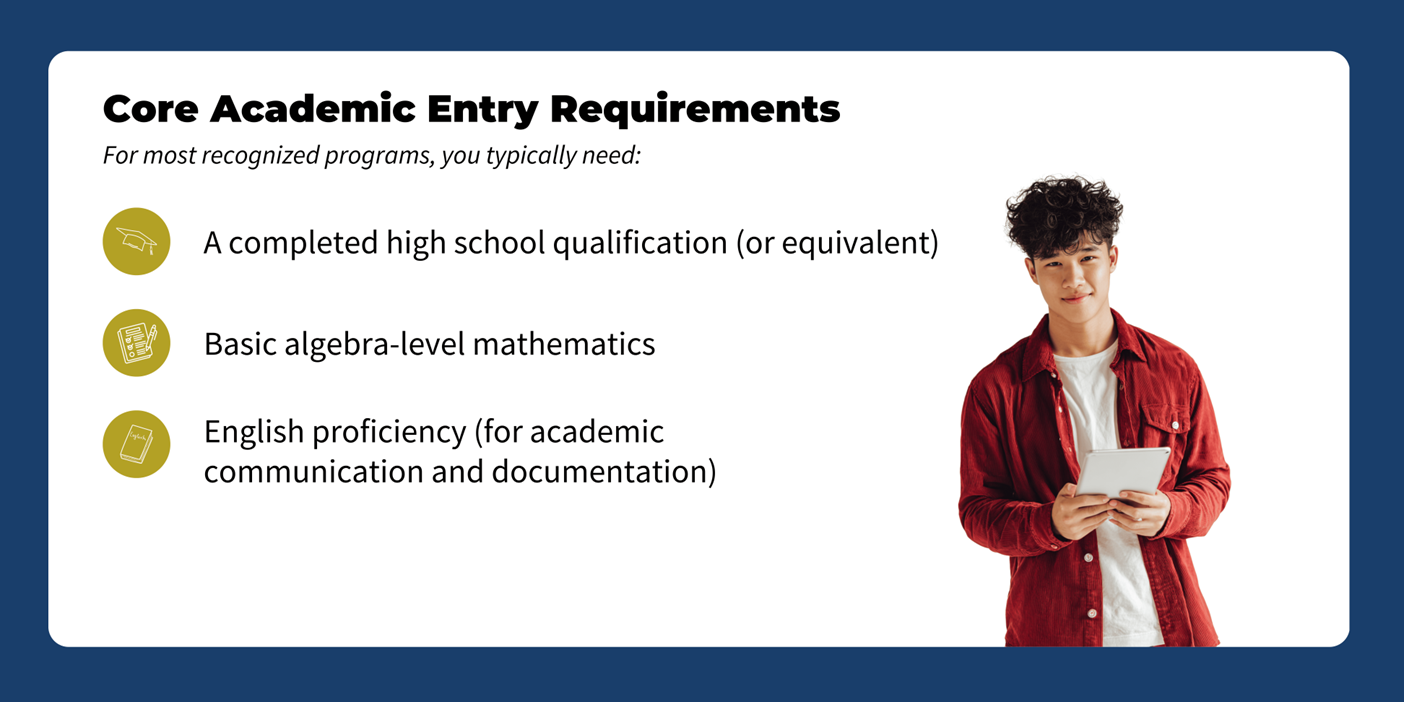
Core Academic Entry Requirements
For most recognized programs, you typically need:
- A completed high school qualification (or equivalent)
- Basic algebra-level mathematics
- English proficiency (for academic communication and documentation)
That’s it.
You are not expected to master algorithms before enrollment. You are not expected to know Python, Java, or JavaScript in advance.
A structured program exists to build those capabilities.
However, readiness levels vary among students. That is why staged pathways, like the one under the CLaaS2SaaS Work-Study Bachelor’s Degree in Software Engineering matter.
Instead of a single high-pressure entry point, the pathway is layered:
Foundation → Higher Diploma → Top-Up Bachelor’s Degree.
Each stage corresponds to a different readiness level.
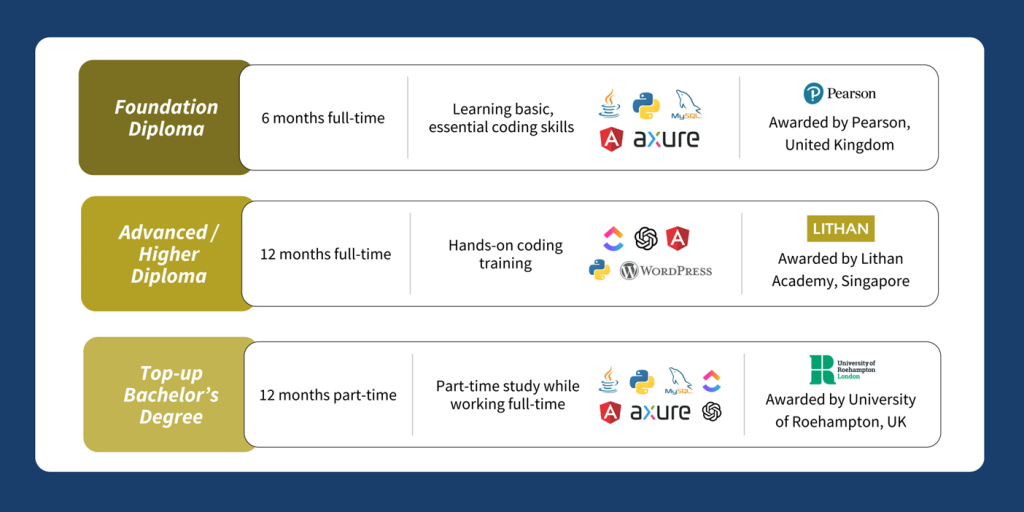
Foundation Diploma: Building Readiness From Zero
The Diploma Yayasan exists for students who:
- Have no coding experience
- Feel weak in mathematics
- Come from non-STEM backgrounds
- Want structured confidence-building before entering core engineering modules
It focuses on:
Logical Thinking Development
Students learn computational thinking, how to break problems into structured steps.Basic Programming Exposure
Introductory syntax and coding logic are introduced without overwhelming abstraction.Digital Literacy and Tool Familiarity
Students learn how development environments work, how files are structured, and how to navigate technical documentation.Mathematical Confidence
Instead of advanced math, the focus is strengthening algebraic reasoning and problem-solving foundations.It transforms “I’ve never coded before” into “I understand how code works.”
For students entering a software engineering degree online pathway, this stage ensures everyone begins the core diploma phase with clarity instead of confusion.
It is especially valuable for high school graduates who need structured academic transition into technical education.
Higher Diploma: Transitioning From Learning to Application
The Diploma Tinggi represents the shift from preparation to applied engineering.
At this stage, the software engineering degree requirements become skill-based rather than purely academic.
Students are expected to:
- Understand programming fundamentals
- Apply structured problem-solving
- Write functional code independently
- Work within version control systems
- Collaborate on group-based projects
The Higher Diploma deepens:
Programming Competency
Students move beyond syntax into architecture and structured development patterns.Database Systems
Understanding how applications store, retrieve, and manage data securely.Web & Application Development
Building real applications that simulate professional engineering tasks.Debugging and Testing
Students learn to identify and resolve errors, a critical real-world engineering skill.This stage aligns with what hiring managers evaluate during junior technical interviews.
According to insights from the Stack Overflow Developer Survey, many professional developers build competence progressively through structured practice rather than pre-existing expertise.
The Higher Diploma phase ensures students are no longer beginners, they are emerging engineers.
It also prepares students to handle bachelor-level expectations without being overwhelmed.
Top-Up Bachelor’s Degree: Academic Credibility + Employment Readiness
The Top-Up Bachelor’s Degree is where academic recognition and professional positioning converge.
At this stage, students are expected to:
- Design scalable systems
- Analyze software architecture
- Apply software engineering methodologies
- Produce capstone-level engineering work
- Demonstrate professional communication
This stage emphasizes:
Systems Thinking
Understanding how individual components integrate into enterprise-level software.Software Lifecycle Management
From requirement analysis to deployment strategy.Industry-Integrated Projects
Applying knowledge in structured real-world or simulated environments.Professional Readiness
Preparing portfolios, refining documentation, and aligning with employer expectations.
Unlike traditional 4-year degrees that delay application until the final year, this staged structure ensures application occurs early and consistently.
Students graduate with:
- A recognized bachelor’s degree
- Documented project portfolio
- Applied engineering experience
- Industry-aligned technical exposure
The Top-Up stage completes the transformation from beginner to graduate engineer.
Balancing Study and Work in a Work-Study Degree
Students often ask how a software engineering degree while working fits into their weekly schedule.Work-study programs are structured so that academic learning and applied practice reinforce each other. This balance strengthens learning outcomes. Concepts learned in lectures become meaningful when applied in real development tasks.
The structure also helps students build professional habits such as time management, communication, and collaborative problem-solving.
Software Engineering Bachelor Program: How the Learning Path Works
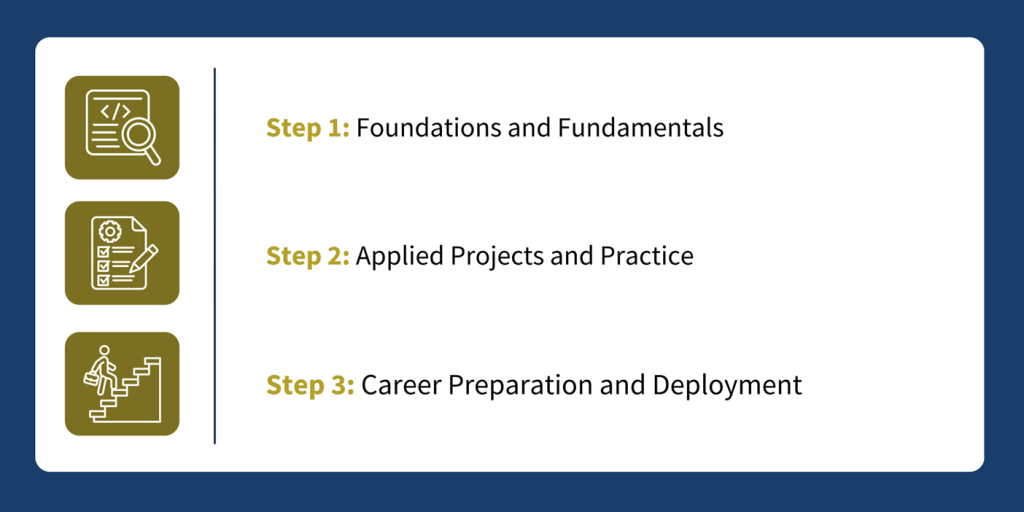
Desain yang baik program sarjana teknik perangkat lunak breaks learning into progressive phases.
Langkah 1: Dasar dan Prinsip Dasar
Students begin with programming logic, syntax, and development environments.
This stage builds conceptual clarity before complexity.
Students learn how to think computationally before solving large engineering problems.
Langkah 2: Proyek dan Praktek Terapan
Once fundamentals are established, learning becomes hands-on.
Students build working applications. They use version control systems. They practice debugging and testing.
Hal ini selaras dengan temuan dari McKinsey & Company, which emphasize that job-aligned experiential learning significantly improves workforce readiness.
Application reinforces understanding.
Step 3: Career Preparation and Industry Exposure
The final stage focuses on readiness.
Students refine portfolios. They simulate professional workflows. They understand agile team collaboration.
This transforms academic knowledge into deployable skill, which makes graduates more competetive.
Graduating earlier with structured experience closes the gap between education and employment. Early exposure to real development environments also helps students understand how software teams operate. Working with version control systems, collaborating on shared codebases, and troubleshooting bugs in complex applications mirrors the workflows used in professional engineering teams.
Hasil Karier yang Membenarkan Fast Track
Graduates move into roles such as:- Software Engineer.
- Full-Stack Developer.
- Application Developer.
- Systems Engineer.
Menanggapi Kesalahpahaman Umum
“Apakah gelar yang lebih cepat kurang kredibel?”
No. Credibility depends on accreditation and curriculum rigor, not duration.
“Apakah belajar lebih cepat mengurangi kualitasnya?”
No. Efficient sequencing removes redundancy, not core learning.
“Is this only for top math students?”
No. Structured pathways support beginners from foundational stages upward.
Kursus

Mulailah perjalanan karier Anda di bidang teknik perangkat lunak sekarang
Technology will not slow down.Your learning pathway should not either.
Dengan CLaaS2SaaS Work-Study Bachelor’s Degree in Software Engineering, Anda dapat:
Graduate faster than traditional programs, build job-ready skills early, gain real project exposure before graduation, follow a structured, beginner-friendly pathway.