အဖွင့်စာမျက်နှာ ဘလော့ HigherEd Transformation How Universities Can Use AI CRM to Re-Engage Alumni and Lifelong Learners
HigherEd Transformation
How Universities Can Use AI CRM to Re-Engage Alumni and Lifelong Learners
How Universities Can Use AI CRM to Re-Engage Alumni and Lifelong Learners
အကြောင်းအရာ
အကြောင်းအရာ
Alumni records often go stale after graduation, and engagement fades with them. An alumni engagement CRM can help universities maintain permissioned relationships, re-engage graduates, and identify alumni who may benefit from upskilling later in their careers without treating every graduate the same.
Why Does Alumni Engagement Fade After Graduation?
Three patterns often sit behind the fade. Each is a design problem a CRM workflow can address, provided alumni have given permission for the contact involved:- Stale contact data: addresses, employers and roles change, and records age without updates
- Generic mass emails: one message to everyone ignores career stage and interests
- No ongoing value exchange: contact that mostly asks for something, while offering little in return, gives alumni few reasons to respond
How Can AI-Enabled CRM Segment Alumni by Lifecycle Stage?
Lifecycle segmentation groups alumni by where they are in their careers and what they have said they want. A practical starting set is four segments:| အပိုင်း | သူတို့ ဘာတွေကို အလေးထားကြသလဲ | ဥပမာ အချက်ပြမှုများ |
|---|---|---|
| နောက်ဆုံးပေါ် သင်တန်းပြီးမြောက်သူများ | လုပ်ငန်းခွင်ဝင်ရောက်မှု အထောက်အပံ့များ၊ အချင်းချင်းပူးပေါင်းဆောင်ရွက်မှုကွန်ရက်များ | လုပ်ငန်းခွင်ဝန်ဆောင်မှုများ အသုံးပြုခြင်း၊ အခမ်းအနားမှတ်ပုံတင်ခြင်းများ၊ ပထမဆုံးနေရာရရှိမှု အချက်အလက်များ |
| အလုပ်အလတ်ပိုင်းတွင် အငြိမ်းစားယူထားသူများ | လမ်းညွှန်မှု၊ ကျွမ်းကျင်မှုမြှင့်တင်ခြင်း | သူတို့မျှဝေကြသော အခန်းကဏ္ဍပြောင်းလဲမှုများ၊ အကြောင်းအရာအာရုံစိုက်မှုများ၊ လမ်းညွှန်မှုအတွက် စာရင်းသွင်းမှုများ |
| ပြန်လည်ထောက်ပံ့ပေးလိုသူ အငြိမ်းစားဝန်ထမ်းများ | မန်တိုရင့်ခြင်း၊ အခမဲ့ဝန်ဆောင်မှုလုပ်ငန်းများ၊ လူမှုရေးပါဝင်ဆောင်ရွက်ခြင်း၊ လူမှုရေးဖျော်ဖြေမှုအခွင့်အလမ်းများ | လူမှုကယ်ဆယ်ရေးအဖွဲ့ဝင်များ စာရင်းသွင်းခြင်း၊ သင်တန်းပို့ချမှုတွင် ပါဝင်ခြင်း၊ တက္ကသိုလ်ကို ထောက်ပံ့ပေးရန် ထုတ်ဖော်ထားသော အကျိုးစီးပွားများ |
| ပြန်လည်ဝင်ရောက်လာသူများ | အလုပ်အကိုင်အဆင့်နှင့် ကိုက်ညီသော အသေးစား တိုးချဲ့သင်တန်းများ | သင်တန်းစာမျက်နှာများ လာရောက်ကြည့်ရှုမှုများ၊ သင်ယူလေ့လာမှုအလေ့အကျင့်များ၊ သင်တန်းသမိုင်း |
AI can help identify patterns in available engagement data, suggest relevant segments and flag when an alumnus’s interests may have changed. These suggestions should be checked against defined rules and available evidence, with staff retaining oversight of how segments are used.
Segments are starting points, not fixed labels. An alumnus may belong to several segments at once, and their stated preferences should take priority over inferred interests. Universities should also make it easy for alumni to update their information and communication preferences.
Use only data that the institution is permitted to process for the intended purpose. Define appropriate access, retention and review rules, and avoid scraping external sources or inferring sensitive attributes to determine how alumni should be approached.
What Does AI-Driven Outreach Look Like in Practice?
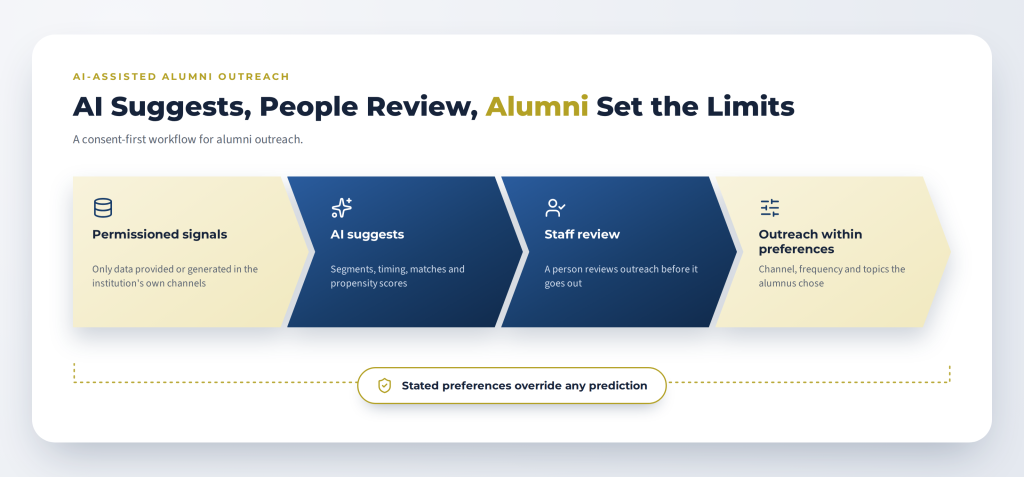
Once universities identify relevant alumni segments, AI-enabled CRM can help teams turn those insights into timely, coordinated follow-up. This may include suggesting relevant communications, identifying potential next steps and helping staff manage outreach across the alumni relationship.
For example:
- From event participation to follow-up: After an alumnus attends a university event, the CRM can help staff identify an appropriate next interaction, such as sharing a related event or inviting them to join an alumni network.
- From engagement to re-engagement: If an alumnus responds to an invitation or reconnects with the university, the CRM can help staff track the interaction and coordinate relevant follow-up.
- From predicted interest to staff action: AI can estimate which communications may be more relevant based on available engagement data, helping teams prioritize outreach for review rather than automatically deciding whom to contact.
Effective outreach is not about sending more messages. It is about making follow-up more relevant, coordinated and useful—supporting stronger alumni relationships over time.
How Do Alumni Become Lifelong Learners Again?
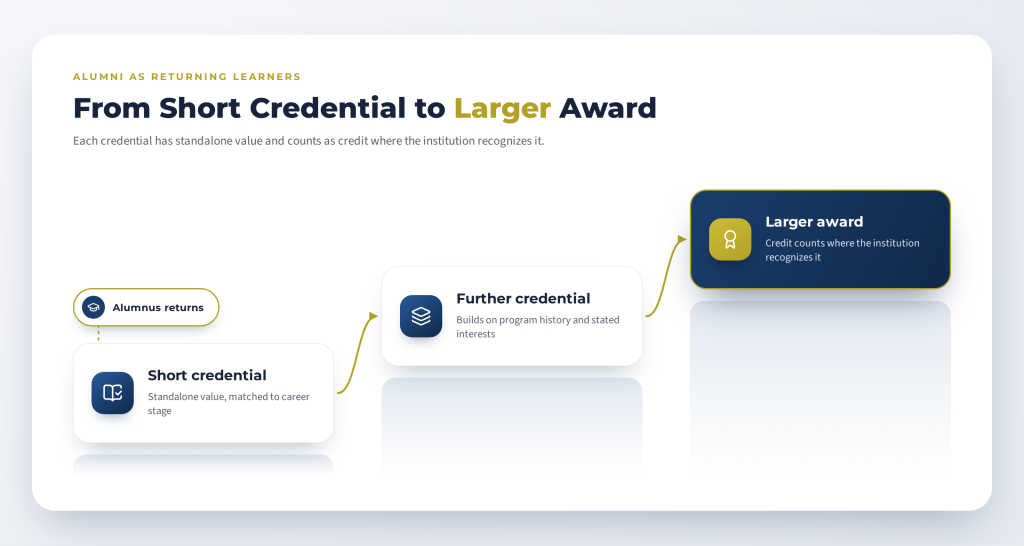
For many alumni, returning to study means a short, focused credential rather than a full degree. Stackable offerings fit that need: [BS1.1]each credential has standalone value and counts as credit toward a larger award where the institution recognizes it. Three design points help:
- Match the offer to career stage: a refresher after a role change differs from a leadership program for a senior alumnus
- Use history: the CRM knows prior programs and stated interests, so the offer can build on what the person already studied
- Make re-entry easy: formats that fit around work, with the route to a larger award visible up front
Which Metrics and Safeguards Matter?
Universities should measure whether alumni outreach leads to meaningful engagement, not just email opens and clicks.- Re-engagement: Responses from previously inactive alumni.
- Participation: Event attendance, mentoring and volunteering.
- Lifelong learning: Course enquiries, applications and re-enrollment.
- Outreach effectiveness: Response, conversion, unsubscribe and complaint rates.
- Repeat engagement: Alumni returning for further activities or programs.
The goal is to strengthen alumni relationships while protecting their privacy and trust.
မေးလေ့ရှိသော မေးခွန်းများ
Can AI really improve alumni giving?
AI can help prioritize whom to contact and when, and personalize the message, but results depend on data quality and a genuine value exchange with alumni. Institutions should measure it against their own past campaigns instead of relying on generic benchmarks.
Is this the same as engaging current students?
No. Alumni are at a different lifecycle stage with different goals: re-connection, giving and re-skilling. The consent context differs too, so keep the two workflows and their data rules separate.
What data is needed?
Contact details and consent status, program history, and engagement history from the institution’s own channels. Keep it minimal and permissioned, and do not scrape or infer data from outside sources without permission.
How do alumni become learners again?
Through short, stackable upskilling offers matched to career stage, where the institution recognizes completed credentials as credit toward larger awards. The CRM’s role is to match each offer to the person’s history and interests.
What are the privacy risks?
Collecting more than a purpose needs, contacting people against their preferences, keeping data too long, and inferring attributes without permission. Safeguards include recorded consent, a preference center, retention limits and checking the law that applies where alumni live.
Further reading: Explore how CLaaS2SaaS’ AI-enabled CRM for institutions capabilities, including personalised engagement, multi-channel campaigns, and customer-success workflows. Universities can assess how these broader capabilities could support consent-aware alumni engagement and lifelong-learning relationships within their own systems and governance requirements.
မျှဝေပါ


ဒီအလုပ်ကသင့်အတွက်လားဆိုတာ စစ်ဆေးချင်ပါသလား?