

Trang chủ Thông cáo báo chí CLaaS2SaaS Calls for a Shift from Compliance to Measurable Outcomes in TVET Quality Assurance
Thông cáo báo chí
CLaaS2SaaS Calls for a Shift from Compliance to Measurable Outcomes in TVET Quality Assurance
Related Topics
Related Topics
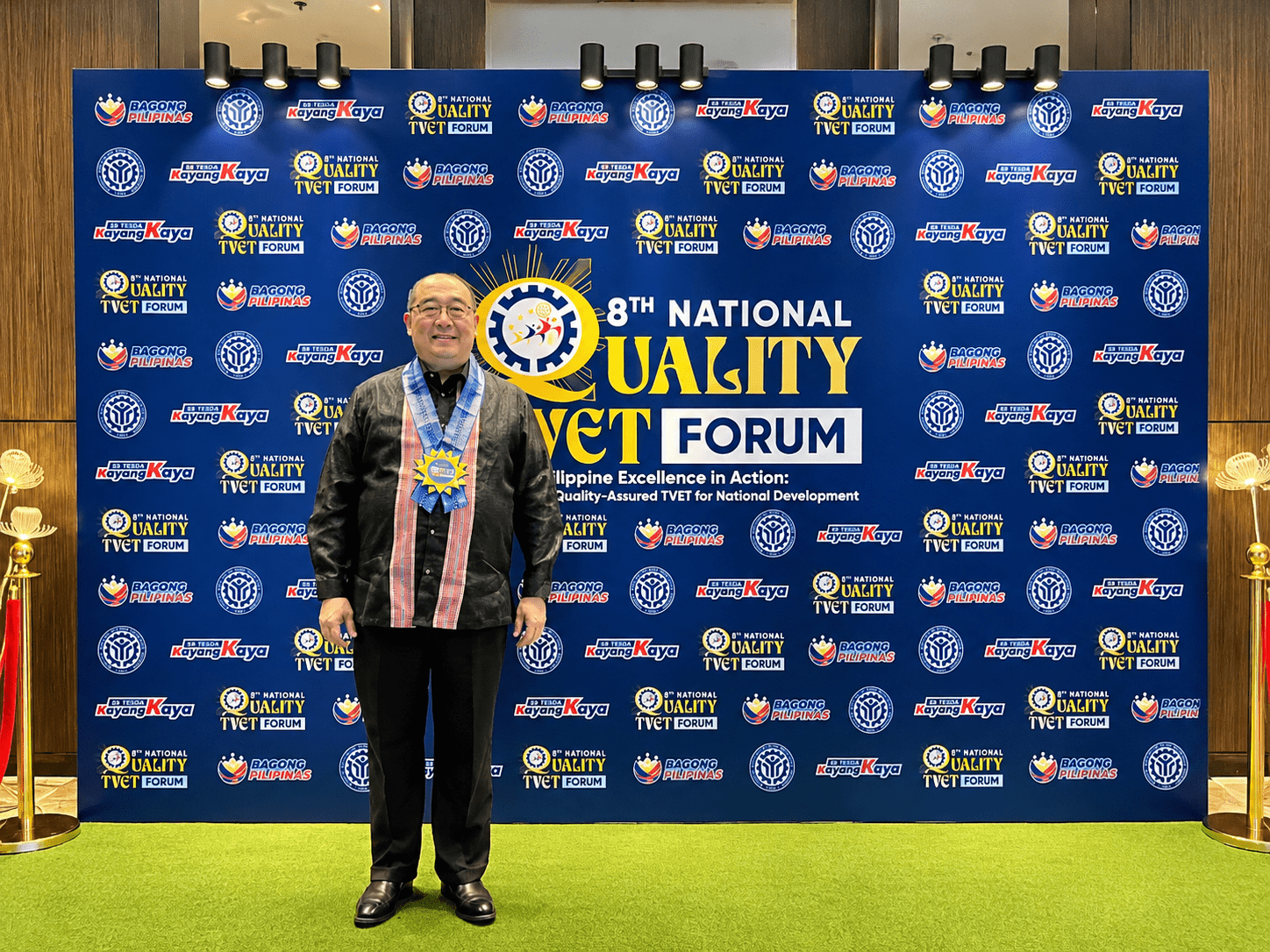
Philippines, 14 October 2026 – CLaaS2SaaS joined education, industry and workforce development stakeholders at the 8th National TVET Forum to advance discussions on how quality assurance can translate into measurable learning outcomes and improved workplace readiness.
Representing CLaaS2SaaS, Prof. Vicente Antonio V. Pijano III, Vice President for Higher Education at CLaaS2SaaS, delivered a plenary presentation entitled “Does Quality Training Produce Quality Outcomes? Rethinking Quality Assurance in TVET.” His presentation challenged technical and vocational education and training (TVET) institutions to look beyond regulatory compliance and examine what ultimately matters: whether learners acquire demonstrable competencies, can apply their skills in real-world settings, and are prepared to meet evolving industry requirements.
Moving Beyond Compliance Towards Demonstrable Competencies
Quality assurance remains essential to maintaining standards, consistency, and institutional accountability across TVET institutions. However, meeting accreditation requirements, completing training programmes and complying with established standards do not automatically guarantee that learners have developed the competencies required in the workplace.
The central argument of Prof. Pijano’s presentation was that the quality of training must ultimately be demonstrated through the quality of its outcomes.
This calls for a stronger emphasis on competency-based assessment, practical application, workplace performance, and the ability of learners to continuously develop their capabilities.
Rather than measuring success primarily through training completion and institutional compliance, TVET providers must increasingly evaluate what learners know, what they can do, and how effectively they can apply their competencies in actual work environments.
The presentation concluded with an open forum, allowing participants to reflect on the implications of outcomes-driven quality assurance and its practical application in institutional improvement. The discussions reinforced the importance of making TVET programmes more responsive to industry expectations and changing workforce demands.
Building a Culture of Continuous Improvement
Another plenary session explored the theme of Filipinism and Global Competence, highlighting how Filipino identity, cultural values and local knowledge can complement international standards and professional competencies.
The discussion underscored the importance of preparing Filipino talent to participate confidently in international industries and workplaces while remaining grounded in their cultural identity and values.
Together, these discussions highlighted a broader challenge for Philippine TVET: preparing a workforce that is not only technically competent but also adaptable, globally competitive and capable of responding to technological change.
As artificial intelligence and digital technologies reshape industries and occupations, TVET institutions must also consider how emerging technologies, AI-enabled learning and evolving competency requirements can be integrated into skills development and assessment.
This requires stronger collaboration among education providers, employers and industry partners, supported by continuous improvement and learning pathways that connect education directly with workplace application.
Connecting Skills Development with the Future of Work
For CLaaS2SaaS, the discussions at the National TVET Forum reinforce the importance of a skills-first, work-integrated approach to education and workforce development.
Through its Pan-ASEAN AI & Workforce Acceleration Platform™, CLaaS2SaaS advocates the integration of adaptive learning technologies, industry-aligned competency development and practical workplace applications to help individuals and organisations prepare for the evolving AI economy.
The transition towards outcomes-driven education requires institutions to rethink not only how training is delivered but also how learning is assessed, competencies are validated, and workforce readiness is demonstrated.
Ultimately, quality education and training should be measured not simply by what institutions deliver, but by what learners become capable of achieving.
For the Philippine TVET sector, this represents an opportunity to strengthen the connection between education, industry and employment while building a more responsive, inclusive and future-ready workforce.
About CLaaS2SaaS
CLaaS2SaaS is a Pan-ASEAN AI Acceleration Platform with a connected AI and workforce transformation ecosystem committed to advancing inclusive digital economy transformation across Southeast Asia.
Driven by its Skills-First, Work-Integrated Learning approach, CLaaS2SaaS helps educational institutions develop industry-relevant digital talent through AI-powered adaptive learning technologies and practical workforce development pathways.
The company also supports enterprises in adopting intelligent digital solutions and scalable AI services that enhance productivity, strengthen workforce capabilities, and accelerate business transformation.