Cloud Computing Courses Singapore: Choose the Right AWS, Azure, or GCP Certification Path
Content
Content
Choosing the right cloud certification is not just about learning a platform. It is a strategic decision that shapes your path into cloud engineering, platform operations, or architecture.
For many learners, the challenge is not whether cloud computing is important. It is knowing where to start, which certification to choose, and how to turn that certification into real, job-ready skills.
Singapore provides a strong benchmark for cloud hiring demand. According to SSRN, shows that the cloud market is dominated by three major providers: Amazon Web Services (AWS), Microsoft Azure, and Google Cloud Platform (GCP), infrastructure and platform professionals remain among the most in-demand roles. This trend is also reflected across Asia, including India, Malaysia, Indonesia, and the Philippines, where organizations continue to invest in cloud transformation.
Each platform supports a different career path. AWS offers broad exposure across industries, Azure is widely used in enterprise environments, and GCP is growing in data and analytics use cases. Choosing the right path depends on your background, your target role, and the type of systems you want to work with.
However, certification alone is not enough. Employers expect professionals who can apply cloud concepts in real environments. This is where many learners face a gap between passing an exam and performing in a job role.
A structured learning pathway helps bridge this gap by combining certification preparation with hands-on application and role-based skill development. If you are ready to move from certification to real capability, explore structured programs through CLaaS2SaaS
AWS vs Azure vs GCP: Which Certification Should You Choose First?
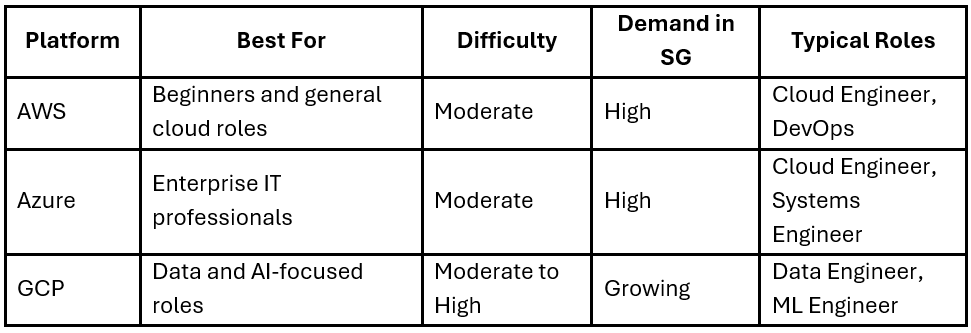
For most beginners, AWS is the recommended starting point due to its broad adoption. However, Azure is equally valuable in enterprise environments, while GCP is ideal for data-driven career paths.
Choosing the right platform is only the first step. What matters more is how you progress from certification into real-world capability.
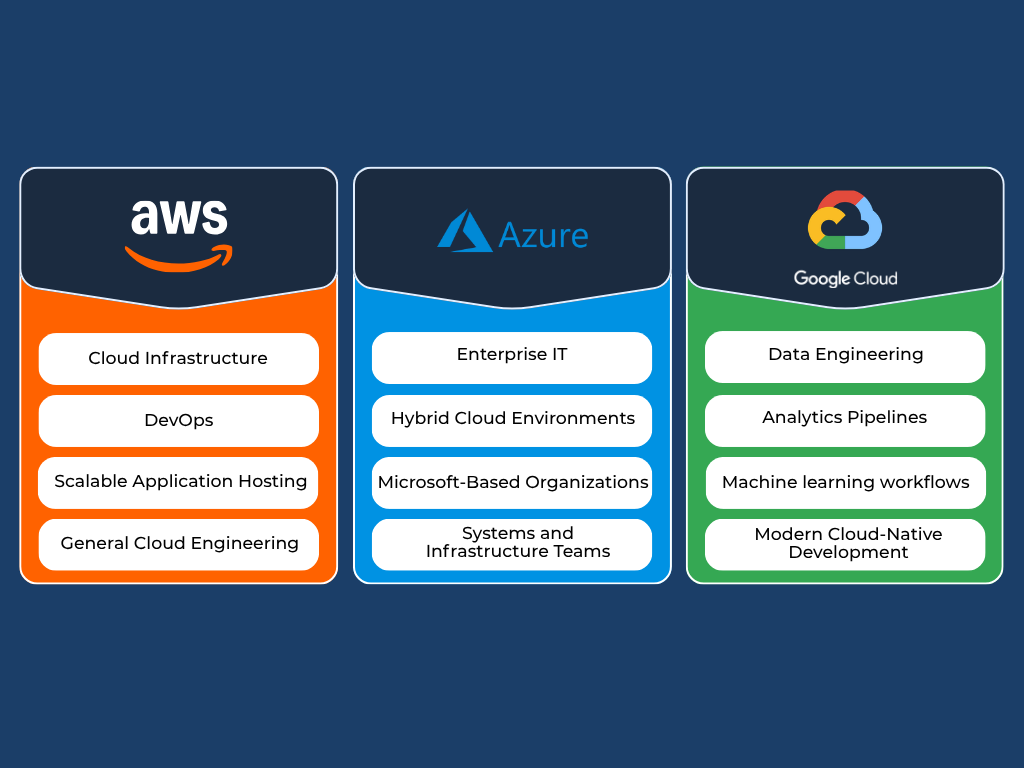
Cloud computing courses Singapore learners consider typically focus on:
- AWS for infrastructure and DevOps
- Azure for enterprise and hybrid cloud
- GCP for data, analytics, and machine learning
Beyond infrastructure, these platforms are increasingly used to run data pipelines, machine learning models, and AI-driven applications.
This makes cloud skills highly transferable across roles in software development, data analytics, and AI implementation. Each platform has its strengths, but career success depends on how you build skills beyond certification.
Certification Pathways and Career Progression
Cloud certifications typically progress through three stages:
- Foundational level: Build core cloud concepts, terminology, and platform awareness.
- Associate level: Develop hands-on skills for cloud operations and engineering tasks.
- Professional level: Move into advanced design, architecture, and optimization.
This progression reflects how cloud careers develop in practice. Learners usually begin with entry-level understanding, then build operational capability, and eventually grow into cloud engineer or cloud architect roles.
A structured pathway helps each stage build on the one before it, so learners are not just preparing for an exam but developing the skills needed for real job responsibilities. This is where a guided learning path matters most.
Why Cloud Certifications Alone Are Not Enough
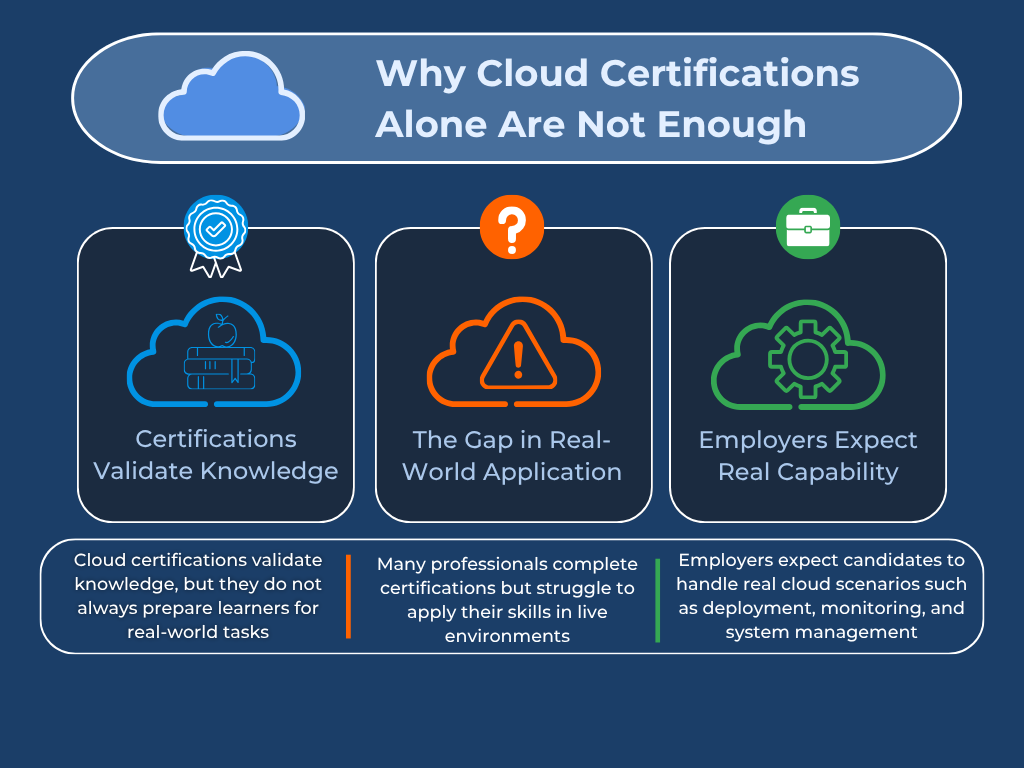
Cloud certifications validate knowledge, but they do not always prepare learners for real-world tasks.
Many professionals complete certifications but struggle to apply their skills in live environments. Employers, however, expect candidates to handle real cloud scenarios such as deployment, monitoring, and system management.
Many learners focus heavily on exam preparation because certification is the most visible milestone. However, passing an exam is not the same as being able to perform in a cloud role. In real work environments, professionals must deal with changing requirements, live systems, and unexpected technical issues. That is where theory alone starts to fall short.
Employers want people who can do more than identify cloud concepts. They want professionals who can deploy services, monitor performance, troubleshoot issues, and support business outcomes. In other words, they want capability, not just knowledge.
This is why a learner can hold a cloud certification and still feel unprepared for the job. The gap usually appears when the learner has not had enough practice connecting concepts to real tasks. That gap is exactly what a structured pathway is meant to close.
A Structured Cloud Learning Pathway Built for Real Job-Ready Skills
Cloud certifications are more valuable when they are supported by a structured learning pathway. Instead of studying cloud topics in isolation, learners follow a guided journey that combines certification preparation with practical application.
At CLaaS2SaaS, the cloud pathway is designed to help learners build capability step by step. The structure is skills-first and outcome-driven, with learning that moves from cloud fundamentals into hands-on practice and then into role-ready progression. This makes the pathway more useful for learners who want to move toward cloud engineer or cloud architect roles, not just pass an exam.
This approach is important because it helps learners see the relationship between what they are studying and the type of work they want to do. For example, someone aiming for a cloud engineer role needs more than a certificate. They need exposure to deployment, system management, and hands-on problem solving. Someone aiming for a cloud architect role needs an even deeper understanding of design, optimization, and scalability.
The value lies in the combination of structure, practical learning, and clear progression. That is what turns cloud training into career development. You can explore the broader learning journey through the Digital Skills & Tech hub and the Courses & Training page.
If you want to follow a pathway designed for both certification and real-world readiness, explore CLaaS2SaaS
How Cloud Roles Progress: Responsibilities and Salary in Singapore
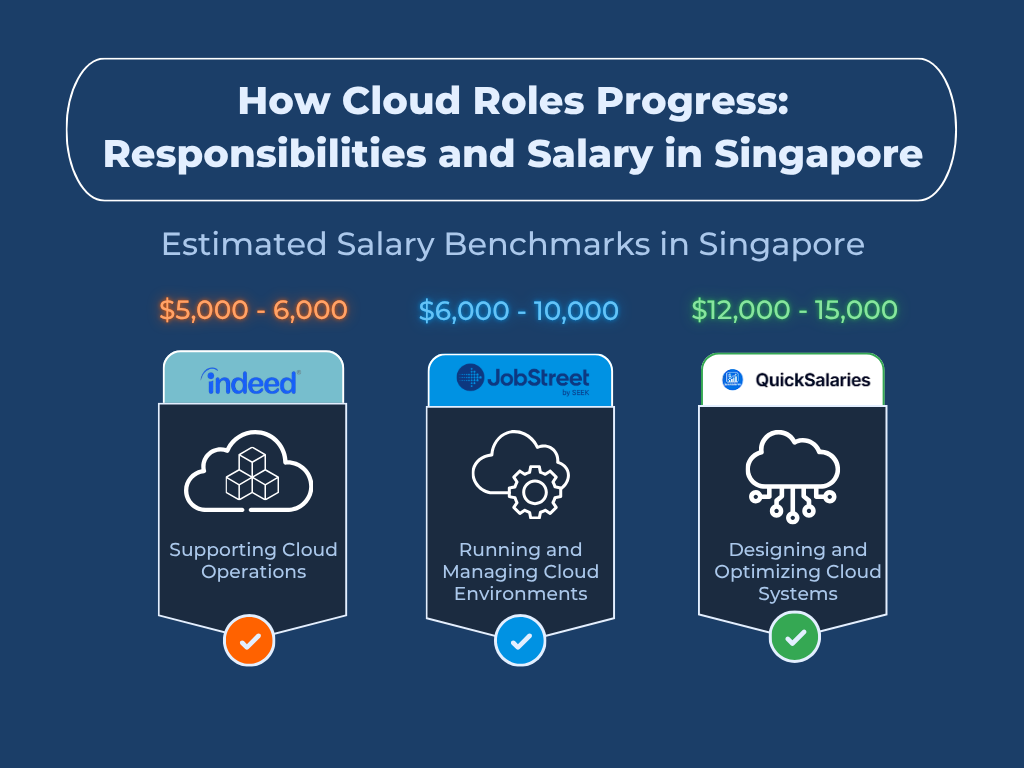
Singapore provides a strong benchmark for cloud salaries, but compensation is more closely tied to capability than certification alone.
Supporting cloud operations
At this stage, professionals help maintain cloud environments under guidance. They assist with resource provisioning, monitoring, documentation, and basic troubleshooting.
- Estimated salary range: $5,000 to $6,000, based on entry-level salary data from Indeed.
Running and managing cloud environments
At this level, professionals take ownership of day-to-day cloud operations. They deploy services, manage cloud resources, troubleshoot incidents, and support system reliability.
- Estimated salary range: 6,000 to $10,000, based on mid-level salary insights from JobStreet.
Designing and optimizing cloud systems
At this stage, professionals shape how cloud systems are built and improved. Their work includes architecture planning, cost optimization, reliability, security, and governance.
- Estimated salary range: $12,000 and above, according to QuickSalaries senior roles salary data.
Across Singapore and the wider Asia region, similar salary growth patterns are observed as organizations continue to invest in cloud capability and digital transformation. This is why cloud learning should focus on more than exam preparation. It should build the practical capability needed to perform in real roles.
Salary growth in cloud is closely tied to how much responsibility a professional can handle. At the lower end, professionals are usually supporting basic cloud tasks and learning how systems work. As they gain more capability, they begin taking ownership of deployment, troubleshooting, and day-to-day operations. At the advanced level, they are expected to contribute to high-level design decisions and system strategy.
This is why salary should be understood as a reflection of capability growth, not certification alone. A certification may help open the door, but the ability to work independently and make sound technical decisions is what drives long-term progression. Across Singapore and the wider Asia region, this pattern is becoming more visible as organizations continue to invest in cloud adoption and digital transformation.
Who Should Attend Cloud Computing Courses
This cloud computing pathway is a strong fit for beginners exploring cloud for the first time, IT professionals who want to transition into cloud roles, and engineers who want to specialize in AWS, Azure, or GCP.
It is also suitable for career switchers who want a structured route into cloud engineering or cloud architecture. For learners building adjacent skills, related pathways in Software & Web Development and Data & Analytics can also support a broader technology career direction.
You can also explore related career pathways such as Software & Web Development or Data & Analytics.
Career Outcomes in Cloud
Cloud learning can open the door to roles in engineering, operations, platform support, and architecture. But the real value is not just the job title. It is the ability to work confidently with cloud systems, solve real infrastructure problems, and contribute to modern digital operations.
For learners, that means more than certification. It means becoming capable of applying cloud skills in practical environments, collaborating with technical teams, and progressing into higher-value roles over time. Across Singapore and the wider Asia region, employers continue to value professionals who can combine cloud knowledge with hands-on execution.
That is why a structured, applied pathway matters. It helps turn certification into capability and capability into long-term career growth.
FAQs
Which cloud certification should I get first?
Can I use SkillsFuture for cloud certification?
How much do cloud engineers earn?
How long does it take to get certified?
Conclusion
Cloud learning also has broader value beyond a single job title. It builds a way of thinking that applies across infrastructure, operations, automation, and digital transformation. Learners who understand cloud well often find it easier to connect with related areas such as software development, data analytics, and AI-driven workflows. That makes cloud a useful foundation for learners who want flexibility in their career path.
This is one reason cloud computing remains such a strong investment for professionals across Asia. It is not only about getting into a specific role today. It is about building a capability set that stays relevant as technology stacks continue to evolve.
The best cloud computing courses Singapore learners and professionals across Asia should choose are those that go beyond certification and focus on building real, job-ready skills.
Choosing between AWS, Azure, and GCP is only the first step. What matters more is following a structured pathway that helps you develop practical experience and progress toward real cloud roles.
Choose Your Cloud Certification Path
If you are ready to take the next step, explore structured cloud training through CLaaS2SaaS and begin your journey toward cloud certification and career success.


Â
 Â