Home Blog Work Study Degree Degree Programs Philippines 2026
Work Study Degree

Degree Programs Philippines 2026 - CHED-Accredited Schools, Tuition & Career Paths

Degree Programs Philippines 2026 - CHED-Accredited Schools, Tuition & Career Paths

Banner image for Degree Programs Philippines 2026 guide showing how Filipino students can explore CHED-accredited schools, tuition comparison, online degree programs, and career-focused education pathways.
Choosing the right college path in the Philippines is not only about finding a course you enjoy. For many Filipino families, selecting from available college programs is one of the biggest financial and career decisions they will make. It’s not only whether a degree is officially recognized by the Commission on Higher Education (CHED) or how much it costs, but also making decisions that leads to employability, career mobility, and long-term relevance in a rapidly changing digital economy.
CHED recognition matters because employers, professional licensing bodies, and graduate schools in the Philippines often look for credentials from institutions that meet national education standards. For first-generation college students, understanding CHED accreditation can help avoid investing time and money into programs that may not deliver strong career opportunities.
At the same time, Filipino learners today have more choices than ever before. Traditional 4-year bachelor’s degrees now compete with online degree programs, ladderized pathways, and accelerated industry-focused education models designed for fast employment.
This shift is becoming even more important in the age of artificial intelligence (AI) and digital transformation. As an example, education providers such as CLaaS2SaaS and its university partners are part of a growing movement toward work-integrated and industry-aligned learning models that help students graduate with both recognized credentials and real-world experience.

CHED Accreditation Explained – Why It Matters for Philippines Graduates

CHED, or the Commission on Higher Education, is the Philippine government agency responsible for regulating colleges and universities. When a school or program is CHED-recognized, it means the institution meets academic and operational standards required in the Philippines.
For students, CHED recognition can affect:
  • Eligibility for government scholarships and financial aid
  • Employer acceptance of your degree credentials
  • Admission to postgraduate studies
  • Qualification for board examinations in regulated professions
  • Credit transfer opportunities between schools
This is especially important for online and hybrid learning. As more Filipino students, working professionals, and Overseas Filipino Workers (OFWs) consider flexible education options, verifying CHED recognition helps ensure the degree remains valid for employment and future studies.
As industries increasingly adopt AI tools, automation, and digital workflows, employers are also placing greater value on graduates who can demonstrate practical technology skills alongside academic qualifications. This has contributed to the rise of industry-focused and work-study degree models that integrate project-based learning, digital collaboration, and exposure to real business environments. CLaaS2SaaS’ partners such as Philippine Women’s College of Davao and First City Providential College are part of this broader movement toward flexible and employability-focused higher education.

Types of Degree Programs in the Philippines
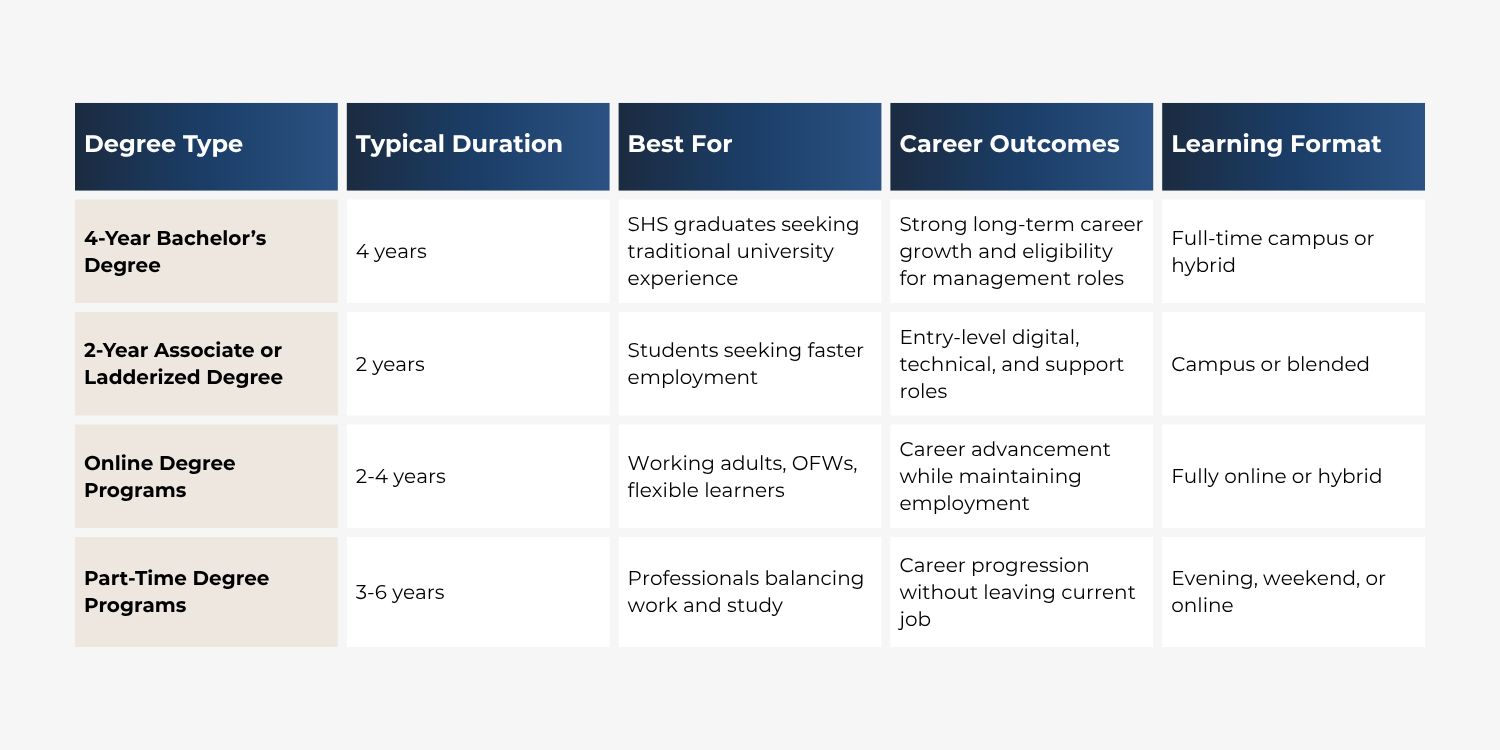
Comparison table of degree programs in the Philippines including 4-year bachelor’s degrees, 2-year ladderized programs, online degree programs, and part-time college pathways with duration, career outcomes, and learning formats.

Traditional bachelor’s degrees remain the most common route for Filipino students entering university after Senior High School. Popular college courses in the Philippines include Business Administration, Information Technology, Nursing, Accountancy, Hospitality Management, and Engineering.

Programs from CHED-accredited schools are often preferred by employers, especially in industries with licensing requirements or formal graduate recruitment programs.
In recent years, some Philippine institutions have also introduced more industry-integrated learning approaches within traditional degree structures. For example, Philippine Women’s College of Davao offers work-study learning model that allow students to combine academic education with practical workplace exposure while completing a full bachelor’s degree. These approaches are becoming increasingly relevant as employers place greater emphasis on real-world experience and job readiness.
Students looking for strong salary potential in 2026 are increasingly considering technology-related undergraduate programs such as:
  • Software Engineering
  • Data Analytics
  • Information Systems
  • Digital Marketing
  • Cybersecurity
These fields continue to see strong hiring demand as Philippine and international employers accelerate digital transformation, automation, AI adoption, and global service delivery.
Ladderized education pathways are becoming more popular among Filipino learners who want faster employment opportunities. Many employers now prioritize graduates with portfolio projects, internships, and applied digital experience alongside academic qualifications.
A 2-year course can provide practical, industry-focused training that leads directly to entry-level employment. In some cases, students can later “ladder up” into a bachelor’s degree using earned credits.
This option is especially attractive for:
  • Students with budget constraints
  • Career shifters
  • Learners who want practical skills quickly
  • Families seeking faster return on education investment
Digital business and software-related associate pathways are increasingly valued because employers prioritize demonstrable skills and project experience.
Online degree Philippines searches continue to grow as working adults, OFWs, and those unable to commit to a full-time on-campus schedule seek flexible study options.
Key advantages include:
  • Flexible schedules
  • Lower transportation and relocation costs
  • Ability to continue working while studying
  • Access for learners outside Metro Manila
However, students should still verify whether the program or institution has appropriate Philippines recognition or international articulation pathways. For students and parents who want a more detailed understanding of how college, technical education, licensure, and higher education pathways work in the country, The Philippine Education System provides a broader overview of the Philippine education structure, including the roles of CHED, TESDA, DepEd, and PRC.

Next Steps: Take Charge of Your Pathway


You’ve explored how associate degrees work in the Philippines, how they compare to bachelor’s programs, and how newer models like work-study pathways offer a different approach to achieving degree-level outcomes. 

The next step is yours. Whether you’re: 

  • A student looking for a more affordable and flexible starting point  
  • A working adult aiming to upskill without pausing your career  
  • Or someone seeking a faster, more practical route to employment  

What matters most is choosing a pathway that aligns with your timeline, budget, and career goals. 

Traditional associate degrees provide a structured academic progression. But if your priority is to gain real-world experience earlier while working toward a full qualification, work-study degree models offer a more integrated alternative. 

Programs like CLaaS2SaaS are designed around this approach—combining skills training, applied learning, and career support within a 2–3 year pathway aligned to bachelor-level outcomes. 

Don’t let uncertainty delay your progress. The right pathway should give you clarity, flexibility, and a clear direction toward employment and growth. 

Explore Your Options — Compare pathways, understand your progression, and choose the route that moves you forward with confidence. 

Top CHED-Accredited PH Schools – Tuition by Field
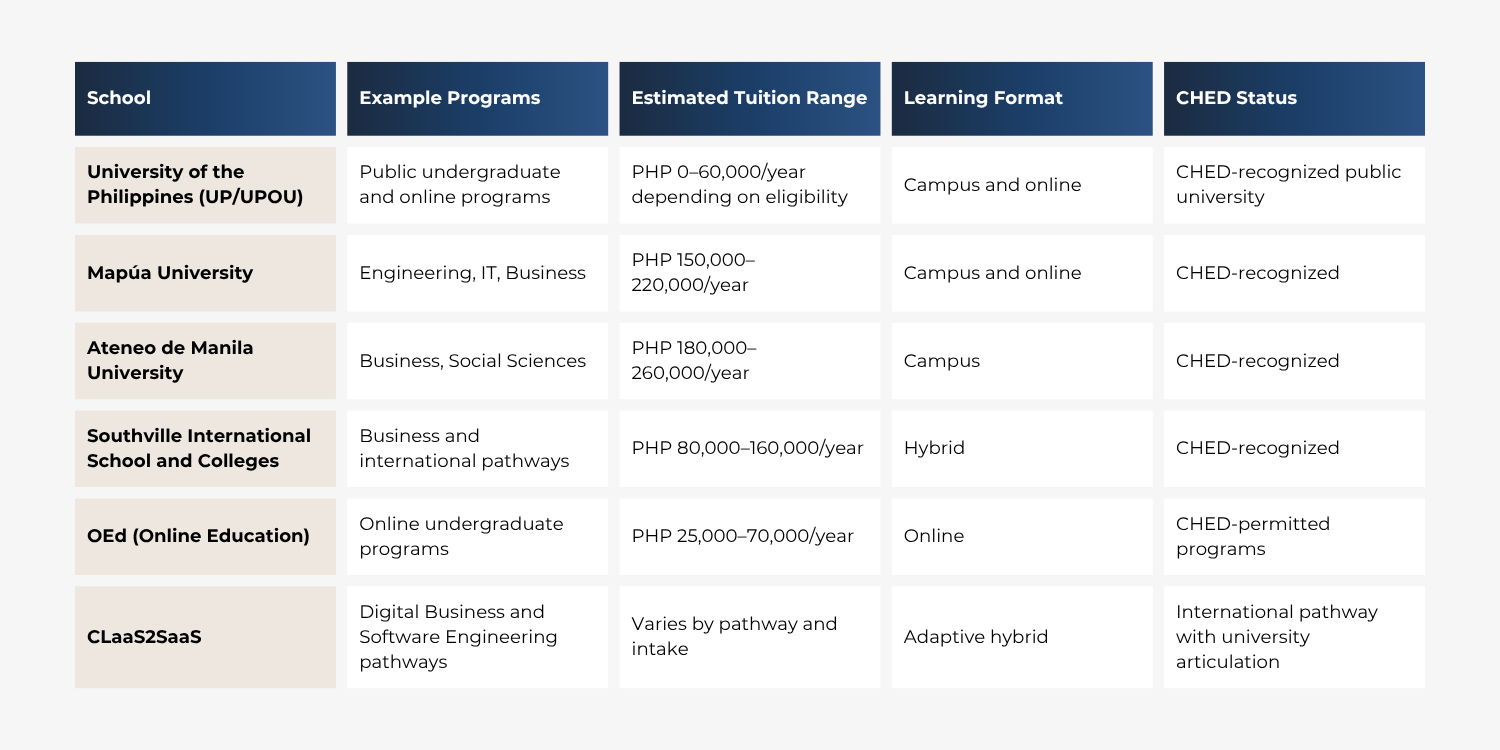
Tuition comparison table of CHED-recognized schools in the Philippines including UP, Mapúa, Ateneo, Southville, OEd, and CLaaS2SaaS with estimated tuition fees and learning formats.
Disclaimer: Tuition costs vary based on units, specialization, and residency status. Students should always confirm updated tuition directly with the institution before enrollment.

Career Outcomes by Degree Type – Graduate Salary Benchmarks

One of the biggest questions students ask is: “Which degrees lead to faster employment?”
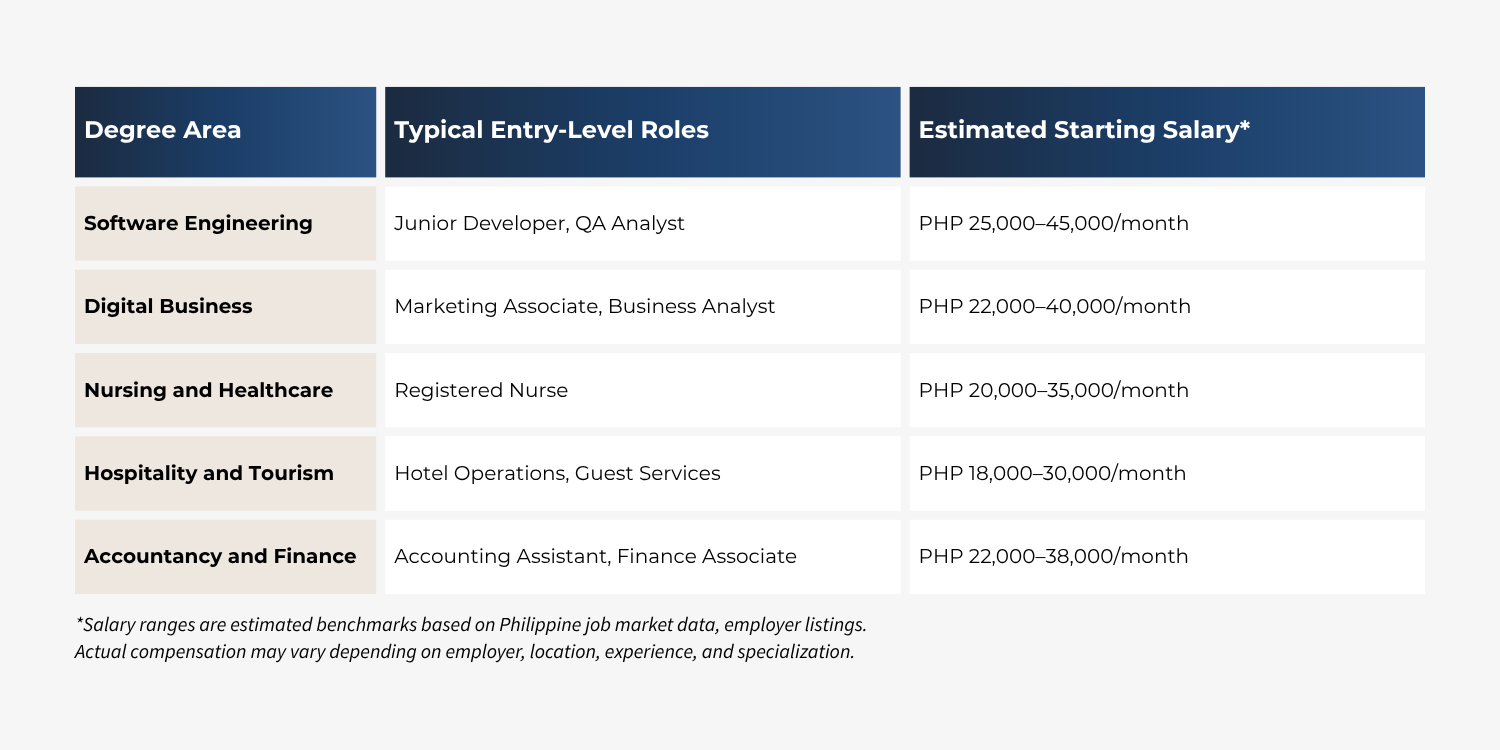
In 2026, technology, business transformation, and digital services continue to drive hiring demand in the Philippines.
Graduates with internships, apprenticeships, and portfolio-based experience often secure employment faster than graduates with academic credentials alone.

Scholarships and Funding Options

Many Filipino students assume college is financially out of reach, but several scholarship and funding opportunities are available.

Common options include:

  • CHED scholarship programs
  • LGU-funded education grants
  • Private university scholarships
  • Corporate-sponsored scholarships
  • Installment tuition plans
  • Flexible payment options for online learners

CLaaS2SaaS Programs for Philippines – Structure, Fees & Intakes

CLaaS2SaaS offers an accelerated pathway for students seeking practical, job-focused education in high-growth digital industries.
Unlike traditional 4-year programs, learners can complete an international bachelor’s pathway in as little as 2 years while building real-world project experience.
Programs include:
  1. Digital Business
  2. Software Engineering
Instead of focusing only on classroom theory, learners gain job-ready skills through real-world projects, mentorship from industry practitioners, and exposure to AI-enabled business and technology workflows increasingly used by global companies.
Key features include:
  • Industry-focused curriculum
  • Real-world projects guided by practitioners
  • Apprenticeship opportunities with international companies
  • Adaptive hybrid learning approach
  • Faster graduation timeline
  • International university articulation pathway
The pathway structure typically includes:
  • Foundation Diploma (6 months)
  • Advanced or Higher Diploma (12 months)
  • Bachelor’s top-up degree with apprenticeship (12 months)
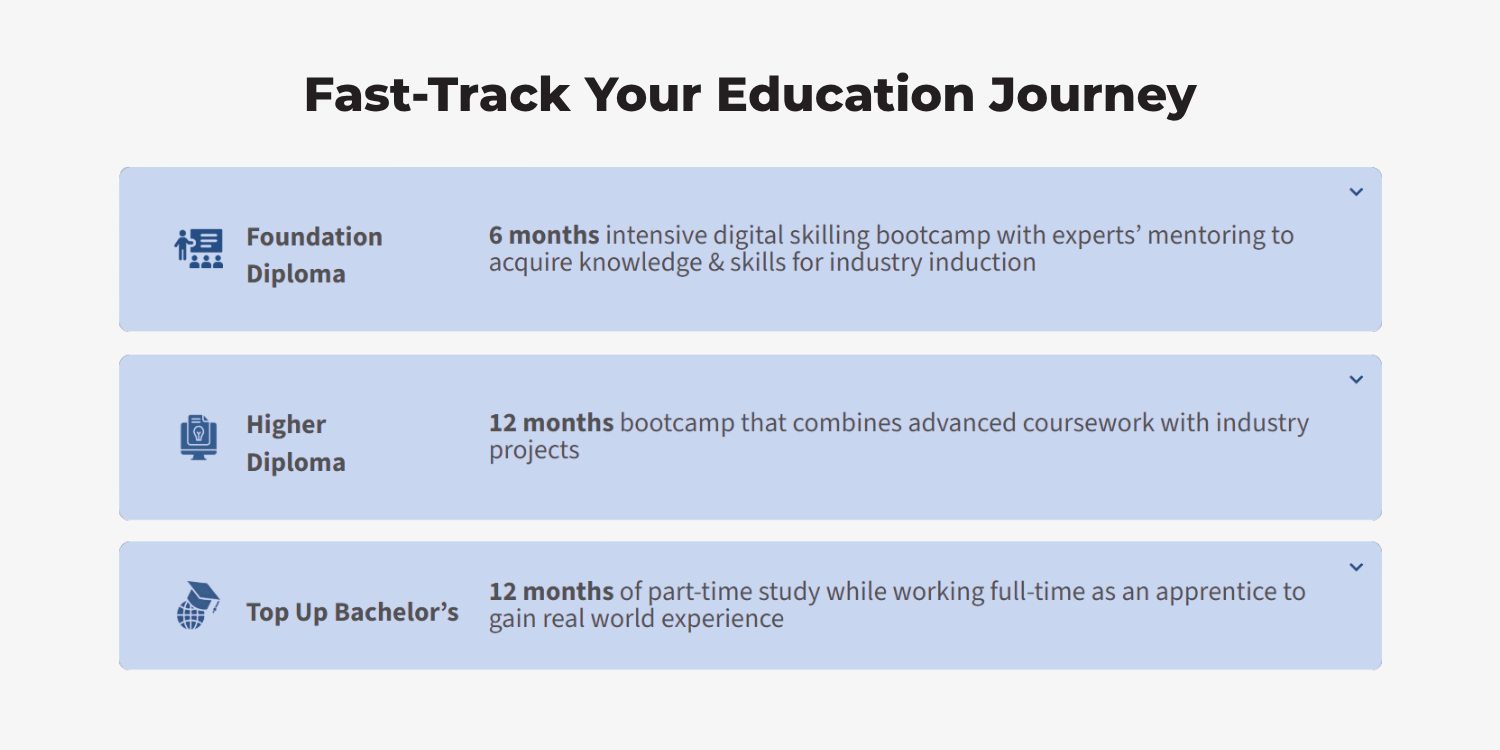
CLaaS2SaaS accelerated degree pathway infographic showing Foundation Diploma, Higher Diploma, and Top-Up Bachelor’s stages for fast-track digital career education.
This structure is designed for students who want both recognized academic progression and practical employability skills.

Admission Requirements & Timeline

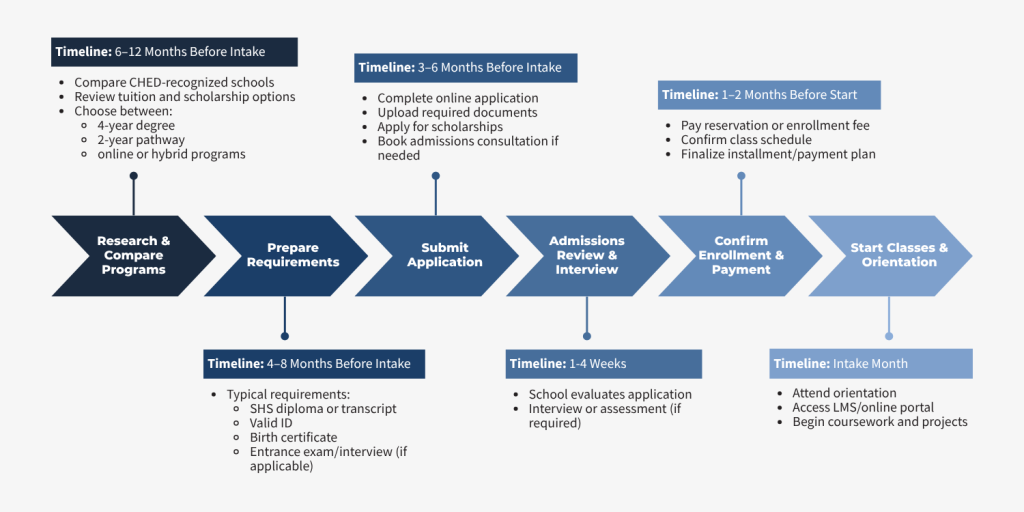
Philippine college admission timeline flowchart showing program research, application requirements, admissions review, enrollment, and orientation process for 2026 degree programs.

Admission requirements vary by institution, but most undergraduate programs in the Philippines require:

  • Senior High School completion
  • Academic transcripts
  • Valid identification documents
  • Entrance examination or interview (depending on the school)
  • Proof of English proficiency for certain international pathways

For accelerated digital programs such as Software Engineering, some pathways may only require English and Mathematics credits.

Students planning for 2026 enrollment should begin researching schools and scholarship options at least 6-12 months before intake periods.

Frequently Asked Questions 

The Philippines offers bachelor’s degrees, associate degrees, online programs, part-time programs, and ladderized education pathways across fields such as business, IT, healthcare, hospitality, engineering, and digital technology.
CHED accreditation or recognition means a school or program meets Philippine higher education standards. This affects employability, scholarship eligibility, and postgraduate opportunities.
UPOU, Mapúa, OEd, Southville, and several hybrid international pathway providers offer online or blended learning options.
Tuition ranges widely depending on the institution, from low-c.
Want to check if this career is for you?