
Course Options: Short Course vs Diploma vs Degree
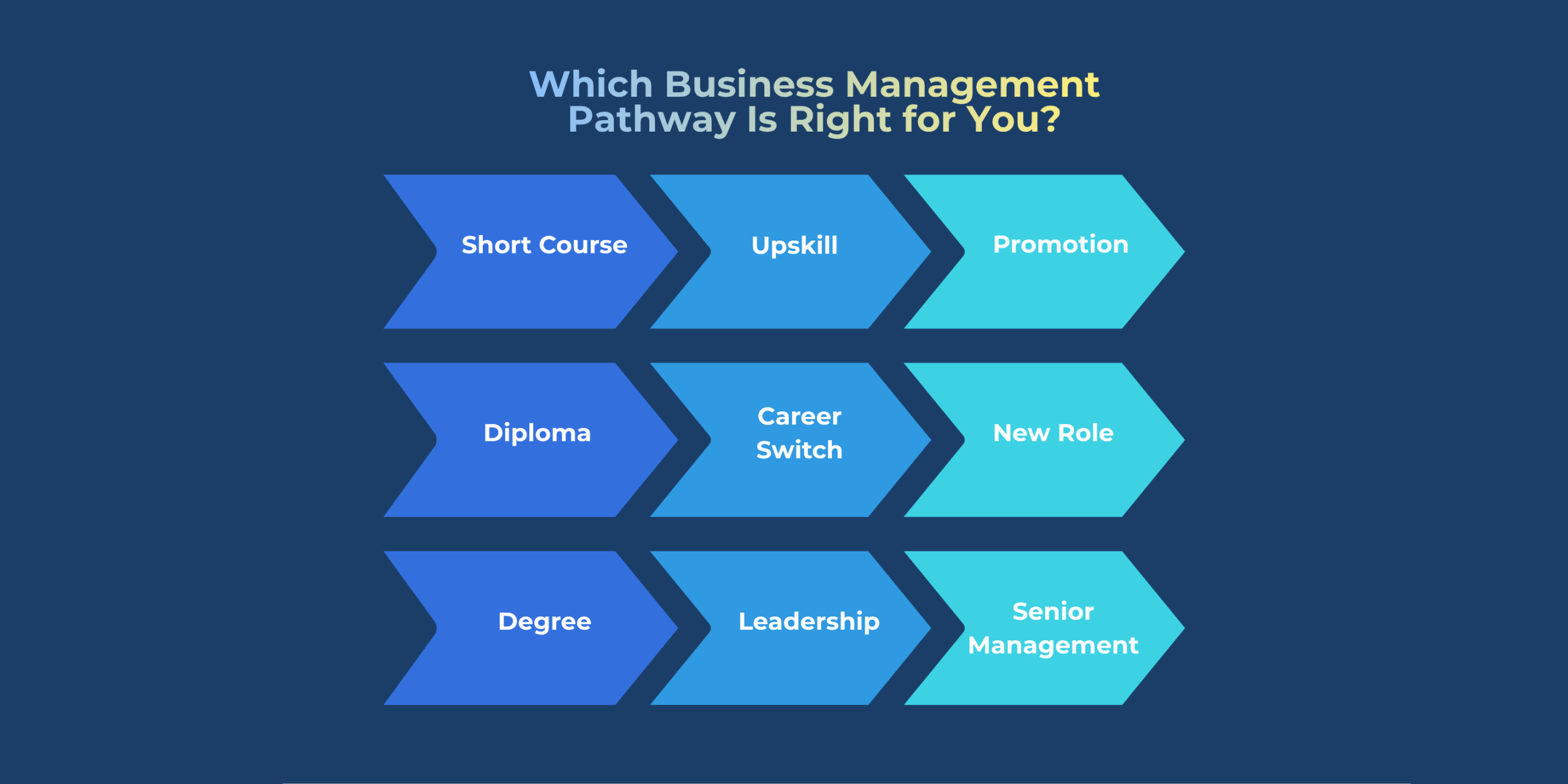
Choosing the right business management course depends largely on your career stage and professional goals. These pathways are not just academic choices, but they represent different speeds and approaches to career transition.
- Short courses, which typically run between two to six months, are ideal for professionals who want to quickly upgrade specific skills without committing to long-term study. These programs are particularly effective for individuals aiming to transition into roles such as marketing executive or business analyst, especially those coming from internship or junior-level backgrounds.
- Diploma programs, on the other hand, provide a more comprehensive learning experience over six to twelve months. They are well-suited for mid-career professionals seeking a structured transition into new roles or industries. These programs bridge the gap between foundational knowledge and applied expertise, enabling learners to reposition themselves in the job market.
- For those focused on long-term career advancement, degree programs offer in-depth knowledge and leadership preparation. While they require a longer commitment of two to three years, they are often necessary for individuals targeting senior management or executive positions.
For professionals aiming to move into marketing roles, following a structured digital marketing career pathway can further accelerate job readiness.
The CLaaS2SaaS AI-powered digital marketing program is designed with stackable pathways, allowing learners to progress from professional certification that will take only 4 months towards a professional diploma and eventually towards a Master’s degree in the future. This provides added flexibility for professionals who may want to enter the workforce quickly while keeping the option open for advanced academic progression.
Who Should Attend

This program is designed for mid-career professionals who are ready to take the next step in their careers.
For individuals aged 28 to 45, the course provides an opportunity to formalize existing experience into recognized business competencies. Many professionals at this stage find themselves limited not by capability, but by the lack of structured training or credentials required for advancement. This program helps bridge that gap by converting existing experience into recognized, job-ready capability.
It is also highly relevant for those transitioning between roles. For example, individuals moving from a marketing internship into a full-time marketing executive position, or from an operational role into a managerial position, will benefit from the structured skill development offered by the program.
Employers and small-to-medium enterprises (SMEs) can also leverage these programs to upskill their workforce.
Salary Outcomes After Business Management Training
Salary progression is one of the most important decision factors for professionals evaluating business management courses globally.
While Singapore provides a clear benchmark for salary outcomes, similar upward trends are observed across international markets. Professionals who complete structured business training consistently experience higher earning potential due to their ability to contribute to business outcomes.
An example based on aggregated market data, entry-level to early mid-career roles in Singapore on an annual basis, earns approximately $54,000 per year on average, with strong upward potential as professionals gain strategic and leadership responsibilities.
 Disclaimer: Salary figures presented are estimates based on aggregated market data, industry reports, and publicly available salary benchmarks across multiple countries. Actual salaries may vary depending on factors such as location, industry, company size, individual qualifications, prior experience, and market demand. Currency conversions are approximate and subject to change based on exchange rates. These figures are intended for general informational purposes only and should not be interpreted as guaranteed outcomes.
This progression is not driven by certification alone, but by the acquisition of practical, in-demand skills such as data analysis, business strategy, and digital marketing execution.
Employers are increasingly prioritizing candidates who can contribute immediately to business outcomes. As a result, professionals who combine structured training with real-world applications are more likely to secure higher-paying roles and faster promotions.
Compare CLaaS2SaaS vs Other Business Management Programs
When selecting a business management course provider, it is important to compare not just content, but outcomes—regardless of location. Across Southeast Asia and globally, professionals typically choose between industry-focused training providers, university-led executive education, and online learning platforms.
The table below highlights how CLaaS2SaaS compares with commonly recognized program types and institutions: 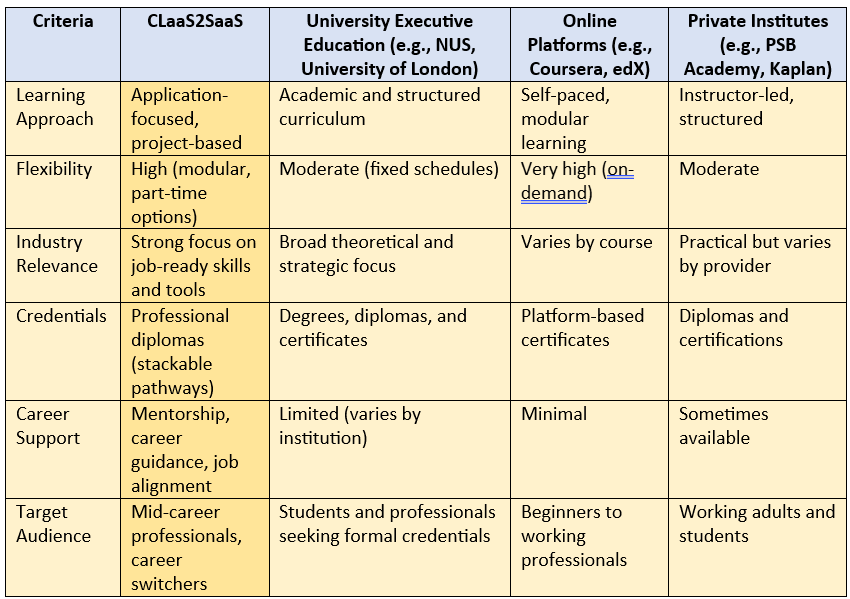 Choosing the right program ultimately depends on your career goals, learning preferences, and timeline.
Professionals looking for structured academic progression may benefit from university-led programs, while those seeking flexibility may prefer online platforms. For individuals who want guided, practical learning with direct workplace application, structured training providers offer a more hands-on approach. CLaaS2SaaS focuses on applied, job-ready capability, particularly suitable for professionals aiming to transition into roles with direct business impact.
By evaluating these factors carefully, learners can select a pathway that not only builds relevant skills but also supports long-term career growth and progression.