Home Blog Lifelong Learning CET Career Development for Leadership & Digital Innovation Growth
Lifelong Learning CET

Career Development for Leadership & Digital Innovation Growth

Career Development for Leadership & Digital Innovation Growth

Banner with headline: Career Coaching Skills for Modern Leaders; Develop the capability to guide teams, support growth, and lead digital transformation and apply coaching to drive career development

Across Singapore, ASEAN, and global markets, careers are no longer linear. The rise of high-growth digital careers for professionals means career paths are no longer linear. Roles are constantly evolving, making professional development and a clear career development plan essential for navigating a job market shaped by rapid digital transformation. 

In this environment, lifelong learning is becoming the key to staying relevant. Singapore often serves as a benchmark for this shift, with initiatives like SkillsFuture highlighting how economies are moving toward continuous upskilling, career mobility, and leadership that can keep pace with change. 

Beyond adapting, professionals today are increasingly expected to lead digital innovation. This is not limited to understanding new technologies but also guiding teams by making strategic decisions in uncertain environments and aligning people with transformation goals. The challenge is that traditional education and career pathways are not designed for this level of agility or real-world application. 

In this context, career coaching shifts from being an external support to an embedded capability within digital leadership. It enables professionals to navigate complex career transitions, develop individuals and teams effectively, lead change within organizations, and sustain continuous learning and growth. 

As organizations place greater emphasis on innovation and transformation, coaching is increasingly seen as: 

  • A leadership capability for guiding teams through continuous change  
  • A strategic tool for enabling digital innovation and workforce transformation  
  • A professional pathway with global standards through the International Coaching Federation  

The conversation is no longer about “What is Career Coaching?”, but about how coaching, as a core capability within digital leadership, equips professionals to intentionally develop themselves and others to become future-ready leaders who can drive innovation and thrive across industries and markets. 

The Value of Coaching Capability in Leadership and Digital Roles 

Using Singapore as a benchmark, coaching has evolved beyond a standalone profession into a high-value capability embedded within leadership, HR, and transformation roles. As organizations prioritize talent development and workforce agility, the ability to coach is increasingly reflected in how professionals create impact and how they are compensated. 

While exact figures vary across ASEAN markets, earning potential remains comparable as demand rises regionally. Professionals who apply coaching within leadership or consulting roles often see increased value contribution. In fact, obtaining a career coaching certification in Singapore is becoming a standard requirement for those looking to pivot into high-level advisory roles, ensuring they meet the rigorous standards expected in the local business landscape. 
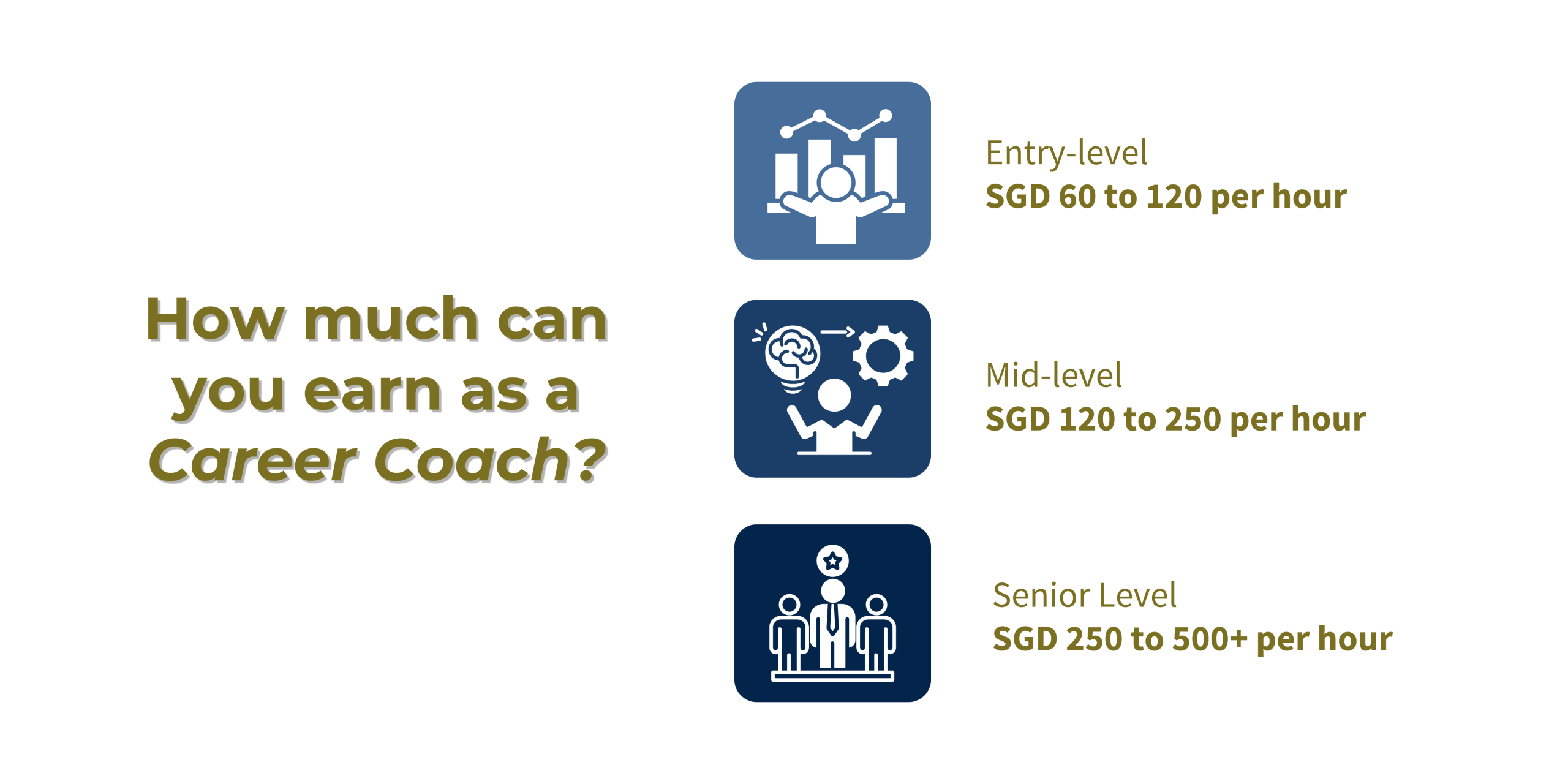
Infographic showing coaching-influenced earning potential across levels, with hourly value ranging from SGD 60–120 at early stages, SGD 120–250 at mid-level, and SGD 250–500+ at senior levels.

For those integrating coaching into broader roles such as leadership, HR, or consulting, total annual earnings can range from SGD 80,000 to 200,000+, depending on scope and impact. 

Disclaimer: Salary ranges are provided for informational purposes only and may vary based on factors such as experience, qualifications, location, and business needs. 

Beyond income, the more important signal is market direction. Organizations are investing in coaching for individual development as well as strengthen leadership pipelines and support career transformation initiatives. This makes coaching a high-leverage skill, especially for professionals looking to expand their set of capabilities. 

Career Why Career Coaching Is a Must-Have Skill in Today’s Workforce 


As the workplace evolves, the ability to apply career coaching is increasingly seen as a core skill for modern professionals. 

It is increasingly relevant across ASEAN and global economies facing similar workforce shifts. As organizations adapt to digital transformation, adopting AI, automation, and data-driven systems, they are placing greater emphasis on leadership development, employee engagement, and career mobility. 

This creates sustained demand for coaching across different roles and industries who can apply coaching within broader career development and leadership contexts, where leaders must guide teams through rapid shifts in how work is performed. 

Professionals who develop coaching capabilities often find themselves operating in areas such as:

  • Career and transition coaching for individuals navigating change  
  • Internal HR or L&D roles focused on talent development  
  • Leadership and executive coaching within organizations 

These opportunities span industries including technology, financial services, government, education, and SMEs undergoing transformation. 

Compared to traditional career paths, coaching offers:  

Program Overview: What You’ll Learn 

A strong development pathway focuses on building applied capability. This is especially important for professionals who want to grow into leadership roles or transition into digital, future-ready careers. 

At its core, coaching training develops the ability to understand people, guide decision-making, and support transformation at both individual and organizational levels. Key areas typically include:  

  • Coaching frameworks and methodologies  
  • Active listening and strategic questioning  
  • Career and leadership development techniques  
  • Behavioral and mindset coaching  
  • Ethics and professional standards  

These skills extend into leading innovation. Coaching enables professionals to manage change more effectively, align people with business goals, and support teams through uncertainty. This is what makes it increasingly relevant for aspiring coaches and professionals building digital careers. 

CLaaS2SaaS’ Pathway to Leading Digital Innovation 

Many programs focus primarily on helping participants gain certification or isolated skills. While this is important, it often leaves a gap between learning and real-world application. 

CLaaS2SaaS is designed to bridge that gap by positioning career development within a broader Digital Innovation Leadership pathway. This allows professionals to not only gain coaching capabilities but also build the leadership and innovation edge required to make an impact on the economy. 

Unlike standalone pathways, CLaaS2SaaS integrates career coaching with multiple lifelong learning tracks, including: 

What differentiates this approach includes: 

  • Coaching delivered by experienced practitioners  
  • Integration with digital transformation and innovation projects  
  • Focus on real-world application, not just theory  
  • Portfolio-building to demonstrate capability 

This positions learners not just as coaches, but as leaders capable of driving business and digital transformation. 

Funding and Investment Perspective 

Singapore provides a useful benchmark for professional growth. Beyond SkillsFuture, professionals can leverage resources on Careers Gov and CareerFuture (formerly MyCareersFuture) to identify skills gaps. These platforms, such as CareerFuture SG, are essential for tracking market demand and finding the right pathways for upskilling  

While similar funding structures vary across ASEAN markets, the broader trend is clear: both governments and organizations are actively investing in skills that support workforce transformation. 

From an ROI perspective, coaching delivers not just financial returns, but time-based advantages in how quickly professionals can progress in their careers. 

Consider a simplified scenario: 

  • Example investment: SGD 10,000  
  • Example rate: SGD 150 per hour  
  • Example monthly scenario: 5 clients × 4 sessions × SGD 150 = SGD 3,000  

However, the more important factor is how time is leveraged, not just recovered. 

Unlike traditional education pathways that take years to translate into career outcomes, coaching as a capability can be applied immediately within existing roles. Professionals begin to see returns not only through additional income streams, but through: 

  • Faster career progression by applying coaching skills to lead teams, manage stakeholders, and drive performance can accelerate promotions or role expansion within months, not years  
  • Increased role value for professionals who can develop others become critical to organizational growth, often leading to higher compensation and broader responsibilities  
  • Expanded opportunities where coaching capability enables lateral moves into leadership, consulting, or transformation roles without needing to restart a career path  

In this sense, the “payback period” is not limited to recovering a SGD 10,000 investment. It extends to compressing the time it typically takes to reach the next level of responsibility and income. 

Over the long term, this creates compounded returns: stronger leadership capability, greater career flexibility, and sustained relevance in a rapidly evolving job market. 

Real-World Applications (Career Outcomes)

Career development combined with coaching skills can be applied across a range of roles, making it a flexible and transferable capability across industries and regions. Professionals typically use these skills in contexts such as:
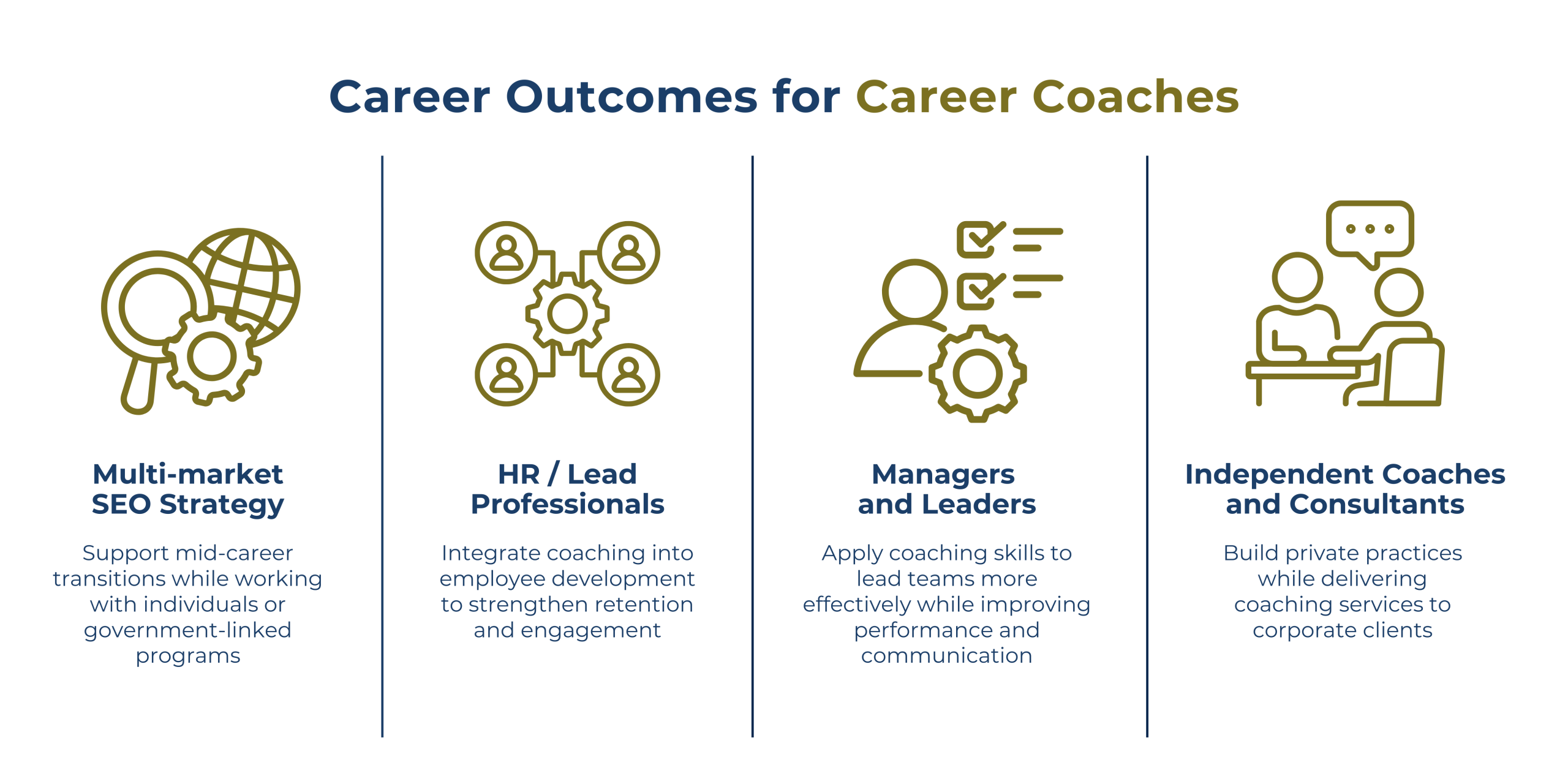
Infographic showing four career outcomes of becoming a: career coach, HR/L&D professional, manager or leader using coaching skills, and independent coach or consultant. 1. Career Coaches  
         a. Supporting mid-career transitions  
         b. Working with individuals or government-linked programs   

2. HR / L&D Professionals  
          a. Embedding coaching into employee development
          b. Improving retention and engagement  

3. Managers and Leaders 
          a. Using coaching skills to lead teams effectively  
          b. Enhancing performance and communication  

4. Independent Coaches / Consultants
          a. Running private practices  
          b. Serving corporate clients  

Across ASEAN and global markets, these applications are increasingly linked to broader goals such as innovation, transformation, and organizational growth. Professionals are expected to lead change, implement new systems, and align teams with business and digital strategies 

FAQs on Career Development & Coaching

It is a structured approach to helping individuals navigate career decisions, develop skills, and achieve professional goals.
Basic capabilities can be developed within months, while mastery comes with consistent real-world application.
No. Many professionals use coaching as part of leadership, HR, or consulting roles.
Yes. With increasing demand for career guidance, leadership development, and workforce transformation, coaching is a growing and sustainable profession.
It enables leaders to guide teams through change, develop talent, and drive performance in fast-evolving digital environments.

Build a Future-Ready Career Through Coaching and Digital Pathways 

It is clear how career coaching is starting to become a structured, globally recognized profession that also plays a key role in leadership and innovation. 

For professionals across Singapore, ASEAN, and beyond, it offers a way to build credibility, expand career opportunities, and contribute more meaningfully to organizational growth. 

More importantly, it equips professionals with the ability to lead people through change, which is becoming one of the most critical capabilities. 

Start Your Career Development Journey


If you are exploring how to move into more future-ready roles, the next step is to focus on practical, applied learning. 

  • Understand how coaching fits into your current role  
  • Build skills through real-world scenarios  
  • Apply coaching to leadership and innovation challenges 

Take the next step toward developing your career through pathways that combine coaching, leadership, and digital innovation across industries and markets. 

Want to check if this career is for you?