What Is a Work-Integrated Learning Program? (And Why Employers Prefer It)
What Is a Work-Integrated Learning Program? (And Why Employers Prefer It)

Content
Content
What is work-integrated learning, and how is it different from simply taking a course? Work-integrated learning connects structured learning with practical application, so you build knowledge and show how you can use it. This guide explains how the model works, where 70:20:10 fits, how it differs from other learning formats, and what to look for in a strong program.
See the work-integrated programs
What Is Work-Integrated Learning?
Work-integrated learning is an educational approach that connects structured learning with practical application in work-related or industry settings.
Instead of only studying a concept and completing an exam, learners put what they learn into practice. This might involve solving a business problem, completing an industry project, developing a product, working through a simulation, or applying new skills in a workplace setting.
The key idea is simple: learners develop knowledge and then use it.
Depending on the program, work-integrated learning may include:
- Industry projects
- Practical assignments
- Workplace projects or placements
- Simulations
- Apprenticeships
- Project-based learning
- Mentoring and guided practice
How Does a Work-Integrated Learning Program Work?
A work-integrated learning program often follows a simple process:
Learn → Apply → Receive Feedback → Improve → Demonstrate Capability
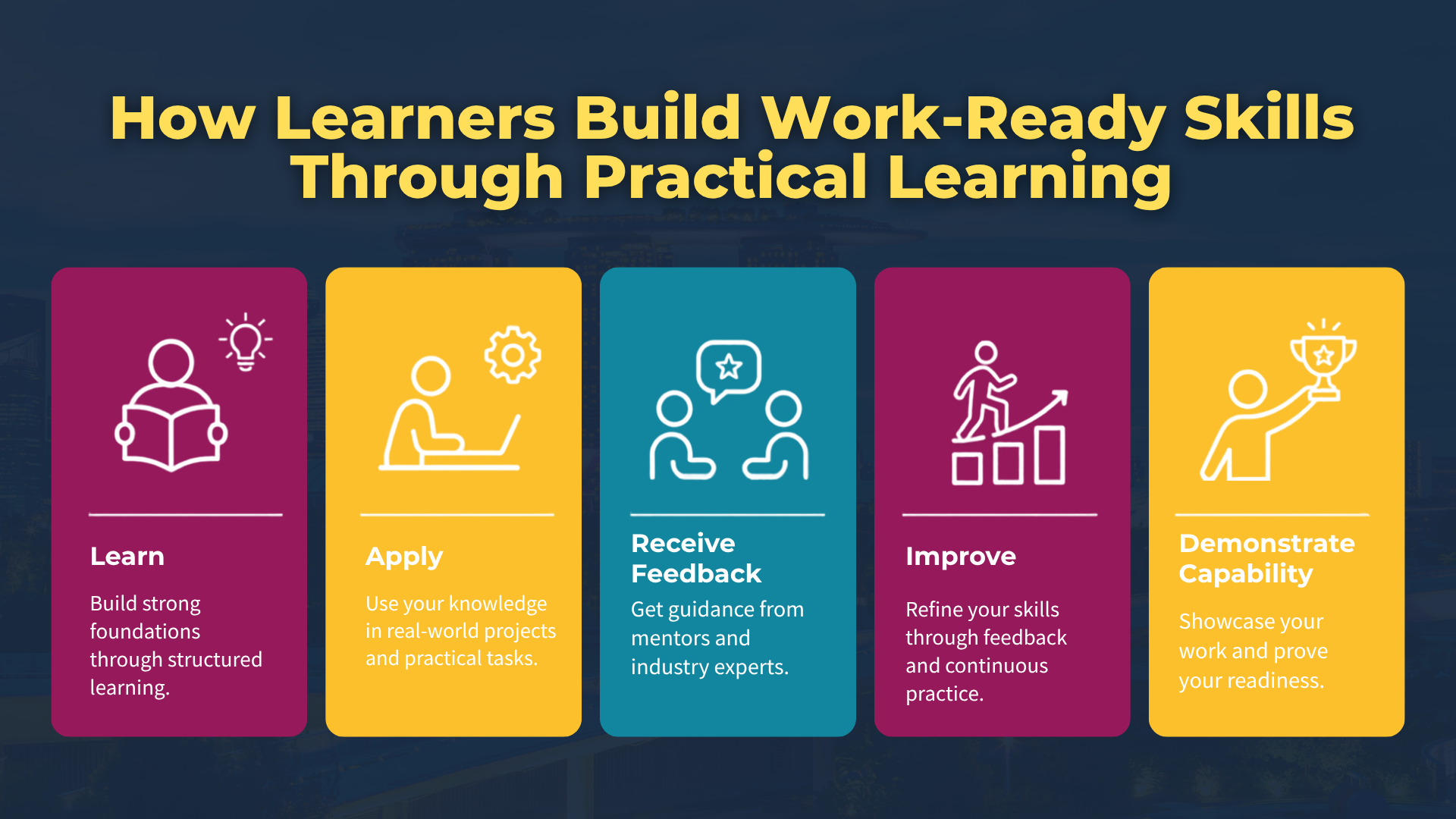
A learner might first study how a digital marketing campaign works. They could then create a campaign plan based on a realistic business situation.
A mentor or instructor reviews the work, provides feedback, and helps the learner identify areas for improvement. The learner applies that feedback and develops a stronger final outcome.
This process can be used across digital marketing, data science, software development, cybersecurity, digital innovation, and other fields.
By the end of a project, learners should be able to explain what they worked on, the tools or methods they used, the decisions they made, and what they learned from the experience.
This makes practical skills easier to demonstrate than simply saying, “I completed a course.”
What Does 70:20:10 Mean in Work-Integrated Learning?
The 70:20:10 learning model is a framework that places strong emphasis on learning through experience while also recognizing the importance of mentoring and structured learning.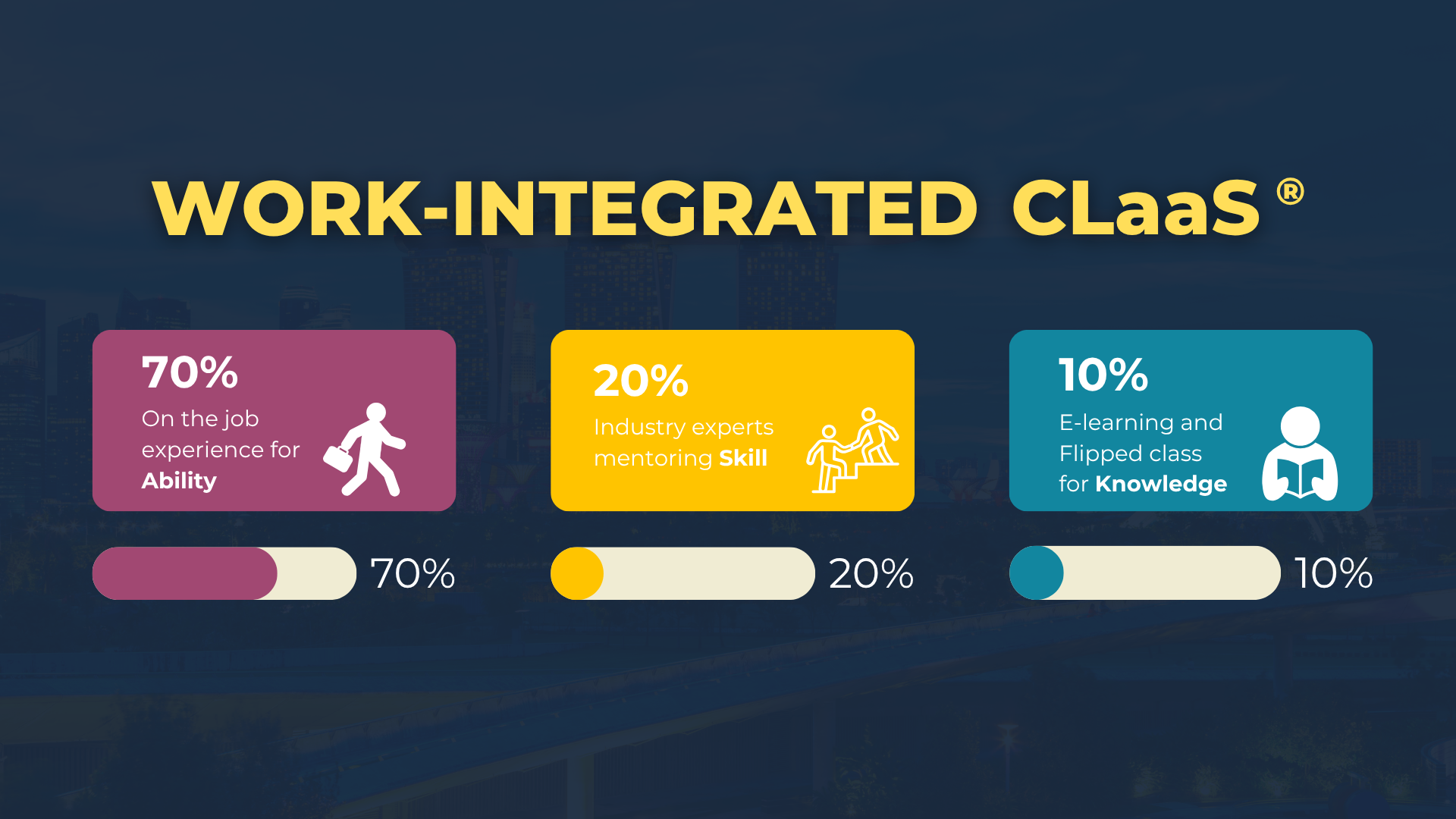
In simple terms:
- 70%: Learning through practical, hands-on experience and projects
- 20%: Learning through feedback, interaction, coaching, or mentoring
- 10%: Learning through structured or formal learning
CLaaS® Lifelong Learning uses a 70:20:10 learning approach within its work-integrated digital skilling model.
The learning experience can combine self-paced e-learning, flipped classes, expert-led projects, project mentoring, practice, and assessment.
The goal is to move beyond simply understanding a concept and give learners opportunities to apply, improve, and demonstrate their skills.
Work-Integrated Learning vs Traditional Classroom Learning
Traditional learning can provide important theoretical and conceptual foundations. Work-integrated learning adds deliberate opportunities to apply those concepts in practical situations.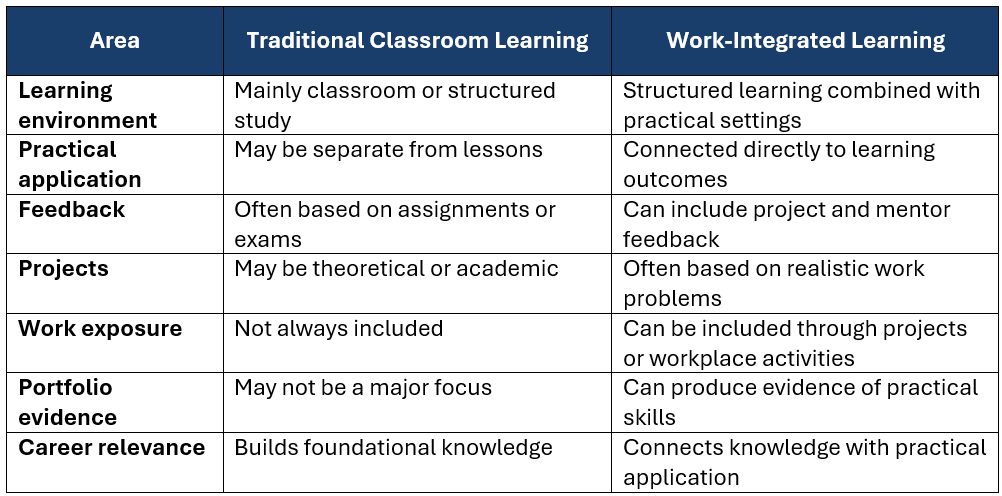
The difference in work integrated learning vs traditional education is therefore not about replacing theory. It is about giving learners opportunities to put theory into practice.
Work-Integrated Learning vs Internship vs Apprenticeship
Work-integrated learning, internships, and apprenticeships are related, but they are not the same.
An internship usually provides direct workplace exposure. Interns may support everyday tasks, observe professionals, and gain experience inside an organization.
However, an internship is not automatically work-integrated learning. The experience should be intentionally connected to learning outcomes, feedback, reflection, or assessment.
An apprenticeship generally combines formal learning with substantial on-the-job training for a particular occupation.
Work-integrated learning is the broader approach. It connects structured learning with practical work or industry application.
A work-integrated learning program may include an internship or apprenticeship, but it can also use industry projects, simulations, capstone projects, mentoring, and practical assignments.
Examples of Work-Integrated Learning
The easiest way to understand work-integrated learning is to look at what learners actually do.
A Digital Marketing learner might plan a campaign, create content, use marketing tools, analyze performance, and recommend improvements.
A Data Science & AI learner might analyze a business dataset, build dashboards, use analytics or AI tools, and present recommendations.
An AI Application Development learner might develop an application, work with databases, build AI-enabled features, and complete a practical capstone project.
A Digital Innovation learner might examine an existing business process and develop a digital solution or transformation plan.
The focus is not simply on the subject being studied. It is on using skills to produce a practical outcome.
What Are the Benefits of Work-Integrated Learning for Learners?
The main benefit of work integrated learning is that learners can build knowledge while developing practical experience.
Build practical skills
Working on realistic tasks allows learners to see how concepts work outside a textbook or lesson.
Strengthen understanding
Applying a concept can reveal whether it has been fully understood. Learners can identify gaps and improve through practice.
Create evidence of your skills
Projects can become useful examples of what a learner can do. Depending on the field, this might include a campaign, application, data analysis, prototype, or business improvement project.
Learn from feedback
Mentoring and project feedback help learners understand what worked, what needs improvement, and how experienced professionals approach similar problems.
Build confidence and career clarity
Completing practical work can help learners become more confident discussing their skills. It can also give career changers a clearer idea of what working in a new field is actually like.
Work-integrated learning does not guarantee employment, but it can help learners build stronger evidence of their capabilities.
Why Can Employers Value Work-Integrated Learning?
Employers consider many factors when hiring, including qualifications, experience, technical ability, communication, and industry knowledge.
Practical experience can strengthen a candidate’s profile because it gives employers more information about how that person uses their skills.
For example, employers may want to understand whether a candidate can:
- Solve practical problems
- Use relevant tools
- Communicate clearly
- Work with others
- Respond to feedback
- Complete projects
- Work within realistic requirements
This can provide more useful evidence than simply listing a course or qualification.
Is Work-Integrated Learning Only for Students?
Work-integrated learning is not limited to full-time students or people beginning their careers. It can also support working adults, career changers, and professionals who need to develop new capabilities while staying connected to practical work.
For a career changer, realistic projects, mentoring, and assessment can provide a structured way to test and demonstrate skills in a new field.
For a working professional, the same approach can help connect new knowledge to current responsibilities or prepare for a future role.
The important question is not whether you are a student. It is whether the program deliberately links learning outcomes to practical application, guided practice, and evidence of capability. CLaaS2SaaS Lifelong Learning offers work-integrated digital skilling for adults with and without prior IT experience, with pathways across digital and technology-focused careers.
Who Is Work-Integrated Learning Best For?
Work-integrated learning is not limited to full-time students.
It can also suit:
- Career changers who need practical evidence of newly developed skills
- Working adults who want to connect new knowledge with their current or future careers
- Lifelong learners developing new digital capabilities
- Hands-on learners who prefer learning by doing
- Professionals who value mentoring, projects, and practical feedback
CLaaS® Lifelong Learning provides work-integrated digital skilling pathways for both learners without previous IT experience and experienced technology professionals.
However, someone who prefers a highly theoretical or conventional academic learning experience may prefer a different approach.
What Should You Look for in a Work-Integrated Learning Program?
Not every course described as “practical” provides meaningful work-integrated learning.
Before enrolling, ask:
- Are the projects realistic? Do they reflect real workplace situations?
- Are the learning outcomes clear? Do you know what you should be able to do?
- Is feedback provided? Will a mentor or instructor review your work?
- Will you apply your skills? Is practical work part of the learning journey?
- Can you build evidence of your work? Will you produce useful project outcomes?
- Are the skills industry-relevant? Are you using current tools and methods?
- Is your capability assessed? Does the program evaluate practical performance?
- Is there an appropriate credential? Does it support your learning or career goals?
- Is career support available? Can you access useful career guidance?
- Is the workload clear? Can you understand the schedule and project requirements before joining?
How CLaaS® Lifelong Learning Uses Work-Integrated Learning
CLaaS® Lifelong Learning is one example of a work-integrated digital skilling approach designed for adults developing new career capabilities.
Its learning model is described as personalized, work-integrated, and outcome-based, supported by a competency-based curriculum and the 70:20:10 learning approach.
Depending on the pathway, learners may experience:
- Self-paced e-learning
- Flipped classes
- Project mentoring
- Hands-on projects
- Assignments and practice
- Assessment
- Industry project development
The goal is to connect structured learning with practical projects so learners have opportunities to develop and demonstrate skills rather than only study them.
Frequently Asked Questions
What is work-integrated learning?
Work-integrated learning connects structured learning with practical application in work-related or industry contexts. Learners use their knowledge through projects, workplace tasks, simulations, or other practical activities.
What is an example of work-integrated learning?
Examples include creating a digital marketing campaign, analyzing a business dataset, developing an application, completing an industry project, or improving a business process with feedback and assessment.
Is work-integrated learning the same as an internship?
No. An internship is one form of workplace experience. Work-integrated learning is a broader approach that intentionally connects learning objectives with practical application.
What is the 70:20:10 learning model?
The 70:20:10 model emphasizes learning through practical experience, interaction and mentoring, and structured learning. CLaaS® uses this approach alongside projects, mentoring, classes, self-paced learning, practice, and assessment.
Why is work-integrated learning useful for career changers?
It can help career changers apply new skills, complete practical projects, build evidence of their abilities, and connect new knowledge with previous professional experience.
Do employers prefer work-integrated learning graduates?
There is no universal employer preference. However, relevant practical experience can strengthen a candidate’s profile by showing how they have applied skills, solved problems, used tools, and completed work-related projects.
Turn Learning Into Practical Capability
Learning becomes more valuable when you can apply it. If you want to develop digital skills through structured learning, practical projects, mentoring, and work-related application, explore the CLaaS® Lifelong Learning work-integrated approach.
Share


Want to check if this career is for you?