Software Engineer Job Interview Prep: Questions, Tips & Portfolio Advice
Software Engineer Job Interview Prep: Questions, Tips & Portfolio Advice
Content
Content
How do you pass a software engineer interview without a computer science degree or years of experience? It’s one of the most common concerns among career switchers preparing for their first role in tech. The good news is that many software engineer interview questions for beginners focus on fundamentals, problem-solving, projects and communication, not just advanced computer science theory.
The demand for digital skills continues to grow across industries. According to the World Economic Forum’s Future of Jobs Report 2025, software developers remain among the roles expected to see significant growth in the coming years. Meanwhile, research highlighted by McKinsey shows that technological change is accelerating workforce transitions and increasing demand for workers who can adapt and continuously learn. Because many beginner interviews test how you apply concepts in real situations, project experience can be just as important as memorising model answers.
In this guide, we’ll cover what to expect during a software engineering interview, common questions, and how to approach them, portfolio strategies, and practical preparation tips. If you’re currently developing your technical skills, you can also explore CLaaS2SaaS resources on Software Engineering career pathways, job-placement support, and work-integrated learning opportunities to better understand how learners transition into software development roles.
What to Expect in a Software Engineer Interview
For many career switchers, the interview process feels intimidating because it’s unfamiliar. However, most junior software engineering interviews follow a relatively predictable structure.
The first stage is often a screening conversation. This may be conducted by a recruiter, hiring manager, or talent acquisition team. The goal is usually to understand your background, motivation, and communication skills rather than test deep technical knowledge.
The second stage may include technical or coding-related discussions. For entry-level roles, employers often focus on how you think through problems rather than whether you can instantly produce the perfect solution. Interviewers want to see your reasoning process, your ability to explain decisions, and how you approach challenges.
You may also be asked to discuss projects you’ve built. This is especially important for career switchers because projects provide tangible proof of your skills. Interviewers frequently ask about your role, technical decisions, obstacles you faced, and what you learned throughout development.
Finally, many interviews include behavioral questions. Employers want to understand how you work with others, manage deadlines, learn new skills, and adapt to change. For career switchers, this is often an opportunity to highlight transferable skills gained from previous industries.
Remember that junior interviews are designed to evaluate potential and readiness to learn. Employers do not expect beginners to know everything.
Common Questions and How to Approach Them
Fundamentals: HTML, CSS, JavaScript and Git
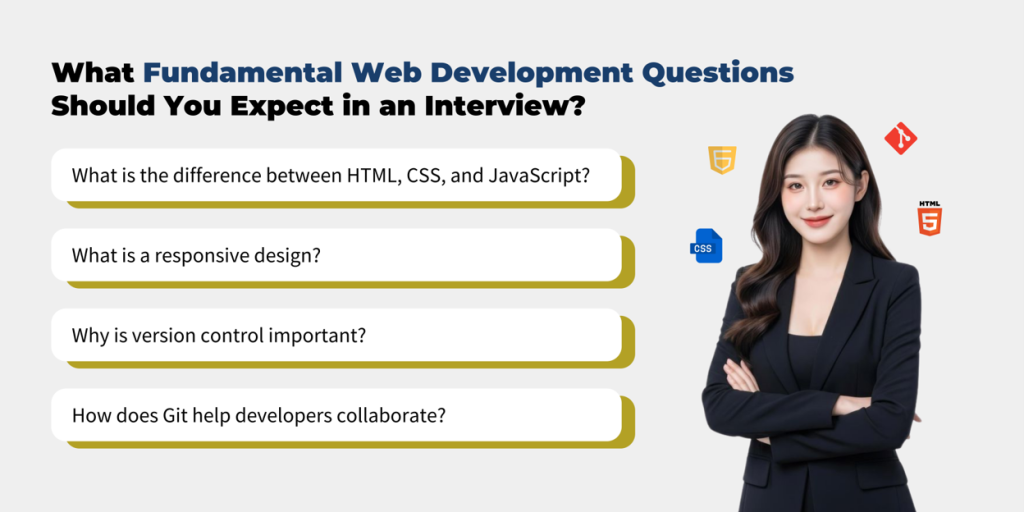
Many first software engineering job interview tips begin with strengthening your fundamentals. Examples may include:
- What is the difference between HTML, CSS, and JavaScript?
- What is responsive design?
- Why is version control important?
- How does Git help developers collaborate?
Rather than memorising textbook definitions, focus on explaining concepts in practical terms. Use examples from projects you’ve completed and describe how you applied these technologies to solve real problems. Interviewers are often more interested in understanding how you use these tools than hearing a perfectly rehearsed answer.
Problem-Solving and Coding Approach
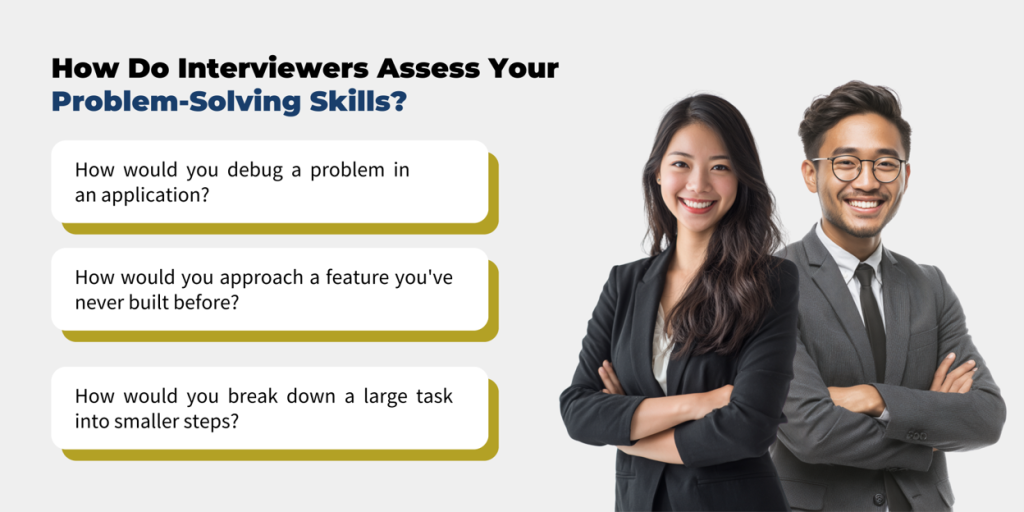
Many candidates worry about technical assessments. However, interviewers frequently care as much about your process as your final answer. You may encounter questions such as:
- How would you debug a problem in an application?
- How would you approach a feature you’ve never built before?
- How would you break down a large task into smaller steps?
Project Walkthrough Questions
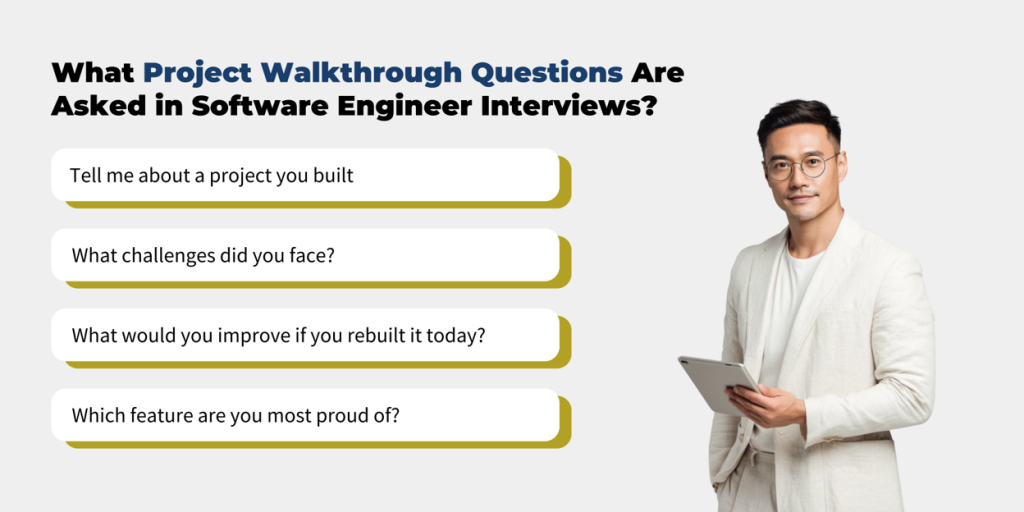
Project discussions are among the most important parts of software developer interview preparation, particularly for career switchers.
Common questions include:
- Tell me about a project you built.
- What challenges did you face?
- What would you improve if you rebuilt it today?
- Which feature are you most proud of?
A useful structure is:
- Explain the problem.
- Describe your approach.
- Discuss challenges.
- Share the results.
- Reflect on lessons learned.
Behavioural Questions: Explaining Your Career Switch
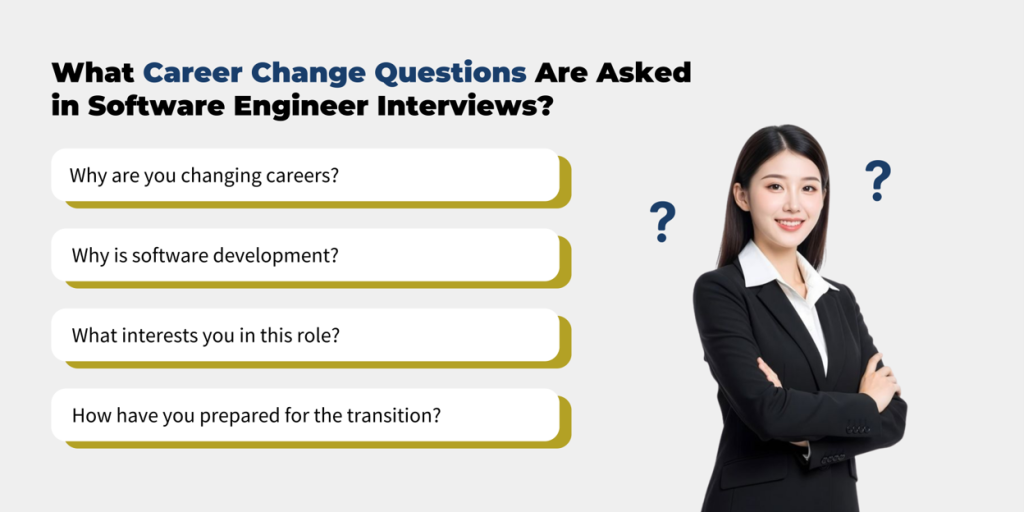
Many interviewers will ask why you decided to move into software engineering. Questions often include:
- Why are you changing careers?
- What interests you in this role?
- How have you prepared for the transition?
Use Your Portfolio to Carry the Interview
A strong portfolio can become your biggest advantage during a software engineering interview. Career switchers may not have years of professional development experience, but they can demonstrate capability through projects. A portfolio provides evidence of what you’ve built, how you think, and how you solve problems.
Focus on a few projects that showcase meaningful skills rather than creating many small ones. When presenting your portfolio, be prepared to discuss the project’s objective, technologies used, key challenges, technical decisions, lessons learned, and future improvements.
Be ready to explain why you built each project, the challenges you encountered, how you solved them, and what you would change if you revisited it today. These conversations help interviewers understand how you think and work as a developer.
Many beginner candidates struggle when interviewers ask about projects, debugging decisions or teamwork because they have only studied concepts in isolation. CLaaS2SaaS’ work-integrated learning helps learners build practical experience through real projects, so they can explain not only what they know, but how they have applied it. This approach is especially useful for career switchers: it gives you concrete project examples to explain during interviews.
Ultimately, your portfolio is not just a collection of projects. It demonstrates your ability to apply technical knowledge to real-world software challenges, giving employers greater confidence in your readiness to contribute from day one.
How Job-Placement Support Improves Your Odds
Technical skills are important, but interview preparation involves much more than coding knowledge. Many career switchers struggle with resume preparation, interview confidence, personal branding, and understanding employer expectations. Practical experience and applied projects provide the foundation for successful interviews, while coaching and career support help learners present that experience effectively to employers. Structured support can help bridge these gaps.
At CLaaS2SaaS, learners can access job-placement support designed to help them navigate the hiring process. This includes Career Builder Workshops, one-to-one coaching, recruitment activities, and interview opportunities through an extensive partner network. The goal is not simply to learn technical concepts but to become more prepared for real hiring conversations.
For those exploring pathways into software development, learn more about the Software Engineering bootcamp and its job-placement support here. While no programme can guarantee employment, preparation, coaching and exposure to hiring opportunities can help career switchers approach the job market more confidently.
Frequently Asked Questions
How do I prepare for a software engineering interview without experience?
Focus on three things: fundamentals, a portfolio, and your story. Make sure you can explain core web-development concepts, walk through real projects you’ve built, and answer confidently when asked why you’re switching into software. Practising coding problems out loud helps, and structured support, like the Career Builder Workshops and mock interviews in CLaaS2SaaS’s job-placement programme makes a significant difference for career switchers facing their first technical interview.
What questions are asked in a junior software developer interview?
Most junior interviews focus on four areas: technical fundamentals, problem-solving ability, project walkthroughs, and behavioral questions. Interviewers typically want to understand how you think, learn and communicate rather than test highly advanced knowledge.
How important is a portfolio in a software engineering interview?
A portfolio is extremely important, especially for career switchers with limited professional experience. It provides concrete evidence of your abilities and gives interviewers real examples to discuss during the interview.
How do I explain switching careers into software engineering?
Focus on transferable skills, genuine motivation, and the actions you’ve taken to develop technical expertise. Explain what attracted you to software engineering and how your previous experience contributes value to a development team.
Does CLaaS2SaaS help with interviews and job placement?
Yes. CLaaS2SaaS provides job-placement support that includes Career Builder Workshops, one-to-one coaching, recruitment activities and access to a network of more than 2,000 partner companies. These services are designed to support learners throughout their job search, but they do not guarantee employment.
Ready to Prepare for Your First Software Engineering Interview?
The best interview preparation combines real technical skills with practical career support. From developing technical capabilities and building project experience to interview preparation, recruitment activities and industry connections, structured guidance can help you approach opportunities with greater confidence.
Share


Want to check if this career is for you?