What Is an Enterprise AI Intelligence Layer? Why AI Transformation Fails Without One
What Is an Enterprise AI Intelligence Layer? Why AI Transformation Fails Without One
Nội dung
Nội dung
An enterprise AI intelligence layer is a unifying data and context layer that connects enterprise systems, reconciles fragmented information, and gives AI tools and agents a consistent view of the business.
Enterprise AI initiatives can struggle without this foundation because even capable AI tools may produce incomplete, inconsistent, or difficult-to-audit outputs when they rely on fragmented data, knowledge, and business context.
The sections below explain why most enterprise AI initiatives underperform despite real investment, define what an intelligence layer actually is, describe how it changes what AI can do once it’s in place, and outline what to evaluate before adopting one.
Why Do Most Enterprise AI Initiatives Underperform?
One common reason enterprise AI initiatives underperform is fragmented data and business context. Even a capable model can generate incomplete or conflicting outputs when it relies on isolated systems, inconsistent definitions, or outdated records. Separate departmental pilots may therefore produce recommendations that disagree because each one sees a different part of the organization.
Here’s a concrete example of how this plays out. A sales AI pilot flags a customer account as low-risk based on recent purchase volume recorded in the CRM. A separate operations AI pilot, working from support-ticket data the sales pilot never sees, flags that same account as high-risk [BS1.1]based on a recent spike in unresolved service complaints. Leadership reviewing both pilots’ outputs sees two contradictory risk assessments for the same customer, not because either AI model made an error, but because neither pilot had access to the other’s data, leaving both working from an incomplete picture.
When AI outputs conflict, enterprises may respond by retraining models or changing vendors. But if the underlying data remains fragmented, the same problem can reappear with the next AI implementation.
What Is an “Intelligence Layer” Actually?
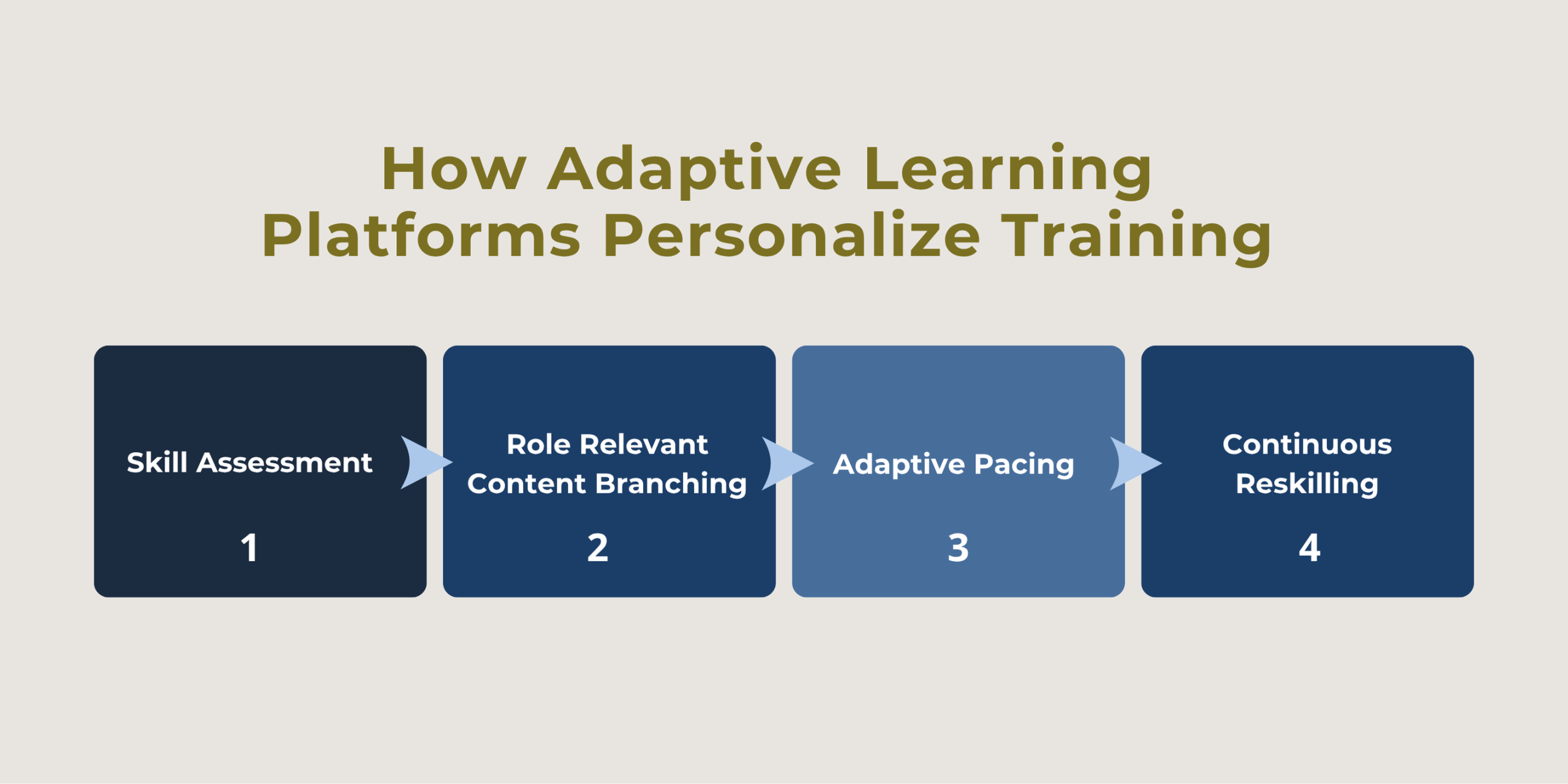
An adaptive learning platform An enterprise AI intelligence layer solves this specific problem by sitting between an enterprise’s existing systems, such as its CRM, ERP, and learning management system, and any AI tool built on top of them. The layer reconciles conflicting values across these systems, establishing a governed and consistent representation of shared information where previously each system may have held a different, unsynchronized version of the same data. Rather than each AI tool connecting directly and separately to each underlying system, every AI tool draws from this single, reconciled layer instead, working from the same consistent data regardless of which system originally produced it.
The layer is broader than a unified data store. It can also connect enterprise knowledge, business rules, workflow state, permissions, and governance controls, so AI tools and agents operate with consistent and traceable context.
The difference becomes more important as enterprises move from AI tools to AI agents. An AI assistant can retrieve information from several systems, but an agent operating across functions needs a consistent understanding of customers, processes, roles, and business rules before it can reliably make decisions or take action.
How Does an Intelligence Layer Change What AI Can Actually Do?
This unification changes what AI can actually accomplish across an enterprise. When AI tools connect independently to limited or inconsistent sources, they may miss patterns that depend on information held elsewhere. A shared intelligence layer can provide governed context across systems, helping tools and agents generate more consistent, traceable, and coordinated outputs.
With an intelligence layer in place, AI tools and agents can reason across previously siloed data simultaneously, connecting customer, operational, financial, and workforce information to build a more complete view of the business.
This matters even more when AI agents are expected to act across systems rather than simply generate recommendations. An agent that can access a consistent enterprise context can coordinate actions across workflows without relying on disconnected, department-specific views of the business.
For many enterprise AI initiatives, this cross-system reasoning capability can be a more fundamental constraint than simply moving to a more advanced model.
What Should You Look for When Evaluating an Intelligence Layer?
Evaluating an enterprise AI intelligence layer before adoption requires looking past the AI capability itself toward the data foundation underneath it.- Data governance and consistency guarantees matter first. Confirm the layer enforces a governed, consistent representation of shared enterprise data rather than simply aggregating conflicting versions without resolving them.
- Integration of compatibility with existing systems matters second. A layer that requires replacing your existing CRM, ERP, and other systems introduces far more cost and disruption than one designed to connect to systems you already have.
- Auditability matters third. You need to trace exactly which underlying system contributed which piece of data to a given AI-generated insight; this matters considerably during a compliance review or when troubleshooting an unexpected output.
- AI and agent readiness matter as enterprises move beyond individual AI tools. Evaluate whether the layer can provide AI systems and agents with consistent business context across customers, processes, transactions, and organizational functions, not simply expose data from connected systems.
Why This Is the Real Starting Point for Enterprise AI Transformation
An intelligence layer is necessary infrastructure, but it is not the whole transformation. Enterprises also need people who can work effectively with AI, processes redesigned around intelligent automation, and governance that determines where agents can act independently and where human approval remains necessary.
For enterprises already running multiple AI initiatives, the next step may not be another AI tool; it may be addressing the fragmented data and context those tools depend on. A governed enterprise AI intelligence layer can provide the shared foundation needed to connect AI tools, agents, and enterprise workflows, creating a stronger starting point for an AI-First Adaptive Enterprise.
Chia sẻ


Bạn muốn kiểm tra xem nghề nghiệp này có phù hợp với mình không?