Digital Marketing Course: AI-Inclusive Training towards Job Success
Content
Content
A digital marketing course should not leave you better at discussing campaigns than actually running one.
That is why the search for a digital marketing pathway learners can trust is getting more competitive. Career switchers, working professionals, and SME owners are not looking for vague theory anymore. They want practical skills, visible proof of work, and a faster route into roles that demand content, analytics, paid media, and AI fluency all at once.
They also want flexibility in how they progress.
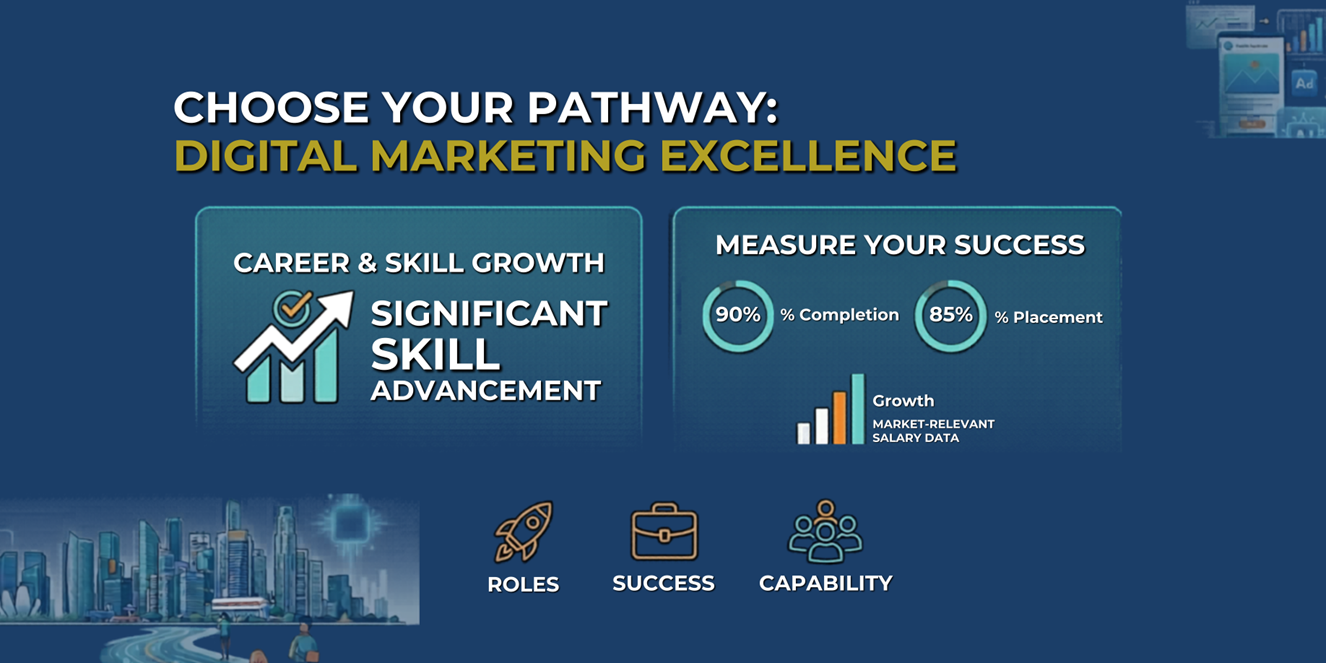
For many learners, the real value is not just a single course. It is a stackable credential pathway that starts with practical training, builds into a Professional Diploma, and can progress further into a master’s degree. That makes the learning journey more useful because it supports immediate skill-building without closing off longer-term academic and career advancement.
The timing matters.
Digital marketing in every country is no longer a side function. It sits close to revenue and business growth. Companies now use digital platforms to promote their products or services directly to the right audience.
Employers increasingly want marketers who can do more than post content. They want people who can read performance data, boost conversions, work across platforms, and use AI tools responsibly. This helps teams move faster.
That is the gap this kind of programme is meant to solve.
Instead of spending months collecting disconnected concepts, a stronger path is one that combines practical digital marketing training with real execution. CLaaS2SaaS positions its digital marketing training around that idea, helping learners build applied capability through hands-on learning, modern tools, and structured skill development that reflects how real teams work today.
Its digital marketing pathway is especially relevant for learners who want exposure to campaign planning, content development, analytics, and paid media in a format that feels closer to work than to passive study.
That means learners are not only studying digital marketing.
They are learning how to build campaigns, evaluate results, use AI tools in context, and develop the kind of practical confidence that shortens the distance between learning and employability.
Why Choose a Digital Marketing Short Course You Can Apply Immediately?
The short answer is simple: because speed only matters when it leads to capability.
Traditional learning pathways often assume students should absorb the theory first and apply it later. That model can still work for academic goals, but it is a weaker fit for people trying to move into modern marketing roles quickly.
A stronger accelerated pathway works when it is built around outcomes. You will learn how to reach and engage with potential customers across various digital marketing channels.
- building campaigns, not just discussing them
- learning tools in context, not in isolation
- understanding analytics through real examples
- creating work that can be shown to employers
- shortening the gap between study and employability
That matters even more now because modern digital marketing is no longer just about channels. It is about systems. Employers want marketers who can connect audience targeting, content, ad performance, landing pages, and reporting into one workflow because these directly impact customer acquisition, conversion rates, and revenue growth.
The question then becomes: how should a modern digital marketing course professionals take actually be designed to build that kind of capability?
What Is a Project-Based Digital Marketing Learning Pathway?
A project-based digital marketing pathway is a model where practical application is not an extra. It is the core of how learners build skills.
Instead of moving from slide deck to quiz to abstract discussion, learners move from concept to campaign, from campaign to data, and from data to improvement. That matters because digital marketing is not a memorisation function. It is a performance function.
A strong project-based pathway usually includes:
- Campaign planning tied to real objectives
- Content and copy development
- Paid media and audience targeting
- Analytics and optimisation work
- AI-assisted marketing workflows
- Portfolio-style outputs that show applied thinking
This is also why hands-on learning matters more than generic exposure. A learner who can explain how they planned a campaign, wrote messaging, launched ads, interpreted performance, and improved results has a much stronger hiring story than someone who only completed theoretical modules.
That does not mean every short course is strong.
It means a well-designed, practice-first environment gives learners a better shot at building confidence, retention, and real-world usefulness than passive lecture-heavy instruction alone.
Traditional Marketing Course vs Digital Marketing Short Course Singapore Learners Actually Need
The real difference is not the certificate.
It is the proximity to real work.
A conventional programme may give learners broad conceptual coverage. A stronger short course should still provide those foundations, but it should also reduce the distance between learning and doing.
Traditional Marketing Course
In a traditional learning path, learners often spend long stretches on concepts before they build or analyse anything meaningful.
That creates three problems.
First, confidence develops slowly because learners do not apply enough.
Second, portfolio value stays weak because most work disappears inside classroom exercises rather than employer-relevant outputs.
Third, the timeline delays career movement at the exact moment the market is changing fastest.
For someone targeting digital marketing roles, those tradeoffs matter. Skills in analytics, automation, paid media, and AI-supported execution do not stay for years at a time.
Practical Digital Marketing Short Course Singapore Pathway
A strong short course flips the sequence.
You still learn the foundations, but you learn them while building. The goal is not to remove rigour. The goal is to make rigour useful faster.
CLaaS2SaaS offers a clearer version of that shift. Its digital marketing direction highlights a skills-first pathway that combines campaign strategy, content development, paid platforms, analytics, and AI-supported execution in one applied learning journey.
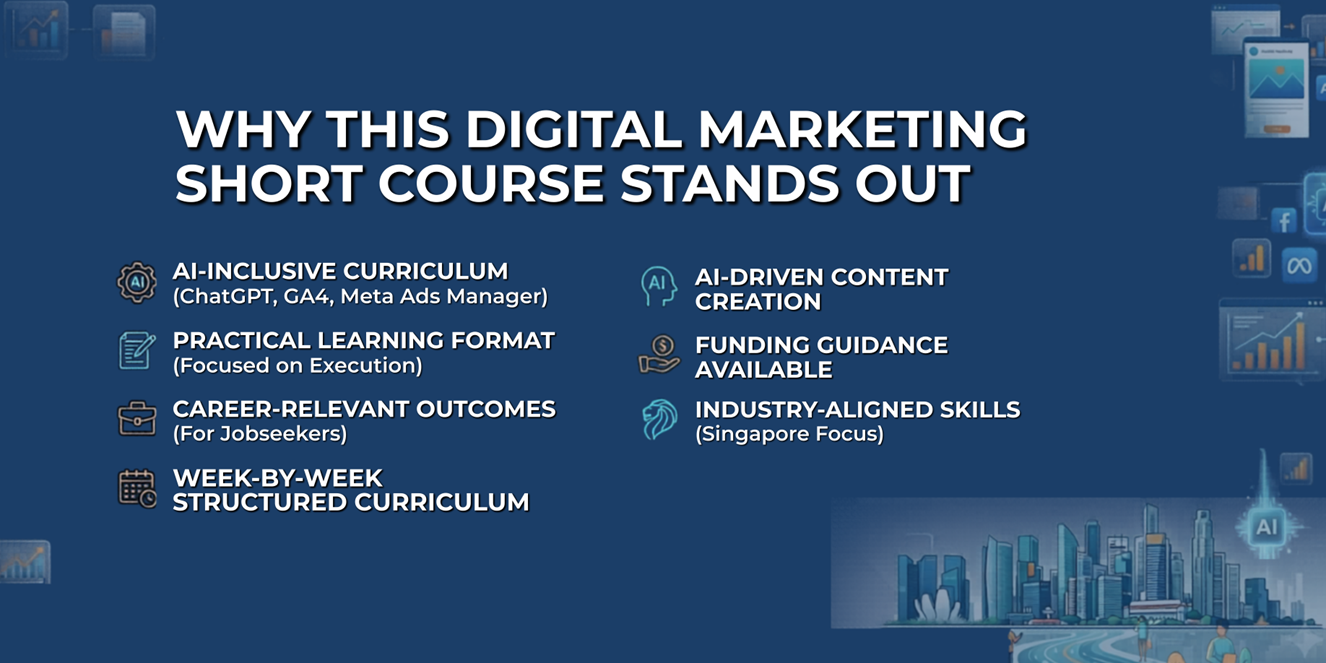
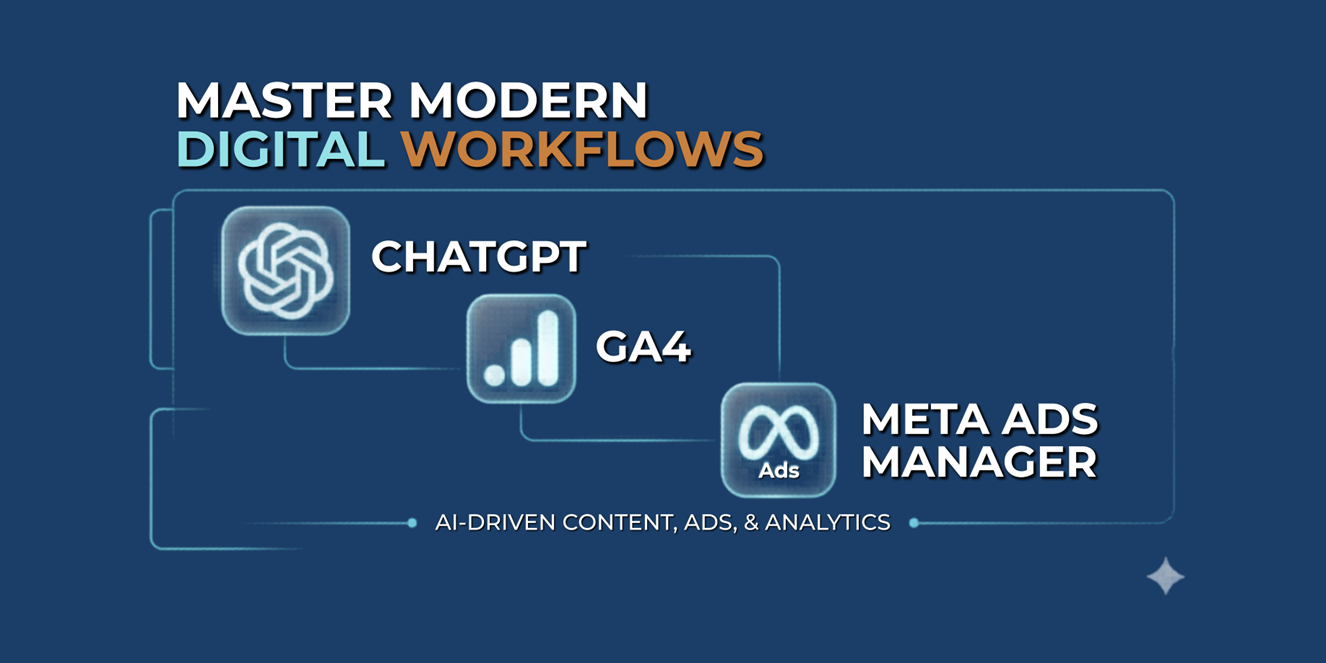
The structure also matters. Instead of treating AI as a separate future module, the course brief positions tools such as ChatGPT, GA4, and Meta Ads Manager as part of the actual learning experience.
That is the core promise of applied learning done right.
You are not waiting until the end of the course to prove you can do the work.
How the Hands-On Digital Marketing Programme Works
While exact delivery can vary by intake, the structure is clearly designed around a practical learning journey that helps learners build job-ready capability step by step.
Phase 1: Marketing Foundations That Support Execution
Learners start by building a practical understanding of digital channels, audience behaviour, campaign objectives, and funnel thinking.
This gives them the context needed to understand not just what marketers do, but why campaigns succeed or fail. By the end of this phase, learners can confidently map campaigns to funnel stages and business objectives.
Phase 2: Applied Campaign Development
Learners begin moving from theory into execution.
This includes content, messaging, audience targeting, campaign thinking, and paid media exposure that reflects how modern digital teams operate. The focus is not only on doing tasks, but on understanding how those tasks connect to business goals.
Phase 3: Analytics, Optimisation, and AI Workflow Integration
Once campaigns exist, performance must be measured.
That is where tools like GA4 and AI-assisted reporting become useful. Learners are exposed to how performance data can shape next actions and how AI can support faster drafting, sharper insight generation, and better iteration.
This work-integrated structure reflects a broader shift in adult learning, where capability development and practical relevance need to happen in parallel.
It matters because the outcome is more than course completion.
Learners gain proof of work, stronger confidence, and more credibility when they explain what they can do.
What You Actually Learn in the Digital Marketing Course
The best short courses are not shallow.
They are selective.
Instead of trying to cover every possible branch of marketing at a surface level, they focus on the skills that matter most for employability and practical business impact. AI is also not taught as a tool. It is embedded as a productivity layer across campaign planning, execution, and optimisation.
Marketing Foundations
- campaign planning
- audience targeting
- customer journey thinking
- messaging strategy
Content and Channel Capability
- Content creation
- copywriting logic
- social and campaign messaging
- paid media foundations
- Search engine optimization [SEO]
Data and Performance Skills
- GA4 exposure
- performance tracking
- reporting logic
- optimisation thinking
AI and Workflow Capability
- ChatGPT for ideation and drafting
- AI-assisted reporting
- workflow acceleration
- faster campaign iteration
Those building blocks show why this is more than a generic digital marketing course.
It is a practical, project-driven marketing mindset aligned to current business needs. Learners are expected to connect creative execution, performance thinking, and AI-supported workflows rather than treat them as separate worlds.
AI and GenAI Tools in the Curriculum
One of the strongest differentiators in this digital marketing short course page is the direct naming of tools.
Many course pages say they are current. Few say exactly what learners use.
This course can clearly highlight:
- ChatGPT
- GA4
- Meta Ads Manager
That matters because these are not abstract references. They reflect the actual tools many teams now use in planning, execution, and optimisation.
A learner may use ChatGPT to generate campaign ideas, support content development, and accelerate reporting drafts.
They may use Meta Ads Manager to understand audience setup, campaign structure, and testing logic.
They may use GA4 to evaluate traffic, conversions, and next-step optimisation decisions.
That workflow is much closer to how modern digital marketing really works.
For career switchers, that improves job relevance.
For SME owners, it strengthens internal capability.
For existing marketers, it helps update a skill set that may otherwise become outdated.
Curriculum Overview: How the Digital Marketing Pathway Builds Skills Step by Step
A strong digital marketing pathway should make progression easy to understand.
This one does not stop at a single course. It is designed as a stackable lifelong learning journey that helps learners build practical skills first, then progress into higher-level marketing and leadership capability over time.
The journey starts with the Professional Certificate in Digital Innovation.
This stage introduces learners to core digital concepts, innovation thinking, and the foundations needed to work confidently in today’s technology-driven business environment. It helps learners build early momentum and develop the digital mindset that modern marketing roles increasingly demand.
From there, learners can progress into the Professional Diploma in Digital Marketing or the Postgraduate Diploma in Digital Marketing, depending on their pathway.
This is where learning becomes more applied. Learners move deeper into areas such as digital marketing strategy, campaign planning, content development, audience engagement, analytics, automation, and practical marketing execution. In other words, this is the stage where skills become more visible, more usable, and more relevant to actual work.
For learners who want to keep building, the pathway can continue into the master’s in digital marketing.
At this level, the focus expands beyond execution alone. Learners develop stronger strategic thinking, broader business awareness, and a deeper understanding of how digital marketing supports long-term growth, decision-making, and organisational success.
Together, these stages create a pathway that supports both immediate employability and long-term career progression.
Instead of forcing learners to choose between short-term skills and future qualifications, this model allows them to build both. They can start with practical training, grow into diploma-level capability, and continue toward a master’s degree through a structure that reflects how modern careers develop.
Career Outcomes That Make This Course Worth It
The biggest value is not just finishing faster.
It is becoming useful faster.
When learners can point to campaign thinking, AI-enabled workflows, content outputs, reporting logic, or hands-on platform exposure, they build a stronger story for hiring managers. They are no longer saying, “I studied this.”
They are saying, “I can do this.”
That distinction matters in a market where businesses increasingly want marketing hires who can contribute early.
Practical outcomes often include:
- Stronger portfolio material
- Better interview examples
- More confidence with modern marketing tools
- Clearer problem-solving stories
- More credibility for digital marketing and growth-related roles
This matters not only for job seekers. Many learners are also trying to move internally from admin, operations, customer service, retail, or support roles into more future-facing business functions.
For those learners, the course is not just about education.
It is about mobility.
Why Employers Value Practical Digital Marketing Graduates
Modern hiring in digital marketing increasingly rewards demonstrated capability over abstract familiarity.
A certificate still matters. But employers also want proof that a candidate can think through audience problems, shape a campaign, use tools correctly, and interpret performance.
That is why practical learners stand out.
They can explain how they approached a campaign, why they chose a certain message, how they understood an audience, what performance signals they watched, and what they would improve next. They have experience with iteration, tradeoffs, and practical delivery.
Those are not classroom extras.
They are everyday realities in marketing work.
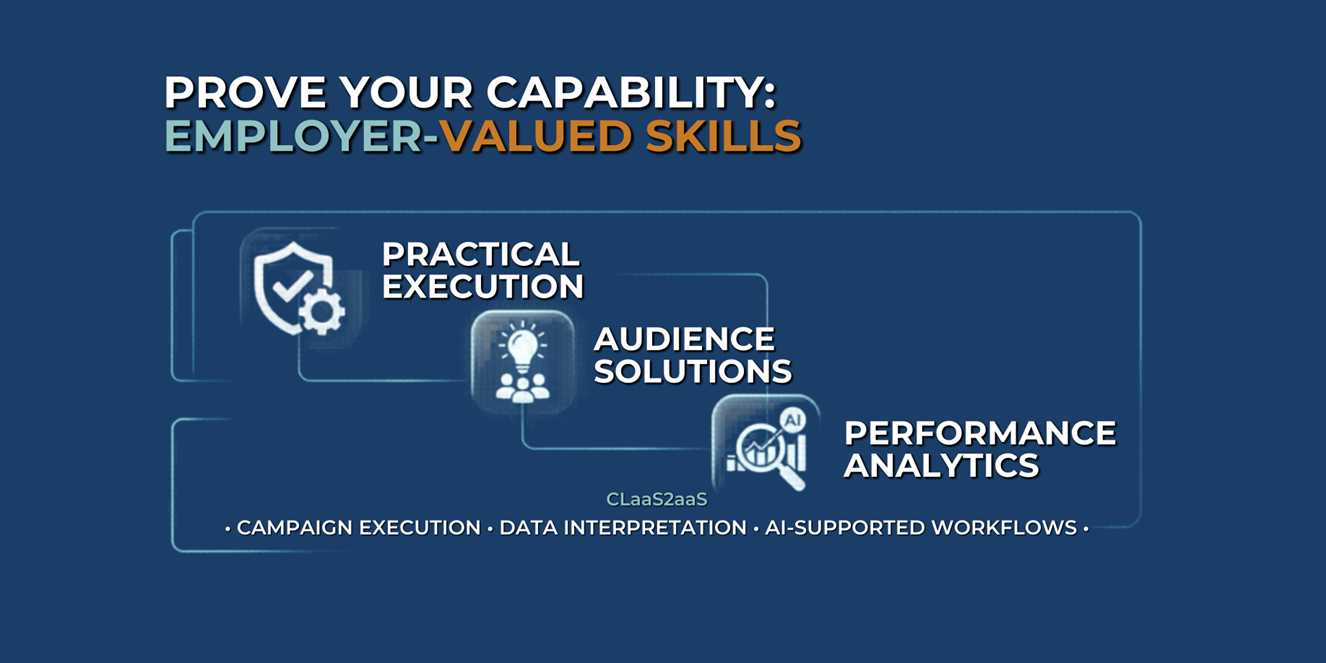
This is also why a hands-on digital marketing course learners can apply immediately is more relevant than a theory-only approach. Modern marketing sits at the intersection of content, data, performance, automation, and business problem-solving. CLaaS2SaaS reflects that blend by combining campaign execution, analytics, AI-supported workflows, and practical learning in one journey.
Addressing Common Misconceptions
Those building blocks show why this is more than a generic digital marketing course.
It is a practical, project-driven marketing mindset aligned to current business needs. Learners are expected to connect creative execution, performance thinking, and AI-supported workflows rather than treat them as separate worlds.
AI and GenAI Tools in the Curriculum
One of the strongest differentiators in this digital marketing short course page is the direct naming of tools.
Many course pages say they are current. Few say exactly what learners use.
This course can clearly highlight:
- ChatGPT
- GA4
- Meta Ads Manager
That matters because these are not abstract references. They reflect the actual tools many teams now use in planning, execution, and optimisation.
A learner may use ChatGPT to generate campaign ideas, support content development, and accelerate reporting drafts.
They may use Meta Ads Manager to understand audience setup, campaign structure, and testing logic.
They may use GA4 to evaluate traffic, conversions, and next-step optimisation decisions.
That workflow is much closer to how modern digital marketing really works.
For career switchers, that improves job relevance.
For SME owners, it strengthens internal capability.
For existing marketers, it helps update a skill set that may otherwise become outdated.
Curriculum Overview: How the Digital Marketing Pathway Builds Skills Step by Step
A strong digital marketing pathway should make progression easy to understand.
This one does not stop at a single course. It is designed as a stackable lifelong learning journey that helps learners build practical skills first, then progress into higher-level marketing and leadership capability over time.
The journey starts with the Professional Certificate in Digital Innovation.
This stage introduces learners to core digital concepts, innovation thinking, and the foundations needed to work confidently in today’s technology-driven business environment. It helps learners build early momentum and develop the digital mindset that modern marketing roles increasingly demand.
From there, learners can progress into the Professional Diploma in Digital Marketing or the Postgraduate Diploma in Digital Marketing, depending on their pathway.
This is where learning becomes more applied. Learners move deeper into areas such as digital marketing strategy, campaign planning, content development, audience engagement, analytics, automation, and practical marketing execution. In other words, this is the stage where skills become more visible, more usable, and more relevant to actual work.
For learners who want to keep building, the pathway can continue into the master’s in digital marketing.
At this level, the focus expands beyond execution alone. Learners develop stronger strategic thinking, broader business awareness, and a deeper understanding of how digital marketing supports long-term growth, decision-making, and organisational success.
Together, these stages create a pathway that supports both immediate employability and long-term career progression.
Instead of forcing learners to choose between short-term skills and future qualifications, this model allows them to build both. They can start with practical training, grow into diploma-level capability, and continue toward a master’s degree through a structure that reflects how modern careers develop.
Career Outcomes That Make This Course Worth It
The biggest value is not just finishing faster.
It is becoming useful faster.
When learners can point to campaign thinking, AI-enabled workflows, content outputs, reporting logic, or hands-on platform exposure, they build a stronger story for hiring managers. They are no longer saying, “I studied this.”
They are saying, “I can do this.”
That distinction matters in a market where businesses increasingly want marketing hires who can contribute early.
Practical outcomes often include:
- Stronger portfolio material
- Better interview examples
- More confidence with modern marketing tools
- Clearer problem-solving stories
- More credibility for digital marketing and growth-related roles
This matters not only for job seekers. Many learners are also trying to move internally from admin, operations, customer service, retail, or support roles into more future-facing business functions.
For those learners, the course is not just about education.
It is about mobility.
Why Employers Value Practical Digital Marketing Graduates
Modern hiring in digital marketing increasingly rewards demonstrated capability over abstract familiarity.
A certificate still matters. But employers also want proof that a candidate can think through audience problems, shape a campaign, use tools correctly, and interpret performance.
That is why practical learners stand out.
They can explain how they approached a campaign, why they chose a certain message, how they understood an audience, what performance signals they watched, and what they would improve next. They have experience with iteration, tradeoffs, and practical delivery.
Those are not classroom extras.
They are everyday realities in marketing work.
This is also why a hands-on digital marketing course learners can apply immediately is more relevant than a theory-only approach. Modern marketing sits at the intersection of content, data, performance, automation, and business problem-solving. CLaaS2SaaS reflects that blend by combining campaign execution, analytics, AI-supported workflows, and practical learning in one journey.
Addressing Common Misconceptions
“Short means superficial.”
“AI marketing courses only teach prompts.”
Data and Performance Skills
“Digital marketing is only for people already in marketing.”
Those building blocks show why this is more than a generic digital marketing course.
It is a practical, project-driven marketing mindset aligned to current business needs. Learners are expected to connect creative execution, performance thinking, and AI-supported workflows rather than treat them as separate worlds.
AI and GenAI Tools in the Curriculum
One of the strongest differentiators in this digital marketing short course page is the direct naming of tools.
Many course pages say they are current. Few say exactly what learners use.
This course can clearly highlight:
- ChatGPT
- GA4
- Meta Ads Manager
That matters because these are not abstract references. They reflect the actual tools many teams now use in planning, execution, and optimisation.
A learner may use ChatGPT to generate campaign ideas, support content development, and accelerate reporting drafts.
They may use Meta Ads Manager to understand audience setup, campaign structure, and testing logic.
They may use GA4 to evaluate traffic, conversions, and next-step optimisation decisions.
That workflow is much closer to how modern digital marketing really works.
For career switchers, that improves job relevance.
For SME owners, it strengthens internal capability.
For existing marketers, it helps update a skill set that may otherwise become outdated.
Curriculum Overview: How the Digital Marketing Pathway Builds Skills Step by Step
A strong digital marketing pathway should make progression easy to understand.
This one does not stop at a single course. It is designed as a stackable lifelong learning journey that helps learners build practical skills first, then progress into higher-level marketing and leadership capability over time.
The journey starts with the Professional Certificate in Digital Innovation.
This stage introduces learners to core digital concepts, innovation thinking, and the foundations needed to work confidently in today’s technology-driven business environment. It helps learners build early momentum and develop the digital mindset that modern marketing roles increasingly demand.
From there, learners can progress into the Professional Diploma in Digital Marketing or the Postgraduate Diploma in Digital Marketing, depending on their pathway.
This is where learning becomes more applied. Learners move deeper into areas such as digital marketing strategy, campaign planning, content development, audience engagement, analytics, automation, and practical marketing execution. In other words, this is the stage where skills become more visible, more usable, and more relevant to actual work.
For learners who want to keep building, the pathway can continue into the master’s in digital marketing.
At this level, the focus expands beyond execution alone. Learners develop stronger strategic thinking, broader business awareness, and a deeper understanding of how digital marketing supports long-term growth, decision-making, and organisational success.
Together, these stages create a pathway that supports both immediate employability and long-term career progression.
Instead of forcing learners to choose between short-term skills and future qualifications, this model allows them to build both. They can start with practical training, grow into diploma-level capability, and continue toward a master’s degree through a structure that reflects how modern careers develop.
Career Outcomes That Make This Course Worth It
The biggest value is not just finishing faster.
It is becoming useful faster.
When learners can point to campaign thinking, AI-enabled workflows, content outputs, reporting logic, or hands-on platform exposure, they build a stronger story for hiring managers. They are no longer saying, “I studied this.”
They are saying, “I can do this.”
That distinction matters in a market where businesses increasingly want marketing hires who can contribute early.
Practical outcomes often include:
- Stronger portfolio material
- Better interview examples
- More confidence with modern marketing tools
- Clearer problem-solving stories
- More credibility for digital marketing and growth-related roles
This matters not only for job seekers. Many learners are also trying to move internally from admin, operations, customer service, retail, or support roles into more future-facing business functions.
For those learners, the course is not just about education.
It is about mobility.
Why Employers Value Practical Digital Marketing Graduates
Modern hiring in digital marketing increasingly rewards demonstrated capability over abstract familiarity.
A certificate still matters. But employers also want proof that a candidate can think through audience problems, shape a campaign, use tools correctly, and interpret performance.
That is why practical learners stand out.
They can explain how they approached a campaign, why they chose a certain message, how they understood an audience, what performance signals they watched, and what they would improve next. They have experience with iteration, tradeoffs, and practical delivery.
Those are not classroom extras.
They are everyday realities in marketing work.
This is also why a hands-on digital marketing course learners can apply immediately is more relevant than a theory-only approach. Modern marketing sits at the intersection of content, data, performance, automation, and business problem-solving. CLaaS2SaaS reflects that blend by combining campaign execution, analytics, AI-supported workflows, and practical learning in one journey.
Addressing Common Misconceptions
Who Should Consider a Digital Marketing Short Course Singapore Programme?
This path is especially strong for learners who need a practical bridge between ambition and employability.
It is a good fit for:
- Career switchers who want a faster route into marketing
- Working professionals who need updated digital and AI capability
- Current marketers who want stronger analytics or paid media exposure
- SME owners who want to build in-house digital capability
- Learners who prefer building and applying instead of passive study
If you already know that lecture-heavy learning does not work well for you, that is another sign.
A project-based digital marketing short course model is best for people who learn by doing, testing, improving, and understanding how all the parts connect.
Is This Path Right for You?
Ask yourself a better question than “Is this short?”
Ask, “Will this help me do the work I want to be hired for?”
If you want a future in digital marketing, growth, content, or performance roles, the right course should help you:
- Build practical campaign capability
- Understand modern tools in context
- Create proof of work
- Explain business value, not just tactics
- Improve employability without losing momentum
If that is what you want, this is not a shortcut.
It is a more direct path.
Build Real Digital Marketing Skills with AI-Inclusive Training
The strongest promise in modern education is not “learn everything.”
It is “learn what matters, apply it quickly, and prove it.”
That is why the CLaaS2SaaS approach is compelling.
For career switchers, working professionals, and SME teams, the course creates a practical route into digital marketing through hands-on learning, tool-based exposure, and work-relevant capability building.
The broader value is not just in course completion.
It is in building confidence with real workflows, understanding how AI fits into modern campaign work, and developing skills that feel usable from the moment the course ends.
That is what makes a strong digital marketing short course singapore worth serious attention.
Ready to build practical digital marketing skills that employers value?
Explore the course structure, review the funding options, and see how AI-inclusive training can help you move faster toward real marketing capability.