Blog
Fast Track Data Science Certification: The 4-Month Roadmap
SHARE THIS:


A Fast Track Data Science Certification is one of the most efficient ways to move from “interested in data” to “I can confidently deliver analysis or models that answer real business questions.” Speed, however, only works when it is paired with structure, accountability, and a clearly defined outcome.
This guide walks through how fast-track certifications work, how they compare to degrees, what a realistic 4-month workload looks like, and how to choose intensive training without wasting time or money. If you want to explore structured, time-efficient options built for working adults, many learners begin with a data science certification path for working professionals under the Claas2SaaS Lifelong Learning framework.
What A Fast-Track Certification Is (And What It Isn’t)
A fast-track program is a compressed, outcome-driven learning path. It focuses on the highest-leverage skills used in real data roles: SQL, Python, applied statistics, core modeling techniques, and communication.
What makes it “fast” is not skipping fundamentals but sequencing them efficiently. Concepts are introduced only when you need them, reinforced immediately through practice, and evaluated through projects rather than exams. This approach is common in a well-designed intensive data science training program.
What it is not:
- A magic shortcut that eliminates effort
- A theory-heavy academic replacement
- A collection of disconnected tutorials
The goal is simple: build applied competence quickly and prove it through portfolio work.
When evaluating any fast-track option, judge it by two outputs:
- Portfolio quality: Does the work look like something used in a real company?
- Decision clarity: Can you explain why you chose certain metrics, features, or models?
Fast Track Data Science Certification Vs Degree: How To Decide
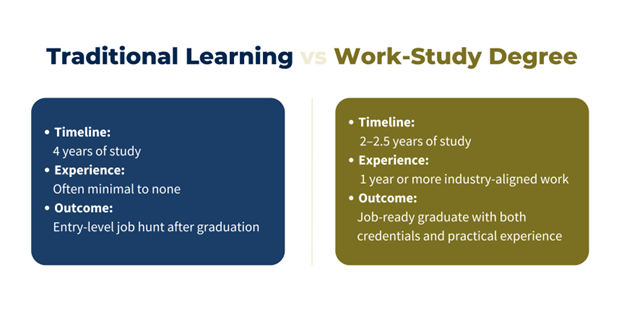
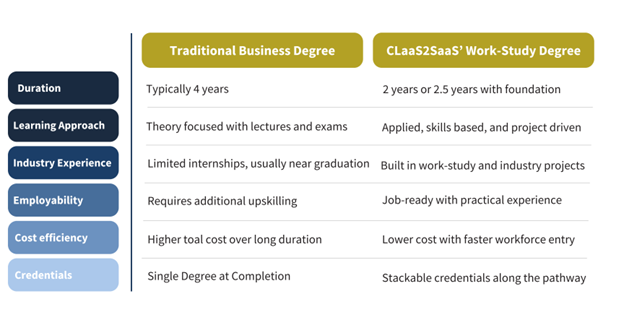
Degrees and certifications both lead to data roles, but they solve different problems. Choosing the wrong one can cost years.
According to the U.S. Bureau of Labor Statistics, data scientists earned a median annual wage of $112,590 (May 2024), with projected employment growth of 34% from 2024–2034. That demand is why employers increasingly focus on demonstrable skills, not just credentials.
When A Degree Makes Sense
- A degree is usually the right path if you need:
- Deep theoretical grounding for research-heavy or academic roles
- Access to internships, labs, or campus recruiting pipelines
- A slower pace to build strong math and statistical foundations
Degrees are also valuable if your target market strongly prefers formal academic credentials.
When A Certification Wins On Speed And ROI
A Fast Track Data Science Certification is often the better choice when you:
Certifications emphasize output: SQL queries, notebooks, models, and write-ups you can show. - Already hold a bachelor’s degree in any field
- Need applied, job-ready skills quickly
- Want to pivot roles or upskill internally without stepping away from work
The “Degree + Certification” Stack Recruiters Like
Many professionals combine both approaches. Keeping an existing degree while adding a fast-track data science learning path signals two things at once: baseline academic credibility and current, applied capability.
Can A 4 Month Data Science Certification Really Work?
Yes—if you treat it like a serious, scoped commitment. A 4 Month Data Science Certification works best when the learning path follows a tight progression: foundations → applied modeling → portfolio → interview narrative.
Speed breaks down when learners try to do everything. Focus wins when you limit scope to one or two realistic project themes.
The Time Math (Hours/Week) You Should Plan For
For most working adults, realistic expectations look like this:
Consistency matters more than motivation. Programs built under Lifelong Learning models are designed around predictable weekly rhythms rather than cramming. - 8–12 hours/week for strong, polished portfolio output
- 6–8 hours/week if you already code and understand basic statistics
- Under 6 hours/week usually results in rushed or shallow projects
Prerequisites That Cut Your Learning Curve In Half
Before starting, aim to be comfortable with:
If these feel shaky, a 7–10 day prep sprint can dramatically improve outcomes in an intensive program. - Basic algebra and chart interpretation
- Spreadsheet logic (filters, grouping, pivots)
- Any prior programming exposure, even minimal Python
The Curriculum That Delivers Results In 16 Weeks
Below is a realistic roadmap followed by most Fast Track Data Science Certification Programs that successfully place graduates into applied roles.
Weeks 1–4: Foundations (SQL, Python, Stats)
You should learn to:
- Write SQL joins, CTEs, and window functions
- Clean and transform data using pandas
- Interpret probability, distributions, and confidence intervals
- Write short summaries that answer one clear business question
Weeks 5–8: Modeling (Supervised Learning + Evaluation)
This phase introduces modeling with emphasis on reasoning, not hype:
Employers value clean evaluation and honest interpretation far more than complex algorithms. - Regression and classification fundamentals
- Train/validation splits and cross-validation
- Baseline models versus improvements
- Evaluation metrics such as RMSE, precision, recall, and ROC-AUC
Weeks 9–12: Real-World Workflow (ETL, Experiments, Storytelling)
Strong Intensive Data Science Training programs extend beyond notebooks to include:
This is where projects begin to resemble real work. - Basic ETL and pipeline thinking
- Experiment design and A/B testing fundamentals
- Decision-focused visualization and communication
Weeks 13–16: Portfolio And Interview-Ready Narrative
By the end of the program, you should have:
- One or two polished, reproducible projects
- A one-page write-up per project (problem → method → result → limitations)
- A repeatable 5-minute walkthrough you can present confidently
How To Choose Intensive Data Science Training Without Wasting Money
Ignore long tool lists and buzzwords. Use outcome-based criteria instead.
The 10-Point Program Checklist
A strong option should include:
- Clear role outcomes (analytics, data science, ML)
- Heavy SQL emphasis
- Python practice with realistic datasets
- Statistics taught through decisions
- End-to-end project pipelines
- Code and project feedback
- Accessible mentorship
- Career materials and interview prep
- Transparent workload expectations
- Visible portfolio standards
Portfolio Standards (What “Job-Ready” Looks Like)
A job-ready project includes:
- A clear business question
- Documented data-cleaning decisions
- A baseline and at least one improvement
- Honest limitations and next steps
- A concise executive summary
Mentorship And Feedback Loops
Fast-track programs fail when learners get stuck silently. Look for:
- Weekly office hours
- Rubric-based project reviews
- Active peer or mentor communities
What To Build: 2 Portfolio Projects That Signal “Hire Me”
You only need two strong projects if they are realistic and well-explained.
Project 1: Decision-First Analysis (SQL + Python)
Examples include churn analysis, funnel drop-off, retention cohorts, or operational metrics.
Project 2: Predictive Modeling With Clean Evaluation
Examples include demand forecasting, lead scoring, fraud flags, or incident prediction.
Clarity, structure, and reasoning consistently outperform complexity.
FAQs About Fast-Track Programs And Outcomes
Do employers accept certifications?
Yes—especially when paired with projects you can clearly defend.
Is a 4 month data science certification enough for a job?
It can be enough for entry-level roles or internal transitions when paired with strong projects.
Why do learners fail fast-track programs?
Inconsistent weekly time and unclear project scope are the most common reasons.
Course

Ready To Improve Your Fast Track Data Science Certification Strategy?
A fast path only works when it is structured. Define the role you want next, control scope, and ship proof through projects that mirror real business work.
If you want a structured reference designed for working professionals, explore the Claas2SaaS Lifelong Learning Data Science Program to compare timelines, outcomes, and certification paths.