Work-Study Software Engineering Degree: Structure, Eligibility, and a Career-Change Roadmap

SHARE THIS:


Choosing a college pathway is one of the most important decisions for students exploring technology careers. For many high school graduates and career switchers, the challenge is not just learning software engineering but gaining practical experience while studying.
A work study software engineering degree addresses this challenge by combining academic learning with hands-on development exposure. Instead of separating education from industry experience, students build real technical skills while progressing through their degree.
Demand for software engineering talent continues to grow as organizations adopt digital technologies across every industry. Research from McKinsey Digital highlights how companies are rapidly increasing investment in software, cloud infrastructure, and digital platforms. As a result, skilled developers remain essential for building and maintaining these systems.
This article explains:
- How a work study software engineering degree works
- Who is eligible for the program
- The structured learning pathway from beginner to graduate
- How students balance work and study
- Why this model supports both high school students and career switchers
Why Work-Study Degrees Are Becoming More Popular
Technology evolves rapidly. Programming languages change, frameworks update, and development tools improve continuously. Traditional degrees sometimes struggle to keep pace with this speed.
A software engineering degree while working helps students bridge the gap between education and industry expectations. By participating in development projects during their studies, students gain familiarity with the tools and workflows used by professional engineering teams.
Another reason work-study programs are gaining attention is the rise of skills-based hiring. Employers increasingly evaluate candidates based on demonstrated technical ability rather than academic credentials alone. Students who graduate with portfolios of real projects often have a clear advantage during technical interviews.
This model also appeals to students who want to combine academic learning with practical experience. Many learners begin exploring how to earn a degree while working, allowing them to develop skills while progressing toward a recognized qualification.
What Is a Work-Study Software Engineering Degree?
A work study software engineering degree is a structured academic pathway that integrates formal coursework with practical software development experience.
Students learn programming fundamentals, database systems, and software engineering methodologies through structured modules. At the same time, they apply those concepts in real-world development environments through projects or apprenticeships.
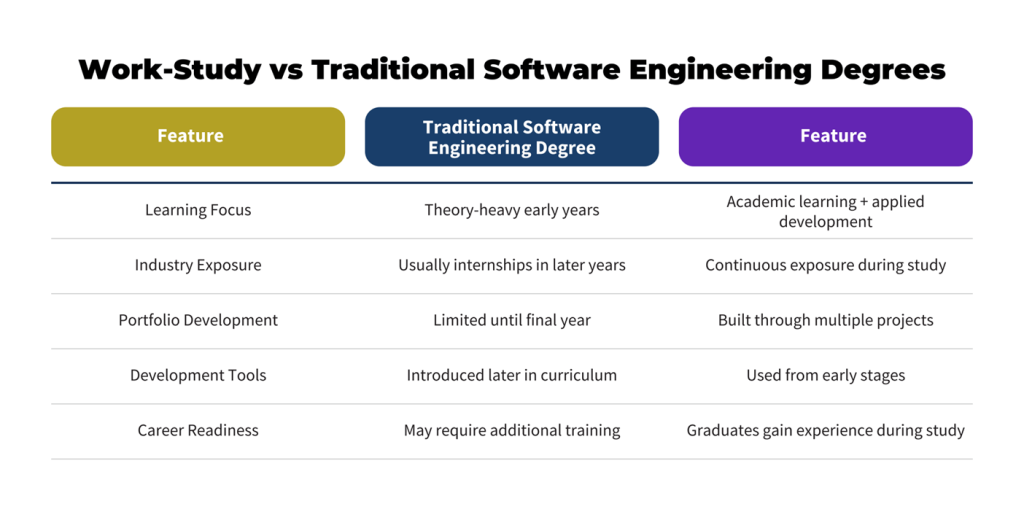
Students often compare a work study software engineering degree with a traditional academic pathway before choosing a program. But, unlike traditional programs where internships occur late in the curriculum, work-study degrees introduce applied learning earlier. This helps students understand how theoretical concepts translate into real engineering tasks.
Students also learn collaborative workflows similar to those used in modern engineering teams. Development processes used in web and mobile application development often involve version control systems, testing frameworks, and continuous deployment pipelines.
This structure helps students connect theory with practice earlier. By the time they graduate, they have already worked with development tools and collaborative workflows used in professional engineering environments.
Who Is Eligible for a Work-Study Software Engineering Degree?
Many students believe technology degrees require extensive technical backgrounds. In reality, most structured programs are designed for beginners.
Typical preparations and eligibility requirements include:
Because the field attracts learners from many backgrounds, work-study pathways are also suitable for individuals considering a career change to a software engineering degree. - Completion of high school or equivalent qualification
- Basic algebra-level mathematics
- English proficiency for academic communication
Work-Study Software Engineering Degree: How the Learning Path Works
A structured work study software engineering degree follows a progressive learning pathway.
Students begin with foundational concepts before advancing to applied development projects and professional engineering practices.
Foundation Diploma: Building Readiness From Zero
Students who are new to programming often start with the Foundation Diploma in Software Engineering.
This stage focuses on computational thinking, basic programming concepts, and digital literacy. Students learn how software systems function and how engineers structure applications.
Instead of jumping into complex frameworks immediately, the foundation stage builds confidence through guided learning and practical exercises.
Higher Diploma: Transitioning From Learning to Application
After building foundational knowledge, students advance to the Higher Diploma in Software Engineering.
At this stage, learning becomes project-based: more practical. Students build applications, manage code repositories, and collaborate on software development projects.
Students also gain exposure to tools used in modern engineering environments, including version control systems and debugging frameworks.
Top-Up Bachelor’s Degree: Academic Recognition and Professional Readiness
The final stage is the Top-Up Bachelor’s Degree in Software Engineering.
At this level, students study advanced engineering topics such as software architecture, system design, and enterprise application development.
Students complete capstone projects that combine multiple technologies into full software solutions. These projects demonstrate both technical ability and professional readiness.
Graduates complete the pathway with a recognized bachelor’s degree and a portfolio of development work.
Weekly Commitment: Studying While Working in Tech
Many students wonder whether balancing work and study is manageable.
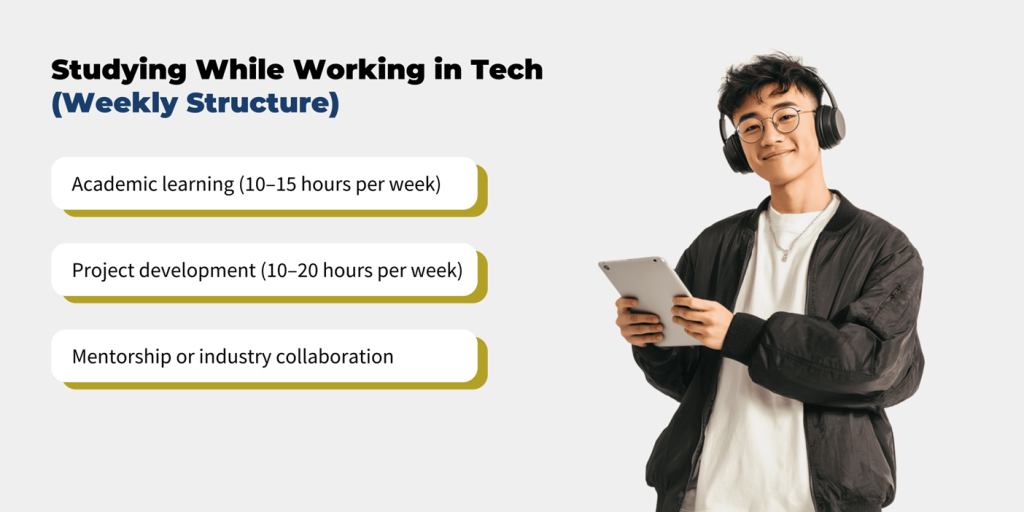
A typical software engineering degree while working involves a structured weekly schedule combining coursework and practical development tasks in a real teams’ operations.
Example weekly structure:
Academic learning (10–15 hours per week)
Students attend lectures, coding labs, or mentoring sessions.
Project development (10–20 hours per week)
Students build real software projects, often working in teams.
Mentorship or industry collaboration
Some programs include guidance from experienced engineers or project mentors.
Career Change to Software Engineering Degree: Step-by-Step Roadmap
Many professionals transition successfully into software engineering each year.
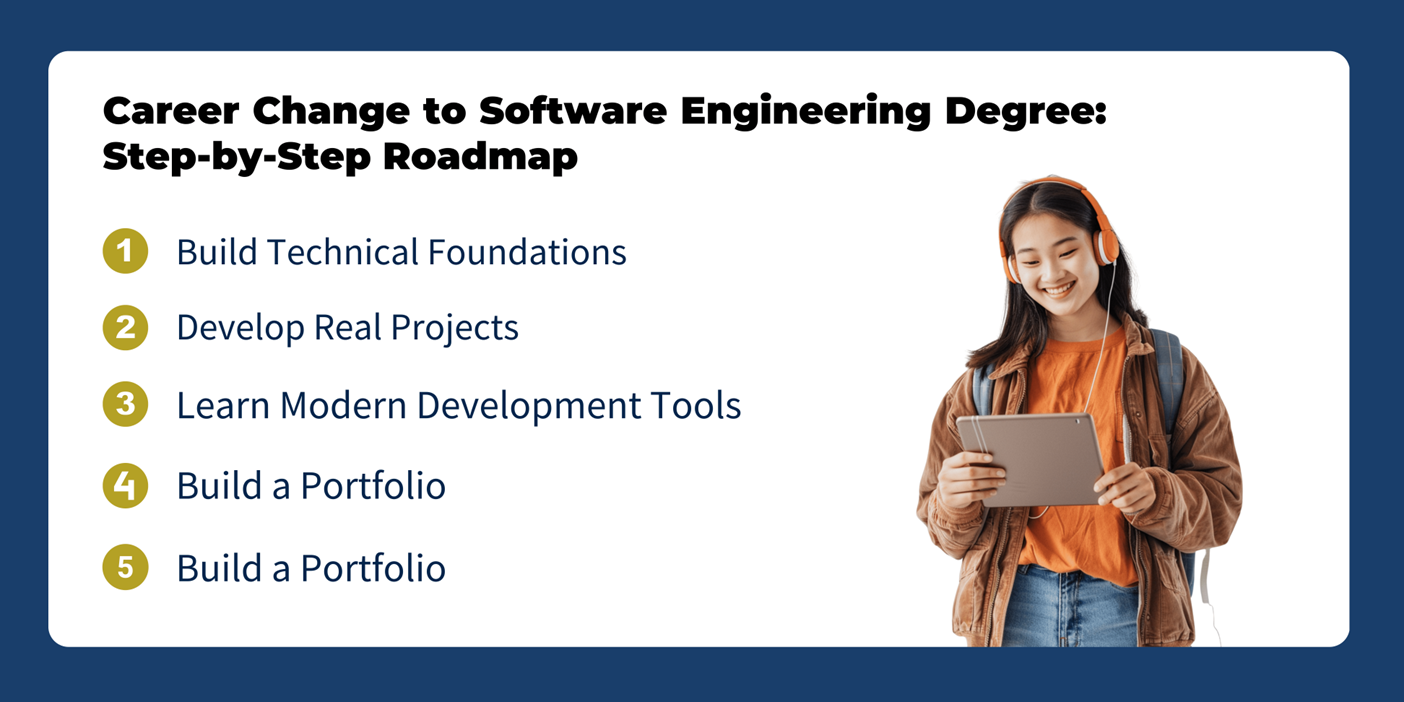
Here is a typical roadmap for career switchers.
Step 1: Build Technical Foundations
Start by learning programming fundamentals such as:
- Python
- JavaScript
- HTML and CSS
- Data structures
Step 2: Develop Real Projects
Practical experience is critical.
In a project-based learning, students build applications such as:
- Web platforms
- Mobile apps
- APIs or backend services
Step 3: Learn Modern Development Tools
Professional developers use tools such as:
- Git and GitHub
- Docker
- Cloud deployment platforms
- CI/CD pipelines
Step 4: Build a Portfolio
Employers often evaluate candidates based on project portfolios.
Students should showcase:
- GitHub repositories
- deployed applications
- collaborative development work
Step 5: Apply for Software Roles
Graduates can pursue roles such as:
- Junior software engineer
- Web developer
- Mobile developer
- Full-stack developer
Balancing Study and Work in a Work-Study Degree
Students often ask how a software engineering degree while working fits into their weekly schedule.Work-study programs are structured so that academic learning and applied practice reinforce each other. This balance strengthens learning outcomes. Concepts learned in lectures become meaningful when applied in real development tasks.
The structure also helps students build professional habits such as time management, communication, and collaborative problem-solving.
Why Speed and Experience Matter More Than Ever
Employers want new hires who can contribute quickly. Graduating earlier with structured experience closes the gap between education and employment.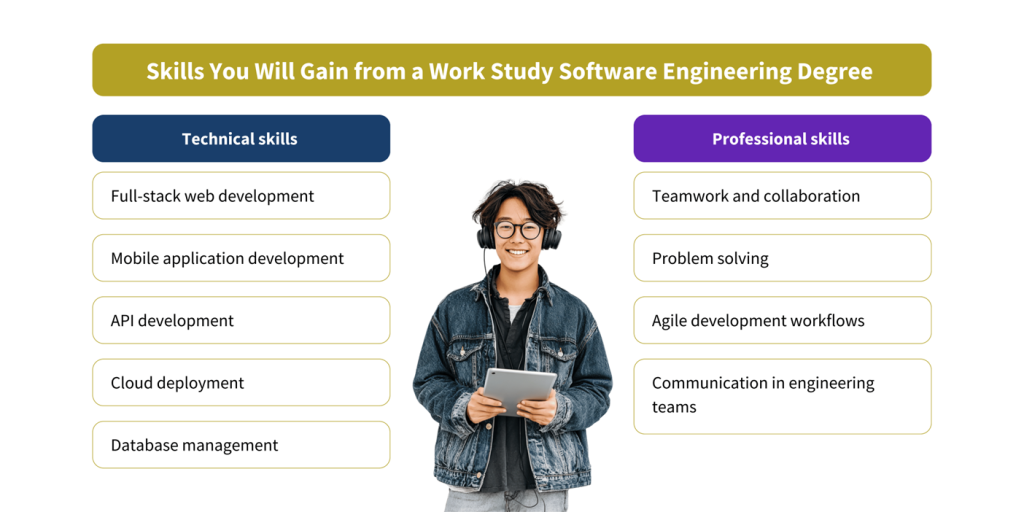
Students graduating from work-study programs typically develop a strong combination of technical and professional skills that prepare them for real-world software engineering roles. This becomes a significant advantage for them when entering the job market.
Through hands-on learning and practical projects, students gain experience in areas such as full-stack web development, mobile application development, API development, cloud deployment, and database management. These technical capabilities allow graduates to design, build, and deploy modern software applications used by businesses and organizations.
Beyond technical knowledge, work-study programs also emphasize the development of essential professional skills required in technology teams. Students learn how to collaborate effectively with others, solve complex problems, and work within agile development workflows, which are widely used in the software industry.
They also strengthen their communication skills, enabling them to discuss technical solutions, share ideas with teammates, and contribute productively within engineering teams. This familiarity with the professional environment reduces the onboarding time required by employers and makes them productive team members earlier in their careers.
Course

How to Start Your Degree Path Today
Choosing the right education pathway can significantly influence your career trajectory.A work study software engineering degree offers a practical approach to entering the technology industry.
Students graduate with:
- a recognized academic degree
- real development experience
- a portfolio of projects
- industry-ready technical skills