What Is Work-Integrated Learning? A Complete Guide for Career Switchers
What Is Work-Integrated Learning? A Complete Guide for Career Switchers
Content
Content
The term ‘work-integrated learning‘ gets used in very different ways depending on who is using it. For some, it refers to university internship modules. For others, it describes something closer to a co-op placement. If you have been searching what is work-integrated learning and found conflicting answers, that is why. This guide defines the term clearly, explains how it works in an applied upskilling context, and maps out what a real work-integrated pathway looks like for career switchers.
Work-Integrated Learning, Defined (and What It Is Not)
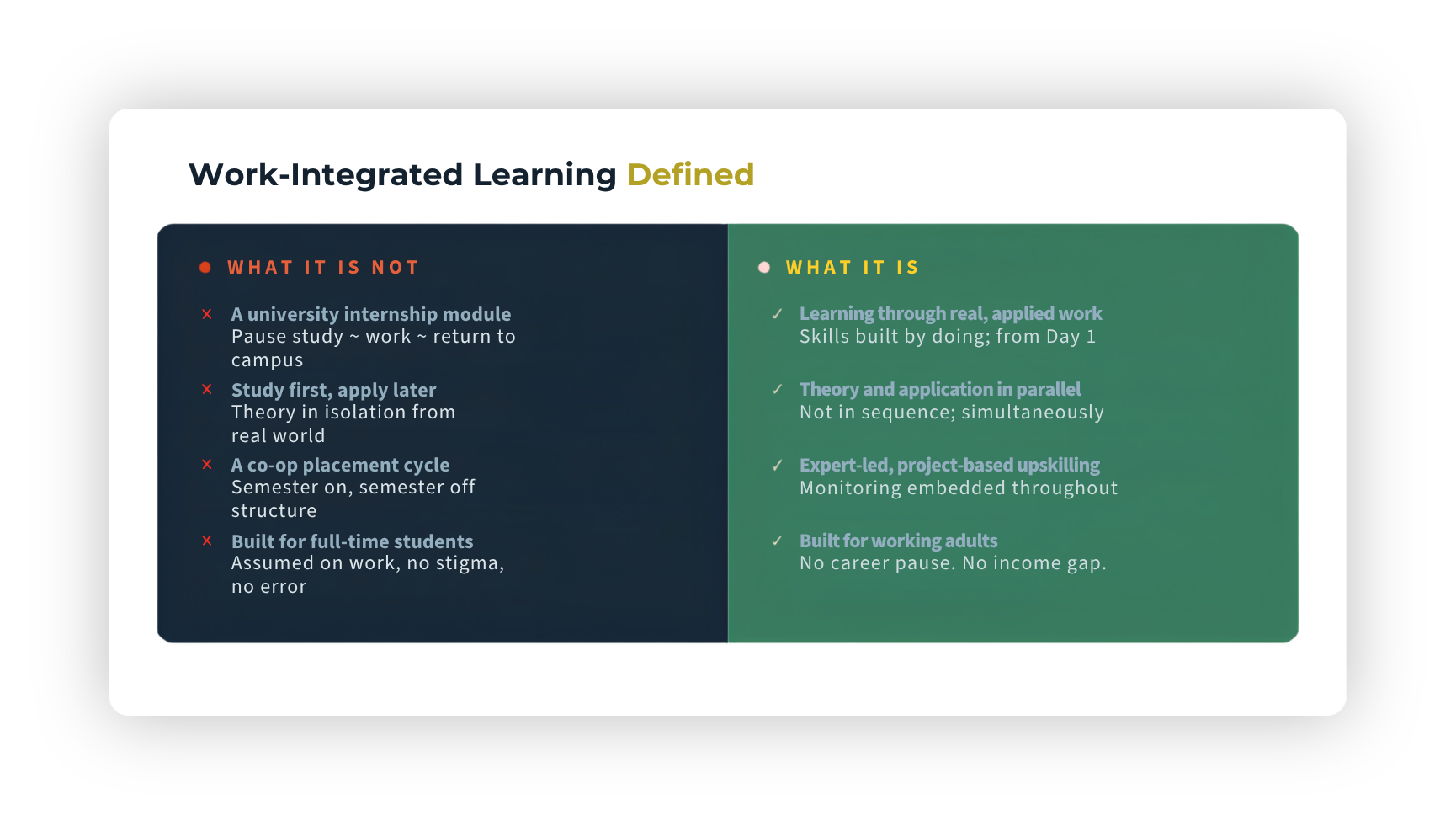
Work-integrated learning is an approach to education that combines structured learning with applied, real-world work. Instead of studying a subject in isolation and hoping to apply it later, you develop skills by doing actual work as part of the learning process itself. Theory and application happen in parallel, not in sequence.
In university settings, work-integrated learning is often synonymous with co-op programmes or internship modules: a semester-long placement that forms part of a full-time degree. The student pauses academic study, works at an employer, then returns to campus. This is the framing that dominates most search results on the topic, particularly those originating from Australian and North American higher education contexts.
The work-integrated learning offered through CLaaS2SaaS is applied upskilling for working adults and career switchers. It is not a university internship add-on. It is a structured, expert-led programme where learning happens through industry-relevant projects, mentoring, and guided application from day one. There is no campus to return to between placements. The entire model is built on the principle that adults learn most effectively through doing, not just listening.
This distinction matters if you are a working adult, evaluating your options. The two models serve different people in different situations and conflating them leads to the wrong conclusions about what work-integrated learning can offer you.
How the 70:20:10 Model Works
Central to understanding work-integrated learning explained is the 70:20:10 learning model, the framework that underpins how this approach allocates learning activity.
The model works like this. Roughly 70 percent of learning comes from hands-on experience: working on real projects, solving real problems, and making decisions under actual conditions. This is the dominant mode because it is where skills become durable. Reading about data analysis is very different from cleaning a messy dataset for a live project with a deadline.
Approximately 20 percent of learning comes from social and collaborative experience: working with mentors, receiving expert feedback, collaborating with peers, and learning from people who have done the work before. This layer is what converts raw experience into structured understanding. Without it, hands-on learning can reinforce bad habits as easily as good ones.
The remaining 10 percent comes from formal instruction: structured content, frameworks, models, and theory that give context to the applied work happening in the other 90 percent. Formal instruction matters, but in this model it is the scaffolding rather than the building.
A well-designed work-integrated programme should intentionally balance practical experience, mentoring, and structured learning. CLaaS2SaaS applies this approach through its 70:20:10 learning model. Expert mentoring is embedded throughout, not bolted at the end. Formal instruction provides the conceptual backbone that makes the project work legible and transferable.
For career switchers, this matters because the 70:20:10 can help learners build job-relevant skills earlier than programmes focused primarily on classroom instruction. You are not studying toward a future application. You are applying now, with structure and support around you.
E-Commerce and Digital Business Management
As more businesses shift growth, sales, and customer engagement online, this is one of the most direct career paths from the degree. E-commerce managers, digital operations leads, and online business managers are responsible for the commercial performance of digital channels. They manage product listings, conversion funnels, customer experience, and revenue reporting. The e-commerce component of the curriculum maps directly to these responsibilities, and graduates with project experience in this area are well positioned to enter at a coordinator or executive level and progress quickly.
Data and Analytics Roles
As businesses increasingly rely on data and AI-driven decision making, organisations across every sector are hiring for data literacy, and a digital business degree with an analytics component opens doors into roles such as data analyst, business intelligence analyst, and digital performance analyst. These roles sit at the centre of commercial decision-making, translating numbers into strategy. Graduates who have worked with real data sets during their studies, as the CLaaS2SaaS programme requires, arrive with a portfolio rather than just a transcript.
Digital Marketing Roles
Digital marketing remains one of the highest-demand hiring areas in the digital economy. Graduates move into roles covering paid media, SEO, content strategy, social media management, and campaign analytics. What distinguishes a digital business graduate from a pure marketing graduate in this space is the commercial and data context they bring: they understand how marketing activity connects to revenue, which makes them more effective and more promotable.
Entrepreneurship and Founder Paths
Not every graduate joins an employer. The entrepreneurship and strategic innovation pillars of the curriculum are built for graduates who intend to launch their own ventures or join early-stage companies in a founding or growth role. The combination of commercial, digital, and analytical skills is exactly what founders need to launch, grow, and scale modern digital businesses.
Strategy and Digital Innovation Roles
As graduates gain experience, many move into roles focused on digital strategy, business transformation, and innovation. These roles are becoming increasingly important as organisations accelerate digital transformation initiatives. They sit closer to senior leadership and require the ability to connect technology initiatives to business strategy and organisational change. The strategic innovation component of the curriculum is the clearest pathway into this track over time.
Why Career Switchers Choose Work-Integrated Learning
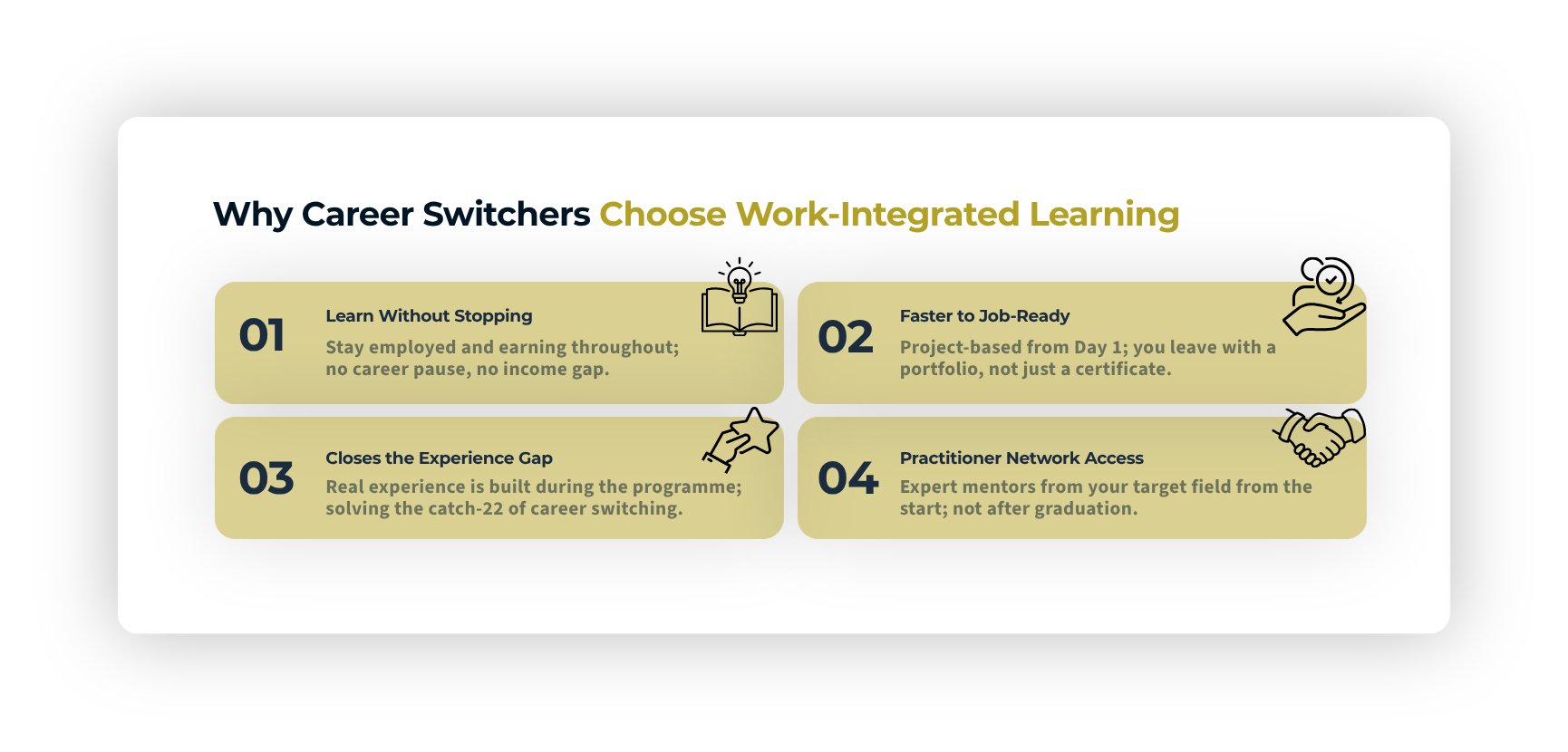
The benefits of work-integrated learning are significant for anyone switching careers, but they are particularly well matched to working adults who cannot afford to step away from income, pause their careers for years, or gamble on qualifications that do not translate into employable skills.
The most immediate benefit is the ability to learn without stopping. A traditional full-time study programme asks you to pause your career, your income, and in many cases your professional network while you acquire new skills. A work-integrated model inverts this. You are building skills while remaining active, earning, and present in a professional context. The risk profile of switching careers drops considerably when you do not have to exit your current life to do it.
The second benefit is speed to job-readiness. Because learners apply new skills throughout the programme, you are not waiting until the end of a programme to have something to show an employer. By the time you complete a work-integrated pathway, you have a portfolio of applied project work, not just a certificate. That distinction is significant to hiring managers to evaluate candidates with similar credentials. If you are aiming for a tech role, our software engineer interview prep guide shows how to get ready for the job search.
Work-integrated learning for career switchers also addresses one of the most common barriers to career change: the experience gap. Employers routinely want experience in a new field before they will hire into it, which creates a circular problem for anyone trying to switch. A work-integrated model closes that gap by generating real experience as part of the learning process.
Finally, the expert mentoring component provides professional network access that traditional study rarely offers. Learning from practitioners who are active in the field you are moving into accelerates not just skill development but industry awareness, which is often the soft factor that separates a candidate who gets interviews from one who does not.
What a Work-Integrated Pathway Looks Like
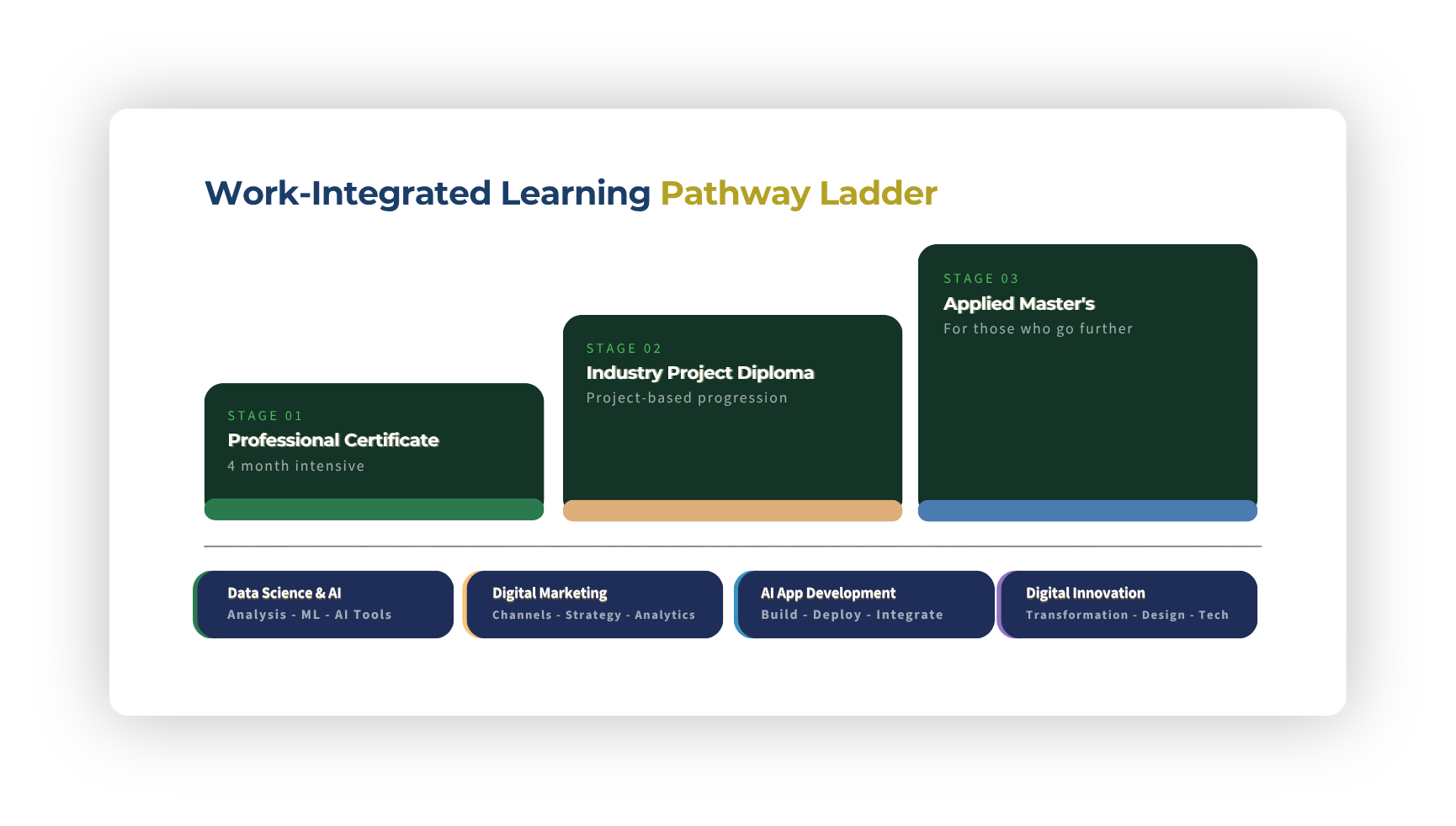
The CLaaS2SaaS work-integrated model follows a clearly structured progression rather than a single fixed endpoint. The pathway runs from a 4-month intensive skilling bootcamp delivering a Professional Certificate, through to an industry project-based Diploma, and on to an Applied Master’s for those who want to go further. Each stage builds the last, and the ladder is designed to be climbed without necessarily stepping away from work.
The four tracks available on the work-integrated digital programs hub reflect the areas of highest demand in the current digital economy.
The Data Science and AI track covers the tools and applied methods driving data-led decision-making across industries, from analysis to machine learning applications.
The Digital Marketing track covers the commercial, strategic, and channel-specific skills that modern marketing roles require, with applied project work running throughout.
The AI Applications Development track focuses on building practical AI-enabled applications through applied projects, helping learners develop modern digital solution development.
The Digital Innovation track is designed for those looking to lead transformation and build new digital capabilities within organisations, combining strategy, design thinking, and applied technology.
Each track follows the same 70:20:10 structure: expert-led, project-based, and designed around the needs of working adults switching careers rather than students entering the workforce for the first time.
Frequently Asked Questions
What is work-integrated learning?
Work-integrated learning blends structured study with applied, real-world work, mentoring, and hands-on practice. At CLaaS2SaaS, it follows a 70:20:10 model: most learning happens through projects, supported by mentoring and formal instruction.
Is work-integrated learning the same as an internship?
No. A university internship is typically a placement module within a full-time degree, where a student pauses academic study to work at an employer and then returns to campus. Work-integrated learning in an applied upskilling context is a different model entirely: learning happens through real projects and expert mentoring from day one, with no campus placement cycle. It is built for working adults, not full-time students.
What is the 70:20:10 learning model?
The 70:20:10 model is a framework for how adults develop skills most effectively. Approximately 70 percent of learning comes from hands-on, on-the-job experience; 20 percent from social learning, mentoring, and collaboration; and 10 percent from formal instruction. Work-integrated programmes structured around this model are designed to support faster application of skills through continuous practice and mentoring.
Is work-integrated learning good for career changers?
Yes. It is particularly well suited to career changers because it builds real, demonstrable skills without requiring you to stop working. You develop a project portfolio during the programme, which addresses the experience gap that typically makes career switching difficult. The mentoring component also provides access to practitioners in your target field from the start of the pathway.
What programs use work-integrated learning at CLaaS2SaaS?
CLaaS2SaaS offers work-integrated pathways across four tracks: Digital Marketing, Data Science and AI, AI App Development, and Digital Innovation. Each follows the 70:20:10 work-integrated learning model and is structured as a progression from Professional Certificate through to an Applied Master’s pathway.
Work-integrated learning enables career switchers to build practical capabilities while continuing to work, making career transition more achievable without putting life on hold. The structure, mentoring, and applied learning model are in place from day one. If you’re ready to explore how this approach could support your next move, let’s talk.
Share


Want to check if this career is for you?