Digital Marketing Salary Guide: Roles, Pay & Career Ladder
Digital Marketing Salary Guide: Roles, Pay & Career Ladder

Content
Content
What can you actually earn in digital marketing and how do you climb? These are the questions that matter most to anyone weighing a career move into one of the world’s fastest-growing industries. A comprehensive look at digital marketing roles and pay reveals that salary ranges vary considerably by role, seniority, and specialisation, but the trajectory is clear: each step up the career ladder brings a meaningful increase in earning potential.
According to the World Economic Forum’s Future of Jobs Report 2025, marketing and media skills rank among the top 20 skills employers consider essential and demand continues to rise as businesses deepen their investment in digital channels.
This guide maps the full digital marketing career ladder, from Executive to Head/Director, explaining what each role involves, what drives pay at every tier, and which specialisations command the highest salaries. If you are evaluating a career switch or planning your next promotion, this is your reference.
The Digital Marketing Career Ladder, Step by Step
Digital marketing is structured around a clear progression path. Each tier demands a broader skill set, greater strategic ownership, and crucially higher pay. Here is how the ladder breaks down.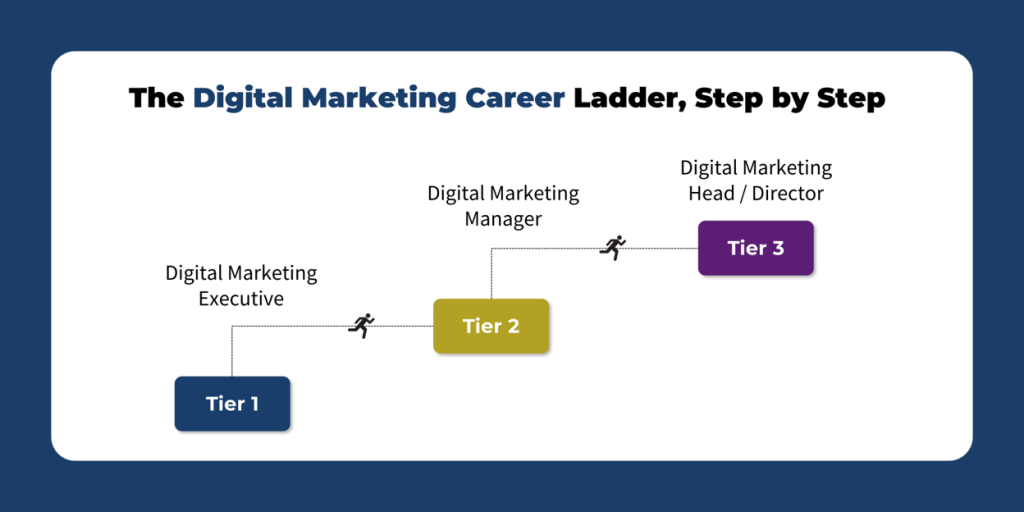
Tier 1: Digital Marketing Executive
The entry point. You execute campaigns across channels, paid ads, content, social, email, using tools like Google Ads, Meta Ads, WordPress, HubSpot, and generative AI tools such as ChatGPT. Pay rises with every skill you can demonstrate in practice.
Tier 2: Digital Marketing Manager
Stepping into a management position brings one of the most significant increases in earning potential. A typical digital marketing manager salary reflects a major shift from execution to strategy—owning campaigns, managing budgets, mentoring junior marketers, and reporting on ROI. Proficiency in marketing automation, CRM, and data analysis is essential. Managers who show measurable results command the strongest packages.
Tier 3: Digital Marketing Head / Director
Marketing becomes a board-level function. You set strategy, lead a team of managers, and tie every campaign to business revenue. Many senior marketing leaders also pursue postgraduate qualifications to deepen their strategic and leadership capabilities. Pay varies most widely here, reflecting direct commercial impact.
What Drives a Digital Marketer’s Salary
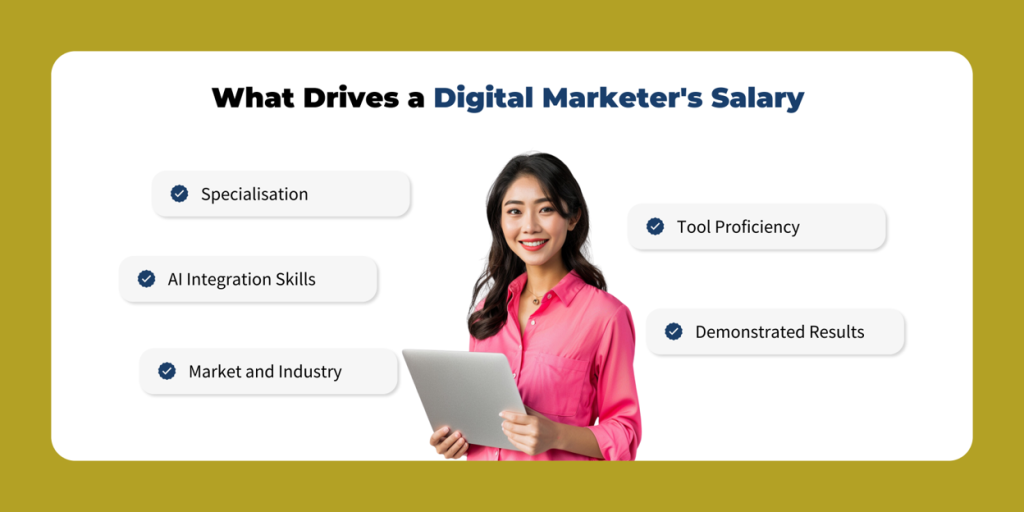
Seniority is the biggest driver of digital marketing pay, but it is not the only one. Several factors determine where you sit within the salary range for your role:
Specialisation
Generalists fill important roles, but specialists in high-demand areas, paid media, SEO, analytics, marketing automation, consistently command a premium. The more precisely you can solve a specific business problem, the more your skills are worth.
Tool Proficiency
Marketers who can demonstrate hands-on proficiency with industry-standard platforms, Google Ads, Meta Ads, HubSpot, WordPress are more hireable and more promotable than those with only theoretical knowledge. Certifications from Google, Meta, and HubSpot signal this proficiency to employers.
AI Integration Skills
The ability to use generative AI tools, ChatGPT, Microsoft Copilot to accelerate content creation, automate campaign workflows, and enhance reporting is increasingly a differentiator at every level. Marketers who treat AI as a productivity multiplier, rather than a novelty, stand out.
Demonstrated Results
A portfolio of campaigns with measurable outcomes, cost per lead, ROAS, organic traffic growth is the most persuasive negotiating tool in any salary conversation. Employers pay for impact, not just activity.
Market and Industry
Digital marketing pay varies significantly by country, industry, and company size. Fast-growth sectors, e-commerce, fintech, SaaS, digital agencies tend to pay above market rates. Pan-Asia markets offer strong demand for marketers fluent in both regional consumer behaviour and global platforms.
High-Demand, Higher-Pay Specialisations
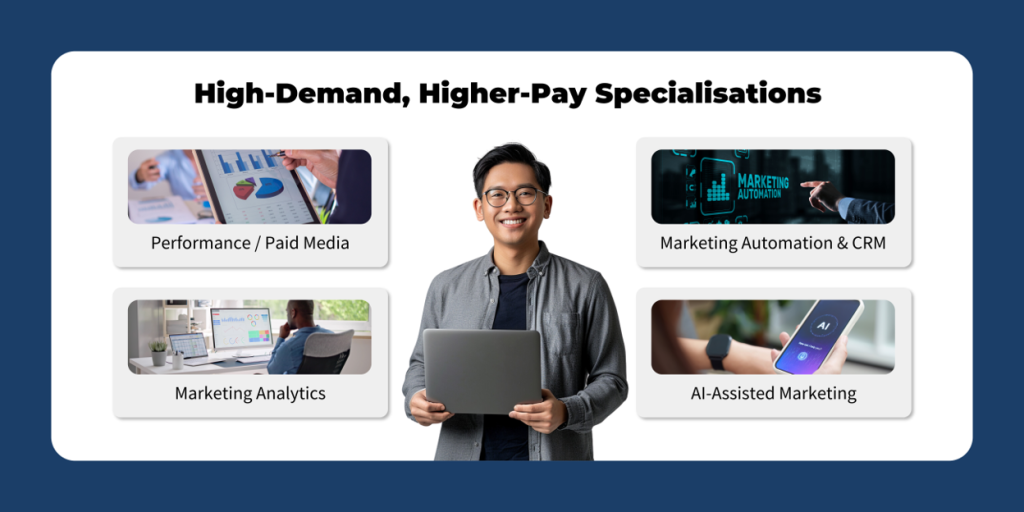
Certain specialisations attract higher pay because they are harder to fill and directly tied to revenue.
- Performance / Paid Media: Optimising Google and Meta ad spend for ROAS places you among the highest-paid specialists at any seniority level.
- Marketing Analytics: Turning campaign data into decisions, dashboards, attribution, audience segmentation, commands a consistent salary premium.
- Marketing Automation & CRM: HubSpot specialists who build automated workflows and lead nurturing sequences are in persistent short supply.
- AI-Assisted Marketing: Marketers who use ChatGPT and Copilot to scale content and automate campaign workflows are a growing premium hire across the industry.
All four of these specialisations are covered in the CLaaS2SaaS Digital Marketer programme, including hands-on work with Google Ads, Meta Ads, HubSpot, WordPress, and generative AI tools, giving graduates both the tools and the portfolio evidence to target specialist roles from the outset. Learn more about the digital marketing course for non-tech professionals.
How Certification Accelerates Your Climb
The career ladder rewards demonstrated skills over years served. Certification can support salary progression by helping learners demonstrate practical skills, tool proficiency, and project experience.
The CLaaS2SaaS Digital Marketing Lifelong Learning Programme is built for career switchers with zero IT experience. You build real campaigns with industry tools, complete a capstone project, and graduate with a Professional Certificate or Diploma, prepared to target entry-level digital marketing roles with a verifiable portfolio. The stackable pathway (Certificate → Diploma → Master’s top-up) then gives you a structured route to Manager and Director without relying only on years of experience. Moreover, employers increasingly look for professionals who can demonstrate practical skills, campaign execution, and measurable business results.
CLaaS2SaaS’ work-integrated learning approach helps learners build practical campaign experience through industry-relevant projects using tools such as Google Ads, Meta Ads, HubSpot, WordPress and generative AI. This gives learners portfolio evidence they can use when applying for roles or discussing salary progression. Job placement support, career coaching, and access to 2,000+ hiring companies can help reduce the gap between completing the programme and applying for relevant roles. See the full pathway on the Digital Marketing programme page.
If you are weighing your options, you can also read our guide on how to learn digital marketing for beginners and changing career to digital marketing that covers the transition in detail, including what to expect from the first 90 days in a new role.
You can also explore the broader range of programmes on the Lifelong Learning non-tech hub, including work-integrated options for professionals at different career stages.
Frequently Asked Questions
How much do digital marketers earn?
Digital marketing salaries grow with seniority, specialisation, and results. High-demand areas such as paid media, analytics, marketing automation, and AI-powered marketing often command higher pay. Certifications that teach industry tools and include career support can help professionals progress faster.
What is the highest-paying job in digital marketing?
Head of Marketing and Marketing Director roles are typically the highest paid. Among specialist positions, paid media and marketing analytics professionals often earn above-average salaries because they directly influence business growth and revenue.
Does a digital marketing certification increase your salary?
A certification does not guarantee a higher salary, but it can help you qualify for better-paying roles sooner by proving practical skills, tool proficiency, and hands-on experience. Programmes that include projects and career support often deliver the strongest outcomes.
What skills raise a digital marketer's pay?
The most valuable skills include Google Ads, Meta Ads, marketing analytics, CRM and marketing automation (such as HubSpot), AI-driven marketing, and project management. Demonstrating measurable results through a portfolio further increases earning potential.
Can career switchers earn well in digital marketing?
Yes. Digital marketing is accessible to career changers because employers value proven skills and results. Transferable experience from sales, customer service, content creation, or project management can accelerate career growth, especially when combined with practical training and portfolio projects.
Ready to Climb the Marketing Ladder?
Career progression in digital marketing is driven by continuous capability development, measurable business results, and the confidence to apply modern marketing tools in real campaigns. The CLaaS2SaaS 4-month program gives you both certification as well as hands-on training, plus job placement support backed by over a decade of track record and 2,000+ hiring company relationships.
Share


Want to check if this career is for you?