Why Singapore’s Demand for Data Analysts Is Growing Fast
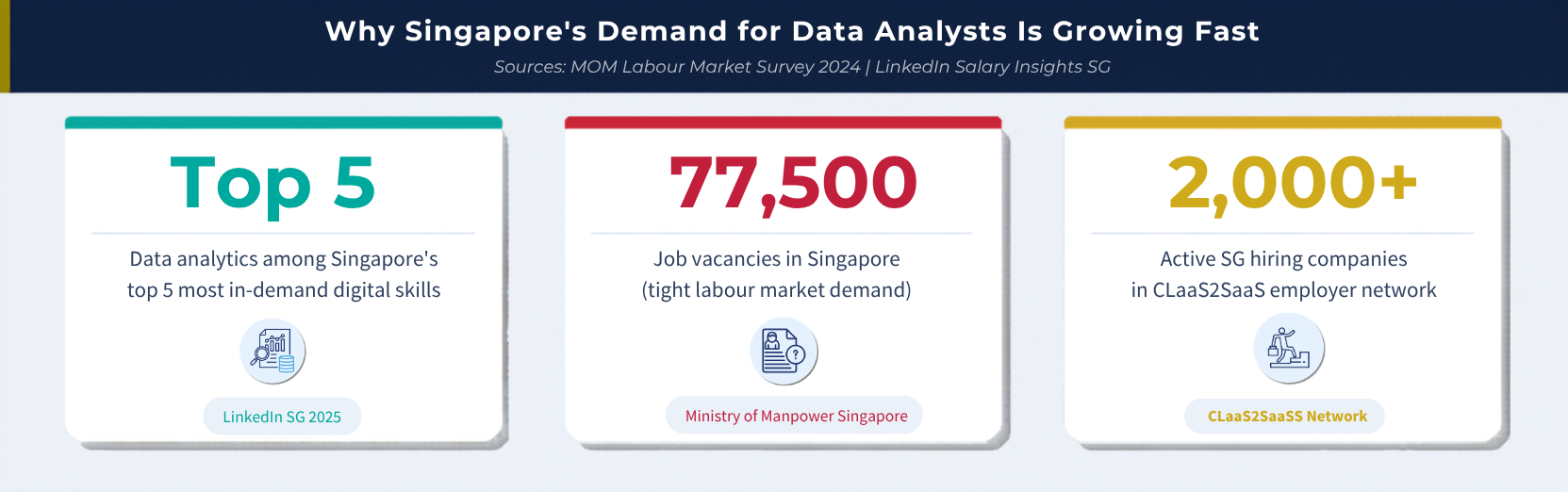
Singapore’s Smart Nation initiative and the rapid digitization of industries like banking, retail, and government services have created sustained demand for professionals who can analyze and visualize data. Roles in data analysis consistently appear on Singapore’s top job platforms, including JobStreet SG and LinkedIn Singapore.
The Singapore Ministry of Manpower (MOM) Labour Force in Singapore 2024 and the Occupational Wages 2024 tables identifies analytics and digital skills as priority competency areas across multiple sectors. This translates directly into hiring: organizations want professionals who can query databases in SQL, model data in Python, and communicate insights through Tableau and Power BI dashboards.
This also applies to employers across Asia, that they aren’t just looking for “dashboard makers,” they need analysts who can translate data into actionable insights using artificial intelligence. This helps companies make data driven decisions that are critical for Singapore’s Smart Nation initiatives.
SG Data Analyst Salary by Experience Level
Based on MOM Labour Market Survey data and LinkedIn Salary Insights SG, here is what data professionals in Singapore can expect across career stages: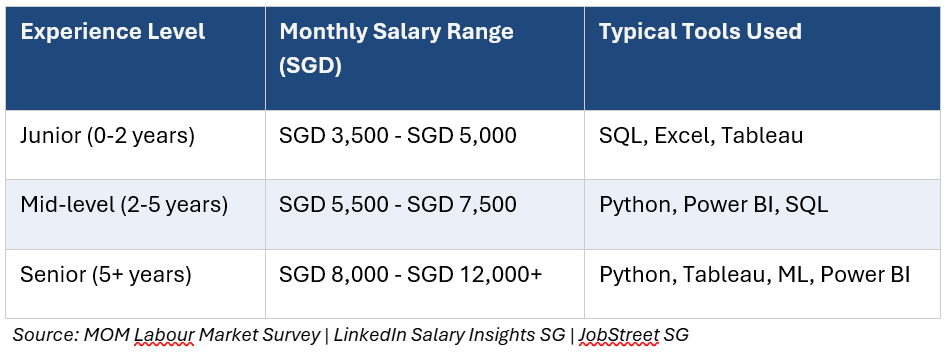
What You Will Learn in This Data Analyst Course
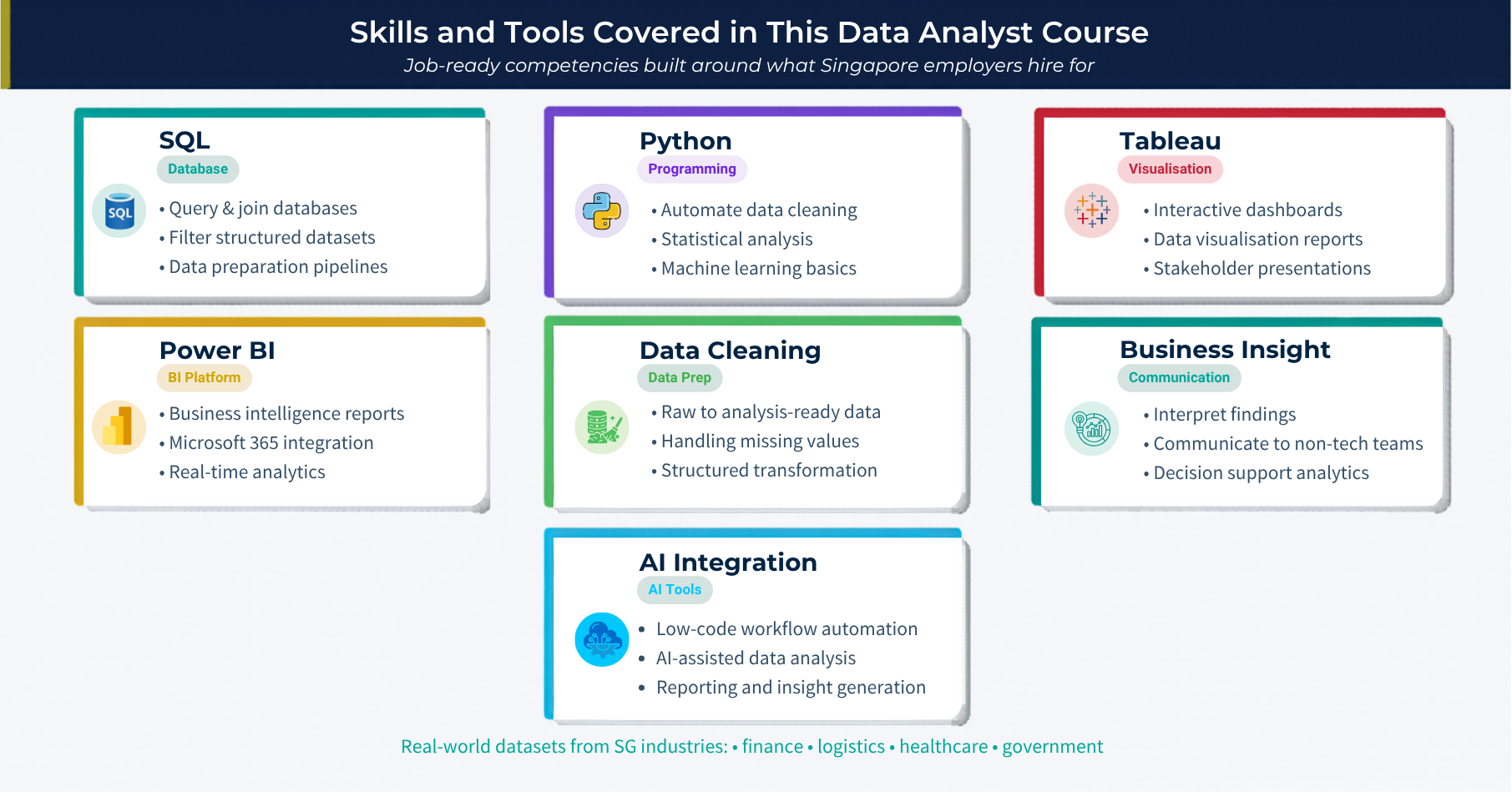
- SQL: Query databases, filter and join datasets, and prepare structured data for analysis
- Tableau: Build interactive dashboards and data visualization reports for business stakeholders
- Power BI: Create business intelligence reports integrated with Microsoft 365 environments
- Data Cleaning and Preparation: Transform raw data into structured, analysis-ready formats
- Business Decisions from Data: Interpret analytical findings and communicate them clearly to non-technical teams
- Low-Code & AI Integration: Combining low-code workflows with AI-assisted analysis.
Looking to pair data skills with engineering or infrastructure capabilities? See also the Software and Web Development track and the Cloud and Infrastructure programme if you want a broader digital profile.
Career Path After Certification
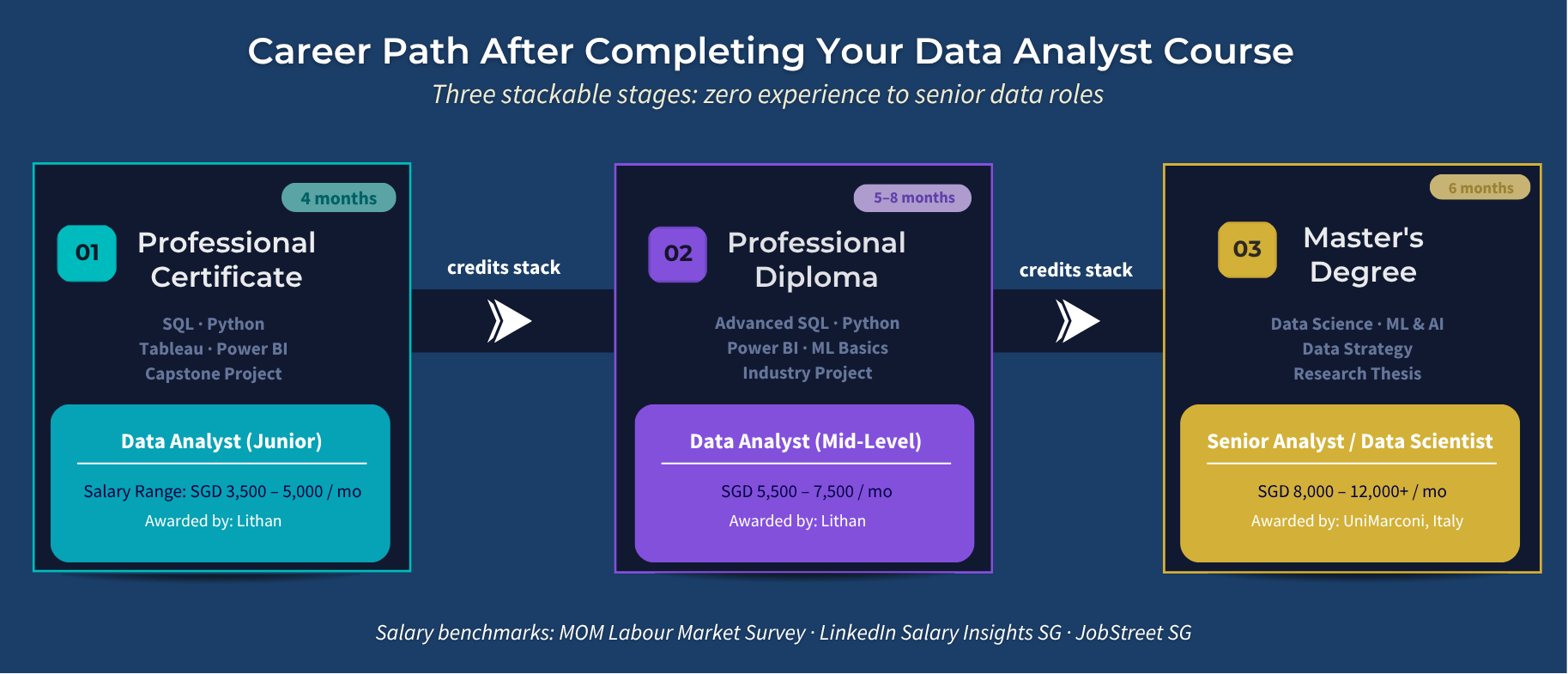
Completing a data analyst course opens multiple career directions in the ASEAN region. Common roles graduates move into include:
- Data Analyst in banking, insurance, or fintech
- Business Intelligence Analyst with reporting responsibilities
- Operations Data Analyst in logistics or retail
- Junior Data Scientist with a programming languages focus
- Marketing Analytics Specialist using dashboards and attribution models
A typical finance-to-data-analyst career transition in Singapore takes 4 to 6 months of structured learning followed by project-based experience. Graduates who complete hands-on projects with Tableau and Python report stronger interview outcomes because they can demonstrate specific data project results, not just course completion.
Data professionals who continue into data scientist jobs or machine learning roles often start with this foundational data analyst course and progress over 12 to 18 months, building on SQL and Python fundamentals with more advanced modelling work.
Course Duration, Schedule and Prerequisites
Duration: The core data analyst course runs over 3 to 4 months part-time, with weekend and evening cohorts designed for working professionals.
Schedule: Flexible learning modes including blended online and in-person sessions to fit around existing work commitments.
Prerequisites: No prior experience in data analysis is required. Basic computer literacy is sufficient. For Python modules, some comfort with logical thinking or spreadsheet use is helpful but not mandatory. Prior experience in any analytical or finance-adjacent role is a useful starting point but not a gatekeeping condition.
Cost and SkillsFuture Funding
This data analyst course qualifies for SkillsFuture Credit. Singapore Citizens aged 25 and above can apply their SkillsFuture Credit balance to offset course fees, reducing the upfront cost significantly.
Additional funding support may be available under:
- SkillsFuture Credit (SFC) for eligible Singapore Citizens aged 25 and above
- NTUC UTAP, 50% unfunded course fee support up to SGD 250/year (SGD 500/year for members aged 40 and above)
- Workforce Singapore (WSG) Career Conversion Programme, salary support up to 90% for mid-career switchers moving into new job roles
For professionals based in the Philippines, Indonesia, Malaysia, Vietnam, and other ASEAN countries as well, Contact the CLaaS2SaaS team for the current course code, exclusive special pricing, and updated fee schedule. Fees and subsidy amounts are reviewed periodically and should be confirmed at enrollment.
CLaaS2SaaS Data Analyst Pathway: From Zero to Job-Ready
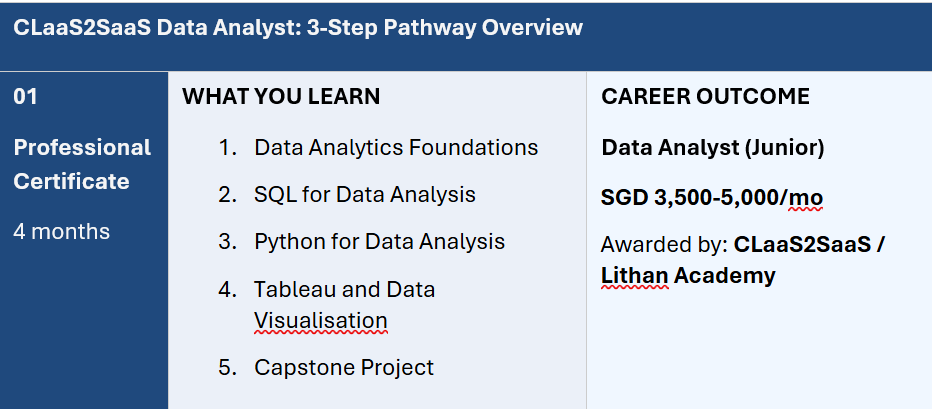
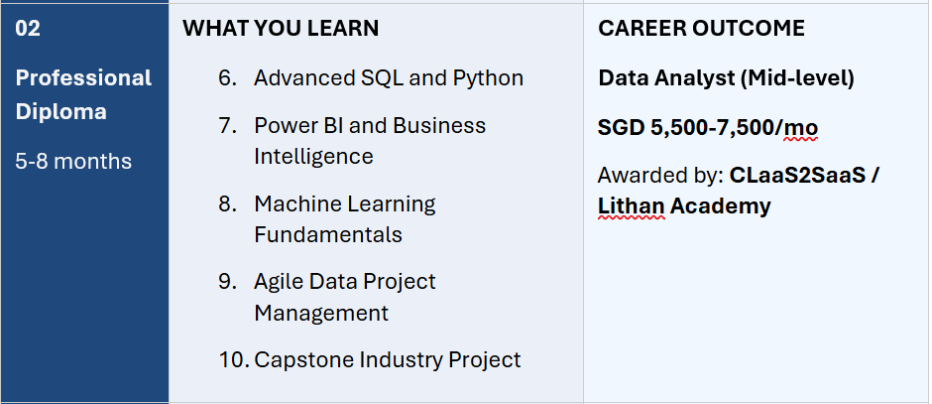
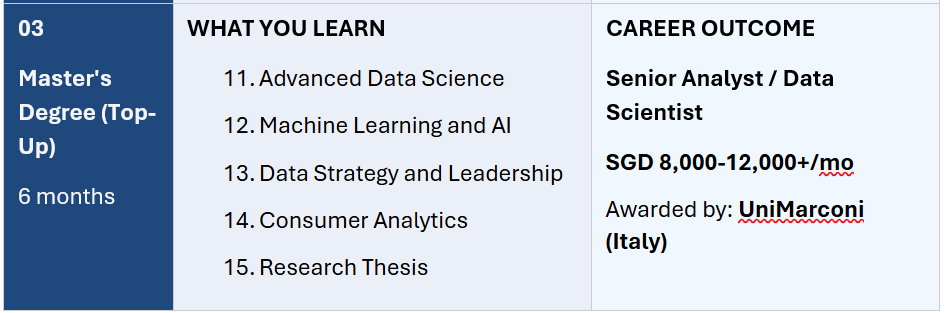
Knowing which skills you need is one thing. Having a structured, accredited path to build and prove them to employers is another. CLaaS2SaaS Data Analyst Programme runs across three stackable stages, each unlocking a higher career and salary tier.
* Salary benchmarks: MOM Labour Market Survey, LinkedIn Salary Insights SG, and prevailing SG employment market rates.
Disclaimer: The salary ranges shown are for general guidance only, based on Singapore market benchmarks and publicly available data. Individual outcomes may vary and are not guaranteed.
Stage 01 is a 4-month intensive. You learn the full practical stack: SQL, Python, Tableau, Power BI, and data cleaning workflows, and complete a real capstone project for your portfolio. No prior data experience required. Graduates are ready to step into junior data analyst roles immediately.
Stage 02 shifts from learning to delivering. Over 5 to 8 months, you run live industry data projects, advance your Python and machine learning skills, and add Agile project management to your toolkit. This stage moves you from analyst to specialist.
Stage 03 is a 6-month part-time top-up to a fully accredited Master’s degree from Guglielmo Marconi University (UniMarconi), Italy. It adds strategic data leadership, advanced analytics theory, and a supervised research thesis, building the credential needed to lead data functions at a senior or director level.
All three stages are underpinned by a 70:20:10 learning model: 70% hands-on project work, 20% mentoring, and 10% structured instruction, supported by CLaaS2SaaS’s network of over 2,000 active SG hiring companies.