The Digital Business Skills That Actually Get You Hired After Graduation
The Digital Business Skills That Actually Get You Hired After Graduation

Content
Content
Graduating with a business degree is an important step, but employers also want evidence that you can apply what you learned in a digital workplace.
Can you read a dashboard, support a digital campaign, improve a simple process, or work confidently with a digital team?
These digital business skills help turn classroom knowledge into workplace value. They include data-driven decision-making, digital marketing, no-code and low-code tools, digital collaboration, and responsible AI use.
You do not need to be a programmer or data scientist. What matters is being able to use digital tools, solve practical problems, and explain your decisions.
That is why practical experience matters. No individual skill or degree can guarantee employment, but practical evidence can help you demonstrate that you are prepared to contribute in a digital workplace. A campaign, dashboard, automated workflow, or team project gives you something concrete to discuss in your resume, portfolio, and interviews. The CLaaS2SaaS Digital Business work-study bachelor’s degree combines business learning with applied projects and workplace experience.
Why Isn’t a Business Degree Alone Enough Anymore?
A business degree gives you a foundation in marketing, management, finance, and strategy, but theory alone may not show that you can apply it in a digital workplace.
Employers may also want graduates who can interpret dashboards, understand customer data, support digital campaigns, work with CRM software, automate simple processes, and collaborate through digital platforms.
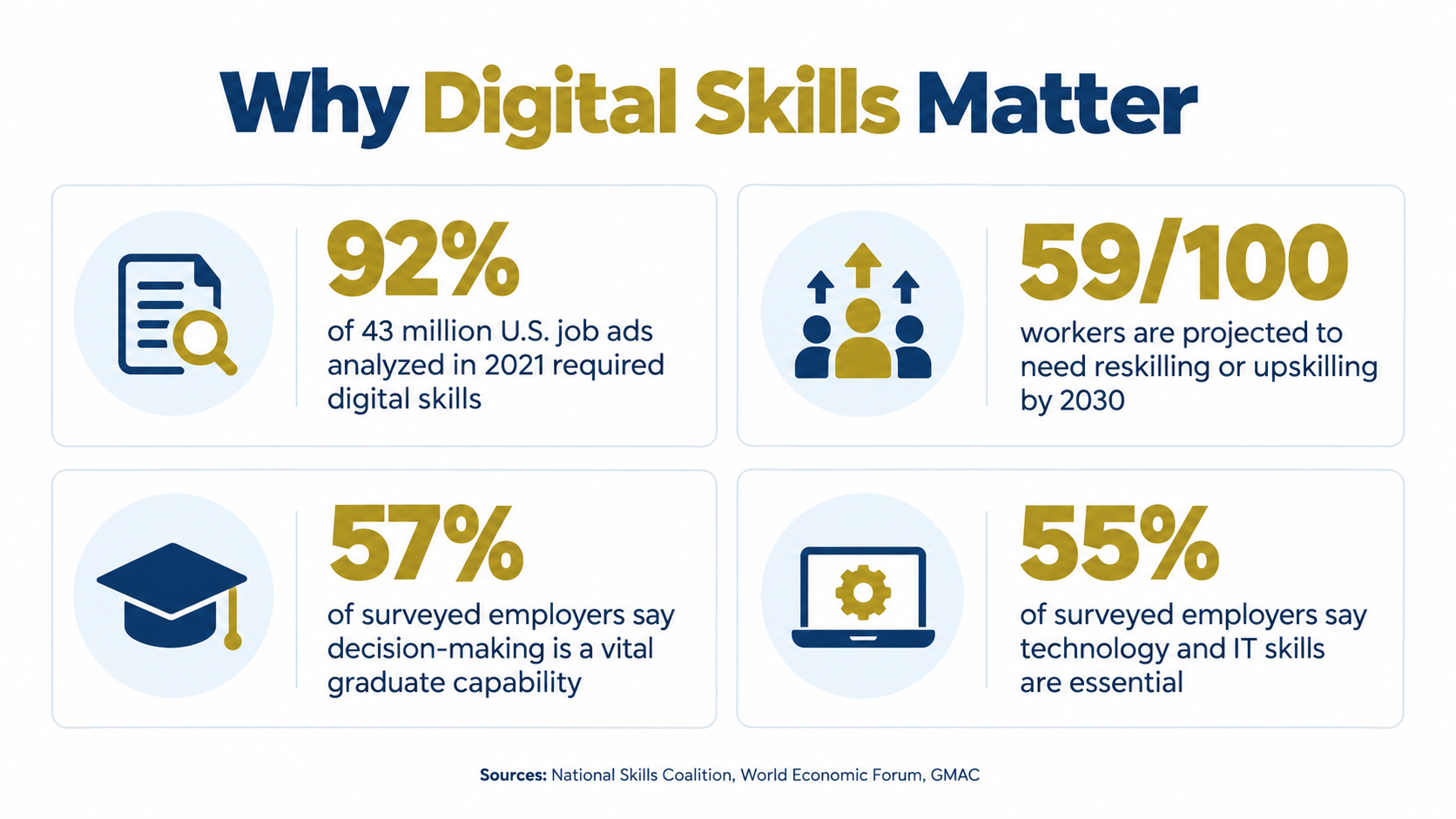
A National Skills Coalition analysis, conducted with the Federal Reserve Bank of Atlanta, examined 43 million online U.S. job advertisements posted in 2021 and found that 92% of the jobs analyzed required digital skills. This finding applies to the U.S. job advertisements studied but it shows how widely digital tools are used at work.
The need to keep developing skills is also growing worldwide. The World Economic Forum Future of Jobs Report 2025 states that if the world workforce were represented by 100 people, 59 would need training by 2030, including upskilling in current roles or reskilling and redeployment.
For students, the message is simple. Your degree matters, but showing that you can use digital tools and information in practical situations can help you become better prepared for the workplace.
What Skills Employers Want From Graduates in Digital Business Roles?
Job titles vary, but many entry-level business roles require similar practical abilities.
Here are four important digital business career skills worth developing.
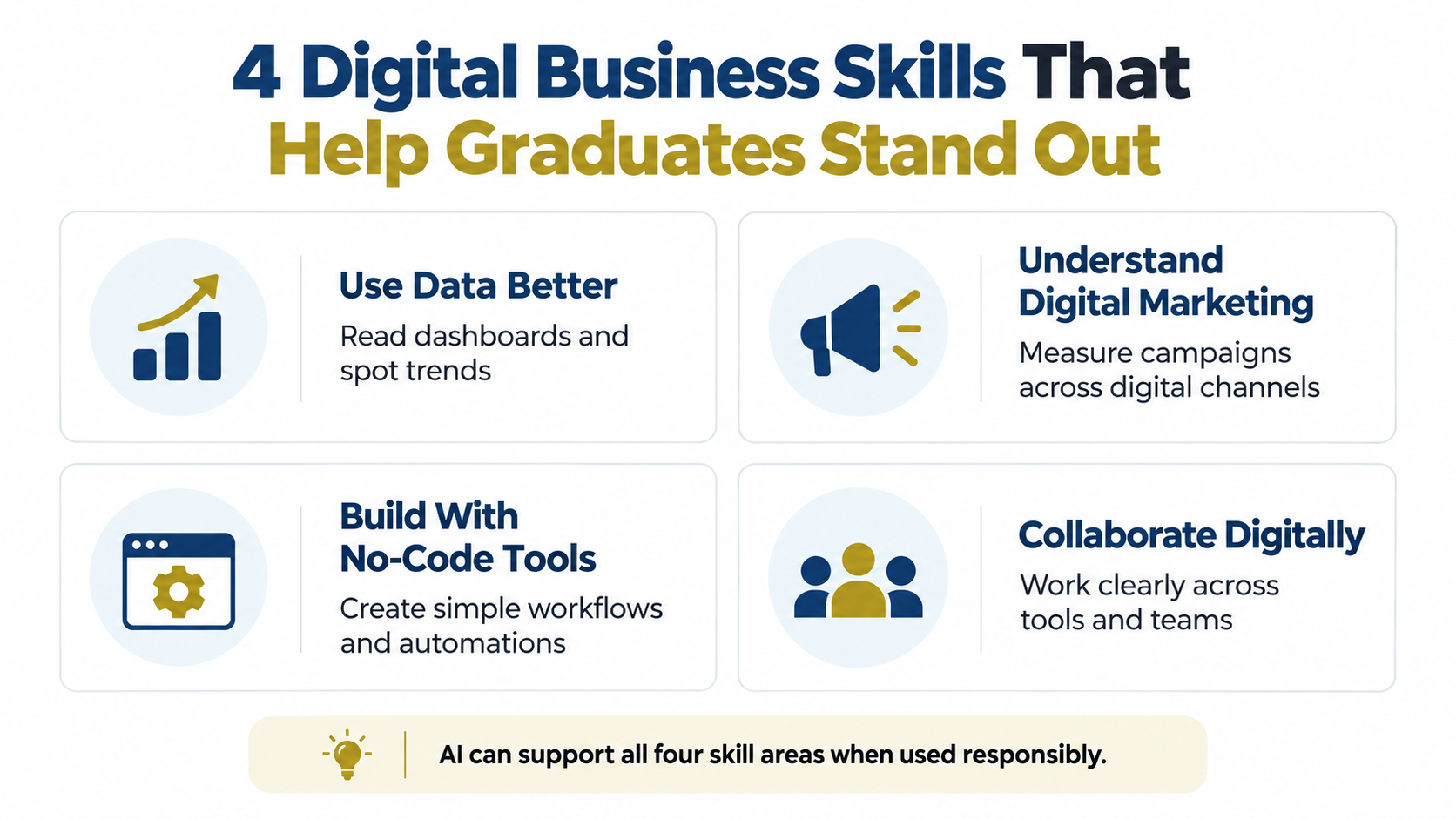
1. Use Data to Make Better Decisions
In many entry-level roles, data skills mean being able to read spreadsheets and dashboards, understand basic metrics, spot patterns, compare results, and explain what the numbers suggest.
If an online store’s sales fall, for example, you might compare traffic, conversion rates, campaign performance, and customer behavior before recommending what to investigate next.
GMAC reports that 57% of surveyed employers evaluating business-school graduates identify decision-making as a vital capability, while 55% consider technology and IT skills essential for gaining employment.
2. Understand Digital Marketing
Digital marketing is useful even if you do not plan to become a full-time marketer.
Businesses use digital channels to attract customers, communicate with audiences, generate leads, build relationships, and support sales.
Useful areas to understand include:
- Search marketing
- Social media marketing
- Email marketing
- Content marketing
- Customer journeys
- Campaign measurement
- Web analytics
What matters is understanding how businesses use digital channels and how results such as clicks, leads, conversions, and sales can be measured.
These are increasingly important employable digital skills for graduates entering marketing, sales, e-commerce, customer experience, and other business roles.
3. Build With No-Code and Low-Code Tools
No-code and low-code platforms allow business users to create simple workflows, forms, applications, and automations without advanced programming.
For example, you might connect an online form to a spreadsheet or CRM so information moves automatically. The key skill is recognizing a repetitive business problem and using technology to make the process faster or more efficient.
4. Collaborate Effectively in Digital Teams
Modern teams often work across locations and time zones. Graduates may use shared documents, project management tools, CRM software, dashboards, and virtual meeting systems.
Strong digital collaboration means communicating clearly, organizing information, tracking deadlines, and sharing progress.
How Do These Skills Show Up in Real Entry-Level Job Postings?
Employers may not write “digital business skills” as one requirement. Instead, they list the tasks and systems they expect you to handle.
A marketing coordinator may need campaign platforms and basic reporting. A business operations analyst may need spreadsheet and data skills. A digital business associate may need CRM knowledge and confidence learning new software. Sales and support roles often combine CRM use, communication, and customer data.
If you are comparing options after graduation, reviewing digital business degree career paths can help you see how these skills connect to roles in marketing, e-commerce, analytics, operations, and customer-facing teams.
How Can You Build Digital Business Skills Before Graduation?
The best place to start is with a real project.
Instead of simply saying that you understand digital marketing, analytics, automation, or AI, create something that shows how you used the skill.
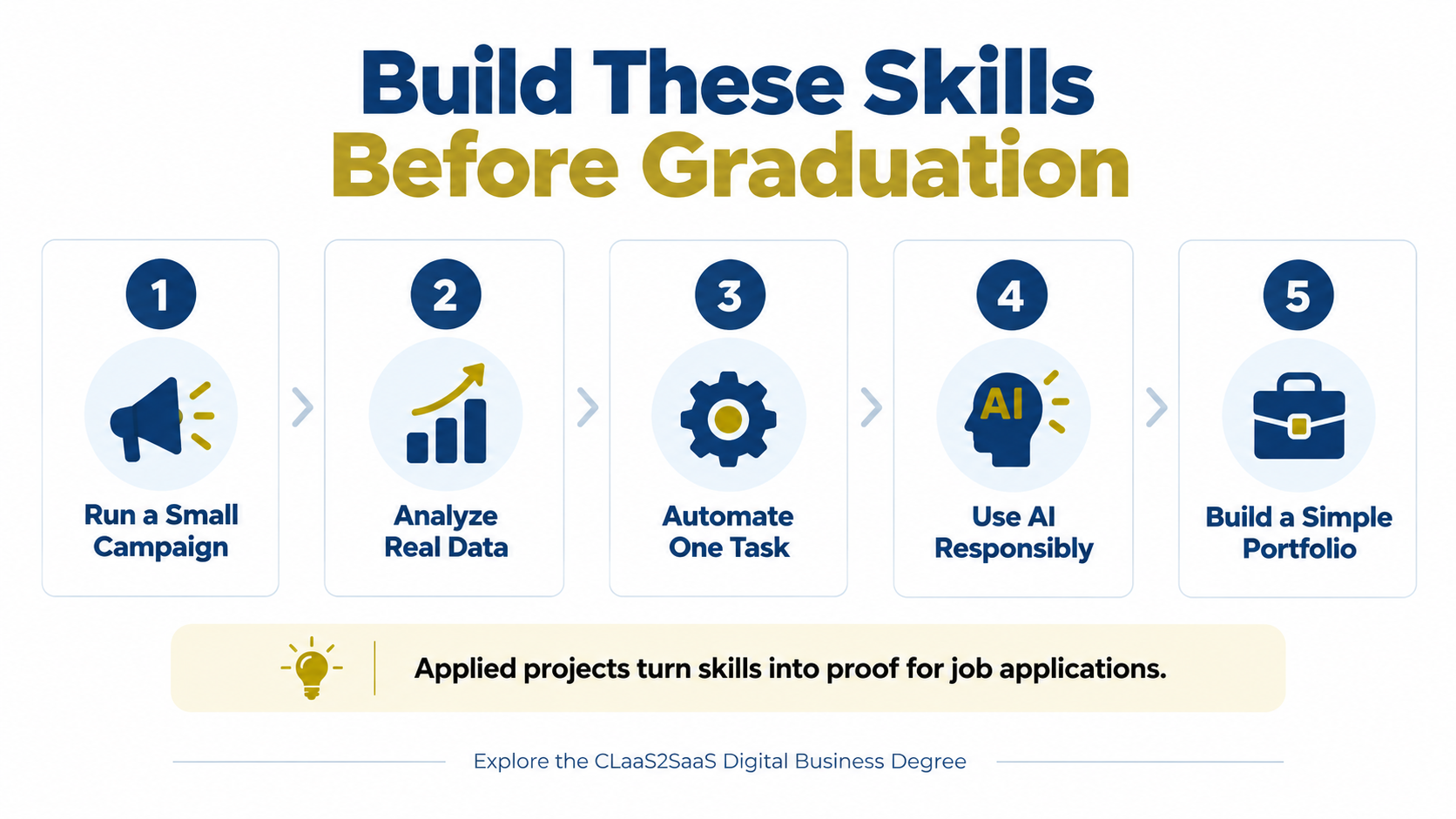
Run a Small Digital Campaign
Create a campaign for a student organization, personal project, community organization, or small business.
Track basic results such as reach, clicks, leads, or conversions.
Analyze a Real Dataset
Analyze a Real Dataset
Create a simple dashboard or spreadsheet analysis, identify an important trend, and explain what decision you would recommend based on the information.
Automate One Repetitive Process
Use a no-code or low-code tool to improve a simple task.
For example, you could automatically transfer form responses into a spreadsheet or organize incoming information into a shared system.
Use AI to Improve a Workflow
Choose a simple business task and document how AI supported it.
You could use AI to help organize research, develop initial marketing ideas, summarize information, or draft a starting version of content.
Make sure you can also explain what you reviewed, corrected, or decided yourself.
Build a Simple Portfolio
Bring your best projects together in one place.
For each project, explain:
- The problem you were trying to solve
- The tools you used
- What you did
- Why you made certain decisions
- What result or lesson came from the project
Make sure you can also explain what you reviewed, corrected, or decided yourself.
A portfolio gives employers something concrete to discuss with you.
Instead of saying, “I studied marketing analytics,” you can explain the dashboard you created, the insights you found, and the recommendation you made.
What Is the Bottom Line for Graduates?
You do not need to learn every new tool. Focus on a small set of skills you can use well: data, digital marketing, automation, digital collaboration, and responsible AI use.
Then prove those skills through real work. One project can give an employer more to discuss with you than a long list of software names on a resume.
If you want a structured route that combines a business degree with applied digital skills and work experience, explore the CLaaS2SaaS Digital Business work-study degree and its progression pathway.
Share


Want to check if this career is for you?