How to Become a Software Engineer: The Skills to Learn From Day One
How to Become a Software Engineer: The Skills to Learn From Day One

Content
Content
Starting a software engineering career can feel overwhelming. There are many programming languages, tools, and courses to choose from. You do not need to learn them all at once. Start with a small set of software engineering skills that you can use in almost any coding language.
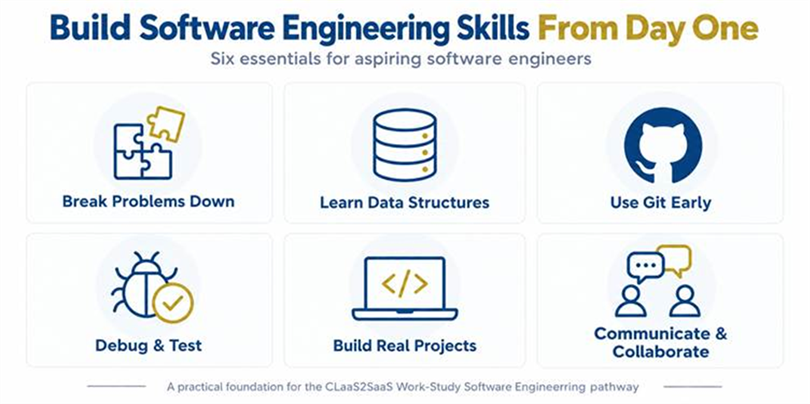
Begin by learning how to break a big problem into smaller steps, organize information, use Git to track changes, find and fix errors, test your code, and finish small projects. Then choose one programming language and practice with it. If you are new to tech, this guide to starting software engineering without a tech background gives you a simple way to plan your first steps.
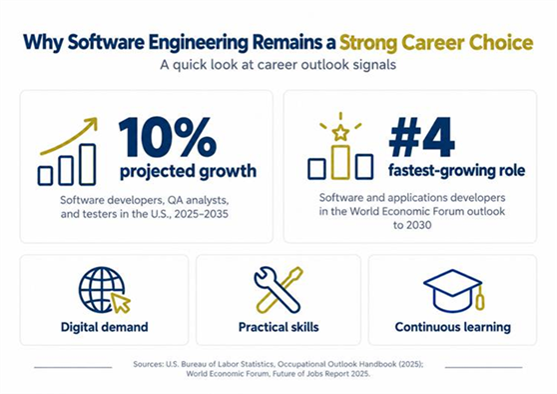
Labor-market conditions vary by country and specialization, but current indicators show continued demand for software skills. The U.S. Bureau of Labor Statistics projects 10% job growth for software developers, quality assurance analysts, and testers from 2025 to 2035, with about 106,100 openings each year on average. The World Economic Forum also lists software and applications developers among the fastest-growing jobs through 2030.
What Foundational Skills Matter Before Any Specific Language?
Programming languages are tools. Before you spend too much time on code rules, learn how to think through a problem, organize information, and keep track of your work. These beginner software engineering skills will help you even if you change languages later.
Break Problems Into Smaller Steps
Software engineers rarely solve a big problem all at once. They split it into smaller tasks. For a to-do list app, you could first create a task, then save it, show it on screen, mark it complete, and delete it. Solving one small step at a time makes the whole project easier to manage.
Understand Basic Data Structures and Algorithms
A data structure is simply a way to organize information in a program. An algorithm is a set of steps used to solve a problem. You do not need to master advanced computer science at the start. Learn the basics and ask: What information do I need? How will I find it later? Is there a simpler way to solve this?
Start Using Git Early
Git keeps a history of changes to your code. Think of it as a set of checkpoints for your project. You can save a small change, go back if something breaks, and share your work with other people. Learning this habit early will make larger projects easier to manage.
How Should You Choose a First Language Without Overthinking It?
There is no perfect first programming language. Python and JavaScript are both good starting choices. Python is often easier to read, while JavaScript is useful if you want to build websites and interactive web pages. The goal isn’t to collect programming languages. It’s to become comfortable enough with one language to build, test, debug, and explain a working project.
Pick the language that fits what you want to build, then stay with it long enough to finish a real project. Once you understand basics such as variables, functions, conditions, loops, and simple data structures, learning another language becomes easier.
What Skills Separate Beginners From Job-Ready Candidates Beyond Syntax?
Syntax means the rules for writing code in a language. Knowing those rules matters, but software engineering also requires you to read other people’s code, find bugs, test changes, use common tools, and explain your work clearly.
Read, Debug, and Test Code Step by Step
Practice reading small projects that you did not write. Ask where the information comes from, which file controls a feature, and how the parts connect. When something breaks, do not change random lines. Check what happened, make one guess about the cause, test it, fix the issue, and test again.
Testing is just as important. Try normal inputs, empty fields, wrong inputs, and unusual cases. This helps you find problems before a user does.
Learn the Basic Development Workflow
Get comfortable with a code editor or IDE, which is an app used to write and test code. Learn basic command-line commands and keep using Git. As your projects grow, learn what APIs and databases do. An API lets programs share information, while a database stores information your app needs. Also learn the basic idea of deployment, which means putting an app online so other people can use it.
Communication matters too. Add a README file that explains what your project does and how to run it. When you ask for help, explain what you expected, what happened, and what you already tried.
How Do You Practice in a Way That Builds a Portfolio?
Tutorials are useful, but they should not be your only practice. A personal project makes you decide what to build, how to organize the code, how to fix problems, and when the project is finished. Those decisions show more of your real ability.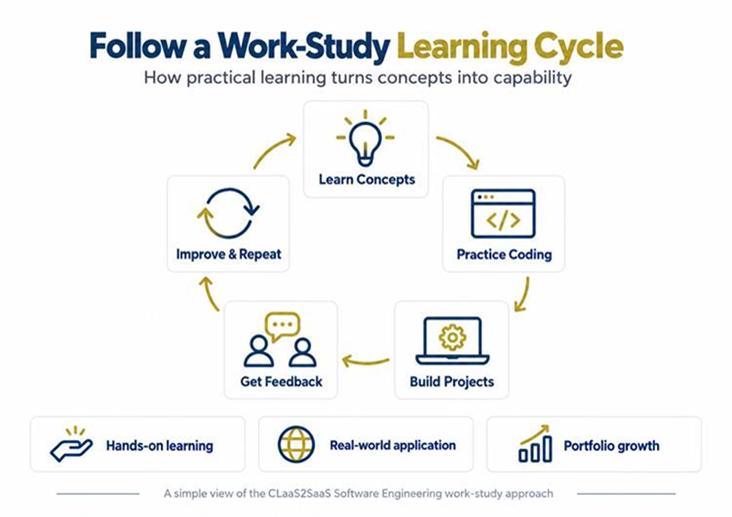
Start with projects you can finish, such as a to-do list, quiz app, expense tracker, personal website, or simple inventory tracker. A few complete projects are more useful than many unfinished ones.
For each project, explain the problem, the approach you took, what the final project can do, and what you learned. If possible, share the code with clear notes so someone reviewing your portfolio can understand both the result and your thinking.
What Does a Realistic Day-One-to-Job-Ready Roadmap Look Like?
There is no single timeline for becoming job-ready. A realistic software engineer career path is easier to follow in three stages. Your pace will depend on how much time you can practice each week.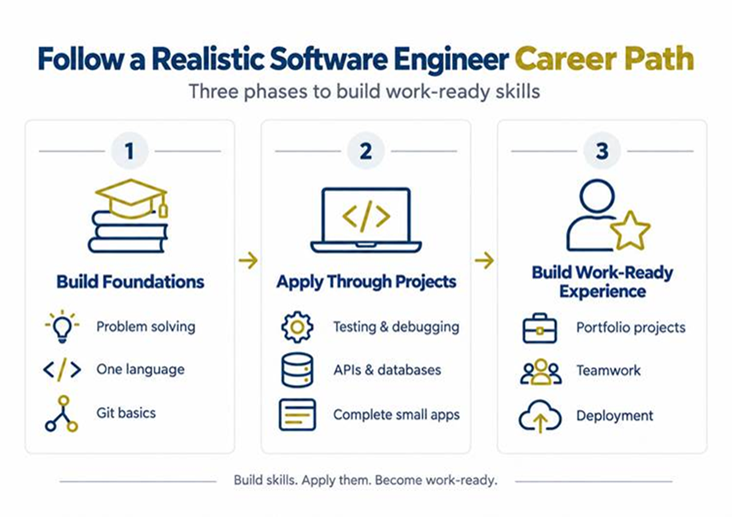
Phase 1: Build the Foundations
Learn one programming language, basic problem-solving, simple data structures and algorithms, and Git. Aim to build small programs and explain how they work.
If you are thinking about formal study, read how to prepare for a software engineering degree to understand the basic academic and technical skills that can help you get ready.
Phase 2: Build and Test Complete Projects
Move beyond short exercises and build complete small apps. Practice debugging, testing, reading unfamiliar code, using Git, connecting to an API, storing data, and putting a simple app online. This is where separate skills start to work together.
Phase 3: Build Work Readiness
Choose your strongest projects for a portfolio. Practice explaining your choices, the bugs you fixed, what you tested, and what you would improve next. Keep taking on slightly harder problems without rushing past the basics.
If you want to combine a degree with practical experience, this guide to a work-study software engineering degree explains how study and work-based learning can fit together.
Software tools will keep changing. The World Economic Forum reports that 39% of workers’ key skills are expected to change by 2030. This is why strong basics and a habit of continuous learning matter.
Start Building Your Software Engineering Skills
Learning how to start a software engineering career becomes easier when you focus on one step at a time. Choose one programming language and one small problem. Build the simplest working version, test it, write down what you learned, and improve it one feature at a time.
As you improve, add APIs, databases, testing, teamwork, and deployment. Each finished project gives you stronger evidence of what you can do and helps you prepare for more complex work.
A Work-Study Bachelor’s in Software Engineering can combine all these elements from computing knowledge, projects, and practical experience for work readiness.
Build Software Engineering Skills While Earning Your Bachelor’s
Share


Want to check if this career is for you?