Home Blog Learn Digital Marketing by Building Real Campaigns
Blog

Project Based Digital Marketing Course: Learn Digital Marketing by Building Real Campaigns

Project Based Digital Marketing Course: Learn Digital Marketing by Building Real Campaigns

project based digital marketing course
Digital marketing is one of the most in-demand skills in today’s digital economy. Companies need professionals who can create campaigns, manage data, optimize performance, and use AI tools to reach customers across multiple channels.
However, many learners discover a frustrating reality. Traditional marketing courses often focus heavily on theory but provide limited real-world practice. Graduates may understand concepts like SEO, social media marketing, or email automation, yet they struggle to apply them in real campaigns.
This is why a project based digital marketing course has become one of the most effective ways to learn modern marketing. Instead of only studying concepts, learners build actual marketing campaigns, analyze performance data, and work with real tools used by industry professionals.
This article explores what a project-based course is, why it is more effective than traditional programs, and how learners can develop full-stack digital marketing skills through hands-on experience.

Why Traditional Digital Marketing Courses Often Fall Short

Many traditional marketing programs focus heavily on theory such as marketing frameworks, models, and strategy concepts. While this knowledge is useful, it does not fully prepare learners for the way marketing teams operate in real organizations.
Today, employers expect marketers to execute campaigns, not just understand the ideas behind them. Digital marketing roles require professionals who can launch campaigns, manage platforms, and continuously improve results.
Modern marketing teams also operate in data-driven environments. Every campaign generates performance metrics such as engagement rates, traffic sources, and conversions. Marketers must analyze these insights to understand what is working and where improvements are needed.
Another key expectation is the ability to use marketing tools and platforms. From CRM systems and analytics dashboards to automation software and AI-powered content tools, marketing professionals must work with technology on a daily basis.
Because of these expectations, many companies now prefer candidates who have practical experience running campaigns and using industry tools rather than only academic knowledge.

What Is a Project Based Digital Marketing Course?

A project based digital marketing course uses a learning approach known as project-based learning, where learners develop skills by completing real-world tasks instead of only studying theory. Learners may design a complete digital campaign that includes search advertising, AI-assisted content creation, email automation, and campaign performance analysis.
In traditional classroom environments, students often learn marketing concepts through lectures, textbooks, and written assignments. While these resources provide useful background knowledge, they do not always reflect how marketing work happens in professional environments.
Project-based learning changes this approach by placing learners in realistic scenarios where they must apply marketing concepts to solve practical problems.
For example, learners might be asked to design a digital marketing campaign for a specific product or service. To complete this task, they must conduct audience research, define marketing objectives, develop messaging, select appropriate channels, and evaluate campaign performance.
These projects simulate real marketing workflows and encourage learners to actively apply what they learn.
Many modern training programs incorporate this learning model because it helps learners build practical marketing experience while developing critical thinking and problem-solving skills.
Platforms such as CLaaS2SaaS Lifelong Learning Programs incorporate project-based learning environments that allow learners to build real marketing projects while developing industry-relevant skills.
Through these experiences, learners move beyond theoretical understanding and begin developing the practical capabilities needed to perform marketing tasks in professional settings.

The Importance of Hands On Digital Marketing Training

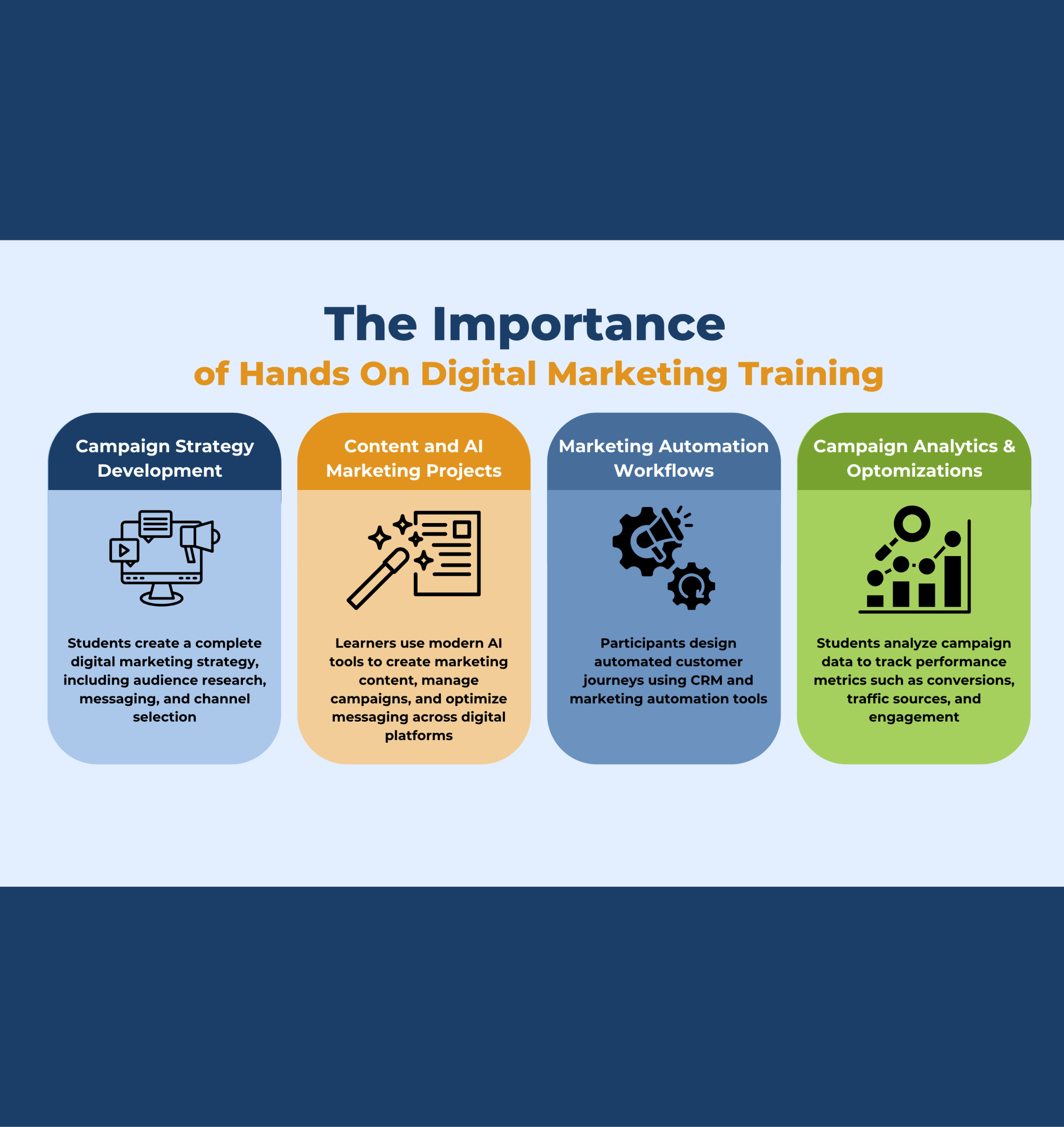
The most effective way to learn marketing is by doing the work. Hands on digital marketing training gives learners the opportunity to practice with real tools, real workflows, and real decision-making scenarios.
Digital marketing skills develop most effectively through direct practice. Hands on digital marketing training allows learners to build capabilities by performing real marketing tasks using industry tools and platforms.
Instead of only studying marketing concepts, learners complete practical activities such as developing campaign strategies, creating marketing content, and analyzing performance data.
Through these tasks, learners gradually develop important professional skills. For example, designing a campaign strategy builds planning and audience targeting skills. Creating AI-assisted content helps learners understand messaging and content optimization. Building marketing automation workflows teaches how customer journeys are structured and managed.
Campaign analytics projects further strengthen analytical thinking by requiring learners to interpret data and make decisions that improve marketing performance.
By practicing these tasks repeatedly, learners gain confidence in executing marketing activities and using the digital tools commonly required in marketing roles.
Learning Through a Real World Digital Marketing Pathways

Building professional digital marketing skills often requires more than a single course or short training program. Many learners benefit from a structured learning pathway that gradually develops both conceptual knowledge and practical capabilities.
In the early stages of the pathway, learners typically build foundational knowledge about marketing principles, digital channels, and customer behavior. This stage helps them understand the basic frameworks used in digital marketing.
Once learners understand these concepts, they begin applying them through project-based learning experiences. These projects allow learners to practice campaign planning, content creation, audience targeting, and performance analysis using realistic scenarios.
As learners progress further along the pathway, the projects become more complex and integrated. For example, learners may work on campaigns that involve multiple marketing channels, automation workflows, and AI-powered marketing tools.
The first stage focuses on foundational marketing knowledge and essential digital marketing skills. Learners develop an understanding of marketing strategy, customer journeys, content marketing, campaign planning, and digital channels.
Through introductory projects, learners begin applying marketing concepts to practical scenarios.
The second stage focuses on applied marketing execution. Learners work on more complex marketing projects that involve designing campaigns, managing marketing tools, and analyzing campaign performance.
Project-based learning plays an important role at this stage because it allows learners to practice real marketing workflows and develop practical experience with marketing technologies.
The final stage focuses on advanced marketing strategy and leadership capabilities. Learners may design full digital marketing campaigns, manage integrated marketing channels, and develop data-driven marketing strategies.
By progressing through this stackable pathway from professional certificate to professional diploma and advanced training, learners build both knowledge and practical experience that supports career advancement.
CLaaS2SaaS support this structured pathway by combining digital marketing education with project-based learning and work-integrated experiences. As learners move through each stage, they build portfolio projects and develop industry-ready marketing capabilities that prepare them for professional roles.

Becoming a Full Stack Digital Marketer in the Age of AI

Modern organizations increasingly need marketers who understand multiple parts of the digital marketing ecosystem. Instead of focusing on a single specialization, many companies look for full stack digital marketers who can contribute across strategy, campaign execution, and performance analysis.
At the same time, artificial intelligence is transforming digital marketing practices. AI tools now support tasks such as content creation, audience targeting, campaign optimization, and predictive analytics.
However, learning how to use these technologies effectively requires practical experience. Project-based training programs allow learners to experiment with AI powered marketing tools while building real marketing campaigns.
For example, learners may:
  • Use AI tools to generate marketing content
  • Build conversational marketing workflows
  • Analyze customer behavior using predictive analytics
  • Automate campaign responses across channels
Through these activities, learners develop the practical skills needed to operate as full stack digital marketers who can manage modern, data driven marketing campaigns.

Building Portfolio Ready Marketing Projects

One of the key benefits of project-based learning is the opportunity to build portfolio-ready marketing projects. A professional portfolio shows how learners apply marketing knowledge in real scenarios rather than only understanding theory.
Portfolio projects may include tasks such as:
  • Designing a complete digital marketing campaign
  • Creating content strategies for multiple channels
  • Building automated customer journeys
  • Analyzing campaign performance and marketing data
These projects demonstrate the practical skills employers expect from digital marketing professionals. By showcasing real campaign work, learners can prove their ability to develop, execute, and optimize marketing strategies.
In CLaaS2SaaS, they emphasize portfolio development through project-based learning so that learners graduate not only with credentials but also with practical marketing experience.

Who Should Take a Project Based Digital Marketing Course

Since digital marketing skills are widely applicable across industries, project-based training programs attract learners from a wide range of professional backgrounds.
Individuals entering the marketing field can build practical experience quickly.
Professionals from other industries can transition into digital marketing by learning real tools and workflows.
Business owners can develop the skills needed to market their own products and services effectively.

Experienced marketers can upgrade their skills with AI tools, automation, and analytics.

Project-based training provides value for learners at many different stages of their careers.

Why Skills First Learning Matters

Many learners today are exploring lifelong learning programs that focus on practical skills rather than traditional lecture-based education.
This shift toward skills-first hiring reflects the growing importance of applied skills in digital industries. Organizations want professionals who can contribute immediately by managing campaigns, analyzing data, and working with marketing technologies.
For example, digital marketing training environments such as the CLaaS2SaaS Digital Marketer program focus on helping learners build real marketing skills through practical projects, campaign simulations, and portfolio-ready work.
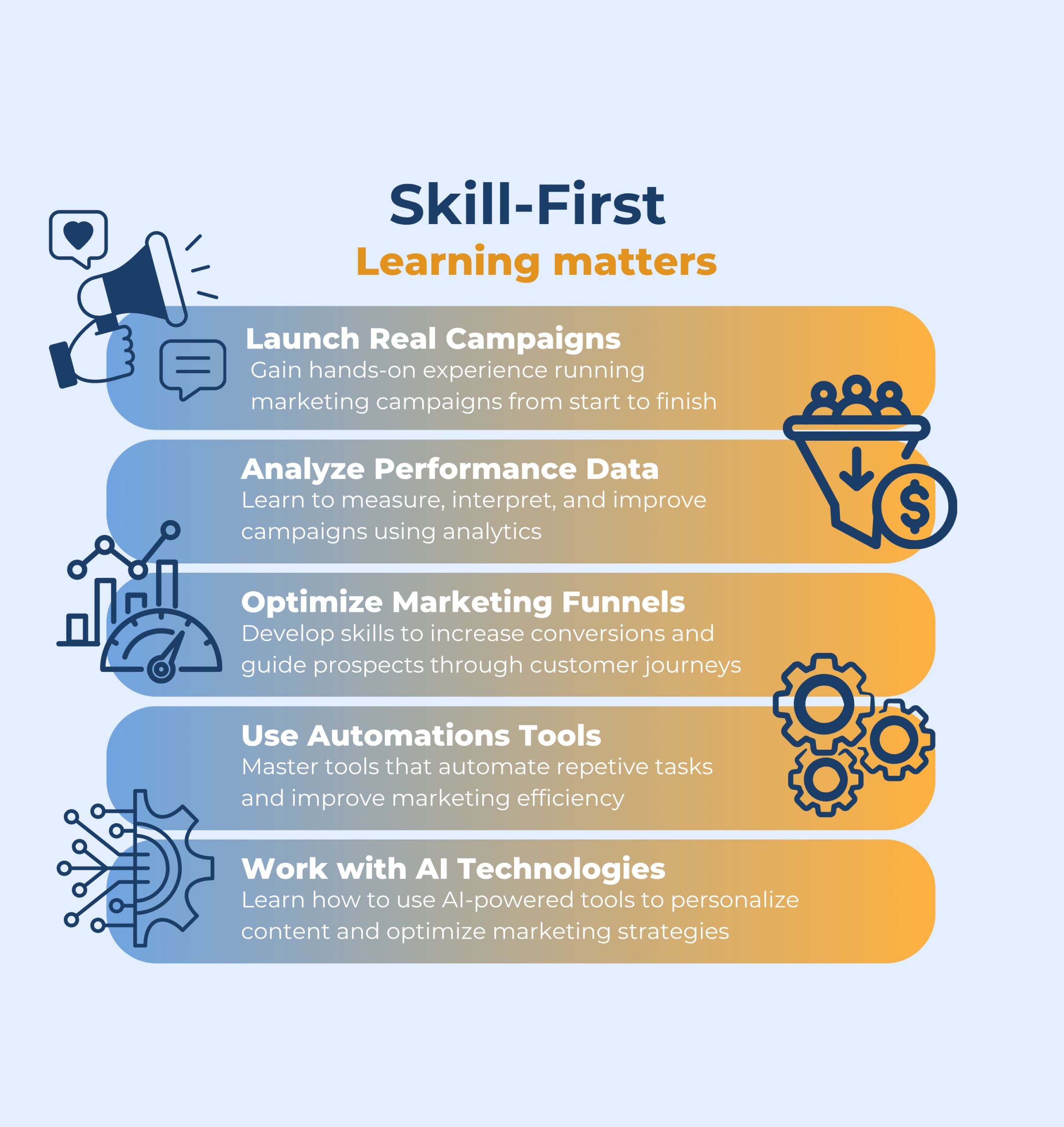
In digital marketing roles, this means candidates must demonstrate the ability to perform real tasks such as launching campaigns, interpreting analytics, optimizing customer journeys, and using automation tools.
Because of this shift, learning models that emphasize practical experience have become more valuable. Programs that integrate real marketing projects into training allow learners to develop the capabilities that employers are actively seeking.
Conclusion

Digital marketing continues to evolve rapidly as new technologies, digital platforms, and customer expectations reshape the way organizations communicate with their audiences.
To succeed in this environment, marketing professionals must develop practical capabilities that extend beyond theoretical knowledge.
They need experience designing campaigns, working with marketing technologies, analyzing performance data, and optimizing customer journeys based on insights.
A project based digital marketing course provides an effective pathway for developing these capabilities.
By combining hands on digital marketing training with structured projects and real-world simulations, learners gain experience performing the same activities that modern marketing teams carry out every day.
Through project-based learning environments and work-integrated training models, learners can develop the practical skills needed to execute AI-powered conversational marketing campaigns and contribute effectively to modern digital marketing teams.
With CLaaS2SaaS, you can start building real digital marketing capabilities in a skills-first lifelong learning environments that align with the needs of today’s workforce.
Want to check if this career is for you?